
How Christian relief ministries work with local partners
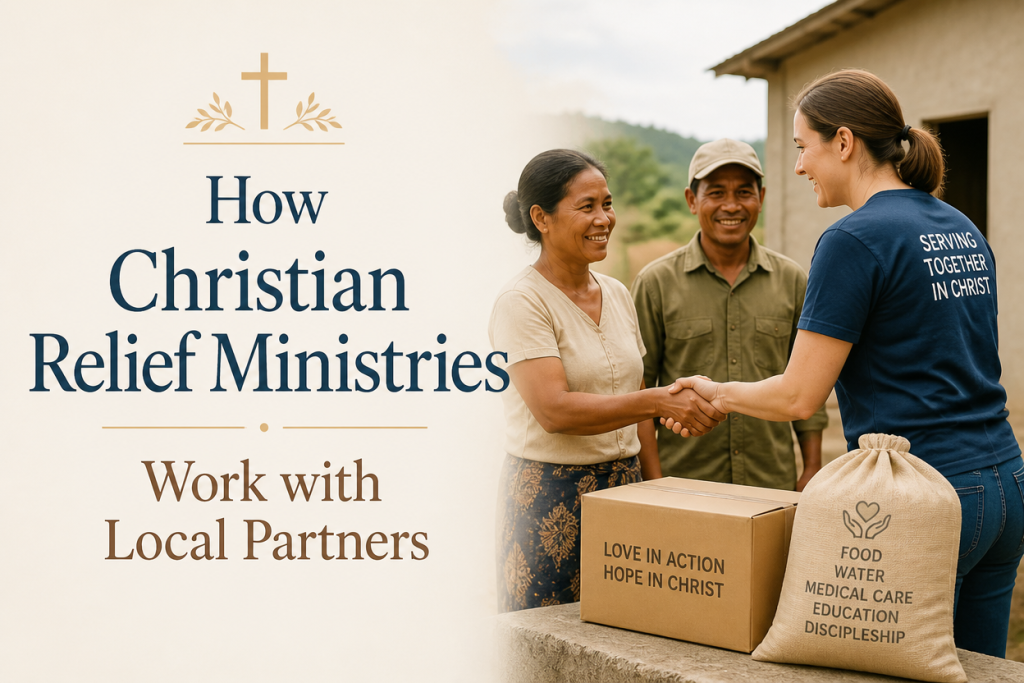
How Christian relief ministries work with local partners is not a secondary operational detail. It is one of the clearest windows into whether a ministry understands both the dignity of the people it serves and the limits of what outsiders can responsibly do in moments of crisis. Christians who give sacrificially want more than activity; […]
How Christian relief ministries spend donations

How Christian relief ministries spend donations is not a technical question for accountants; it is a spiritual question for stewards. When Christians give to relieve suffering after war, famine, disaster, or chronic poverty, we are trying to love our neighbor with material faithfulness, not merely good intentions. The New Testament keeps these realities together: compassion […]
Why Christian relief ministries avoid harmful donations

Why Christian relief ministries avoid harmful donations is not a public-relations posture; it is a moral and operational necessity. Donors often assume that anything given in the name of compassion will help. Disaster settings expose the limits of that assumption because poorly chosen gifts can increase suffering, divert local capacity, and undermine long-term recovery. The […]
How Christian development ministries measure lasting impact

How Christian development ministries measure lasting impact is not a technical question appended to “real ministry.” It is a moral question about whether our giving strengthens what God is already doing in families and communities, or whether it unintentionally replaces local responsibility with donor dependency. Scripture does not reduce mercy to sentiment; it binds compassion […]
When Christian relief ministries shift to recovery work
When Christian relief ministries shift to recovery work, the donor questions change from “Did we get help there quickly?” to “Did we stay long enough to do good?” Relief is urgent and visible. Recovery is slower, more complex, and often less photogenic, yet it is where the long obedience of love is tested. Scripture gives […]
What makes Christian disaster relief ministries effective
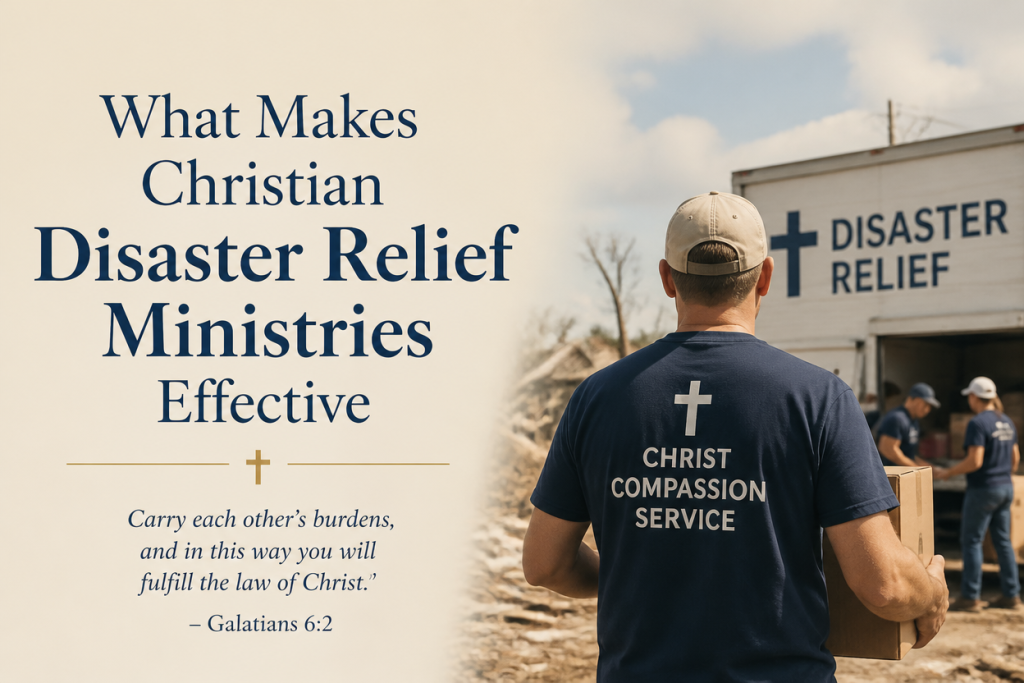
What makes Christian disaster relief ministries effective is not first their speed, visibility, or emotional resonance. It is whether, under pressure, they deliver competent help that protects the vulnerable, strengthens local institutions, and honors Christ in both means and ends. Donors feel the weight of these moments because disaster giving is often urgent, public, and […]
What kinds of gifts Christian disaster relief ministries need

What kinds of gifts Christian disaster relief ministries need is a stewardship question before it is a logistics question. In the earliest hours after a storm or earthquake, donors often assume the greatest need is “stuff.” In practice, the most effective relief work depends on a disciplined mix of cash, specialized in-kind goods, skilled labor, […]
How Christian relief ministries coordinate with local churches
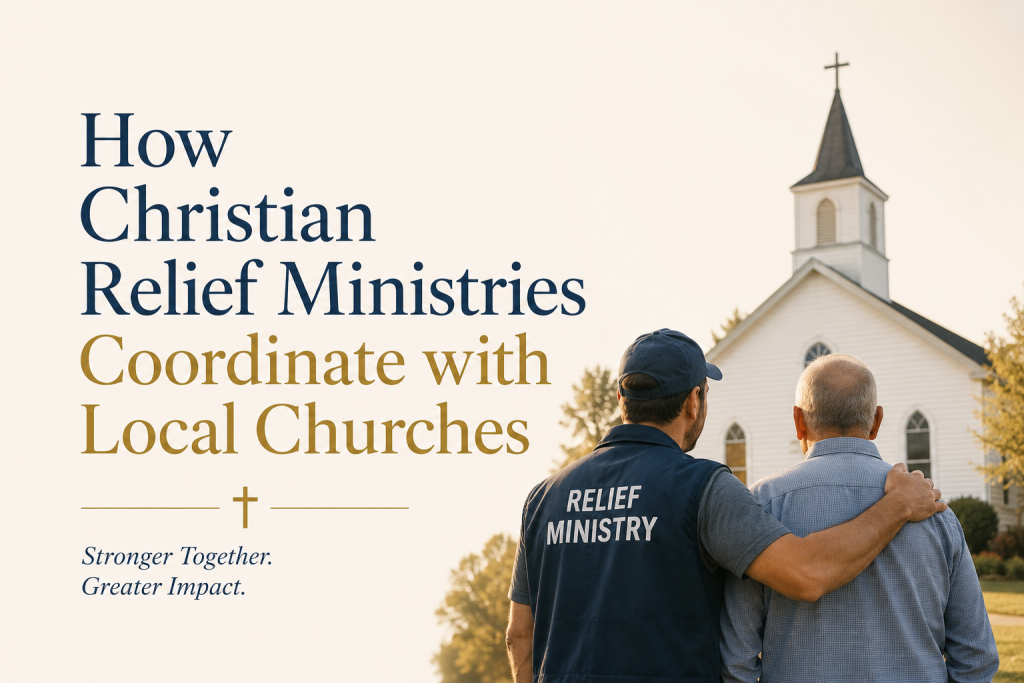
How Christian relief ministries coordinate with local churches is not a secondary operational question. It is a theological and moral question about authority, neighbor love, and whether Christian compassion strengthens the church’s witness or quietly displaces it. Donors rightly ask where a ministry’s effectiveness begins and ends: at the distribution line, or in the long, […]
How Christian disaster relief ministries respond quickly
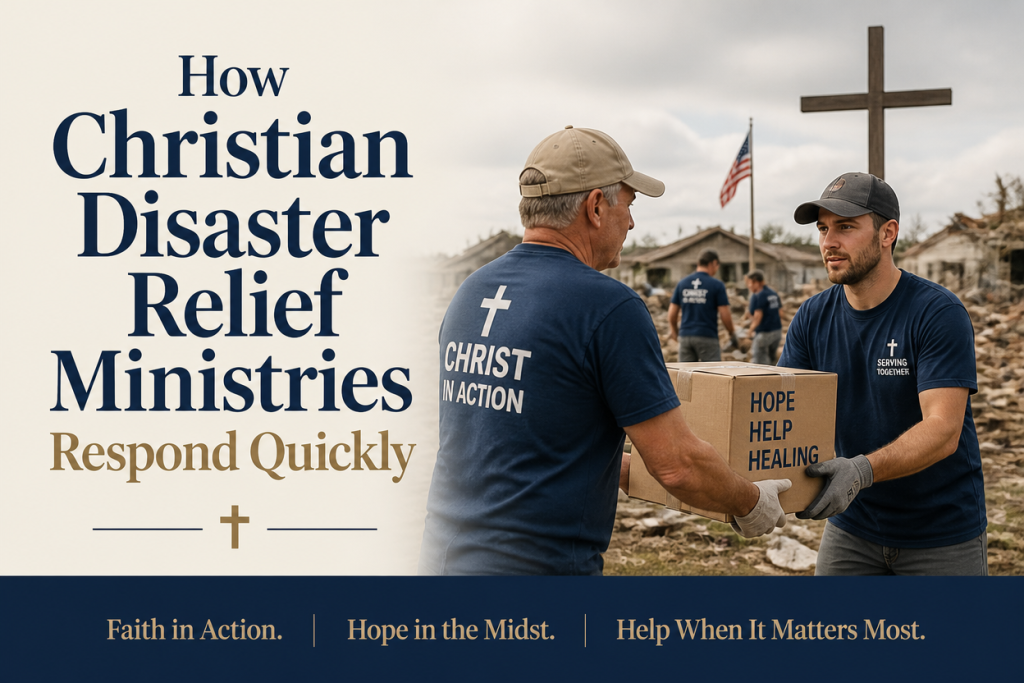
How Christian disaster relief ministries respond quickly is not primarily a question of adrenaline or charisma. It is a question of preparedness, authority, and trust—built long before the storm makes landfall. For Christian donors, speed matters because suffering is immediate, but speed that is unaccountable can also multiply harm, squander resources, and compromise witness. Scripture […]
Why Christian relief and development ministries focus on livelihoods
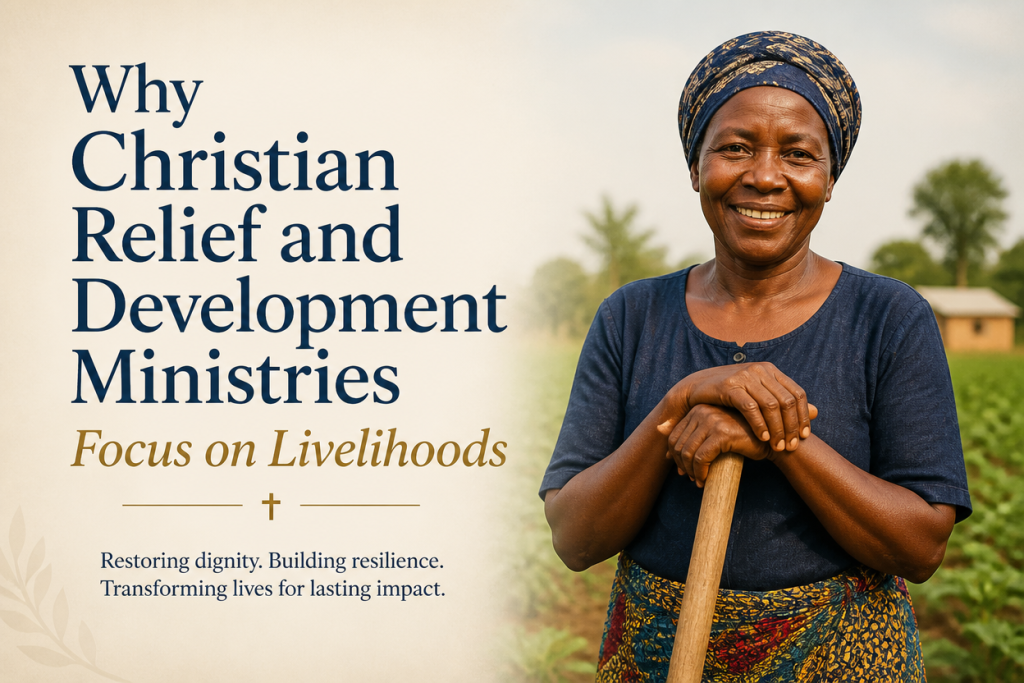
Why Christian relief and development ministries focus on livelihoods is ultimately a question about what kind of change Christian donors are asking their giving to pursue. Emergency relief saves lives. Livelihoods protect lives after the crisis has passed by strengthening families, local economies, and the daily capacity to provide. The shift is not away from […]