
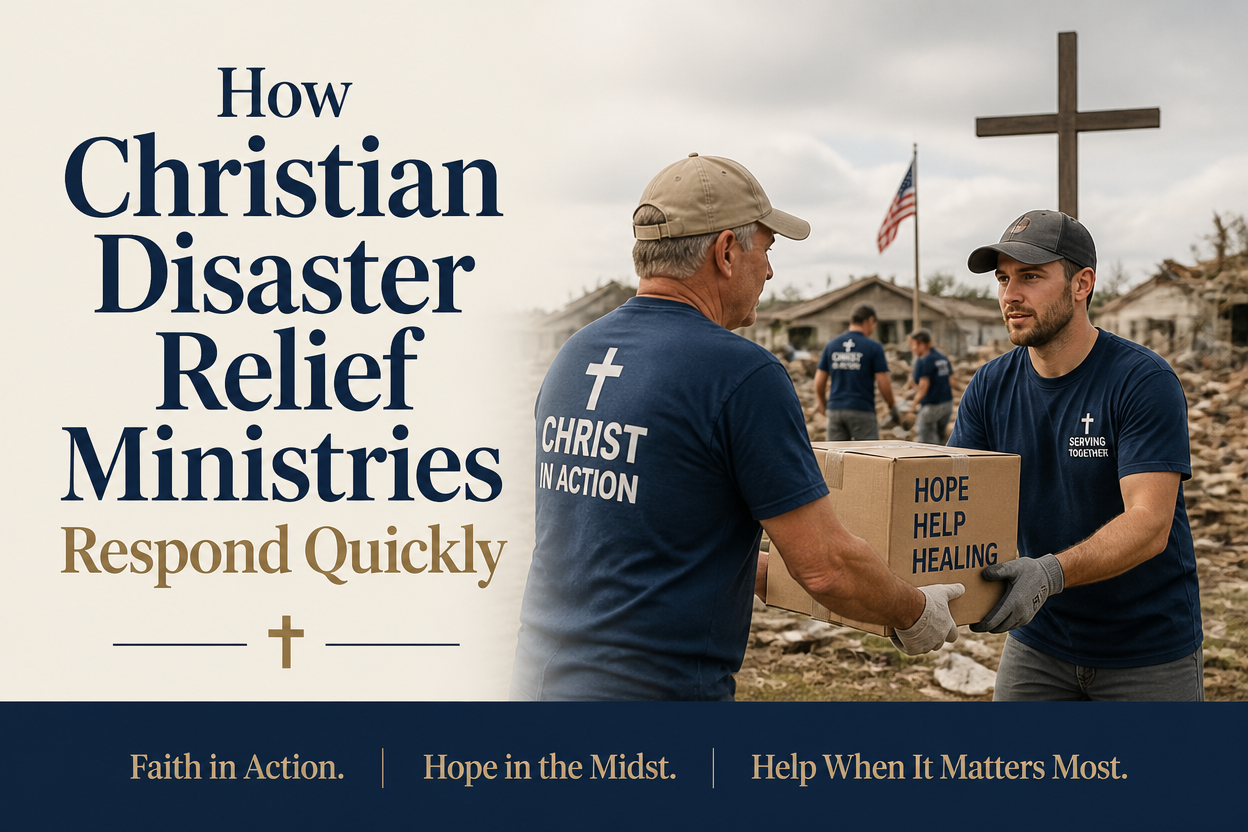
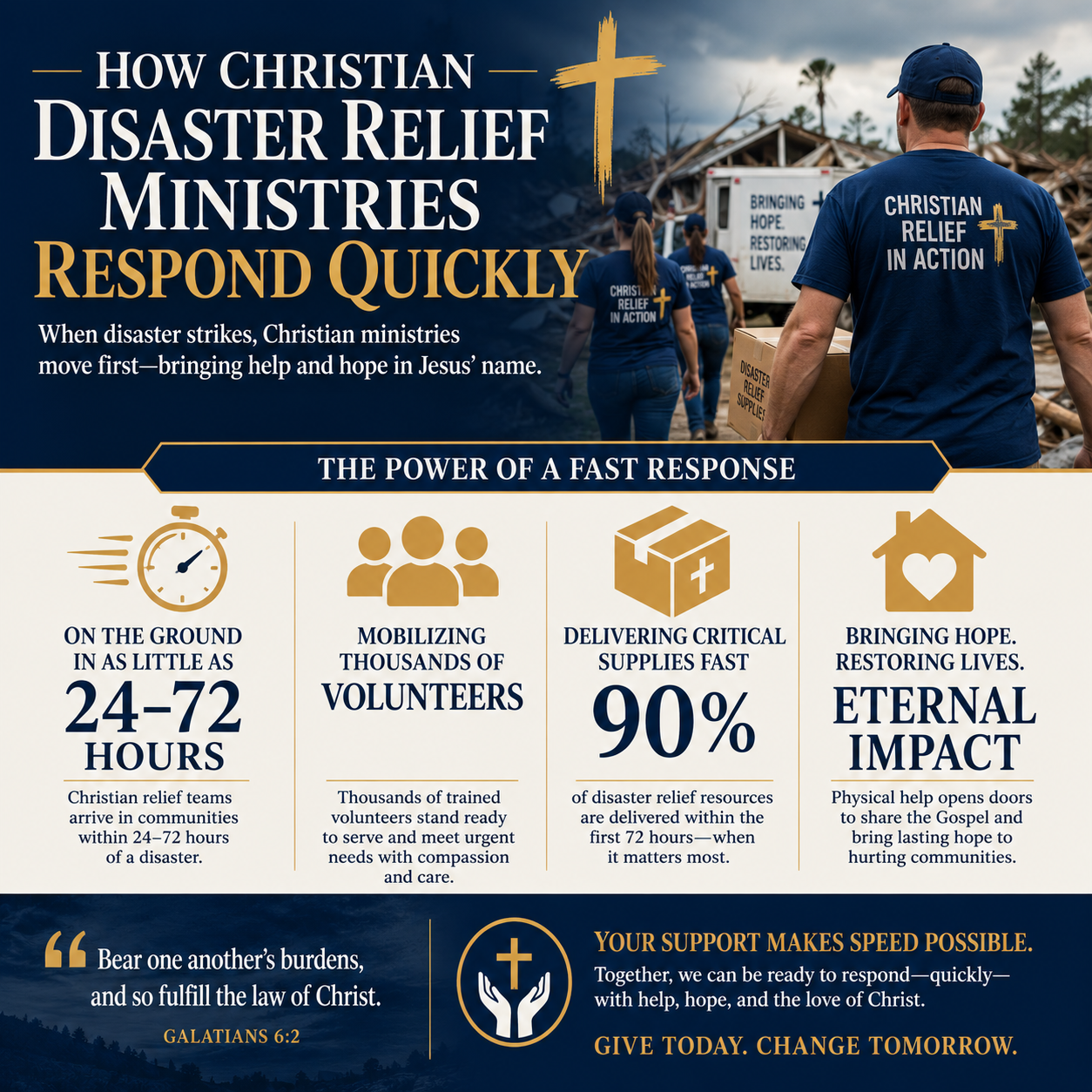
How Christian disaster relief ministries respond quickly is not primarily a question of adrenaline or charisma. It is a question of preparedness, authority, and trust—built long before the storm makes landfall. For Christian donors, speed matters because suffering is immediate, but speed that is unaccountable can also multiply harm, squander resources, and compromise witness.
Scripture holds urgency and order together. The Good Samaritan acts decisively on the road, yet his mercy includes sober arrangements: transport, lodging, payment, and a plan for follow-up. Christian disaster response is similar. Rapid compassion is Christian; so is prudent stewardship.
Speed begins before the disaster with readiness and relationships
The first responders in many disasters are not national brands; they are neighbors, churches, and local authorities. Ministries that arrive quickly tend to have built relationships with local leaders, maintained agreements with vendors, and pre-positioned capabilities. Donors often assume the key variable is how fast a ministry can deploy staff. In practice, the key variable is whether a ministry can operate within a functioning network.
Local presence reduces friction
Ministries with regional offices, standing volunteer bases, or established church partnerships can move faster because they do not need to invent trust in the middle of chaos. This is not merely logistical. Disasters intensify vulnerability, and organizations that bypass local actors risk distributing aid in ways that are culturally tone-deaf, duplicative, or destabilizing.
Preparedness is a moral discipline
Preparedness is not a neutral operational preference; it is a form of neighbor-love that takes foreseeable suffering seriously. FEMA consistently emphasizes that preparedness planning and coordination improve outcomes for response and recovery, especially when roles are defined ahead of time and information flows are clear.FEMA
Across our verification work at Most Trusted, we observe that ministries with credible readiness practices tend to be transparent about their constraints. They do not promise universal coverage. They define what they do well—chainsaw teams, temporary shelter, emergency supplies, case management—and they name what they do not do.
Rapid action depends on clear decision authority and safety discipline
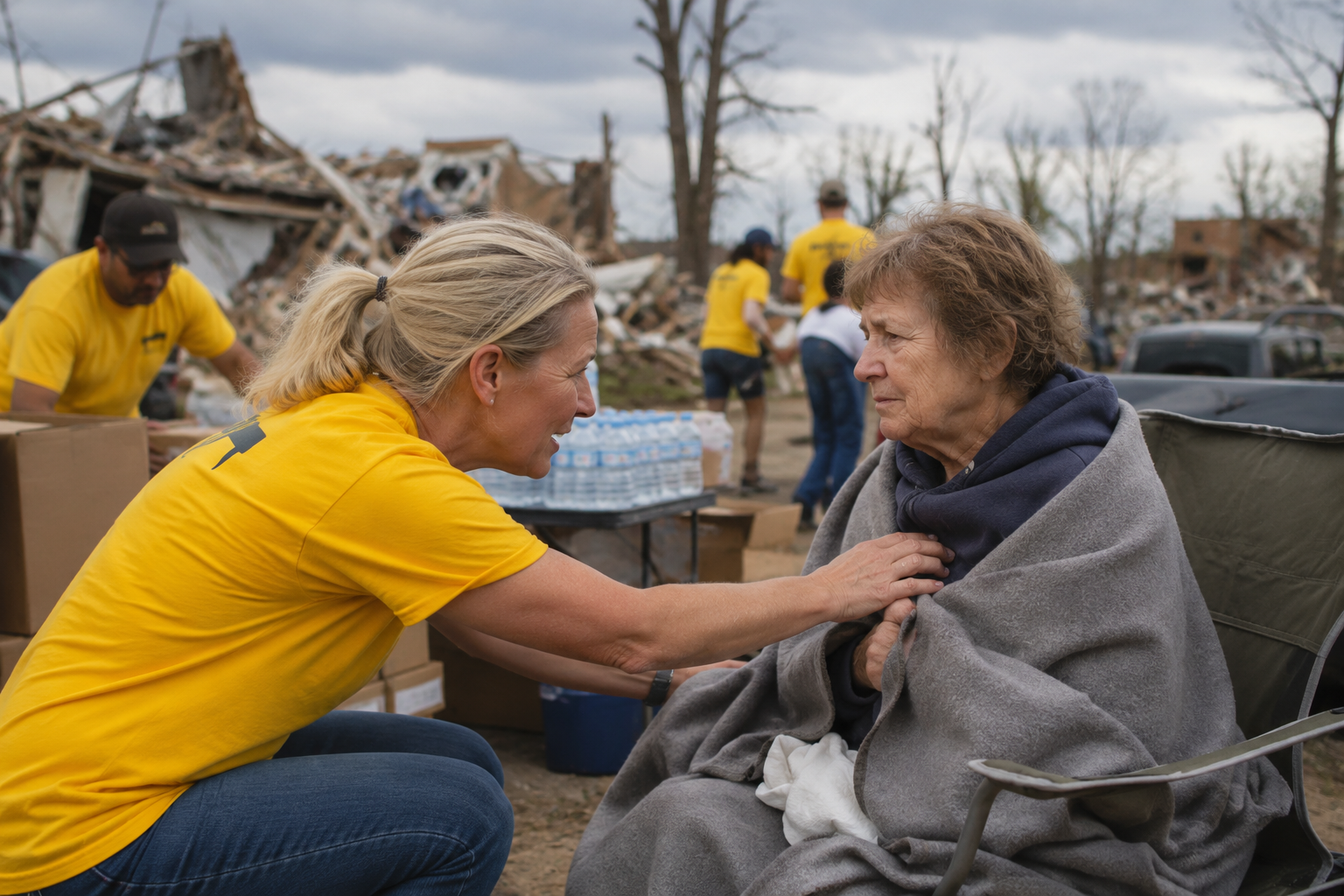
In the first 72 hours, confusion is a predictable enemy. The ministries that respond quickly have clarified who can authorize spending, where teams can deploy, and what safety thresholds cannot be crossed. This is where governance becomes operational. A ministry can have sincere intentions and still fail donors if it lacks decision discipline when the pressure is highest.
Incident management prevents improvisation from becoming recklessness
Many effective responders align with the Incident Command System used broadly in emergency management. Ministries do not need to become government agencies, but they do need compatible language, role clarity, and reporting. When communication is structured, volunteers are safer, and local officials are more willing to coordinate.
Volunteer care is part of donor stewardship
Rapid deployment often relies on volunteers, which raises real risks: untrained teams in unstable environments, compassion fatigue, and unnecessary exposure to hazards. OSHA’s guidance on emergency response emphasizes that disaster sites involve significant risks requiring training, protective equipment, and hazard assessment.OSHA
Christian donors should not romanticize speed that is purchased with preventable injury. Ministries that treat volunteer safety as optional will eventually treat financial controls the same way.
Supply chains and cash controls determine whether speed becomes impact
Relief work is material work: fuel, water, tarps, food, generators, temporary housing, debris removal. A ministry can have compelling storytelling and still be slow because it cannot procure, store, and move goods with integrity. Just as importantly, speed creates temptation. Large volumes of cash and in-kind donations moving through distressed communities invite waste and, at worst, fraud.
Pre-positioning and procurement matter more than publicity
Ministries that move quickly typically have vetted suppliers, pricing agreements, and a plan for surge procurement. They also know when not to ship goods. The humanitarian field has learned that unsolicited in-kind donations can clog ports, warehouses, and roads, consuming scarce local capacity. Cash-based assistance, when well controlled, can be faster and more dignifying, though it requires rigorous verification to prevent misuse.
Fast spending must still be accountable
Donors sometimes assume that emergency conditions require relaxed controls. That assumption is costly. Strong ministries preserve basic internal controls even under pressure: segregation of duties where possible, documented approvals, reconciliations, and post-distribution review. The harder question is not whether money moves quickly, but whether the ministry can later show, with documentation, that funds reached intended purposes.
This is one reason many Christian donors seek independent verification. Most Trusted evaluates ministries against The Most Trusted Standard, including financial integrity and governance practices that must hold in ordinary seasons and under emergency strain.
Coordination and local respect prevent the second disaster
Disaster relief can unintentionally become a second disaster when external actors bypass local institutions, distort local markets, or create dependency. Christians genuinely disagree about how much outside aid is too much and when relief should pivot toward development, but the field has had to reckon with patterns of harm.
Relief must transition toward restoration
The When Helping Hurts framework, articulated by Steve Corbett and Brian Fikkert, helped many Christian organizations distinguish relief from rehabilitation and development, warning against treating every situation as if it were an emergency. A mature ministry knows when immediate aid is necessary and when the faithful next step is to restore agency, livelihoods, and local leadership.
Church partnership is an ethical decision, not a marketing claim
Partnering with local churches can deepen trust and improve identification of the most vulnerable, but only when partnerships are real—mutual, respectful, and clear about decision-making. Donors should ask whether the ministry channels resources through local structures with accountability or merely uses church language as a credibility signal.
For donors comparing organizations, a helpful place to orient is Christian Relief and Development Ministries, where the central questions of relief, development, and Christian witness come into view together.
Donor discernment can reward speed without subsidizing disorder
Many donors want their gifts to reach the field immediately. That desire is understandable. Yet the Christian standard is not immediacy alone; it is faithfulness. The ministries that respond quickly and well tend to combine urgency with evidence: clear reporting, verifiable outcomes, and transparent limitations.
What to look for when a crisis breaks
In the first days of a disaster, donors rarely have time for a full review. These signals can help distinguish rapid competence from reactive noise:
- Clear geographic scope and deployment criteria, not vague claims of being “everywhere.”
- Named local partners and a description of coordination with authorities or recognized networks.
- Specific response activities with operational detail, not only emotional appeals.
- Basic financial clarity: designated fund language, intended uses, and how unused funds are handled.
- Safety and volunteer policies that suggest discipline, not improvisation.
Transparency after the headlines is a credibility test
The news cycle moves on quickly; responsible recovery does not. Ministries worthy of donor confidence continue reporting when attention fades: what was distributed, how households were selected, what the transition plan is, and what was learned. The National Voluntary Organizations Active in Disaster community has long emphasized sustained coordination across response and recovery, precisely because needs evolve over months and years.NVOAD
Donors who want a more focused view of response dynamics can also consult How Christian Disaster Relief Ministries Respond, where the practical questions of speed, integrity, and coordination can be weighed with greater precision.
FAQs for How Christian disaster relief ministries respond quickly
Should Christian donors prioritize ministries that promise the fastest deployment?
We recommend prioritizing ministries that can explain how they deploy quickly rather than those that merely promise speed. Fast deployment is meaningful when it is paired with coordination, safety protocols, and financial controls. Otherwise, donors risk funding activity that is dramatic but difficult to verify, or even disruptive to local recovery.
Is it better to give goods or money during a disaster?
Money is often more flexible and faster, especially when a ministry has vetted suppliers and strong controls. Goods can help in specific situations, but unsolicited in-kind donations can strain logistics and fail to match actual needs. Donors should follow the requesting organization’s stated needs and look for clarity about sourcing, distribution, and documentation.
Speed that serves love and truth
Christian disaster relief ministries respond quickly when readiness, authority, and accountability are already in place. Donors do not need to choose between compassion and prudence. When giving is guided by sober discernment—and when ministries operate with integrity under pressure—speed becomes a servant of mercy rather than a substitute for it.



