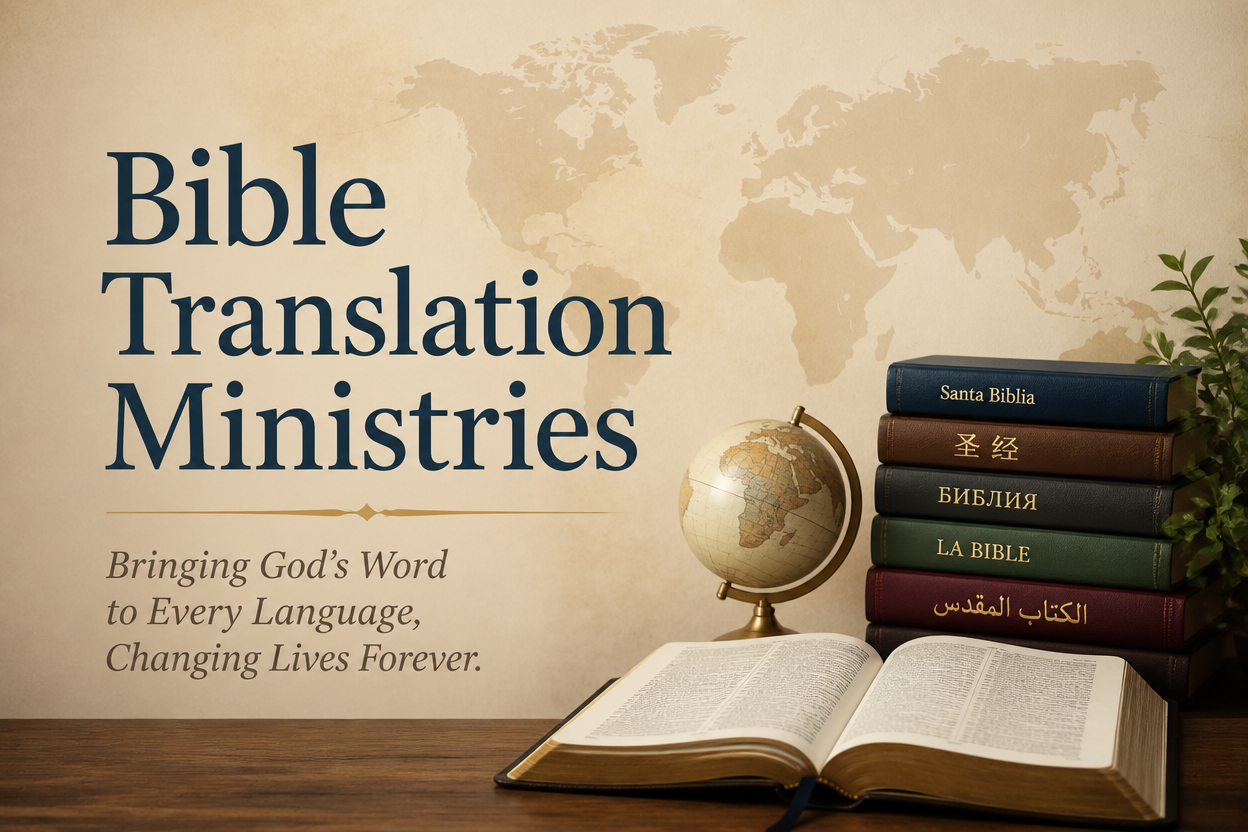
Bible Translation Ministries sit at the intersection of the Great Commission and the doctrine of Scripture itself. When a ministry labors to place faithful translations in the hands of communities that cannot access the Bible in their own language, it is not funding content creation. It is funding access to the ordinary means by which God forms his people through the Word read, preached, and obeyed.
Most Christian donors already sense the moral weight of translation work. The harder question is how to discern which Bible Translation Ministries are doing this work with theological seriousness, cultural humility, and institutional integrity. The field includes longstanding mission agencies with rigorous processes, newer organizations shaped by technology and crowd-sourced models, and hybrid efforts embedded in local churches. Donors should expect complexity and evaluate accordingly.
At Most Trusted, we approach Bible translation giving as a stewardship decision with spiritual consequences. We evaluate Christian nonprofits against The Most Trusted Standard, a 15-criteria framework across Faith Foundation, Financial Integrity, Governance and Leadership, and Transparency and Effectiveness. Translation work can be profoundly faithful and profoundly fragile. The same ministry can show admirable zeal and serious weaknesses in governance, data discipline, or theological accountability. Wise giving names both realities without cynicism.
Why Bible translation is a donor priority and why it is not simple
Christianity is, by nature, a translated faith. Pentecost did not erase languages; it dignified them. The Scriptures themselves come to us through translation—Hebrew and Aramaic rendered into Greek, then into Latin, and into the living languages of the church across centuries. For donors, that history matters because it signals that translation is not a technical side project; it is part of how God has always advanced the gospel through the ordinary work of human words.
Yet Bible Translation Ministries are not merely scaling a known product. They are doing linguistic analysis, community testing, and theological decision-making in contexts where words for “covenant,” “righteousness,” “sacrifice,” or “spirit” may not map neatly onto the receptor language. Even within the same language family, a term that is accurate in one region may mislead in another. Donors who assume translation is a straightforward transfer of meaning often underestimate the seriousness of the work and, therefore, the seriousness of selecting trustworthy organizations.
We also recommend donors resist the simplistic claim that translation is only for “unreached people groups” and therefore always frontline evangelism. Translation serves evangelism, but it also serves discipleship, pastoral training, trauma care, literacy development, and church formation. A faithful translation in the hands of local believers can strengthen a whole ecosystem of ministry over decades, often in ways no donor report can fully capture.
What faithful Bible translation requires in practice
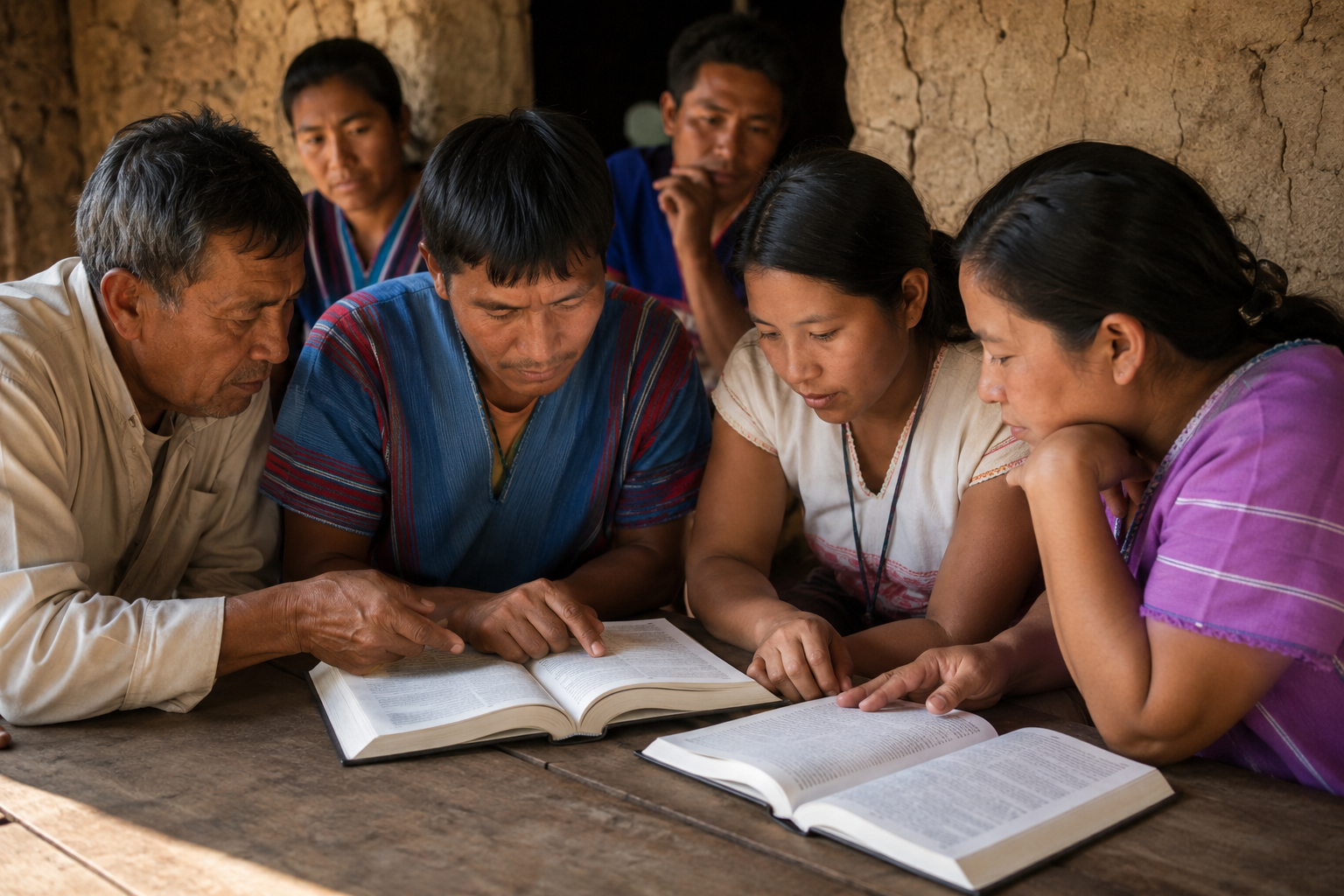
The ministries most worthy of donor confidence tend to treat translation as a long obedience rather than a marketing campaign. Translation is slow work because it must be accurate, intelligible, and received by a real community—not merely completed as a deliverable. Donors should look for evidence of patient process, clear doctrinal guardrails, and accountable partnership with the local church.
Textual faithfulness and theological accountability
Every translation choice implies an interpretive decision. That does not mean translators are free to impose private theology; it means they must operate under accountable constraints. Responsible organizations publish their translation philosophy, name the source texts they use, and articulate how theological disputes are handled. They also describe who has authority to approve final decisions, and how disagreements are adjudicated across linguistic, pastoral, and scholarly inputs.
For donors, this is not a matter of preferring one English translation brand over another. It is asking whether an organization has a coherent doctrine of Scripture, a meaningful statement of faith, and a governance structure that can hold the line when theological pressure comes—whether from funders, local politics, or international partners.
Linguistics, literacy, and the reality of oral cultures
Many translation contexts are not primarily print cultures. Literacy levels vary widely, and for some communities the most faithful distribution strategy may be oral Scripture, audio recordings, or story-based formats rather than bound books. Donors should treat this as a legitimate missiological and pastoral question, not a downgrade from “real” Bible distribution.
Serious Bible Translation Ministries explain how they assess literacy, how they train local readers and facilitators, and how they ensure that oral formats preserve accuracy. They also acknowledge that Scripture access is not merely “having a file.” It includes durable, safe distribution channels and local capacity to teach the Word responsibly.
Community testing and reception by the church
The goal is not a translation that satisfies a distant committee; it is a translation that local believers can understand, trust, and use in worship, preaching, and discipleship. Strong organizations describe how they do comprehension checking, community review, and iterative revision. They also explain how they engage local pastors and church networks so that the translated Scriptures are embedded in the life of the church rather than delivered as an external project.
This is also where donors should watch for unhealthy dynamics. If local input is treated as mere “field testing” rather than shared authority, the project may produce a translation that is technically defensible yet pastorally alien. Conversely, if local preferences override textual fidelity, the result may be culturally comfortable but theologically distorted. Mature ministries name this tension and show how their process seeks faithfulness on both fronts.
The strategic choices donors should understand before giving
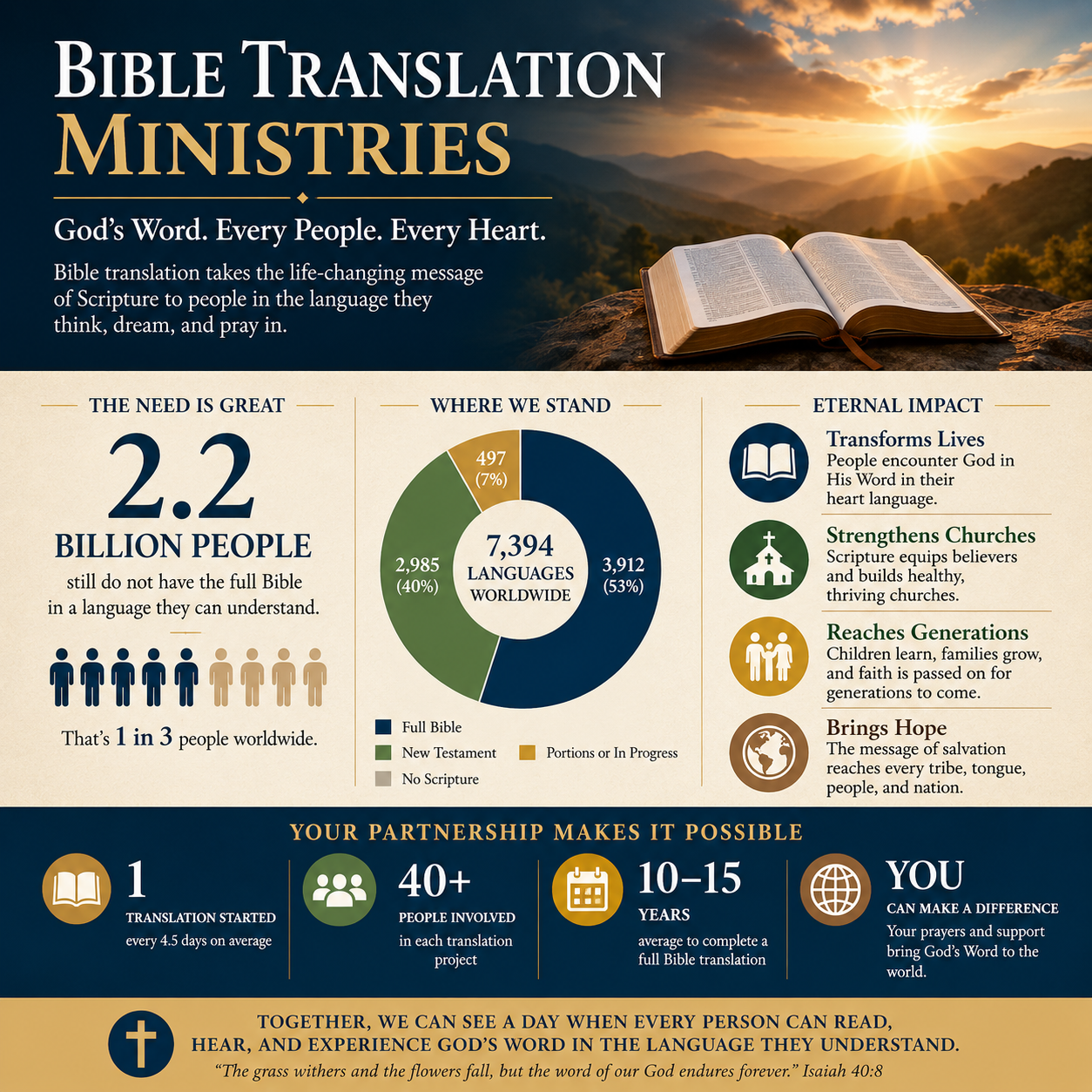
Christian donors often want a clear answer to a clear question: “Where is the greatest need?” With Bible translation, need is real but not uniform. Some languages lack any Scripture. Others have partial translations of uneven quality. Still others have a New Testament that is linguistically outdated or socially distrusted. Donors should treat these distinctions as strategic factors, not technicalities.
First translation versus revision and why both can be urgent
A first translation can open an entire people group to Scripture in a new way, but revisions can be equally urgent. Languages shift. Older translations can become unintelligible to younger speakers, or they may have been produced with limited linguistic tools. Donors should not assume that “revision work” is secondary or bureaucratic. In many contexts, it is the difference between a Bible that is formally present and a Bible that is functionally usable.
The question to ask is not whether a project is new or revised. It is whether the ministry can show compelling evidence that the work is needed, that local churches are prepared to receive it, and that the translation will be distributed and taught responsibly.
Digital distribution, security, and unintended consequences
Technology has made distribution faster and sometimes safer, but it has also introduced new vulnerabilities. In restricted contexts, an app download can expose a believer to surveillance. In fragile regions, a publicized distribution event can endanger local church leaders. Mature Bible Translation Ministries speak candidly about risk management, security protocols, and the limits of what they can publicly report.
Donors should be wary of ministries that market impact primarily through public visibility in places where visibility is itself a threat. Responsible transparency does not require operational recklessness. It requires verifiable evidence shared in appropriate ways, paired with governance that can withstand the temptation to turn sensitive work into promotional content.
Coordination in a crowded field
The modern translation ecosystem includes global coalitions, denominational agencies, and independent nonprofits. Collaboration can reduce duplication and strengthen quality control, but coordination is not automatic. Donors should ask whether an organization works within recognized translation networks, how it avoids redundant efforts in the same language group, and how it relates to local church bodies rather than bypassing them.
Christians genuinely disagree about the best institutional models for translation. Some prefer large, multi-decade organizations with extensive safeguards. Others value nimble models that move quickly into overlooked contexts. The donor’s task is not to pick a style but to verify that whichever model is used has real accountability, doctrinal clarity, and transparent stewardship.
How to evaluate Bible Translation Ministries using The Most Trusted Standard
Donors do not need to become linguists to give wisely, but donors should insist on verifiable integrity. The Most Trusted Standard helps donors evaluate ministries on the fundamentals that predict long-term faithfulness: doctrine, governance, financial stewardship, and credible evidence of effectiveness. Bible translation adds domain-specific questions, but it does not suspend the basic expectations of nonprofit accountability.
Faith Foundation and doctrinal governance
Translation work touches doctrine directly, so a ministry’s Faith Foundation must be more than a statement on a website. Donors should look for evidence that theological oversight is real: a board that understands doctrinal boundaries, qualified theological reviewers, and a clear method for resolving disputes. We also recommend donors ask how a ministry handles controversial terms and passages, and whether it can describe its approach without evasiveness.
Because translation involves contextualization, donors should expect careful language around culture and syncretism. The question is not whether local culture is respected—it should be. The question is whether the ministry can name how it distinguishes respectful contextualization from theological compromise.
Financial Integrity and the stewardship of long projects
Translation projects are long, and long projects can hide weak financial practices. Donors should look for audited financial statements, clear explanations of restricted funds, and budget narratives that match the ministry’s stated strategy. A ministry that reports impressive progress while carrying chronic deficits, weak reserves, or unclear cost allocation is not positioned for faithful endurance.
We also recommend donors resist simplistic overhead judgments. Translation requires skilled labor—linguists, exegetes, reviewers, and project managers. Personnel costs are not an embarrassment; they are often the work. The stewardship question is whether the organization can demonstrate disciplined financial management and transparent reporting consistent with its mission.
Governance and Leadership in high-trust environments
Many translation contexts are high-trust environments where donors cannot easily verify field claims and where projects depend on relationships. That makes governance more important, not less. Donors should look for independent board oversight, clear conflict-of-interest policies, and leadership structures that prevent charismatic founders from becoming unaccountable.
Healthy ministries can explain who makes decisions, how leaders are evaluated, and what happens when partnerships fail or results disappoint. Translation is complex; credible leadership does not promise frictionless progress. It demonstrates that setbacks are handled with integrity rather than concealed.
Transparency and Effectiveness without reducing the work to slogans
Translation ministries often face a difficult communications problem: donors want measurable outcomes, but the most important outcomes are not always quickly measurable. Still, credible organizations provide meaningful indicators: project milestones, quality assurance steps completed, local church adoption, distribution pathways, and training outcomes. They also distinguish between activity metrics and mission outcomes.
In the nonprofit sector, donors have been warned against equating low “overhead” with effectiveness. The widely cited “Overhead Myth” statement, endorsed by major nonprofit evaluators, argues that focusing on overhead alone can mislead donors and weaken organizations. See the BBB Wise Giving Alliance summary and related resources at give.org. What this means for translation is straightforward: donors should ask for evidence of quality and integrity, not merely minimal administration.
When ministries cite global need, donors should expect careful sourcing and humility about what numbers can and cannot prove. The field commonly references global Scripture access and language need estimates; one reputable source for ongoing global translation status tracking is Wycliffe Global Alliance’s public reporting at wycliffe.net. Donors should still evaluate how a specific ministry’s claims relate to its actual project portfolio and partners.
Funding Bible Translation Ministries with wisdom and spiritual patience
Christian donors tend to prize urgency, and rightly so. There is an appropriate impatience in the church when people do not have access to God’s Word. At the same time, donors should expect translation to require spiritual patience. A ministry that promises rapid, frictionless progress across many languages may be promising more than reality permits.
We recommend donors fund translation in ways that strengthen the whole chain: translation, checking, publication, distribution, and local teaching. Underfunding the downstream work can leave communities with a completed text but limited capacity to use it. Conversely, funding distribution without quality assurance can amplify errors at scale. Translation’s moral weight demands craftsmanship.
Donors should also take care not to push ministries into distorted reporting. If funders only reward dramatic stories and fast milestones, organizations will be tempted to overstate progress, oversimplify context, and underreport setbacks. Mature philanthropy sets expectations that reward truthfulness. This reflects Scripture’s consistent concern for integrity in speech and stewardship, not as a public relations posture but as an act of obedience before God.
Across our verification work at Most Trusted, we observe that ministries most worthy of long-term partnership tend to communicate with sober clarity: they name risks, explain delays, document decision-making, and show their work. They are not embarrassed by process because they understand that faithful translation is as much about guarding the text as it is about completing a project plan.
FAQs for Bible Translation Ministries
How can donors evaluate Bible translation quality without being language experts?
Donors can evaluate the process and accountability structures. We recommend asking who performs exegetical review, how community testing works, what quality assurance steps are required before publication, and whether the ministry can describe its translation philosophy plainly. A credible ministry can also explain how it handles disputed renderings and who has final authority, without reducing the matter to marketing claims.
Should donors prioritize first translations over revisions?
Not always. First translations can be urgent where no Scripture exists, but revisions can be urgent where an older translation is no longer understood or was produced with inadequate tools. The stewardship question is whether the project meets a real need, has credible local church partnership, and is governed with the theological and linguistic rigor required for durable use.
What level of transparency should we expect from translation work in restricted contexts?
Donors should expect meaningful transparency about governance, finances, and methodology, alongside prudent limits on operational detail that could endanger local believers. Responsible organizations can provide verifiable evidence through aggregated reporting, third-party audits, board oversight documentation, and clear project milestones without publishing sensitive names, locations, or distribution tactics.
Giving that honors the Word and protects the work
Bible Translation Ministries invite donors into a rare kind of stewardship: funding work that may outlast the donor and quietly reshape the church in places the donor may never visit. That is a privilege, and it should be approached with reverence rather than sentimentality. The goal is not merely to fund activity, but to strengthen faithful institutions that handle Scripture with care.
Most Trusted exists to help donors give with confidence by verifying ministries against The Most Trusted Standard. For translation work, that means asking the questions that protect the text, protect local believers, and protect the integrity of Christian witness. When donors fund translation with discernment, the church participates in a work that is both profoundly human and unmistakably governed by God’s providence.