
What inclusive worship looks like in disability ministry
What inclusive worship looks like in disability ministry is not primarily a question of ramps, captioning, or sensory rooms, though those can matter. It is a question of ecclesiology: whether the church’s worship practices communicate that people with disabilities are full members of Christ’s body, called to offer spiritual sacrifices alongside everyone else. Christian donors […]
What disability ministry resources help small churches
What disability ministry resources help small churches is not primarily a question of budgets or building codes. It is a question of ecclesiology and discipleship: whether the local church will make space for members with disabilities to belong, to be known, and to be needed as full participants in the body of Christ. For Christian […]
What a church disability ministry program looks like
What a church disability ministry program looks like is not first a question of ramps, headphones, or classroom ratios. It is a question of ecclesiology: whether the local church will receive disabled brothers and sisters as indispensable members of Christ’s body, not as occasional guests. Paul’s language in 1 Corinthians 12 is unsentimental and direct: […]
How disability ministries train inclusive volunteers
How disability ministries train inclusive volunteers is not a secondary operational question; it is a theological and pastoral test of whether the church will honor the body of Christ as God has actually assembled it. Many congregations affirm inclusion in principle, yet the lived experience of families affected by disability often turns on the competence, […]
How disability ministries support families
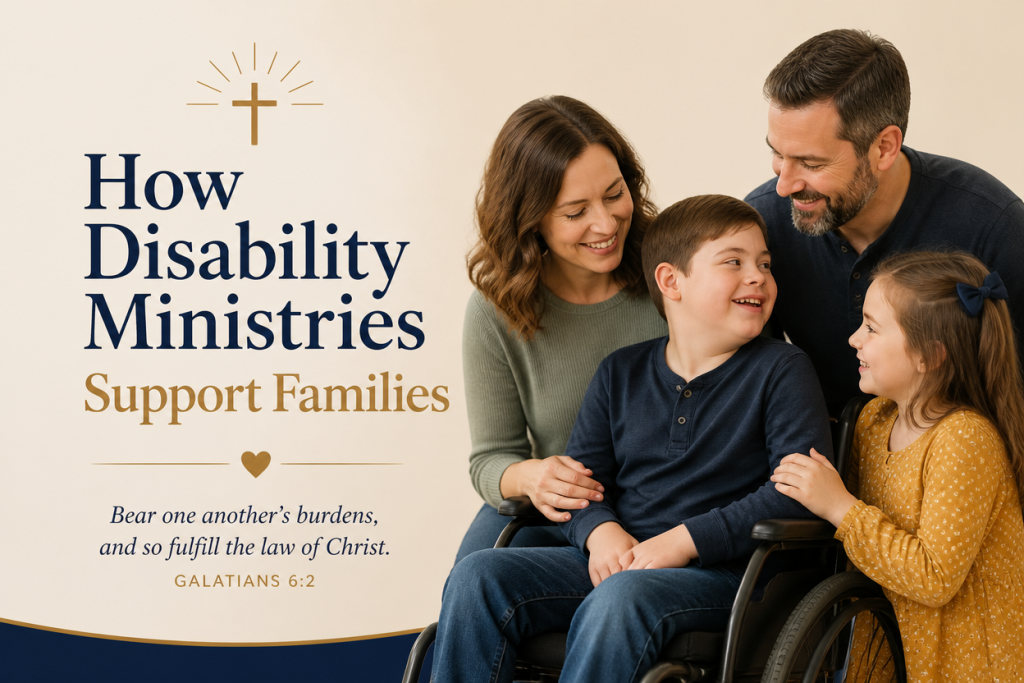
How disability ministries support families is not mainly a question of programming. It is a question of whether the church will embody a credible theology of the body, the family, and belonging when disability touches daily life. Families raising a child or caring for an adult with disabilities often experience a layered form of spiritual […]
Why accessible bathrooms matter in church accessibility
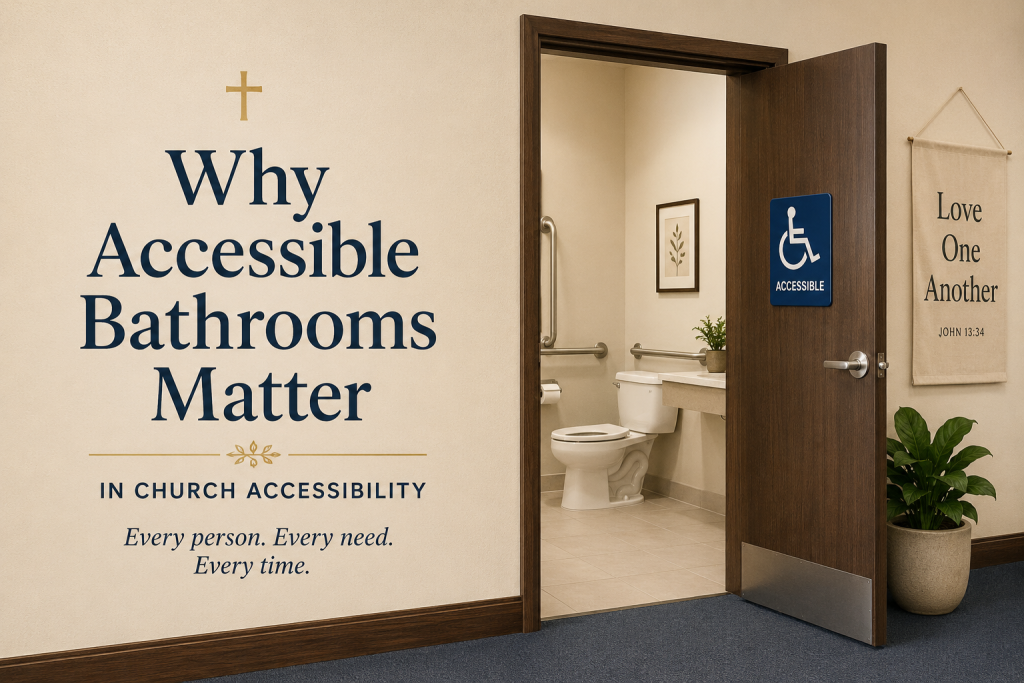
Accessible bathrooms matter in church accessibility because they touch one of the most basic forms of human dignity: the ability to enter, participate, and remain in worship without fear, dependence, or humiliation. For many people with disabilities, the nearest ramp or the audio system is not the decisive barrier. It is whether there is a […]
What church accessibility upgrades make the biggest difference
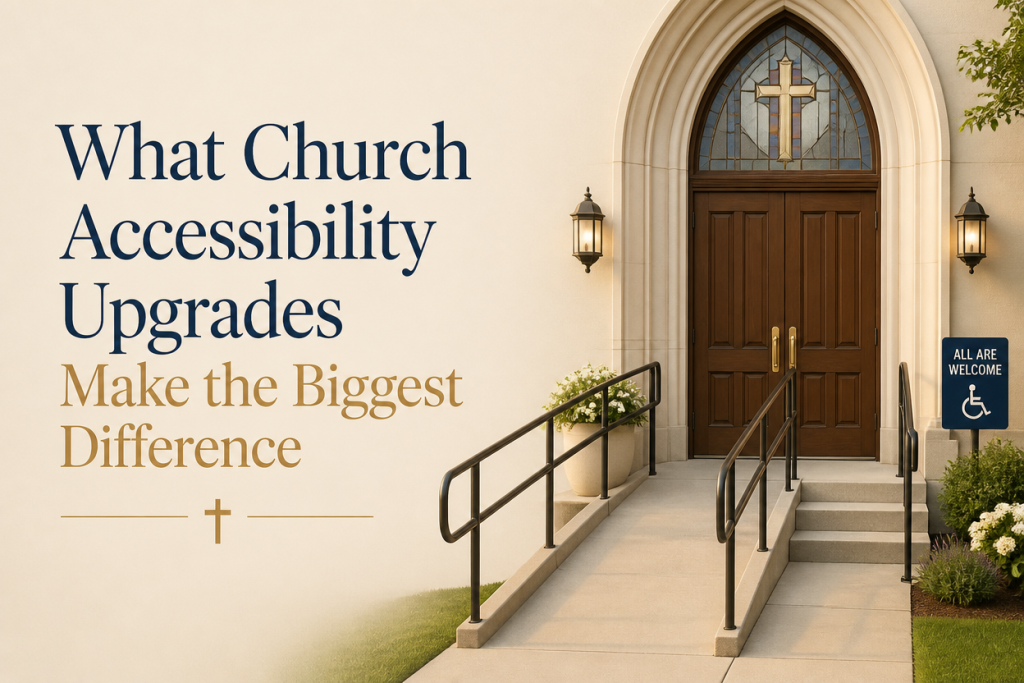
What church accessibility upgrades make the biggest difference is not primarily an architectural question. It is a discipleship question that touches worship, hospitality, and the church’s public witness. For Christian donors, the stakes are also fiduciary: accessibility projects can be quietly transformative, but they can also become expensive gestures that do not materially increase participation. […]
What church accessibility upgrades cost
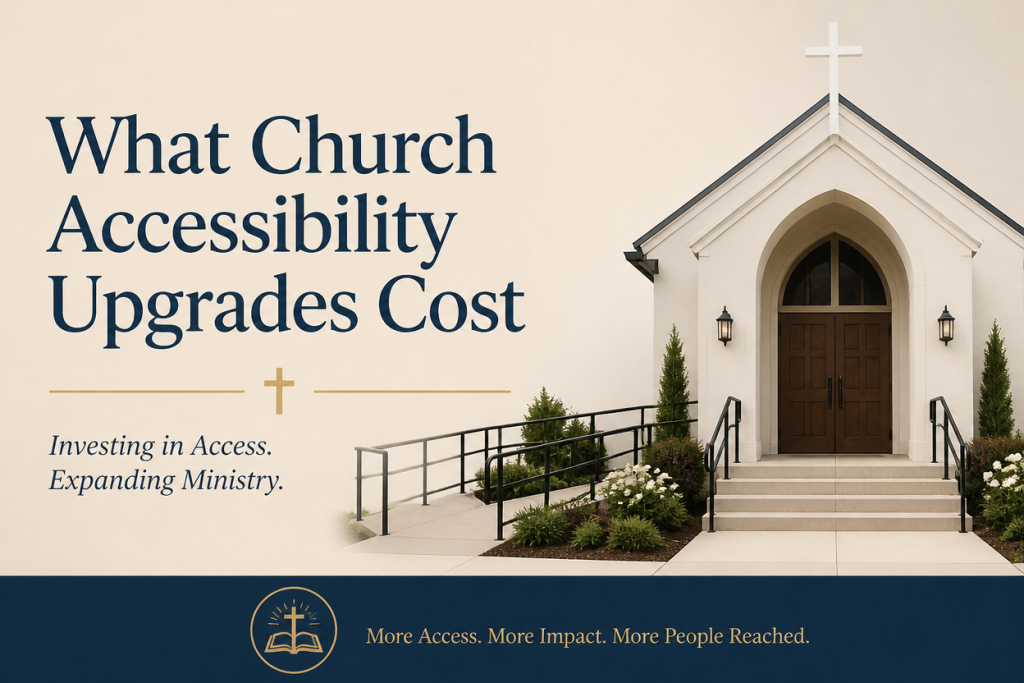
What church accessibility upgrades cost is not only a facilities question. It is a discipleship question with budget consequences: whether a congregation will order its life so that people with disabilities can worship, serve, and belong without having to ask for special permission. Churches that treat accessibility as a one-time construction project often spend more […]
What accessibility barriers disability ministries address
What accessibility barriers disability ministries address is ultimately a discipleship question before it is an architectural one. If the church is Christ’s body, then exclusion—whether by stairs, stigma, or silence—contradicts what we confess about belonging, honor, and mutual care (1 Corinthians 12). Donors often meet disability ministry through a compelling story: a child finally able […]
How disability ministries improve church accessibility
How disability ministries improve church accessibility is ultimately a question about whether the church will embody its confession. If the gospel announces that Christ has broken down dividing walls, then a congregation’s built environment, communication practices, and culture must not quietly rebuild them for worshipers with disabilities. Christian donors who care about the local church […]