
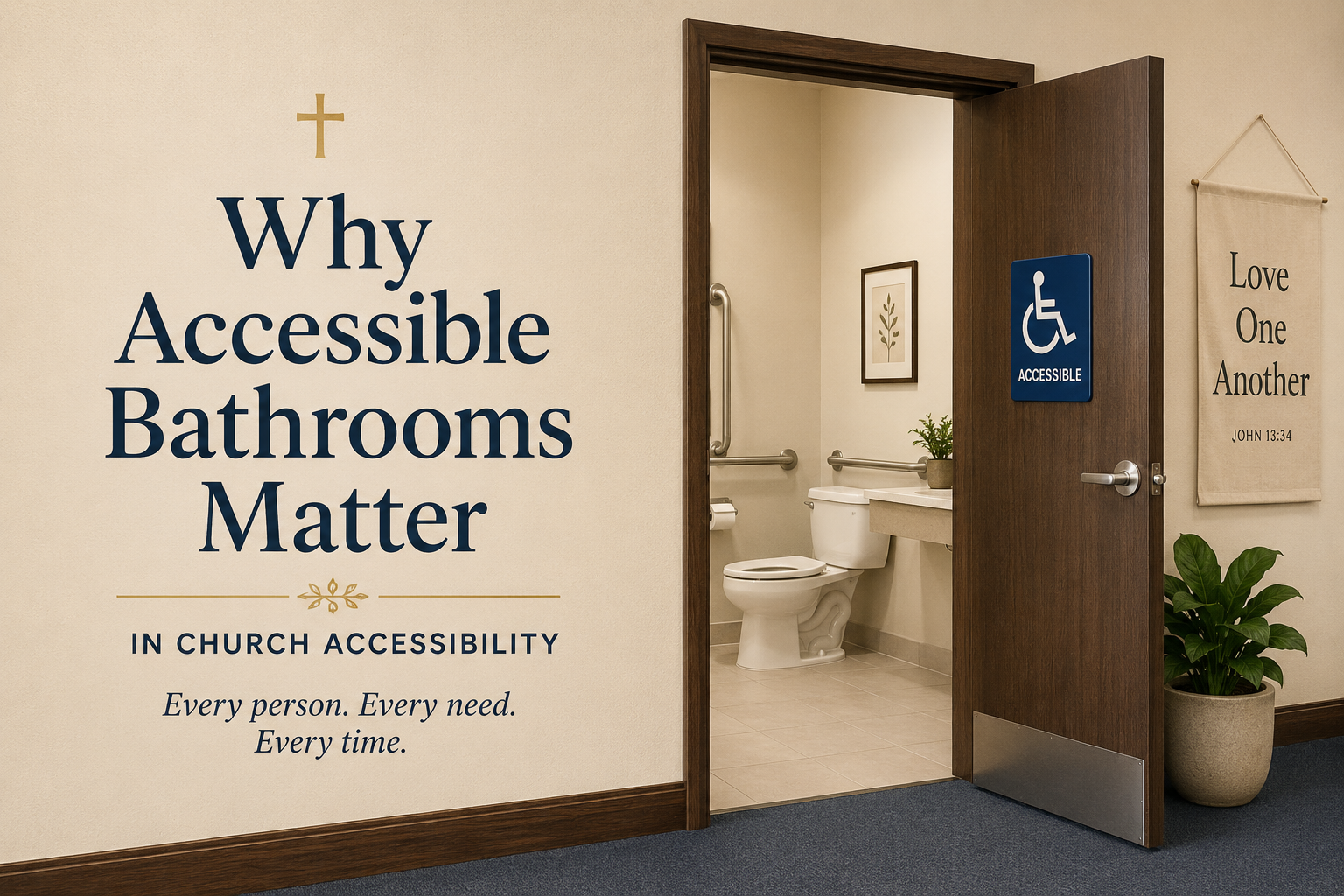
Accessible bathrooms matter in church accessibility because they touch one of the most basic forms of human dignity: the ability to enter, participate, and remain in worship without fear, dependence, or humiliation. For many people with disabilities, the nearest ramp or the audio system is not the decisive barrier. It is whether there is a restroom they can use safely and privately.
For Christian donors, this is not a narrow facilities question. It is a question of hospitality, stewardship, and whether our churches are organized for the people Scripture consistently centers: those who are vulnerable, overlooked, or forced to the margins. When bathroom access is uncertain, the unspoken message is that a person’s presence is conditional—welcome until the body’s needs become inconvenient.
Bathrooms are a theological test of welcome
Hospitality is not theoretical
Christian hospitality is not limited to a greeting at the door. It includes the conditions that make it possible to stay. In the Gospels, Jesus’ attention to bodies is not sentimental; it is concrete. He heals, feeds, and restores people to community life. The New Testament pattern is consistent: the church’s love is measurable in whether the vulnerable can belong without being managed as a problem.
An accessible restroom functions as a quiet but decisive statement: we expected you, and we prepared for your presence. When that preparation is missing, families often learn to plan their lives around exclusion—arriving late, leaving early, avoiding hydration, or skipping church altogether. Those are not small adjustments. They are forms of deprivation that accumulate into absence.
Dignity includes privacy and agency
The loss that many disabled churchgoers describe is not only physical difficulty. It is the steady erosion of privacy. A restroom that requires asking for a key, locating a staff member, or using a storage room that doubles as a bathroom communicates that a person’s ordinary needs are an administrative disruption.
This is one reason accessible bathrooms matter even in churches that have strong preaching and sincere friendliness. A church can be doctrinally serious and still place avoidable burdens on disabled members and visitors. The harder truth is that those burdens are often invisible to leaders precisely because the people affected quietly stop coming.
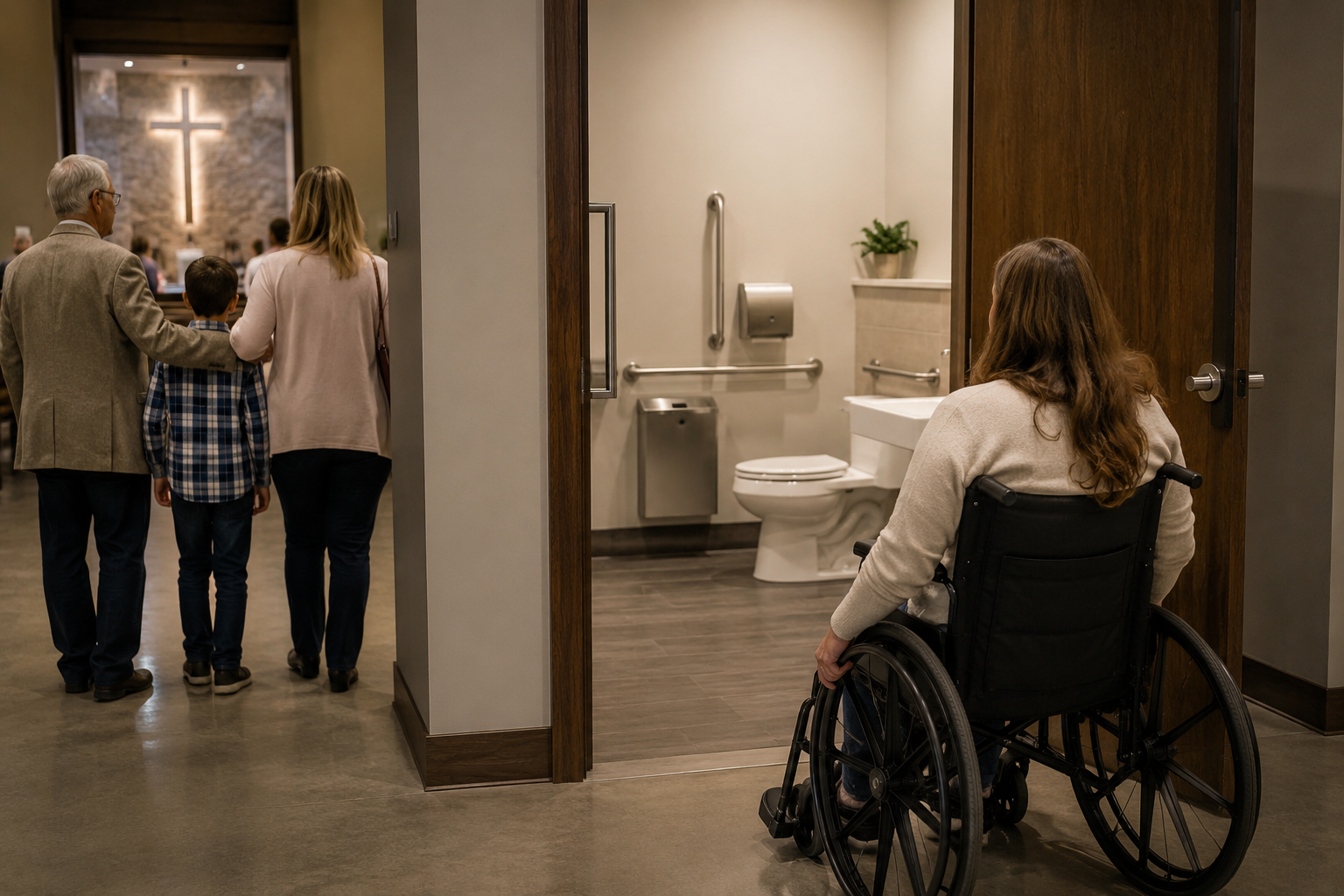
What accessible bathrooms enable that churches often overlook
Participation that lasts more than an hour
Church life is not only the worship service. It is Sunday school, small groups, counseling appointments, volunteer shifts, choir rehearsal, youth nights, and the long conversations that form pastoral community. If restroom access is uncertain, participation narrows to the shortest possible window—or disappears.
What this means in practice is that a church can unintentionally restrict disabled involvement to “attendance,” while excluding the deeper forms of membership Scripture assumes. When Paul describes the body with many parts, the image is not of spectators. It is of mutual contribution and mutual dependence.
Safety for people with mobility and medical needs
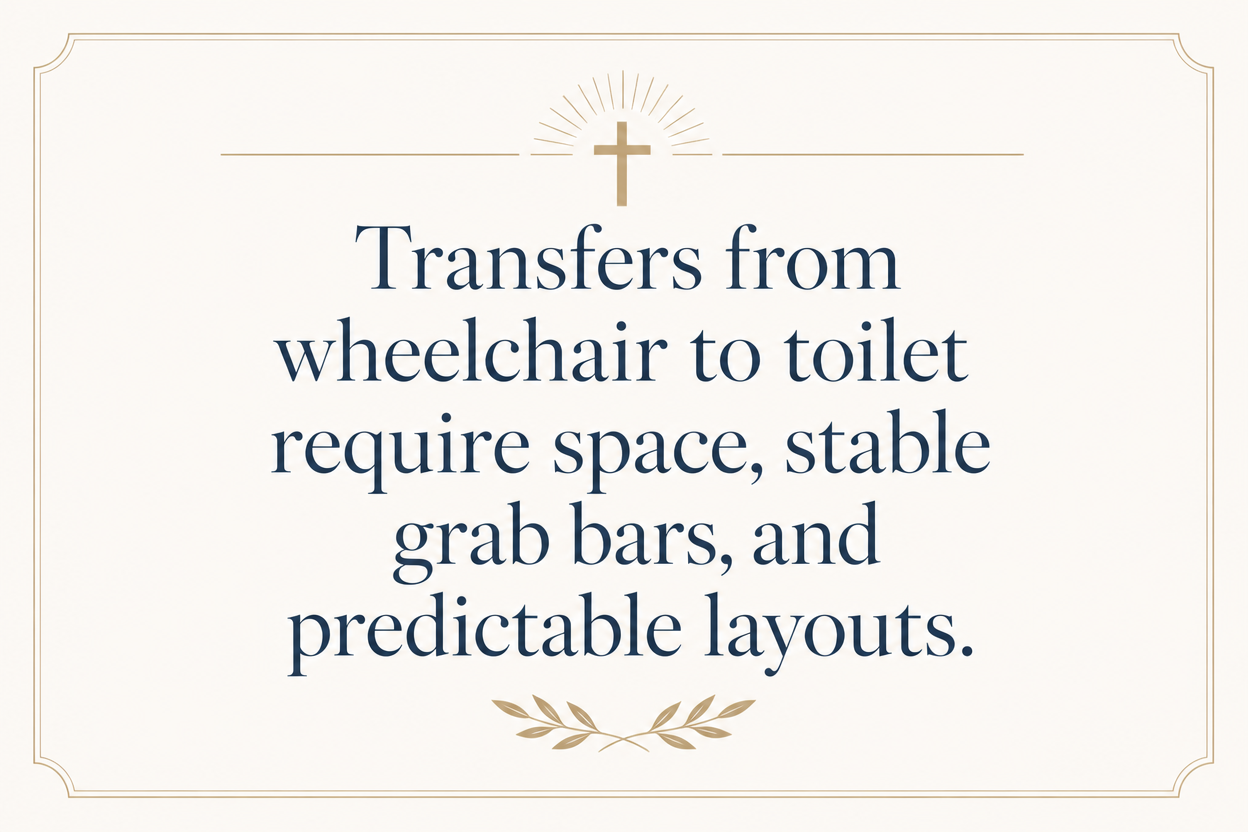
Accessible bathrooms are also a safety issue. Transfers from wheelchair to toilet require space, stable grab bars, and predictable layouts. People with balance limitations need flooring and door hardware that do not increase fall risk. Those with chronic illness, ostomy bags, or conditions that create urgent restroom needs require reliability and proximity, not a scavenger hunt across a building.
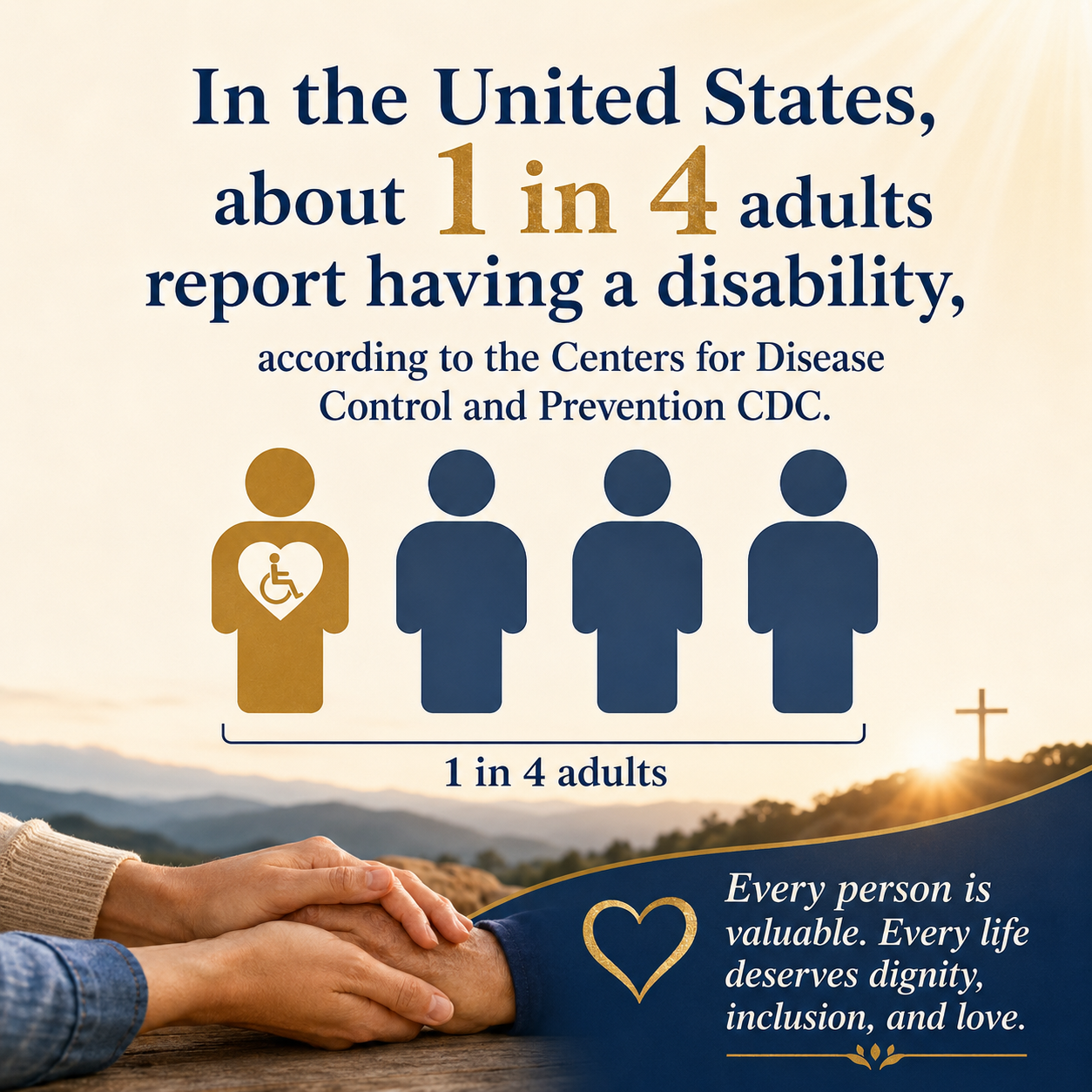
These realities are not rare edge cases. Disability is common, and mobility limitations increase with age. In the United States, about 1 in 4 adults report having a disability, according to the Centers for Disease Control and Prevention CDC. Churches that plan only for an assumed “typical” body are planning for a shrinking portion of their own congregations over time.
Accessibility is also governance and stewardship
Bathrooms reveal whether planning is people-centered
Many churches inherit buildings designed for a different era. Some are historic sanctuaries with real architectural constraints. Others are newer but were built with minimal consultation from disabled users. Christians genuinely disagree about how to weigh preservation, cost, and competing ministry priorities. Yet the presence or absence of accessible bathrooms is often less about inevitability and more about decision-making discipline.
In our verification work at Most Trusted, we observe that ministries that meet The Most Trusted Standard tend to treat hidden needs as real needs. They document risk, invite outside expertise, budget for maintenance, and communicate with clarity rather than relying on informal accommodations. A restroom plan may not be glamorous, but it is an indicator of whether an organization manages operational details with the seriousness donors should expect.
Compliance is not the same as welcome
Some churches approach bathroom access as a legal compliance question. That can be a start, but it is not the end. A technically compliant restroom can still be effectively unusable if it is far away, locked, filled with stored chairs, poorly lit, or reached by a route that requires stairs. Conversely, a church may not be able to renovate immediately but can still improve real access through disciplined interim measures and honest communication.
Donors should recognize the difference between “we have an accessible bathroom somewhere” and “a disabled person can use it independently, safely, and without drawing attention.” That difference is often the gap between token inclusion and genuine welcome.
How donors can assess bathroom accessibility without reducing it to construction
Ask questions that get to lived reality
Church accessibility is frequently discussed in terms of capital projects. Those can be necessary. Yet accessibility is also a culture of listening and follow-through. Donors can ask questions that surface whether a church or disability ministry is attentive to real barriers.
- Can a wheelchair user reach and use the restroom independently during normal building hours?
- Is the accessible restroom kept clear of storage and maintained to the same standard as other restrooms?
- Is there signage that is obvious, consistent, and readable, including to first-time visitors?
- Is the route to the restroom step-free, with doors that can be opened without excessive force?
- Has the church asked disabled congregants to evaluate usability, not just code compliance?
For donors who fund church-based accessibility initiatives, it is also reasonable to ask how improvements are prioritized. A ministry can spend generously on platforms and programs and still leave basic access unsolved. That is rarely a funding limitation alone. It is often a leadership choice about which people will be most comfortable.
Connect accessibility to transparency and effectiveness
We recommend that donors treat accessibility work the way they treat other forms of operational integrity: with evidence, clarity, and measurable outcomes. A church can describe an accessibility goal, a timeline, a budget, and the constraints it is navigating. It can also report what changed for congregants and visitors as a result. Vague assurances are easy; transparent accountability requires more.
Donors evaluating disability-related work may also benefit from broader context on Disability Ministries, where the questions extend beyond physical spaces to discipleship, belonging, leadership development, and family support. Built environment choices are never the whole story, but they often expose whether the whole story is being told truthfully.
Accessible bathrooms as a signal of belonging across the church
Families and caregivers notice what others miss
Many accessibility decisions are made by people who do not live with the consequences. Families who manage toileting assistance, transfers, or urgent medical needs will often scout restrooms before they enter the sanctuary. Caregivers may decide whether a person can attend based on how difficult it will be to navigate a restroom discreetly. When the bathroom is inaccessible, the entire service becomes a calculation of risk.
Those families often carry quiet grief. They may believe deeply in the church’s theology and still find themselves unable to participate. When donors help churches remove barriers, they are not funding comfort. They are making room for a family to remain under the ordinary means of grace.
Accessibility shapes whether leadership is reachable
A church that cannot accommodate basic physical needs will struggle to develop disabled leaders. Leadership requires time in the building, attendance at meetings, and the capacity to serve without undue burden. When the restroom becomes an obstacle, the path toward visible contribution narrows. The body loses gifts it needs.
This is one reason Church Accessibility and Disability Inclusion is not a peripheral concern for serious Christian philanthropy. It is bound to questions of ecclesiology and discipleship: who can belong, who can serve, and whether the church’s shared life reflects the mutual honor Paul describes when he insists that the “weaker” parts are treated with greater care.
FAQs for Why accessible bathrooms matter in church accessibility
Is an accessible bathroom mainly a legal requirement or a ministry priority?
It can be both, but the church should treat it first as a ministry priority. Legal compliance may set a floor, yet Christian hospitality calls the church beyond minimal thresholds toward practical love. The question is not merely whether a restroom meets a technical standard, but whether a disabled person can use it safely, privately, and without special permission.
What if our church building is old and renovations are expensive?
Constraints are real, especially in historic buildings, and donors should not assume quick fixes. Still, leadership can make meaningful progress through phased planning, honest communication, and interim changes such as clearing storage, improving signage, adjusting door hardware, and ensuring a truly step-free route where possible. What donors should look for is seriousness: a plan, a timeline, and accountable follow-through rather than indefinite delay.
A restroom can be a threshold to the church itself
Accessible bathrooms matter in church accessibility because they determine whether many people can remain present long enough to worship, learn, serve, and be known. They are not a special accommodation for a few; they are a concrete expression of whether the church expects disabled people to belong.
For donors, the opportunity is also clear. Funding and encouraging practical accessibility is a way to align the church’s built environment with its confession: that every member is needed, that honor is due, and that love takes forms as ordinary—and as consequential—as a door that opens and a room that can be used with dignity.



