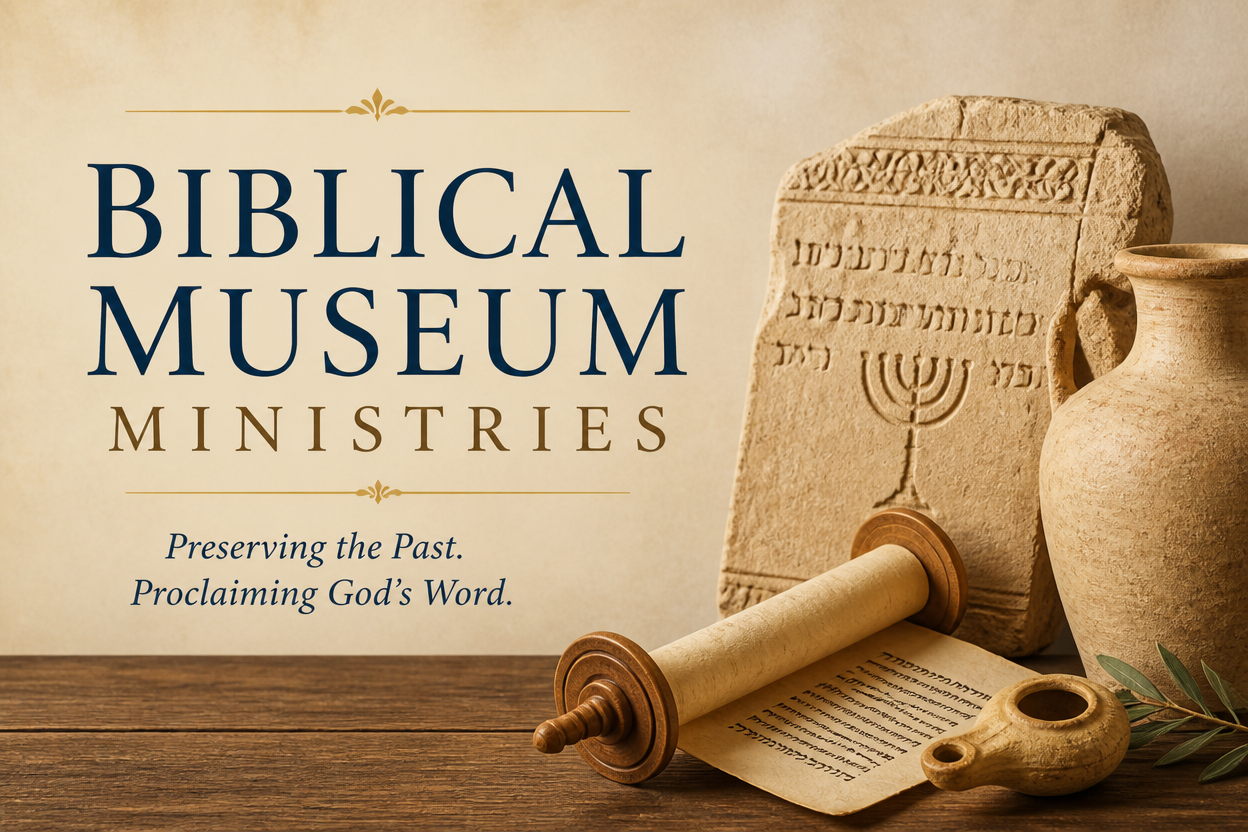
Biblical museum ministries sit at an unusual intersection of Christian discipleship, public history, and donor stewardship. For Christian donors, the question is rarely whether Scripture matters. The harder question is whether a museum is a faithful and effective way to strengthen biblical confidence, form Christian imagination, and serve a watching world without sliding into spectacle or culture-war signaling.
Done well, these ministries preserve artifacts, curate scholarship, and translate complex history into accessible public education. Done poorly, they can confuse apologetics with propaganda, substitute immersive experiences for careful teaching, and treat attendance as proof of spiritual fruit. The difference is not aesthetic. It is theological, ethical, and operational.
What this means in practice is that donors should evaluate biblical museum ministries with the same seriousness they would apply to missions, theological education, or Bible translation. At Most Trusted, our verification work focuses on whether a Christian nonprofit can demonstrate faithful doctrine and disciplined stewardship through verifiable evidence. The Most Trusted Standard assesses ministries across Faith Foundation, Financial Integrity, Governance and Leadership, and Transparency and Effectiveness, because donors are accountable to God for more than sincerity.
Why biblical museum ministries matter for Christian formation
Christian faith is rooted in God’s self-revelation in history. The incarnation is not an idea but an event: “the Word became flesh” (John 1:14). Scripture consistently ties worship to remembrance, testimony, and the public telling of God’s works (Psalm 78:4). A biblical museum ministry can serve that impulse by helping Christians see the Bible as a text embedded in real places, languages, empires, and communities.
Yet museums also carry risks for Christians. Objects can be treated as talismans, and experiences can displace the slow work of catechesis. The biblical pattern is clear: visible signs are gifts when they direct the heart toward covenant faithfulness, and snares when they become ends in themselves (Exodus 20:4–6; 2 Kings 18:4). Donors should look for ministries that can articulate this distinction with humility and consistency.
Public witness without confusion of categories
Many biblical museum ministries understand themselves as part of public witness. That is not intrinsically misguided. Paul reasoned in public spaces and engaged the intellectual framework of his day (Acts 17:16–34). But Christian institutions must resist the temptation to promise more than their work can actually deliver. Museums can clarify context, reduce misconceptions, and invite serious questions. They cannot produce regeneration, and they should not market themselves as if they do.
A mature ministry will describe its role as educational and invitational, not as a substitute for the church. It will also avoid implying that historical evidence can coerce faith. Scripture presents faith as response to God’s word and Spirit, not as the inevitable result of a sufficiently compelling exhibit (1 Corinthians 2:1–5).
Serving the church without competing with it
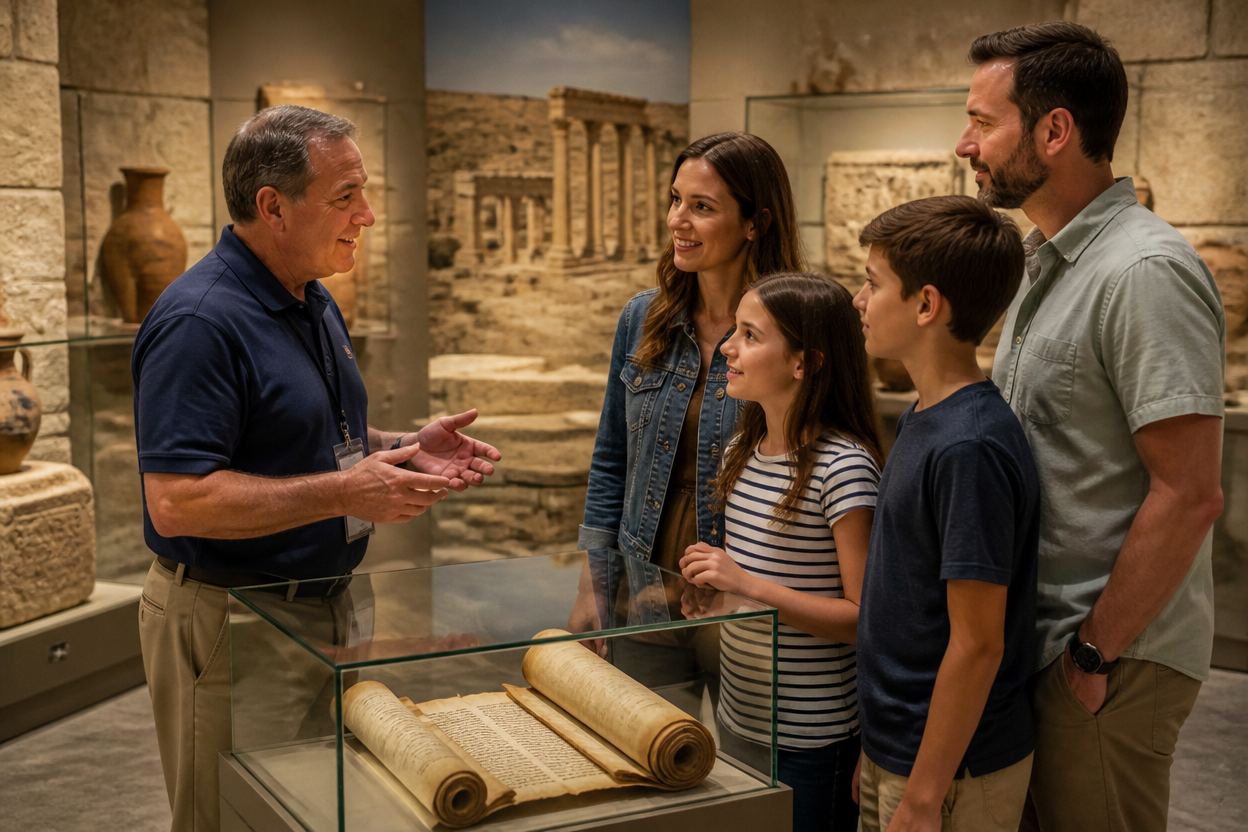
The healthiest biblical museum ministries tend to see local churches as their primary partners and accountability context. That shows up in tangible decisions: theological advisors who are not mere figureheads, programming that equips pastors and teachers, and clear boundaries around what the museum claims to do.
Donors should ask whether the ministry’s educational outputs serve ordinary Christian formation: clarity about genre and context, careful handling of Old and New Testament continuity, and the ability to distinguish between settled doctrine and scholarly debate. Sophisticated readers can tell when a museum is using certainty as a marketing tool.
The intellectual and ethical tensions donors should name directly
Biblical museum ministries operate in contested terrain. Christians genuinely disagree about the proper relationship between apologetics and evangelism, about how to frame Israel and the land in contemporary politics, and about which scholarly debates can be presented to the public without undermining confidence in Scripture. Donors should not punish ministries for acknowledging complexity. They should be wary of ministries that deny it exists.
Apologetics and the temptation of overclaiming
Archaeology and manuscript studies can strengthen confidence that the Bible is historically situated and textually well-attested. They can also be abused through inflated claims about “proving the Bible.” A faithful museum does not need to exaggerate. The Christian tradition has long affirmed that evidence can remove obstacles and clarify misunderstandings, while recognizing that the deepest question is moral and spiritual: whether people will submit to the Lordship of Christ (John 3:19–21).
The donor question is operational as much as theological: does the ministry have formal review processes to prevent overstatement? Are exhibit scripts and public claims vetted by qualified scholars? Are correction mechanisms visible when claims are challenged?
Politics, patronage, and credibility
Every museum has patrons, and every public institution is tempted to tailor its message to the expectations of its supporters. Biblical museums face an added pressure: they often sit adjacent to polarized political narratives about national identity, religious freedom, and the public place of Christianity. The risk is not merely controversy. The risk is a slow erosion of credibility as the institution becomes predictable rather than truthful.
Donors should not demand “neutrality,” which is rarely coherent. They should demand integrity: clarity about what is theological conviction, what is historical reconstruction, and what is prudential judgment. Museums that conflate these categories invite distrust, including from serious Christians.
Handling contested scholarship with candor
Manuscript dating, provenance questions, and interpretive frameworks are often debated among experts. A ministry that hides disagreement will eventually be corrected publicly, and the reputational cost will be borne not only by the institution but by the broader Christian witness. A ministry that foregrounds uncertainty without guidance can also destabilize ordinary believers. Wisdom lies in candor with pastoral care: explaining what is known, what is debated, and why certain conclusions are more responsible than others.
Donors should ask whether the ministry publishes its sources, uses credentialed reviewers, and distinguishes peer-reviewed scholarship from popular-level claims. The point is not academic prestige. The point is truthfulness.
What effective biblical museum ministries actually do
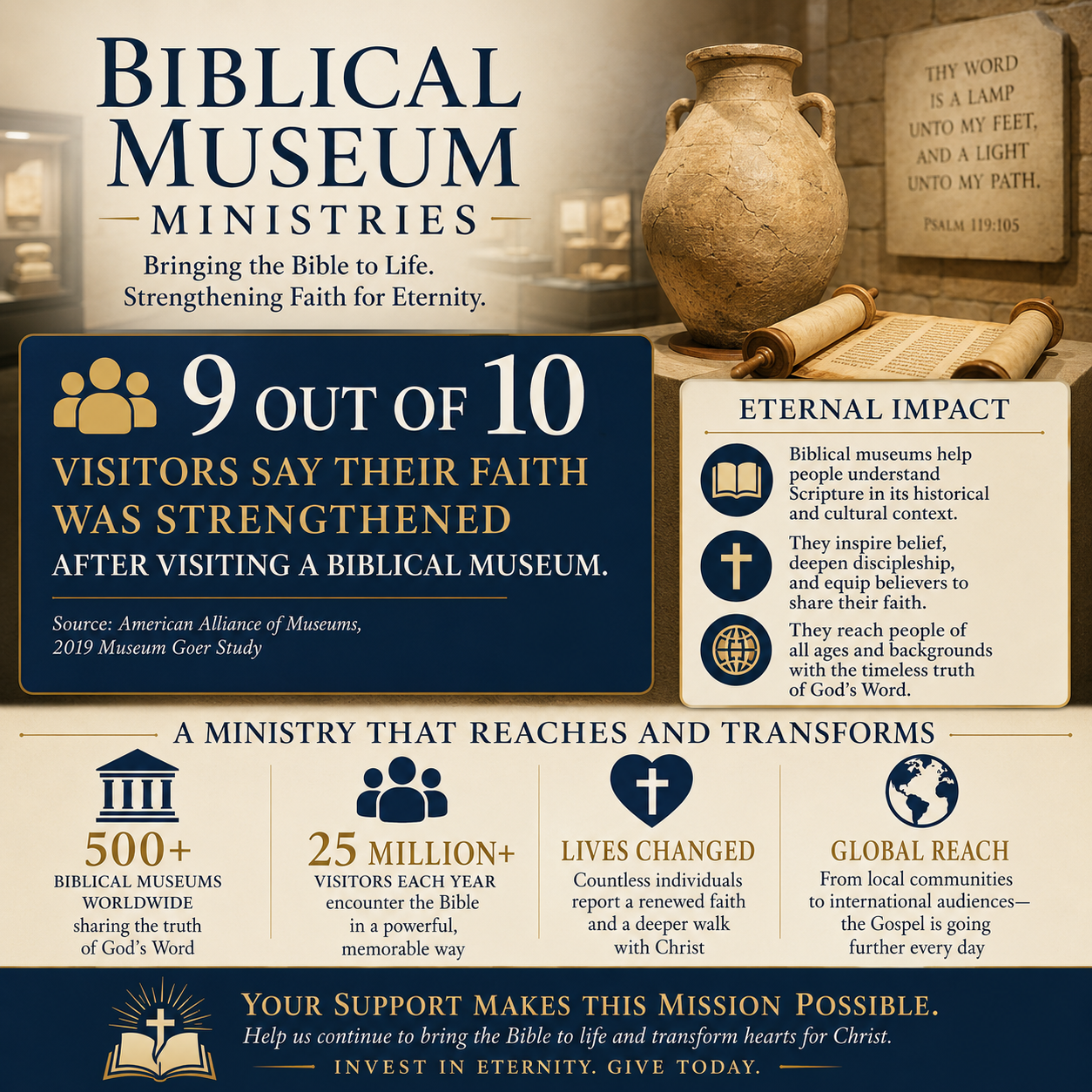
Outcomes in museum work are notoriously hard to measure. Attendance is a real metric, but it is not a theological one. Education can be assessed, but spiritual fruit requires caution. The most credible ministries define effectiveness in layered ways: reach and access, educational clarity, and long-term trustworthiness.
They practice disciplined public education
Educational effectiveness tends to correlate with specific, repeatable practices: docent training, curriculum alignment for schools and churches, and careful narrative design that does not manipulate emotion. Donors can ask for evidence of learning outcomes, not merely visitor satisfaction. A museum can test whether visitors retain basic historical context, understand literary genres, and can distinguish between “this is in Scripture” and “this is an interpretive proposal.”
Many donors support biblical museum ministries because they see biblical literacy weakening in broader society. That concern is not imaginary. The American Bible Society’s annual State of the Bible reporting has tracked notable shifts in Bible engagement and attitudes toward Scripture over time, offering a useful reference point for the broader environment in which these ministries operate (American Bible Society).
They steward collections and provenance responsibly
Collections work is not merely curatorial; it is moral. Museums must handle acquisition, documentation, and provenance with exceptional care. The antiquities trade has well-documented links to looting and illicit trafficking. A biblical museum ministry that cuts corners may unintentionally fund criminal networks and damage legitimate scholarship.
Donors should ask whether the ministry follows recognized professional standards for collections management and whether it has independent oversight on acquisitions. For sector context, the Association of Art Museum Directors has published guidance addressing the responsibilities museums bear regarding archaeological material and provenance (Association of Art Museum Directors).
They invest in scholarship without treating scholarship as marketing
Some museums use scholarship instrumentally: a conference here, a published volume there, mainly to signal seriousness. A stronger model treats scholarship as a service to the church and to public understanding. That can include peer-reviewed publications, transparent bibliographies, and partnerships with universities and seminaries.
Donors should still ask practical questions. Scholarship can become a prestige project with little public benefit. The key is alignment: does the research agenda support the ministry’s stated educational mission, and is it conducted with transparency about methods and sources?
How donors should evaluate these ministries for integrity and trust
Christian donors often give to biblical museum ministries because they care about truth and public witness. Those goals require more than compelling exhibits; they require disciplined governance, clean financial practices, and transparent reporting. Across our verification work at Most Trusted, we observe that ministries earning durable donor confidence tend to treat accountability as a spiritual discipline rather than a compliance burden.
Faith foundation that is specific and operational
Because museums engage scholarship, they face constant pressure to soften doctrinal commitments into vague spirituality. Donors should look for a statement of faith that is theologically substantial and clearly applied. Does the ministry articulate how it understands biblical authority, the person and work of Christ, and the relationship between faith and historical inquiry? Do leadership and content teams operate under that framework, or is it largely ceremonial?
In practice, operational doctrine shows up in governance documents, hiring standards for key roles, and review processes for public claims. A ministry can be intellectually serious without being doctrinally evasive.
Financial integrity suited to complex, capital-intensive work
Museums are expensive. Facilities, security, conservation, insurance, exhibit fabrication, and staffing create a cost structure unlike many program-driven ministries. Donors should expect clear financial statements, audited reporting when scale warrants it, and straightforward explanations of how restricted gifts are handled.
A common donor mistake is to evaluate museums using simplistic overhead assumptions. That does not mean donors should ignore efficiency; it means they should insist on clarity. The sector has broadly recognized that overhead ratios alone are a poor proxy for effectiveness and can incentivize unhealthy underinvestment in governance and infrastructure, a point articulated in the “overhead myth” letter led by GuideStar, BBB Wise Giving Alliance, and Charity Navigator (GuideStar).
Governance and leadership that can resist donor capture
Because major gifts can shape museum direction, governance strength is central. Donors should ask about board independence, conflict-of-interest practices, term limits, and whether the board includes members with relevant expertise: museum operations, financial oversight, theological training, and legal compliance. A board composed primarily of insiders or major funders is structurally vulnerable to pressure.
Leadership credibility also includes succession planning and the ministry’s capacity to hear critique without retaliation. Museums that cannot correct themselves will eventually be corrected publicly.
Transparency and effectiveness that match public claims
Public-facing ministries trade on trust. Donors should look for transparency that is proactive: annual reports that do more than celebrate, clear disclosure of related entities, and accessible explanations of what the ministry achieved and what it learned.
Effectiveness reporting should connect activities to outcomes without inflating spiritual claims. A credible museum can report on educational reach, partnerships with schools and churches, collection stewardship milestones, and independent evaluations of visitor learning. It should be cautious about attributing conversions or church growth to museum attendance, even if testimonies exist.
Practical giving strategies for Christian donors
Many donors approach biblical museum ministries with a mixture of gratitude and caution. Gratitude, because the work can strengthen biblical confidence and serve public understanding. Caution, because high-profile projects can become magnets for controversy and financial overextension. Wisdom expresses itself in disciplined questions and appropriately structured generosity.
Fund mission clarity rather than ambition
Capital projects, traveling exhibits, and new campuses can expand reach, but they can also distort priorities. Donors can help by funding the less visible work that sustains integrity: collections care, scholarly review, docent training, and the systems that protect financial accountability. These are rarely glamorous, and they are often decisive.
When asked to fund expansion, donors should request a credible plan for ongoing operating costs. Museums can be built with one-time gifts and then destabilized by long-term liabilities.
Ask for evidence that learning is happening
Educational ministries should be able to show how they know visitors are learning. That does not require sterile metrics, but it does require more than anecdotes. Donors can ask for curriculum evaluations, pre- and post-visit assessments for school groups, and documented improvements in interpretive clarity over time.
A museum that takes truth seriously will welcome this scrutiny because it treats education as a form of love of neighbor, not as entertainment.
Give in ways that strengthen accountability
Restricted gifts can protect donor intent, but they can also strain an organization if restrictions proliferate. A wise approach is to align restrictions with core mission and to support accountability infrastructure. Funding an external audit, underwriting governance training, or supporting a transparent collections management system can serve the entire ministry.
For donors who want added confidence, independent verification can clarify whether a ministry’s public claims align with its actual practices. Most Trusted exists to help donors give with confidence by evaluating Christian nonprofits against The Most Trusted Standard, with attention to faithfulness, integrity, and verifiable effectiveness.
FAQs for Biblical Museum Ministries
Are biblical museum ministries primarily evangelistic ministries or educational ministries?
Most are best understood as educational ministries that can support evangelism without replacing it. Museums can remove misunderstandings, present Christianity’s historical claims clearly, and invite thoughtful inquiry. Scripture presents faith as ultimately a work of God through his Word and Spirit, not as the inevitable outcome of exposure to artifacts or arguments (1 Corinthians 2:4–5). Donors should favor ministries that describe their purpose with this kind of theological restraint and clarity.
What governance issues are most common in high-profile museum projects?
The most consequential risks tend to be board capture by a small circle of insiders, weak conflict-of-interest practices, and inadequate oversight of complex related-party arrangements such as subsidiaries, property entities, or major vendors. Because museums require large capital outlays, donors should look for independent board members, transparent financial reporting, and evidence that leaders can accept correction without defensiveness.
How should donors think about controversial scholarly debates presented in museum exhibits?
Donors should not demand that museums avoid controversy; they should demand that museums handle it honestly. A responsible approach distinguishes between settled Christian doctrine, strong historical consensus, and live scholarly debate. It also provides visitors with enough context to understand why Christians may differ on secondary questions without implying that the core claims of the gospel are in question.
Giving that strengthens truth and trust
Biblical museum ministries can serve the church and the public by honoring the historical rootedness of the faith, strengthening biblical literacy, and modeling intellectual seriousness under Christ. They can also damage Christian witness when they overclaim, politicize their work, or treat accountability as optional. Donors are not responsible to fund every inspiring vision. We are responsible to steward resources in ways that honor God, love neighbor, and reward integrity.
The ministries most worthy of sustained support are those that pursue excellence without spectacle, scholarship without pride, and public engagement without manipulation. When donors apply careful evaluation—grounded in Scripture and expressed through disciplined accountability—they help biblical museum ministries become not merely impressive institutions, but trustworthy servants of the truth.