

When should donors visit a Bible translation ministry project? For many Christian donors, the honest answer is: only when the visit will strengthen long-term local capacity, reduce risk, and deepen accountability—not when it mainly satisfies understandable curiosity or produces compelling stories for supporters.
Bible translation is unusually vulnerable to well-intentioned disruption. The work often involves minority language communities, fragile trust with local leaders, and real security concerns for Christians and their neighbors. A donor visit can encourage a translation team and clarify how funds are used. It can also unintentionally distort priorities, create dependency, or expose people to danger. Mature stewardship requires naming those tensions rather than ignoring them.
Start with the theological purpose of presence
Presence is a means of love, not a right of giving
Scripture commends embodied love. Paul longed to see the churches he supported, not as a patron inspecting an investment, but as a shepherd strengthening what God was doing among them (for example, Romans 1:11–12). Donors can rightly desire that same kind of shared encouragement. The question is whether the conditions of a visit make that encouragement more likely than the harms a visit can cause.
In our verification work at Most Trusted, we see healthier ministry partnerships when donors treat visits as discernment and service, not entitlement. Financial support creates responsibility, not ownership. That posture matters because translation work is fundamentally local: the Word is rendered into a mother tongue by people who live with the consequences of every choice long after a visitor departs.
The harder question is whose formation is being prioritized
Donor travel can unintentionally shift a project toward donor formation at the expense of community stability. Christians genuinely disagree about how much donor exposure is necessary for faithful stewardship. Some argue that donors must “see it to trust it.” Others insist that discretion and local leadership should govern nearly everything. The wisest path usually holds both truths: donors need verifiable information, and local communities deserve nonintrusive partnership.
One practical implication is that many donors should prioritize verified reporting and third-party assessment over international travel. That is part of why Most Trusted evaluates ministries against The Most Trusted Standard, which tests not only financial integrity but also governance, transparency, and effectiveness in ways donors can meaningfully review without being physically present.
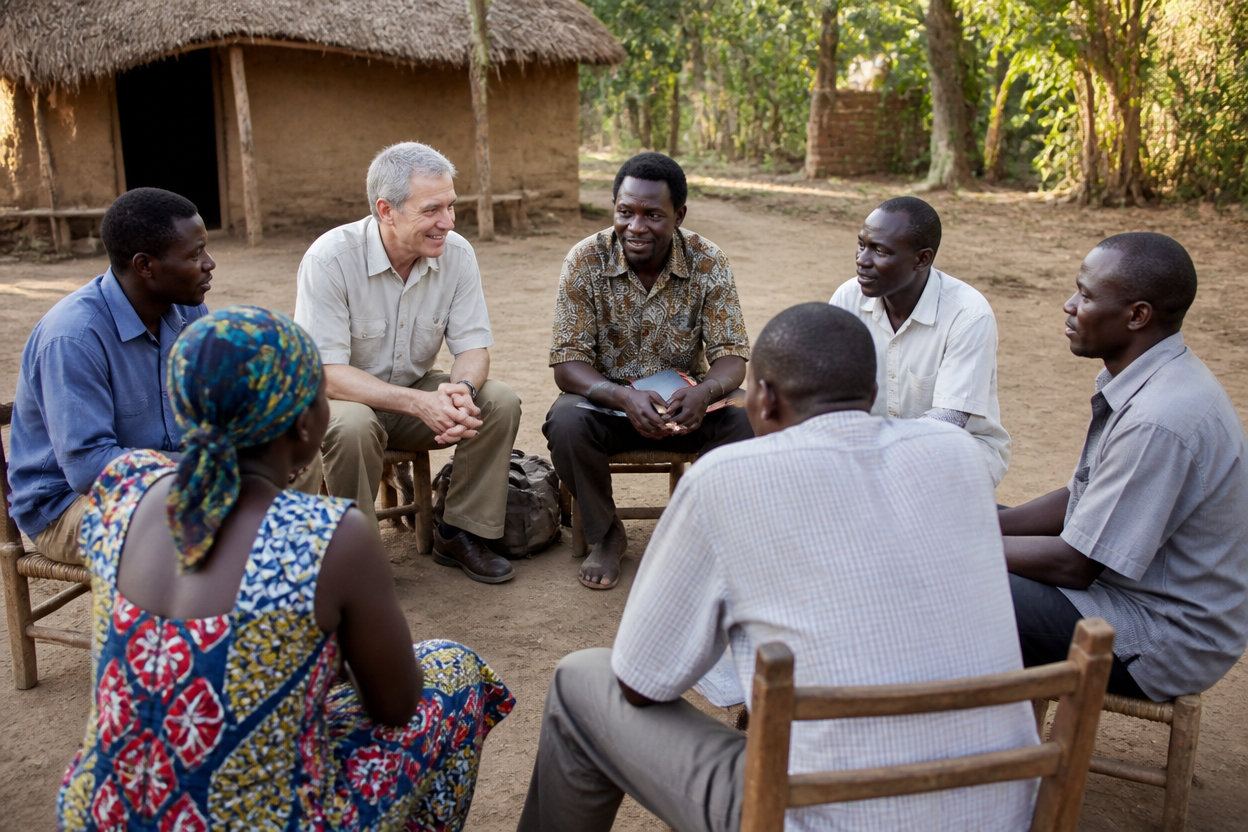
Visit only when it serves local leadership and project outcomes
Ask whether the visit reduces burden or adds it
A visit almost always costs the field team time. Planning logistics, translating meetings, hosting meals, arranging transportation, and managing expectations can consume days that would otherwise be spent on drafting, community testing, consultant checks, and training mother-tongue translators. In some contexts, even a well-meaning visit can signal to the community that the project’s “real stakeholders” live overseas.
We recommend approving travel only when the ministry can articulate, in advance, what the visit is for and how it benefits the local team. The best proposals are specific: a donor with translation or literacy expertise trains local staff; a board member performs governance oversight; a funder and local leaders negotiate multi-year sustainability; or a donor participates in a planned Scripture engagement event that the community requested.
Look for a credible theory of partnership, not tourism
Several field-tested development frameworks warn against outsider projects that displace local initiative. The When Helping Hurts framework, articulated by Steve Corbett and Brian Fikkert, has helped many Christian organizations name how “help” can erode dignity and agency when it is not carefully designed (whenhelpinghurts.org). Bible translation ministries are not identical to relief and development work, but the underlying risk is similar: outsiders can become the center of gravity.
A donor visit is far more likely to be appropriate when local leadership invited it, planned it, and can say “no” without financial consequences. That “no” must be real. If a ministry cannot demonstrate that local leaders have meaningful authority to refuse visits, donors should assume the partnership is already imbalanced.
Do not visit until governance and transparency are already strong
Travel should not substitute for evidence
Many donors assume that a visit is the strongest form of due diligence. It is not. A visit can be curated, selective, and emotionally persuasive without being financially or operationally revealing. Strong governance leaves an audit trail that is harder to manipulate: audited financials, board independence, conflict-of-interest policies, clear restricted-fund practices, and measurable progress reporting.
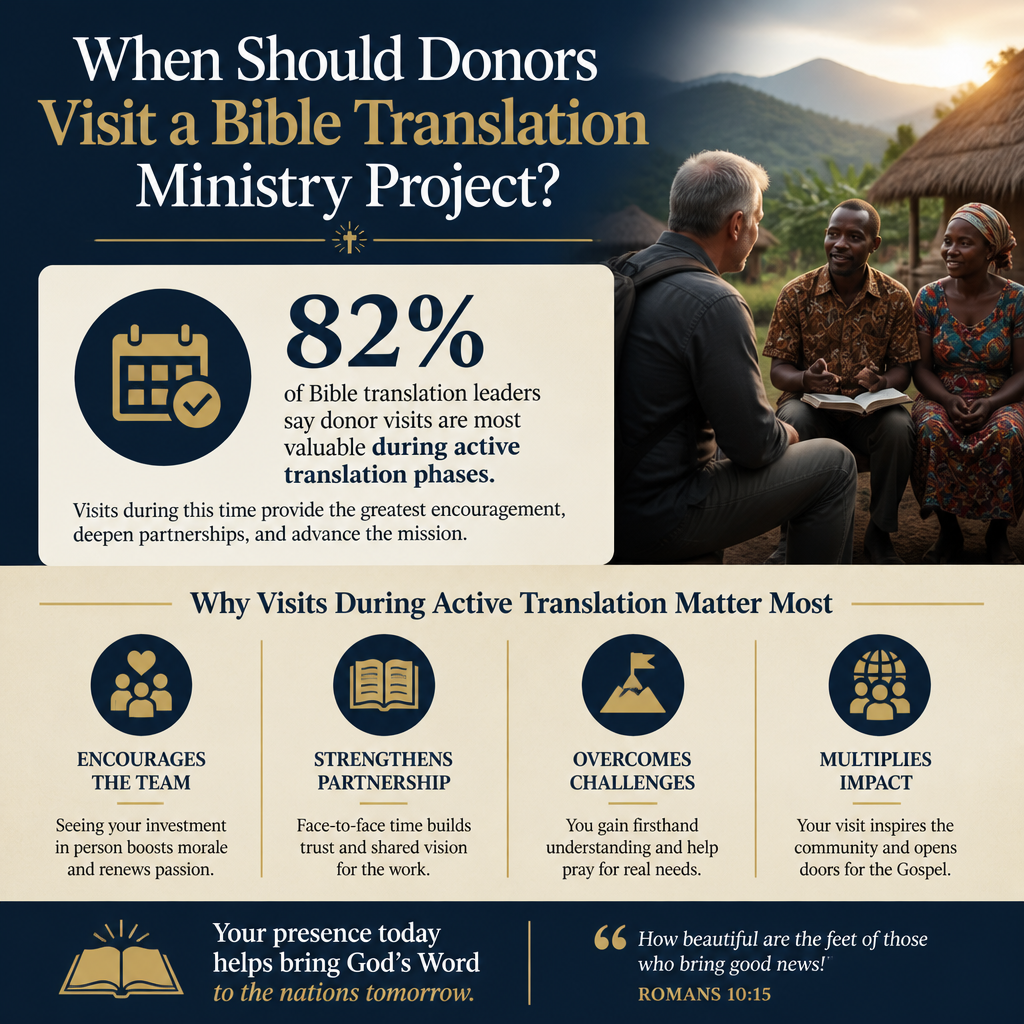
What this means in practice is that donors should request documentation before requesting passports. Ministries that are well governed can usually provide: a current annual report; audited financial statements or reviewed statements appropriate to their size; a clear explanation of how translation progress is measured; and a transparent process for handling allegations of misconduct. The ministries that meet The Most Trusted Standard tend to treat these requests as normal stewardship rather than as suspicion.
Prefer verification that evaluates outcomes and truthfulness
Bible translation work produces understandable enthusiasm, and ministries sometimes communicate progress in ways that are technically true but misleading to non-specialists. Terms like “Bible reached,” “translation completed,” or “Scripture available” can mean different things across organizations. Donors are right to ask what “completed” means: first draft, consultant check, community checking, typesetting, publication, audio production, distribution, and Scripture engagement are not interchangeable stages.
Independent verification is one way to reduce reliance on impressions. Most Trusted’s role is not to replace relationship, but to ensure that donors can give with confidence by testing concrete evidence against The Most Trusted Standard. When documentation is strong, a visit becomes optional rather than necessary—and that is often the safest posture for the people on the ground.
Consider security, dignity, and unintended consequences
Security conditions often make visits unwise
Many translation projects operate in places where a foreign visitor draws attention that local believers would never seek. Even in countries with official religious freedom, local dynamics can be volatile at the village level. Donors should not assume that an organization’s willingness to host visitors proves the visit is safe; sometimes ministries accommodate donor expectations to preserve funding.
Donors should ask for a candid risk assessment and the ministry’s travel and communications protocols: photo guidelines, location sharing limits, whether names can be used, and how information is stored. When a ministry says “we do not host visits to this project,” that can be a sign of maturity rather than secrecy.
Dignity requires more than consent forms
Translation communities are not backdrops for donor inspiration. Image-taking, testimonies, and even casual questions can pressure people to perform gratitude. The New Testament pattern for generosity is marked by discretion and honor, not spectacle (see Jesus’ warning against practicing righteousness “to be seen by others” in Matthew 6:1–4).
We recommend that donors treat photographs and social media as exceptional rather than default. If a visit is approved, the donor’s role should be to receive what local leaders choose to share, not to extract stories. The people closest to the work should control how their community is represented.
Practical timing guidance for donor visits
Stages of a project that are sometimes appropriate for visits
Some points in the translation lifecycle are naturally more stable for outside presence. Early exploratory stages can be sensitive, but they can also clarify whether a ministry is building local ownership through language committees and church networks. Mid-project community checking may be appropriate if local leaders want donors to see how Scripture is tested for clarity and naturalness. Publication celebrations are often meaningful, but donors should ensure the event is not inflated into performance.
We recommend treating timing as a stewardship decision, not a calendar preference. Before travel is considered, the donor and ministry should agree on boundaries, objectives, and what success looks like for the local team.
A short checklist donors can use before approving travel
- Local leaders invited the visit and can decline without funding pressure.
- The ministry provided strong documentation before proposing travel.
- Security guidance is written, specific, and restrictive where needed.
- The itinerary prioritizes staff workload and community dignity over donor access.
- The visit has a defined purpose that serves translation quality, local capacity, or governance accountability.
Donors who want broader context on how Bible translation ministries function—training models, translation workflows, and common reporting language—can review Bible Translation Ministries as a reference point for more informed questions.
Donors who are weighing how to partner without distorting the work often benefit from a wider lens on prayer, communication, and healthy expectations. We have gathered that perspective in Praying for and Partnering with Bible Translation Ministries, with attention to the distinct challenges translation teams face.
FAQs for When should donors visit a Bible translation ministry project
Should major donors always visit before making a large gift?
Not always. A visit can be wise when it is locally invited, security is stable, and the donor’s presence will strengthen accountability or local capacity. But travel is not a substitute for governance evidence. For many projects, the more faithful approach is to require strong financial reporting, independent oversight, and clear progress definitions, and to avoid visits that increase risk for local believers.
What if a ministry uses donor trips as a standard fundraising practice?
Some organizations run trips with care and restraint; others drift into practices that burden field teams or pressure communities to perform gratitude. Donors should ask how the ministry limits group size, protects identities, and prevents “story collection” dynamics. If a ministry cannot explain why trips are beneficial to local leadership and translation outcomes, or if it cannot show strong transparency without travel, donors should pause and seek independent verification before participating.
A faithful visit is rare, purposeful, and accountable
A donor visit to a Bible translation ministry project is most appropriate when it is requested by local leadership, governed by credible security and dignity safeguards, and grounded in evidence that the ministry is already transparent and well led. When those conditions are absent, mature stewardship usually means giving with verified confidence from a distance, praying with perseverance, and refusing to make access the price of generosity.



