
When biblical museum ministries need funding most is rarely when the exhibit hall is full and the annual gala is on schedule. The moments of greatest need often come earlier, in the unseen work of preservation, scholarship, and governance that makes public-facing ministry trustworthy. For Christian donors, the question is not merely what looks compelling in a promotional brochure, but what keeps a ministry faithful to its mandate: to steward the material record of Scripture and the church’s history with reverence, intellectual honesty, and public transparency.
Biblical museum ministries carry a particular burden of trust. They handle artifacts, manuscripts, and educational claims that touch the conscience of the church and the credibility of Christian witness in a skeptical age. They also operate in a complex ecosystem of acquisition markets, academic debate, tourism economics, and donor expectations. The need for funding is real; the need for funding that strengthens integrity is greater.
1. When preservation and collections care cannot be deferred
Conservation is slow, expensive, and spiritually consequential
Many museum costs are not glamorous and not optional. Temperature and humidity control, conservation-grade storage, pest management, digitization workflows, and professional conservation treatment are the invisible infrastructure of stewardship. A museum can postpone marketing for a season; it cannot postpone mold control without risking irreversible loss. Donors who love Scripture should recognize this as a form of keeping faith with what has been entrusted, a practical corollary to the command that “it is required of stewards that they be found faithful” (1 Corinthians 4:2).
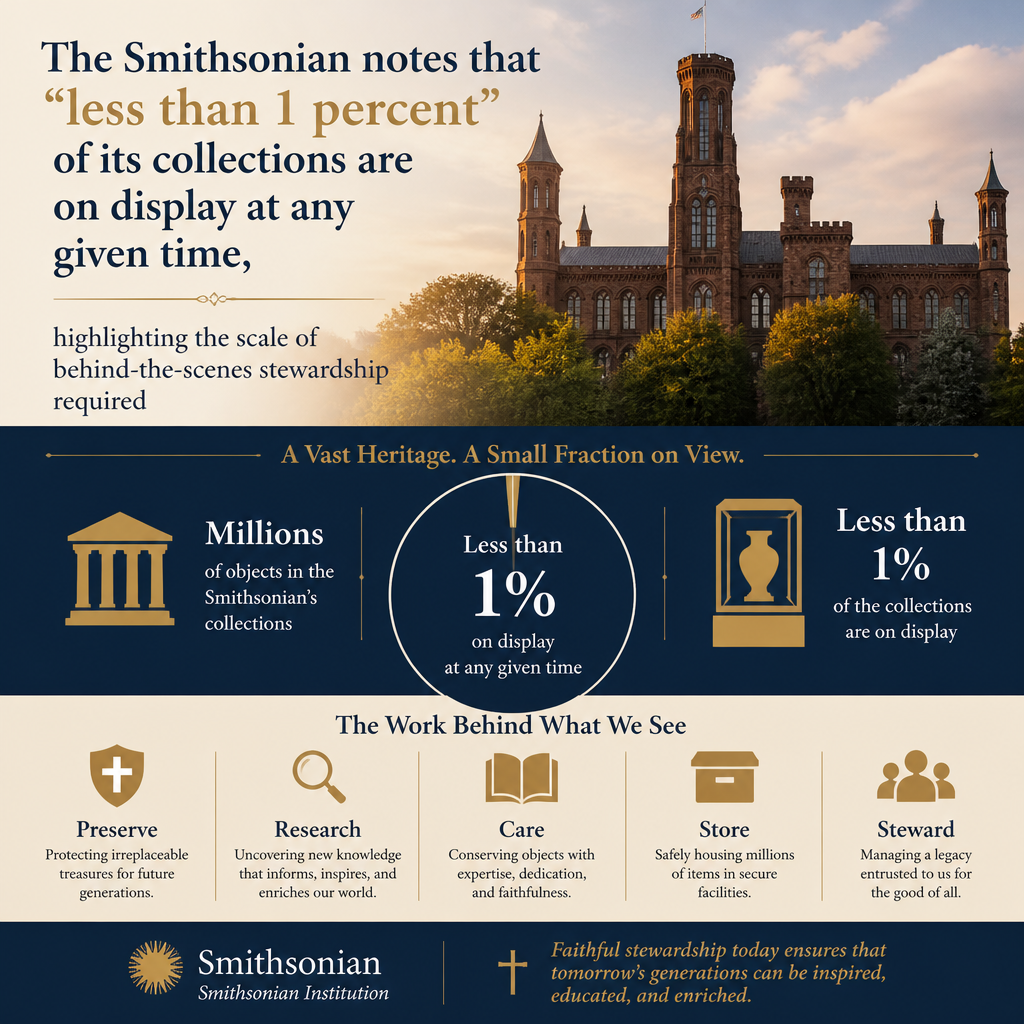
Funding becomes urgent when a ministry is facing a collections care backlog: artifacts unprocessed, condition reports incomplete, storage systems at capacity, or digitization queues growing faster than staff can manage. In many institutions, a significant portion of collections are not on display at any given time; the work continues out of public view. Large museums often display only a small fraction of their holdings at once, which is a normal feature of museum practice rather than a sign of neglect. The Smithsonian notes that “less than 1 percent” of its collections are on display at any given time, highlighting the scale of behind-the-scenes stewardship required Smithsonian Institution.
When acquisition outruns care, risk follows
A recurrent temptation in museum ministry is to prioritize acquisition and exhibit expansion over the slower disciplines of documentation and care. Donors sometimes unintentionally reinforce that pattern by funding headline items while leaving core infrastructure under-resourced. The harder question is whether a ministry’s growth is matched by policies that protect the long-term integrity of the collection: accession standards, provenance review, conservation planning, and appropriate restrictions on handling and travel.
Across our verification work at Most Trusted, the ministries that meet The Most Trusted Standard tend to treat collections care as a governance issue, not only a curatorial one. Boards that ask for clear collections metrics and risk reporting are often the boards that prevent a crisis later.
2. When provenance and legal compliance demand costly diligence
Provenance is not bureaucratic friction
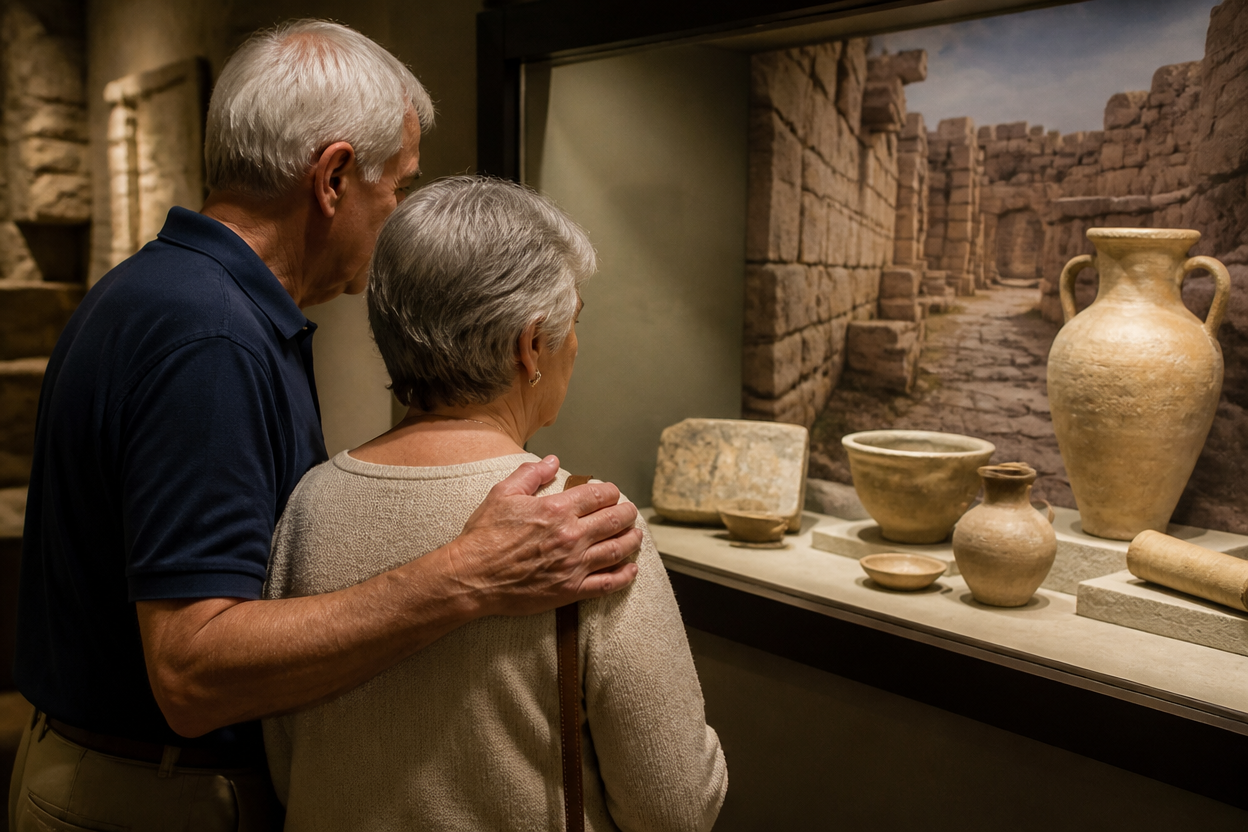
Provenance research is one of the clearest places where theology meets ethics. A museum that bears the name “biblical” should be especially alert to the moral hazards of trafficking, looting, and the exploitation of instability in the Middle East and elsewhere. The Christian duty to seek what is just does not stop at the museum door. Funding is most needed when a ministry is investing in documented, independent provenance review; legal counsel; and the long work of catalog corrections, repatriation processes where required, and public disclosure of what is known and unknown.
The illicit antiquities trade is not speculative. The U.S. Department of State has warned that looting and trafficking of cultural property has financed criminal networks and, at times, armed groups, and it has encouraged countries and institutions to strengthen protections and due diligence U.S. Department of State. A biblical museum ministry that cannot fund rigorous provenance work will eventually pay for it in a different currency: reputational damage, legal exposure, and an erosion of Christian credibility.
When a ministry chooses restraint, it may need donor support to sustain it
Some of the most responsible decisions in this field are decisions not to acquire, not to purchase, or not to exhibit an object whose chain of custody cannot be established responsibly. That restraint can be costly: a museum may forego a major attendance draw, or it may return an item that donors expected to see displayed. In those seasons, donors who understand stewardship can underwrite the discipline of restraint, helping a ministry choose integrity over novelty.
For readers who want a broader view of this ministry area, our coverage of Biblical Museum Ministries frames the distinct stewardship and trust questions donors face when giving in this category.
3. When exhibits and education must be rebuilt for credibility and clarity
Public claims require scholarly accountability
Biblical museum ministries often function as teaching institutions. They shape how families, pastors, students, and skeptical visitors understand Scripture’s historical setting and the church’s story. That influence carries a responsibility to handle contested questions with care. Christians genuinely disagree about how to present certain issues—textual criticism, dating questions, archaeological debates, and the relationship between faith commitments and academic method. Still, donors should expect a museum to be candid about what is known, what is debated, and what is speculative.
Funding becomes urgent when a museum needs to revise exhibits, labels, and curriculum to correct overstatement, update scholarship, or improve interpretive balance. This is not capitulation to academic fashion. It is intellectual honesty and a refusal to bear false witness. If an institution’s educational materials depend on claims that cannot withstand basic scrutiny, the ministry will eventually lose trust with discerning Christians and non-Christians alike.
When audience expectations shift, formation must stay central
Museums increasingly operate in a fragmented attention economy. Donors will often see pressure to add immersive experiences, interactive technology, and social media-friendly installations. Some of this can be helpful, particularly for families and younger visitors. But the ministry must keep formation—catechesis in the broad sense—at the center: careful reading, historical context, and a sober sense of what artifacts can and cannot prove.
A practical marker is whether a ministry’s educational work includes peer review, external scholarly consultation, and clear editorial governance. Those elements cost money and time. They also protect donors from funding a ministry whose most visible outputs are its least defensible.
4. When financial structure and staffing signal fragility
Cash flow stress often precedes public crisis
Museum ministries can look stable right up until they are not. Attendance revenue fluctuates with travel patterns and school calendars. Exhibition build-outs create large, lumpy expenses. Insurance and security costs can rise sharply. A ministry may also carry significant fixed costs: climate control, facility maintenance, and specialized staff. When cash flow tightens, the instinct is to cut the very functions that preserve trust—collections care, compliance, internal controls, and evaluation.
Responsible donors ask for clarity about runway, reserves, and debt. What this means in practice is that the season a museum needs funding most may be when leadership is intentionally strengthening financial resilience rather than expanding public programming. The National Endowment for the Arts has documented how cultural organizations experienced substantial disruptions during recent crises, including revenue declines tied to closures and reduced attendance, underscoring the vulnerability of many museum-like institutions to shocks National Endowment for the Arts.
Underfunding staff is not a virtue
Christian donors sometimes carry an unexamined suspicion of “administration.” The field has had to reckon with the Overhead Myth, articulated in the open letter signed by Charity Navigator, Candid (formerly GuideStar), and the BBB Wise Giving Alliance: focusing narrowly on overhead can drive underinvestment in the very capacities that make nonprofits effective and accountable Candid. Museums are a clear example. Underfunded registrar teams, compliance staff, and conservators create risk. Underfunded development teams create instability that forces short-term fundraising tactics. Underfunded education teams produce thin curriculum that cannot bear the weight of public scrutiny.
For donors, a useful discipline is to fund capacity with conditions that protect mission: written plans, defined deliverables, and board-level oversight. That is not mistrust; it is Christian prudence.
- Bridge funding tied to a documented plan for cash flow stabilization and reserve rebuilding
- Underwriting for conservation, cataloging, and digitization backlogs with measurable outputs
- Support for independent audits, internal controls strengthening, and governance training
- Funding for provenance research, legal review, and public documentation improvements
- Multi-year commitments for scholarly review and exhibit revisions that cannot be rushed
5. When governance and transparency must be strengthened before growth
Boards must be more than patrons
Biblical museum ministries often attract generous benefactors and prominent supporters. That can be a gift. It can also obscure a weakness: boards that function primarily as patrons rather than fiduciaries. Funding is most needed when a ministry is investing in board formation, conflict-of-interest policies, whistleblower protections, document retention, and clear lines of accountability for leadership. These are not distractions from ministry. They are part of loving the truth and protecting the vulnerable, including staff members who bear the cost of weak governance.
Across our team’s verification work, we find that ministries aligned with The Most Trusted Standard typically publish clearer financial reporting, articulate their faith commitments with precision, and invite meaningful external scrutiny. Transparency is not performative. It is a way of honoring donors and guarding the mission from preventable scandal.
Effectiveness for museums must be defined carefully
Measuring impact in museum ministry is not as simple as counting professions of faith or distributing aid. Attendance numbers matter, but they are not synonymous with discipleship or intellectual formation. Donors should ask what a museum is actually trying to accomplish: biblical literacy, confidence in Scripture’s historical rootedness, engagement with the church’s story, or public credibility in a skeptical setting. Then donors should ask how the ministry evaluates those aims: visitor learning assessments, curriculum adoption data, qualitative feedback, and long-term partnerships with churches and schools.
For donors seeking practical categories of discernment in giving, our work on How to Give Wisely to Biblical Museum Ministries addresses the kinds of evidence and governance practices that tend to distinguish trustworthy institutions.
FAQs for When biblical museum ministries need funding most
Is it better to fund exhibits or behind-the-scenes work like conservation and cataloging?
Both can be faithful, but behind-the-scenes work is often the more urgent need because it protects the collection, reduces legal and reputational risk, and makes future exhibits credible. When donors fund a major exhibit without funding the systems that preserve and document the objects, they can unintentionally increase long-term fragility. We generally favor gifts that strengthen stewardship capacity alongside any public-facing expansion.
How can donors tell whether a biblical museum ministry is handling provenance responsibly?
Donors can ask for written acquisition and deaccession policies, documentation standards, and whether the ministry uses independent expertise for provenance research. A responsible ministry will be candid about uncertainty, will avoid overstated claims, and will demonstrate board-level oversight of compliance. Transparency about what is known and unknown is a stronger signal than confident marketing language.
A faithful season to fund what cannot be rushed
Biblical museum ministries most need funding when their work is least visible: conserving fragile materials, documenting ownership histories, strengthening governance, and revising educational claims to reflect what can be responsibly said. These are the slow disciplines of institutional faithfulness. Christian donors who underwrite them are not merely sustaining a museum. They are supporting a form of stewardship that honors truth, resists exploitation, and serves the church’s witness with integrity.



