
Why biblical museum ministries need unrestricted support is not a niche budgeting question. It is a question about whether the church will fund the full work of Christian witness: preserving and interpreting the material record of Scripture, forming believers, and speaking to a skeptical public with integrity.
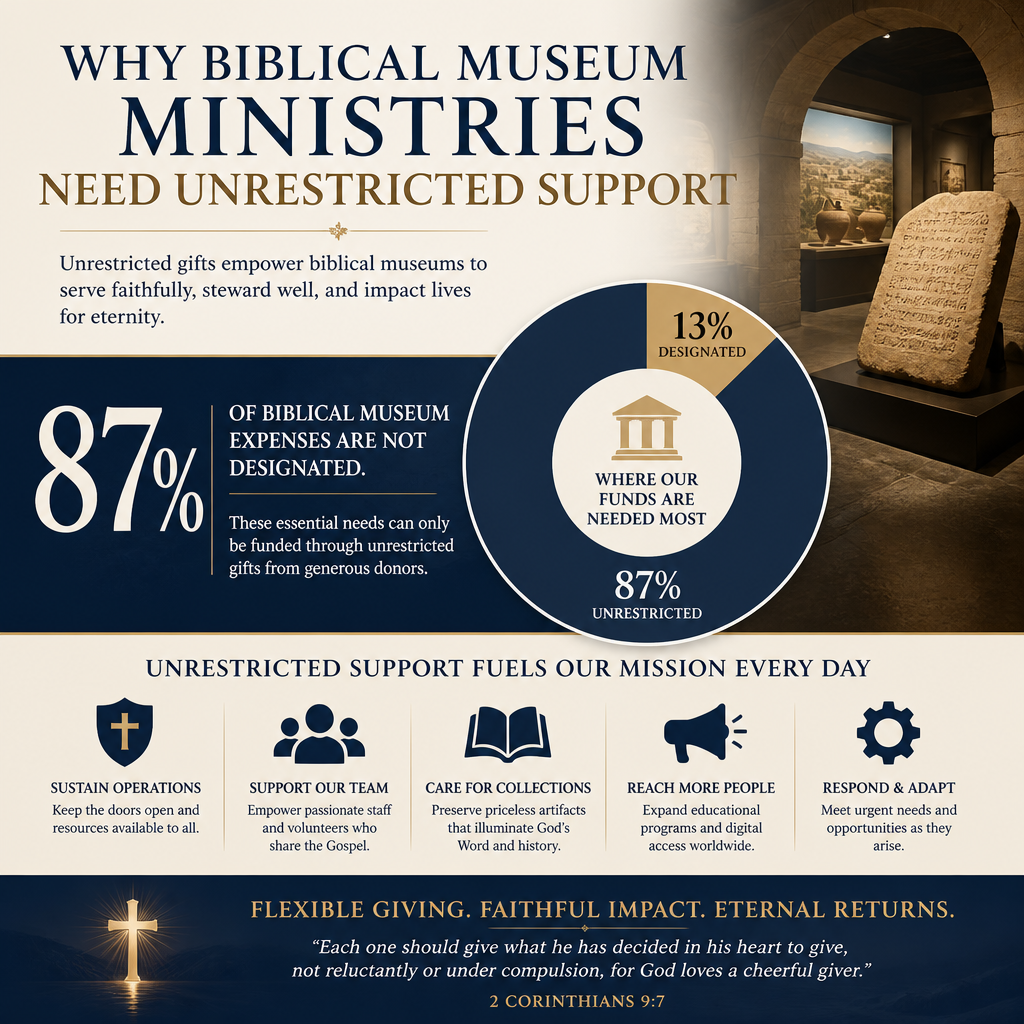
Donors often prefer to fund what can be named and photographed: an exhibit, a restoration project, a school tour, a new artifact acquisition. Those gifts matter. But museum ministries are complex institutions. They require stable leadership, disciplined collections care, careful scholarship, prudent security, and long-horizon educational programming. Restricted funding can underwrite moments; unrestricted support sustains the mission.
Unrestricted giving funds the mission between the exhibits
Museums are ministries of stewardship, not only display
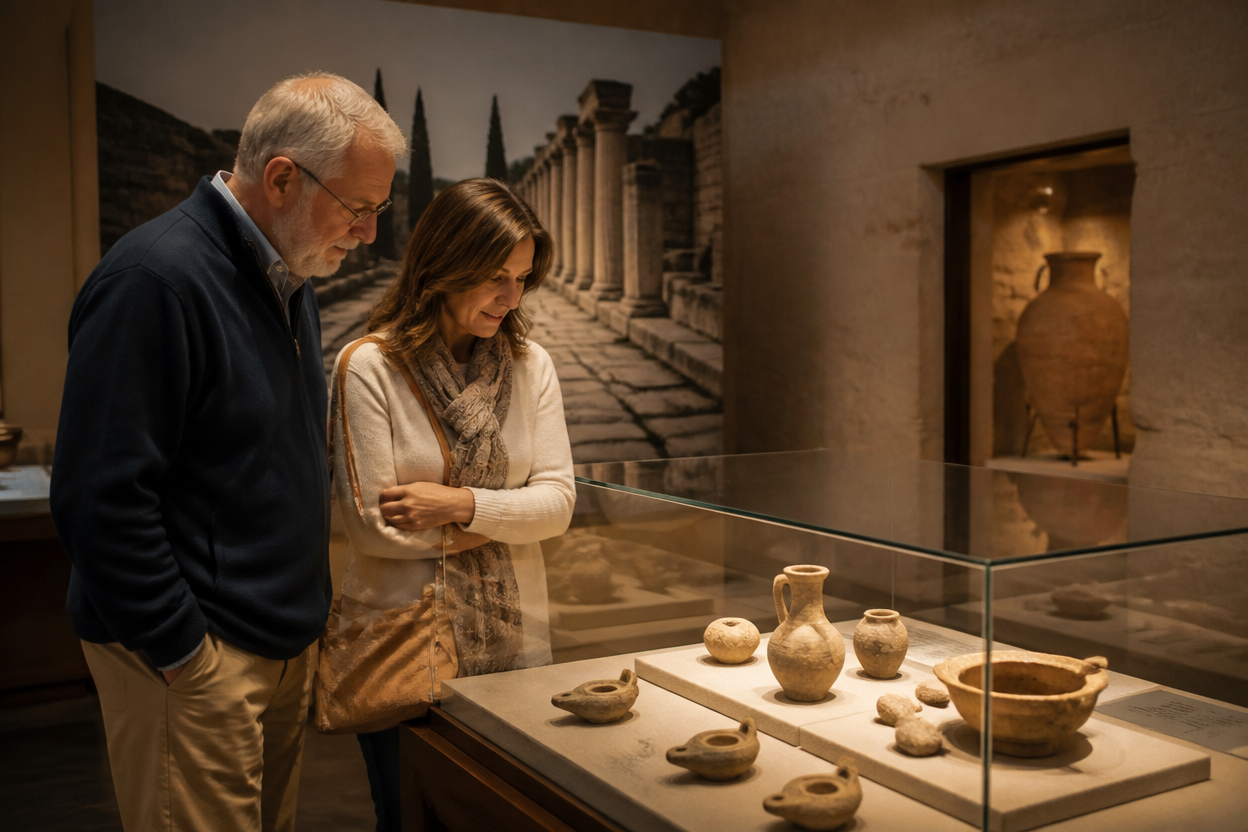
Biblical museum ministries are entrusted with fragile, irreplaceable objects and with the narratives that frame them. The stewardship is both physical and moral. Conservation labs, climate control, archival materials, digitization, provenance research, and security are not glamorous, but they are the basic acts of faithfulness that keep a museum from becoming a revolving door of temporary experiences.
In practice, these responsibilities seldom map neatly onto project-based funding. A donor can endow a gallery, but the museum still must pay trained staff, maintain HVAC systems, insure collections, and update protocols as standards change. Unrestricted support gives leaders the ability to fund what is necessary, not only what is easily packaged.
Long-horizon formation requires flexible funding
Many biblical museums understand themselves as educational ministries. That work includes age-appropriate teaching for children, serious programming for adults, and resources for pastors and teachers. Formation is rarely linear. A well-designed curriculum may require revisions after pilots with schools, translation for international audiences, or accessibility improvements for visitors with disabilities.
Restricted gifts can unintentionally force a museum into delivering a defined output rather than pursuing durable fruit. Unrestricted support allows the ministry to adjust without violating donor intent, and to respond quickly when a promising initiative requires modest additional staffing or materials.
Restricted funding can intensify financial fragility
The starvation cycle is a real pressure in cultural ministries
Nonprofit researchers have long described a pattern where organizations underinvest in core infrastructure because donors reward low administrative spending. In “The Nonprofit Starvation Cycle,” Ann Goggins Gregory and Don Howard argue that chronic underfunding of overhead can erode effectiveness and distort decision-making, especially when funders restrict support to programs while discouraging investment in capacity.Stanford Social Innovation Review
Museums are particularly vulnerable to this dynamic. A biblical museum can be tempted to postpone needed collections care, delay cybersecurity upgrades, or run staff thin because donors will fund a new exhibit more readily than a finance director or a registrar. The long-term costs are not theoretical. Deferred maintenance and thin controls eventually surface as preventable crises.
Healthy administration is part of ethical witness
Christians rightly resist waste. Yet Scripture also demands prudence and accountability. Jesus commends faithfulness in small things, not merely spiritual sincerity. Museum ministries that handle valuable objects, sensitive claims, and public trust should not be pressured into performing austerity as a virtue.
This is where many donors carry understandable tension: a desire to fund “ministry” rather than “overhead,” and a simultaneous desire for professionalism. Those are not competing goods. Competent administration is one of the means by which a museum protects its witness and honors the resources entrusted to it.
Unrestricted support strengthens credibility in a contested public square
Evidence, provenance, and claims must be handled with rigor
Biblical museum ministries operate in a space where public skepticism is high and where errors are amplified. Provenance questions, authenticity debates, and interpretive claims require careful research and conservative communication. The goal is not to win arguments with flair, but to speak truthfully and to avoid putting the faith on the line with fragile claims.
That kind of rigor depends on staffing and systems: qualified curators and collections staff, peer consultation, legal review when needed, and policies that govern acquisitions and loans. These capacities are difficult to fund through restricted, project-specific gifts because they function across the whole institution.
Crisis response requires flexibility
Cultural institutions face events that cannot be scheduled: a security incident, a sudden building repair, an emerging scholarly controversy, or a change in regulatory expectations. When most funding is restricted, leaders may be forced to delay response or to reshuffle costs in ways that reduce clarity.
Unrestricted reserves and flexible operating support are not signs of mission drift. They are the means by which a museum can respond quickly and transparently, protecting visitors, staff, collections, and public trust.
What donors should look for before giving unrestricted
Unrestricted gifts require trust, and trust should be earned
Not every organization is prepared to steward flexible funding well. Mature donors understand this, and we agree with the instinct. The question is not whether unrestricted giving is wise in general, but whether unrestricted giving is wise to a specific ministry with verifiable governance, financial controls, and a track record of candor.
Across our verification work at Most Trusted, the ministries that meet The Most Trusted Standard tend to share certain patterns: clear theological commitments that shape practice, independent oversight that can challenge leadership when needed, disciplined financial reporting, and transparency that does not disappear when news is inconvenient.
Practical indicators of readiness
When assessing whether a biblical museum ministry is a good candidate for unrestricted support, donors can reasonably expect clarity in several areas:
- Audited financial statements or a credible external review appropriate to size and complexity
- A governing board with real independence, relevant expertise, and documented oversight
- Clear policies on collections care, acquisitions, and provenance
- Transparent reporting that connects spending to outcomes and learning
- Leadership continuity plans and documented internal controls
Donors looking for a wider view of how these ministries operate can reference Biblical Museum Ministries as a starting point for the landscape and the distinct challenges in this category.
How to structure unrestricted support with faithfulness and clarity
Unrestricted does not mean unaccountable
Some donors hesitate because unrestricted gifts can feel like writing a blank check. That concern can be met with mature giving practices that preserve flexibility while strengthening accountability. A ministry can receive general operating support and still provide reporting that is concrete, timely, and truthful.
Donors can also clarify intent without locking a ministry into brittle restrictions. A letter of intent can express priorities such as education, collections stewardship, or pastoral service to churches while leaving leaders room to allocate funds responsibly as needs evolve.
Better questions to ask than overhead ratio
Many Christian donors have been trained to treat low overhead as a primary indicator of faithfulness. The nonprofit field has repeatedly warned against this simplification. Charity Navigator, Candid, and the BBB Wise Giving Alliance jointly argued in their “Overhead Myth” statement that overhead ratios can mislead donors and incentivize underinvestment in the very infrastructure that enables results.Charity Navigator
More fruitful questions include: Does the museum have the staff necessary to care for collections responsibly? Are claims made to the public appropriately cautious and well-sourced? Does leadership tell the truth when projects cost more than expected or when attendance declines? Donors who want to go deeper on decision-making in this space can consult How to Give Wisely to Biblical Museum Ministries for categories of due diligence that fit the realities of museum operations.
FAQs for Why biblical museum ministries need unrestricted support
Is unrestricted giving less faithful than funding a specific exhibit or artifact?
Not if the ministry is trustworthy and the gift is made with discernment. Scripture commends designated gifts in certain contexts, but it also commends faithful stewardship of shared resources for the common good. In a museum setting, the work that preserves collections, trains staff, and ensures truthful interpretation is inseparable from what visitors see. Unrestricted support can be a direct investment in that faithfulness.
How can donors guard against mission drift when giving unrestricted?
Mission drift is best prevented through governance, theological clarity, and transparency, not through excessive restriction. Donors can review governing documents, public teaching, board independence, and financial reporting, and they can ask how leadership measures effectiveness and learns from failures. Unrestricted giving is most appropriate when a ministry demonstrates that it can receive flexible support without treating donor trust as an entitlement.
Funding the whole work
Biblical museum ministries stand at the intersection of faith, history, education, and public credibility. Their calling is not only to present compelling exhibitions, but to steward artifacts and claims with integrity across decades. Donors who provide unrestricted support, guided by careful verification and clear expectations, help these ministries remain stable, truthful, and fruitful when the work is costly and the public scrutiny is high.



