
How to give wisely to biblical museum ministries is ultimately a stewardship question: how to support institutions that preserve, interpret, and teach the world of the Bible without confusing cultural engagement with the gospel itself. Biblical museums can be serious instruments of Christian witness and education, but they also carry recognizable temptations—spectacle, overclaiming, and opaque fundraising—because they operate at the intersection of faith, scholarship, tourism, and philanthropy.
Christian donors are right to value this work. Scripture assumes that God’s people remember and teach. Israel set up stones of remembrance so that future generations would ask, “What do these stones mean?” (Joshua 4:6). Yet Scripture is equally clear that sacred objects are never self-authenticating, and religious institutions are never beyond accountability. Wise giving holds reverence and verification together.
Begin with the ministry’s theological aim and the museum’s actual purpose
Not every “biblical museum” is doing the same kind of ministry. Some primarily serve the church through discipleship resources; some primarily serve the public through education and cultural dialogue; some function like apologetics institutions; others are closer to heritage preservation and research. Donors give wisely when they name the purpose clearly and then ask whether the ministry’s choices match that purpose.
Distinguish proclamation, education, and preservation
A museum can proclaim Christ explicitly, and some do. A museum can also educate responsibly about the Bible’s historical context for an audience that will never attend a church. Both can be faithful, but they require different measures of effectiveness. If a ministry’s stated aim is evangelistic proclamation, donors should expect clarity about gospel content, pastoral accountability, and how the museum avoids reducing faith to an argument or an experience. If the aim is public education, donors should expect intellectual honesty, careful sourcing, and an institutional temperament that can handle scrutiny without defensiveness.
Preservation and conservation add another layer. Caring for manuscripts, artifacts, and archival materials is a real public good, but it is expensive and slow. The ministries that do it well usually speak with modesty about what objects can and cannot prove, and they invest in professional collections care rather than merely acquiring “headline” items.
Ask what kind of authority the museum claims
Christian donors should listen closely to the language a museum uses about evidence. Claims like “this artifact proves the Bible” can sound compelling, but they often flatten both archaeology and theology. Scripture does not rest on our ability to produce museum-grade verification for every event. The resurrection is rooted in apostolic testimony and the public claims of the early church, not in curated proof-text objects.
What this means in practice is that donors should reward ministries that practice careful epistemic humility: they can be confident about the Bible’s truth while being precise about what any artifact actually demonstrates. That posture protects the church from unnecessary crises when a claim is later revised.
Evaluate how the museum treats the church and the broader public
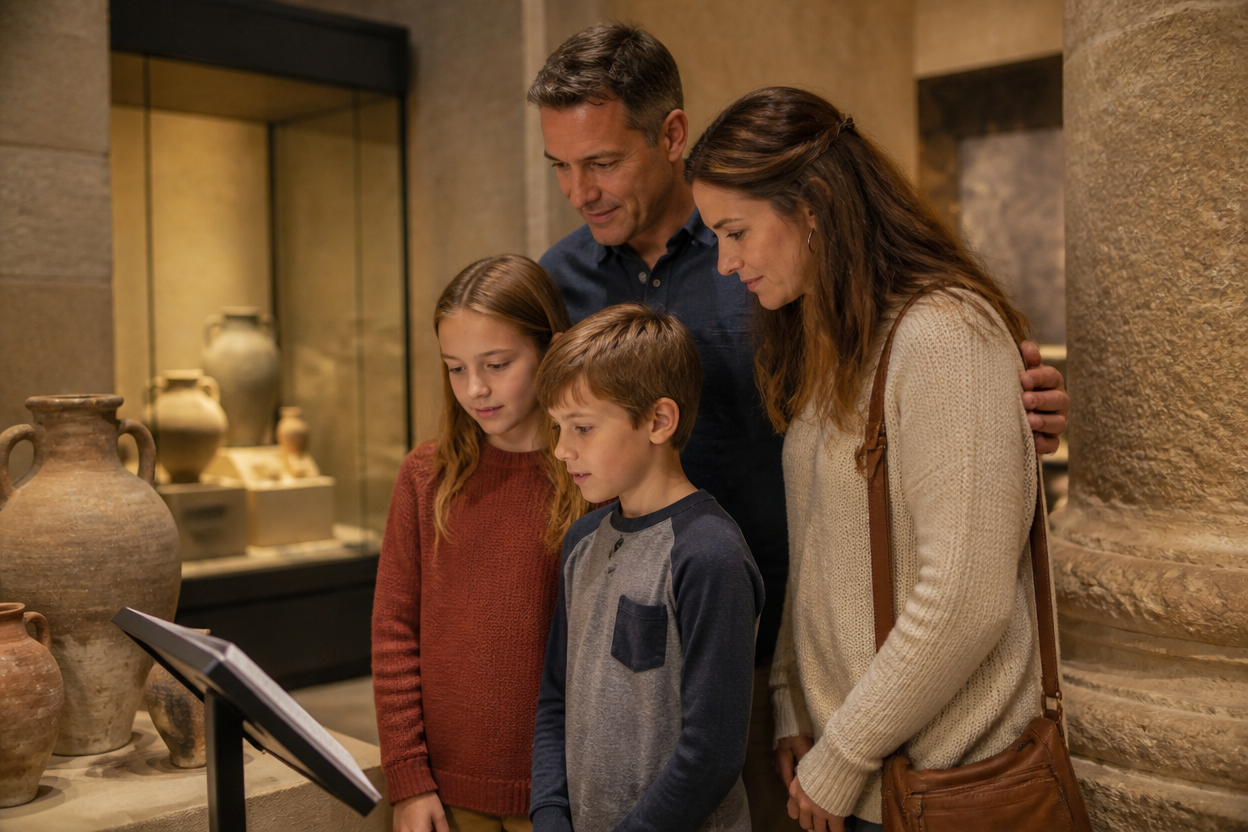
Biblical museums are often bilingual institutions. They speak to believers who love Scripture and to visitors who are curious, skeptical, or simply touring. Wise donors look for evidence that the ministry does not caricature either audience. When a museum treats non-Christians as enemies to be defeated, it tends to drift into propaganda. When it treats Christians as a market segment to be entertained, it tends to drift into commodification.
A mature ministry can welcome rigorous questions, acknowledge scholarly disagreements without panic, and still speak as Christians who believe the Bible is God’s Word.
Assess integrity in scholarship, collections, and public claims
Because biblical museum ministries deal with historical claims, the quality of their scholarship and the integrity of their collections matter directly to donor stewardship. Reputational damage in this sector is not abstract. When a museum overstates, mishandles provenance, or blurs lines between education and marketing, the credibility of Christian witness is affected.
Provenance and acquisition ethics are not optional
Any ministry that collects antiquities must address provenance—documented ownership history and legal export/import status. The field of archaeology has tightened expectations over the last several decades, and responsible institutions have adapted accordingly. Donors should ask whether the museum follows recognized professional standards, how it avoids acquiring looted or illicitly traded materials, and whether it can document how objects were obtained.
For donors, the practical question is straightforward: can the museum show that its collections practices honor both the law and the neighbor, including the nations and communities from which artifacts come? A ministry can hold a high view of Scripture and still violate justice through careless acquisition. Wise giving refuses that trade.
Peer engagement and correction mechanisms signal seriousness
Scholarship is not sanctified by being Christian, and skepticism is not automatically virtuous by being secular. In practice, the healthiest institutions are those that publish responsibly, invite review, and can say, without theatricality, “We were wrong, and we corrected the record.” Donors should look for advisory boards, external scholars consulted for exhibits, and public-facing documentation that distinguishes between consensus, plausible interpretation, and conjecture.
Christians genuinely disagree about some interpretive questions in biblical history and archaeology. A museum does not need to resolve those disagreements to serve the church, but it should not pretend they do not exist.
Communication should match evidentiary strength
Marketing pressures are real. Museums compete for attendance, memberships, and philanthropic attention. But the gospel does not require exaggeration. When a museum’s fundraising language consistently outpaces its evidence, donors should slow down. Responsible institutions tend to use careful verbs—“suggests,” “is consistent with,” “is debated,” “is contested”—not because they lack conviction, but because they respect truth.
For context, the broader nonprofit sector has had to correct common misconceptions about simplistic metrics. The widely cited “Overhead Myth” statement urged donors not to treat administrative and fundraising ratios as the primary indicator of effectiveness, because impact requires infrastructure and sound management. That public letter was jointly released by major nonprofit information organizations (Charity Navigator). The principle applies here: donors should read beyond surface-level headlines and ask whether the institution’s internal capacity matches its public claims.
Give with financial and governance clarity, not just enthusiasm
Biblical museum ministries often require substantial capital: buildings, climate control, conservation labs, exhibit fabrication, insurance, and security. The financial profile can resemble higher education or large cultural institutions more than a typical church ministry. Wise donors adjust their questions accordingly, especially around restricted gifts, debt, and long-term sustainability.
Tax-deductibility depends on the legal entity and the gift’s nature
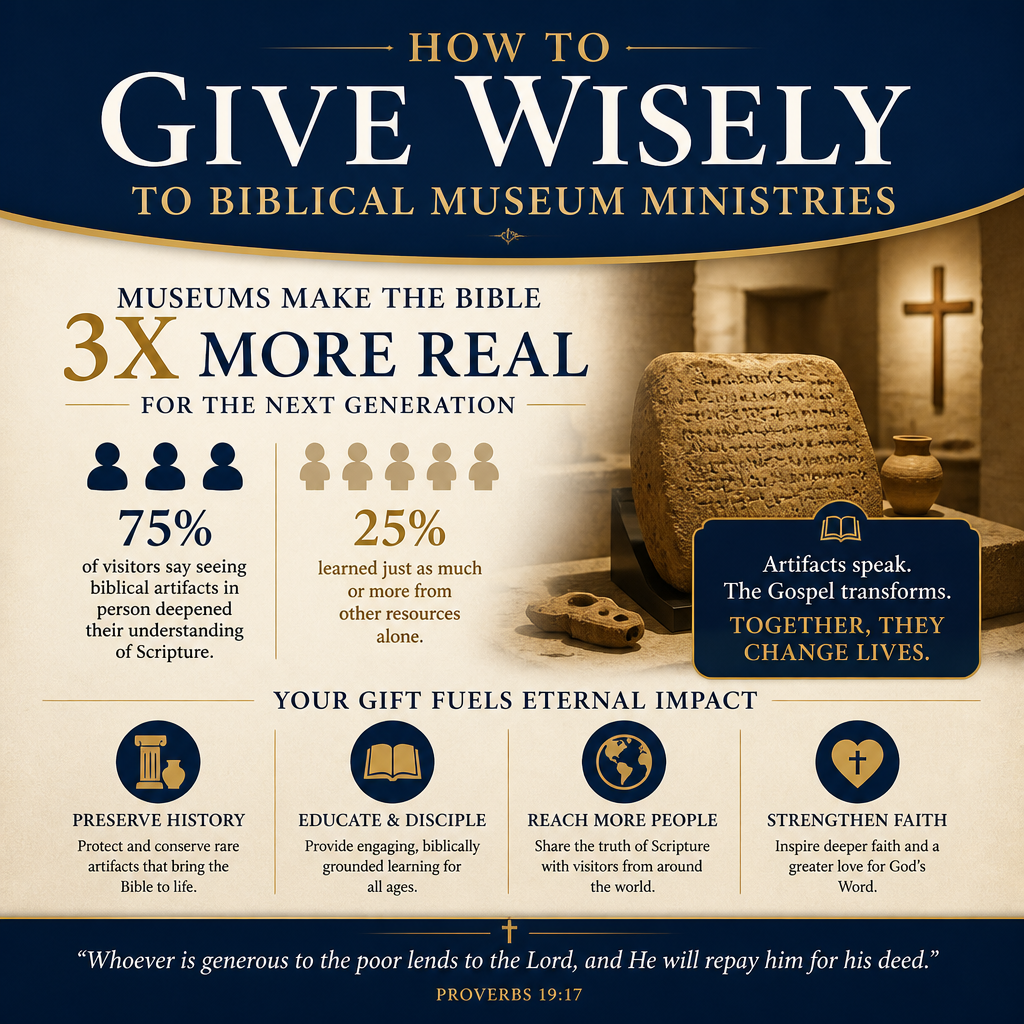
Many biblical museum ministries are organized as 501(c)(3) public charities in the United States, which generally means donations are tax-deductible for donors who itemize. But donors should confirm the organization’s current status and understand that some transactions are not charitable gifts (for example, purchases of tickets, retail items, or quid-pro-quo benefits beyond permitted limits). The safest practice is to verify the ministry’s legal status directly through the Internal Revenue Service’s Tax Exempt Organization Search (IRS) and to keep the contemporaneous written acknowledgment required for larger gifts.
Donors who give from donor-advised funds or complex assets should also confirm the receiving entity’s eligibility and the ministry’s ability to receive non-cash gifts responsibly.
Restricted gifts can help, but they can also create strain
In museum work, restricted gifts often fund visible projects: a new exhibit, a gallery wing, a signature artifact acquisition, or a traveling display. Those can be worthwhile. The harder truth is that a new exhibit also creates ongoing costs: staffing, maintenance, security, insurance, collections care, and periodic refresh. Donors give wisely when they ask not only, “Will this be built?” but also, “Will this be sustained without starving the core work?”
Across our verification work at Most Trusted, we see healthy ministries treat unrestricted support with unusual seriousness. They explain what it funds, how they budget it, and how they prevent it from becoming a blank check. In contrast, ministries that refuse to discuss operating needs often drift toward a cycle of perpetual capital projects without durable institutional health.
Governance should be visible, qualified, and accountable
Museums can be founder-driven, which can produce vision and speed. It can also produce fragility when accountability is weak. Donors should look for a functioning board with relevant expertise—finance, law, museum administration, theological oversight, and fundraising—and for clear separation between governance and management. Conflict-of-interest policies, board minutes discipline, and regular independent audits are not secular intrusions; they are instruments of neighbor-love and prudence.
Donors should also look for transparency around executive compensation and related-party transactions. These are common risk points in complex ministries, especially where for-profit vendors, real estate entities, or licensing arrangements intersect with the nonprofit.
Use a verification framework that respects both faith and evidence
Wise giving to biblical museum ministries requires more than intuition. Donors are often asked to respond quickly to a compelling project, a rare acquisition opportunity, or a time-sensitive building campaign. The discipline is to ask the questions that protect both the ministry and the donor’s stewardship.
What The Most Trusted Standard clarifies
Most Trusted exists because Christian donors deserve an evaluation process that does not treat faith commitments as an embarrassment or as a substitute for evidence. The Most Trusted Standard is our 15-criteria framework across four areas: Faith Foundation, Financial Integrity, Governance and Leadership, and Transparency and Effectiveness. For biblical museum ministries, that means we look for clarity of doctrinal commitments and mission, but also for verifiable financial reporting, accountable leadership, and honest communication about outcomes and limitations.
When a ministry meets The Most Trusted Standard, the pattern is not perfection. The pattern is documented seriousness: clear policies, stable oversight, truthful public claims, and a demonstrated willingness to correct problems rather than conceal them.
Questions mature donors should ask before giving
- Mission alignment: What is the ministry trying to accomplish—church education, public engagement, preservation, evangelism—and how do the exhibits and programs serve that end?
- Collections integrity: Does the institution have clear provenance policies and documented acquisition practices? How does it handle disputed items?
- Financial reality: What are the revenue streams—admissions, memberships, donors, grants—and how vulnerable are they to attendance swings?
- Governance: Who sits on the board, and what mechanisms ensure accountability, especially in founder-led settings?
- Transparency: Are audited financials, annual reports, and clear program descriptions available and current?
Donors considering monthly support should also ask how recurring gifts are allocated. Sustainable museum ministry often depends on predictable operating revenue, not only on episodic campaigns. If a ministry can articulate a disciplined operating plan, monthly giving is often one of the most stabilizing forms of support.
When funding needs are most urgent
Museums tend to experience acute needs in a few recurring moments: major exhibit transitions, collections care backlogs, facility maintenance cycles, and unexpected crises (such as water intrusion, mechanical failure, or security incidents). The ministries that handle these moments well generally have reserves policies, insurance discipline, and contingency planning. Donors should not assume that a beautiful facility implies financial resilience.
For donors who want a broader view of this ministry category, we maintain research and verification resources across Biblical Museum Ministries as part of our commitment to help Christians give with confidence.
Wise giving strengthens witness through truthfulness and endurance
Biblical museum ministries can serve the church and the world when they treat truth as sacred, not strategic. Wise donors support institutions that honor Scripture without turning artifacts into idols, that welcome scholarship without surrendering conviction, and that run their finances and governance as ministries of integrity. Christian stewardship is not merely generosity. It is love ordered by truth, so that what we fund can endure and bear clean witness.



