
When churches ask what programs biblical museum ministries offer churches, they are often asking a deeper question: can artifacts, texts, and curated space serve the church’s worship and discipleship without displacing the ordinary means of grace. Biblical museum ministries sit at a complex intersection of scholarship, education, evangelism, and pastoral care. At their best, they help a congregation love the Word of God with greater clarity, humility, and historical awareness.
Donors rightly care about more than attendance counts. A biblical museum can draw crowds and still fail to serve the church if it trades theological seriousness for spectacle, or if it handles contested historical claims without candor. The ministries we see sustaining long-term credibility tend to treat the church not as a market, but as a stewarded trust.
Church-facing programs tend to cluster around formation, not entertainment
Biblical museum ministries typically serve churches through programs that aim at formation: teaching the Scriptures more faithfully, strengthening confidence in the historic gospel, and helping believers read the Bible with greater cultural and linguistic care. The goal is not to replace preaching or catechesis, but to support them with tangible, well-interpreted materials.
Exhibit experiences designed for congregational learning
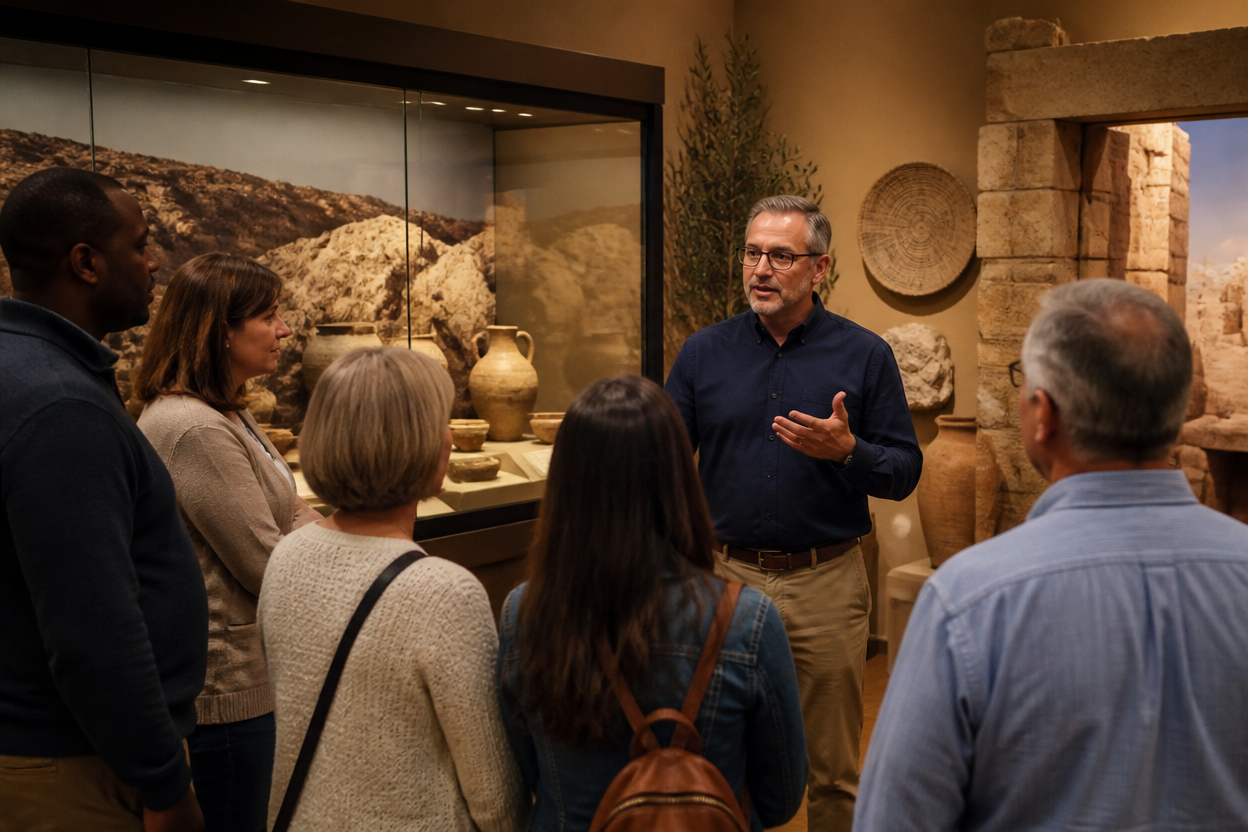
Many museums offer structured visits for congregations with guided tours, docent-led interpretation, and age-appropriate pathways for children, youth, and adult learners. The strongest models are explicit about interpretive limits: where a claim is widely accepted, where it is probable, and where it remains debated. Christians genuinely disagree about how much apologetic weight artifacts should bear, and mature ministries acknowledge that tension rather than inflaming it.
Teaching resources that extend beyond the museum visit
Churches often need more than a one-time trip. Ministries therefore provide downloadable lesson plans, sermon-series companions, small-group discussion prompts, and bibliographies that point to responsible scholarship. Programs are most helpful when they equip pastors and teachers to say, “Here is what we can responsibly claim,” instead of encouraging a congregation to rest faith on a fragile chain of inferences.
Educational partnerships support pastors, teachers, and Christian schools
One consistent feature of biblical museum ministries is their role as educational partners. Churches have limited bandwidth; pastors and volunteers carry much of the teaching load; Christian schools and homeschools need vetted content. Museums can serve as a credible bridge between the academy and the congregation when they interpret scholarship with reverence and restraint.
Pastor and leader enrichment
Common offerings include continuing education days, lecture series, and seminars that address biblical backgrounds, manuscript history, archaeology, and the transmission of Scripture. Here the difference between a helpful ministry and a harmful one often comes down to epistemic humility: presenting academic work as a servant of the church, not as a weapon in culture war or a substitute magisterium.
Curriculum support for Christian education
Museums frequently provide field-trip modules aligned to Christian school courses, homeschool guides, and youth catechesis. When done well, this strengthens a church’s long-term educational ecosystem rather than producing one-off “wow moments.” Donors should look for signs that the ministry understands child development, teacher constraints, and the difference between age-appropriate wonder and sensationalism.
For donors assessing how these programs fit within a broader landscape, it helps to view biblical museum work inside the wider category of How Biblical Museum Ministries Support Education and Discipleship. Some models are primarily educational; others blend education with large-scale tourism economics. The governance and incentives differ accordingly.
Apologetics and evangelism programs require careful theological framing
Biblical museum ministries often provide apologetics-oriented programming because many churches feel the pressure of secular plausibility structures. Congregations want their young people to know that Christian faith is not irrational. Museums can contribute real value here, especially when they focus on the reliability of texts, the coherence of the biblical storyline, and the historical rootedness of the early church.
Public lectures and evidence-based exhibits
Well-designed lectures and exhibits can introduce believers to the basic contours of manuscript evidence, ancient Near Eastern context, and the early Christian movement. However, donors should be alert to a recurring temptation: overstating what artifacts can prove. Christianity does not stand or fall on a single inscription or contested find. The resurrection is a public claim with historical reasoning, but it is not reducible to museum verification.
Church outreach events that invite neighbors without manipulating them
Many museums host outreach nights, community open houses, and church-sponsored invitations that reduce social friction for a skeptical neighbor. These can be honorable when the tone is hospitable and truthful. They become questionable when marketing language implies certainty beyond what the evidence warrants. Christian witness is strengthened by candor, not diminished by it.
- Docent training that equips volunteers to interpret artifacts without speculative claims
- Pre-visit teaching kits for pastors and youth leaders to frame the experience theologically
- Post-visit discipleship tools that connect learning to Scripture reading and prayer
- Community invitation events designed for respectful conversation rather than pressure
- Accessibility accommodations so churches can bring seniors and those with disabilities with dignity
Church services often include traveling exhibits and on-site support
Not every congregation can travel to a major museum campus. Many biblical museum ministries therefore develop mobile programming: traveling exhibitions, artifact replicas, pop-up learning labs, and speaker teams that visit churches. This is where a donor can see whether a ministry is committed to serving the breadth of the church or primarily those with the means to travel.
Traveling exhibits and replica collections
Because genuine artifacts require stringent security and conservation, churches commonly receive high-quality replicas paired with interpretive panels and teaching scripts. The best ministries are transparent about what is original and what is replicated, and about why those constraints exist. Trust grows when a ministry refuses to trade honesty for mystique.
Workshops and weekend intensives
Church-hosted weekends may include adult education sessions, youth apologetics workshops, and training for teachers. These intensives can be especially effective when they are anchored in Scripture and designed to strengthen the local church’s long-term teaching capacity, rather than creating dependence on outside experts.
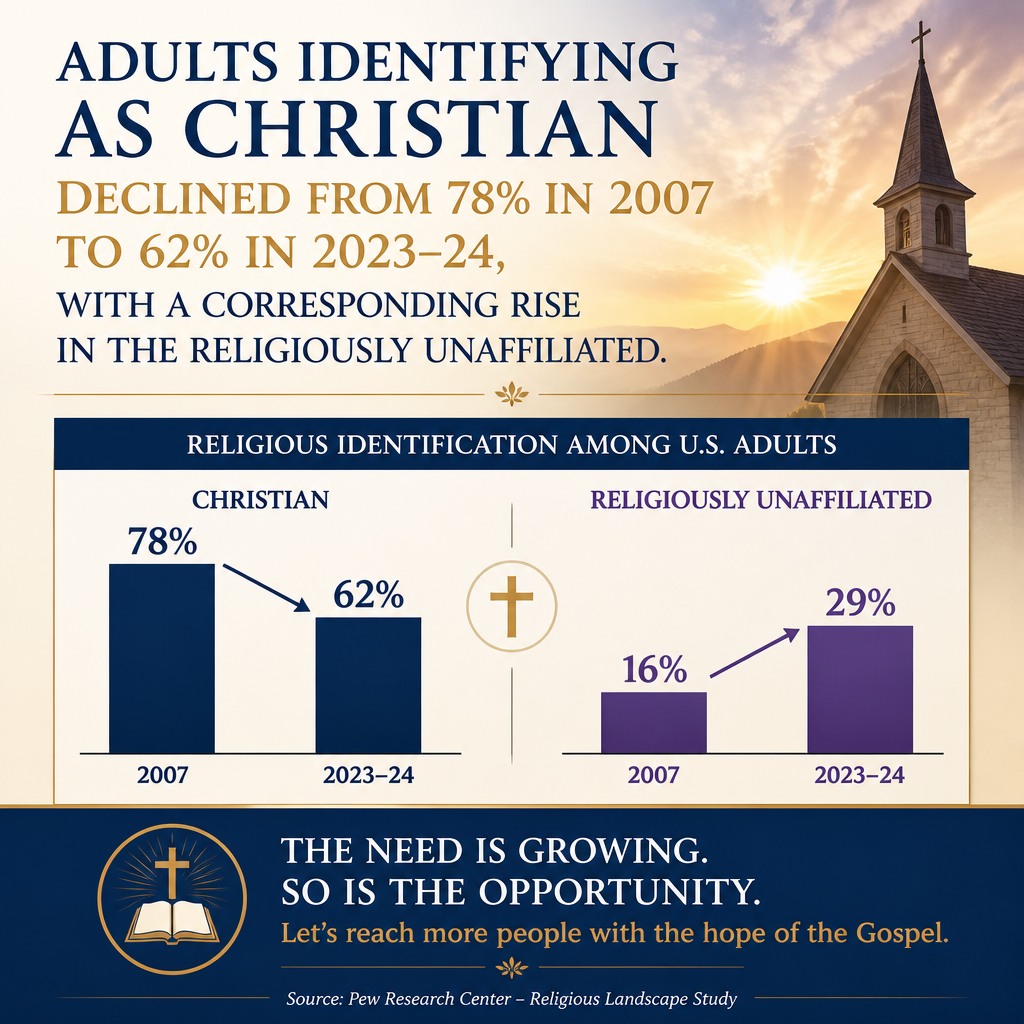
Across the sector, donors should remember a basic reality of religious participation: Americans’ attachment to institutional religion has weakened across decades, which increases the pressure on ministries to rely on events and tourism rather than congregational life. Pew Research documents that the share of U.S. adults identifying as Christian declined from 78% in 2007 to 62% in 2023–24, with a corresponding rise in the religiously unaffiliated.Pew Research Center Biblical museum ministries that remain church-centered in this environment often do so by deliberate governance choices, not by accident.
Donors should evaluate programs through credibility, stewardship, and spiritual aims
Program lists can be impressive and still conceal weaknesses that matter to Christian donors: theological drift, opaque finances, celebrity-driven leadership, or results that cannot be verified. Museums also face unique ethical risks, including provenance questions, acquisition practices, and the temptation to inflate claims for fundraising. Churches and donors should ask for the kind of transparency that withstands scrutiny.
Questions that reveal whether a ministry is worthy of trust
Several lines of inquiry consistently clarify whether a biblical museum ministry is prepared to serve churches responsibly.
First, does the ministry state its faith commitments plainly and show how those commitments govern interpretive decisions, not merely marketing language. Second, does it publish audited financials, clear governance structures, and conflict-of-interest policies. Third, does it treat contested historical issues with intellectual honesty, including provenance and scholarly disagreement. Fourth, does it measure outcomes that relate to formation, not only attendance.
How Most Trusted fits into a donor’s due diligence
Most Trusted exists because Christian generosity should be governed by both love and truth. We evaluate ministries against The Most Trusted Standard, a 15-criteria framework that examines faith commitments, financial integrity, governance and leadership, and transparency and effectiveness. In our verification work, the ministries that consistently meet rigorous expectations tend to welcome hard questions, publish clear documentation, and resist the temptation to treat credibility as a branding asset rather than a moral obligation.
Donors exploring this field in a broader way will benefit from the wider landscape of Biblical Museum Ministries, where program models vary significantly. Some organizations are primarily local and church-integrated; others operate at a national scale with different financial pressures. Discernment should be tailored accordingly.
FAQs for What programs biblical museum ministries offer churches
Do biblical museum ministries replace church teaching or function as a supplement?
At their best, they function as a supplement that strengthens church teaching. Museums can illuminate context, manuscript history, and the material world of Scripture, but they cannot replace preaching, sacraments, prayer, and pastoral care. A healthy ministry frames its programs as aids to the church’s ordinary discipleship rather than as an alternative authority.
What should donors ask about artifact claims and scholarly controversy?
Donors should ask whether the ministry distinguishes clearly between established evidence, plausible interpretation, and disputed claims. They should also ask about provenance policies, acquisition ethics, and whether the ministry has reputable scholarly oversight. Trustworthy ministries make their interpretive standards visible and treat candor as part of Christian witness.
A program menu is not the same as a faithful ministry
Biblical museum ministries can serve churches through tours, curricula, apologetics events, traveling exhibits, and leader training. The central question is whether these programs form believers in truth and humility, or whether they chase attention at the expense of credibility. Donors who give with discernment help sustain ministries that honor both the Scriptures they display and the churches they claim to serve.



