
When donors ask what biblical museum resources help small groups, they are rarely asking about novelty. They are asking whether a museum experience can serve the slow work of discipleship: forming biblical imagination, strengthening confidence in Scripture, and training Christians to read the Word with reverence and skill.
The best biblical museum ministries treat small groups as communities of formation, not as crowds to be entertained. Their resources are designed to help ordinary believers handle historical claims responsibly, resist sensationalism, and love God with heart, soul, and mind. That is a spiritual aim, but it is also an accountability question for donors who want their giving to produce durable fruit.
Small groups need formation more than information
A biblical museum can offer genuine service to the church when it helps a small group read Scripture in context and submit to its authority. Artifacts and reconstructions do not prove the gospel, but they can clarify the world in which God spoke and acted. The difference between formation and information often becomes visible in the resources a museum builds around its exhibits.
Resources that discipline the imagination
Many small groups carry questions they do not always name: Can the Bible be trusted as history? Are we reading it as the church has received it, or as modern people assume it should read? Museums can help by giving physical and visual anchors for terms that remain abstract in conversation: inscriptions, ancient writing materials, household economies, or the realities of exile and empire.
When a museum provides curated reading lists, exhibit bibliographies, and docent training rooted in mainstream scholarship, it is inviting small groups into intellectual humility. That humility is not a retreat from conviction; it is a refusal to treat faith as dependent on fragile claims.
Why donors should care about interpretive integrity
Christians genuinely disagree about how to weigh archaeology in apologetics. Some overstate it as if it could compel faith; others dismiss it as spiritually irrelevant. A responsible museum ministry holds a middle ground: material culture can illuminate Scripture, while Scripture remains God’s Word regardless of what is or is not unearthed in a given decade.
This is one reason we encourage donors to evaluate ministries with clear standards rather than impressions. Most Trusted exists to help donors give with confidence by assessing organizations against The Most Trusted Standard, including whether a ministry’s teaching posture reflects theological seriousness and intellectual honesty.
Curated exhibits become discipleship tools when they come with study materials
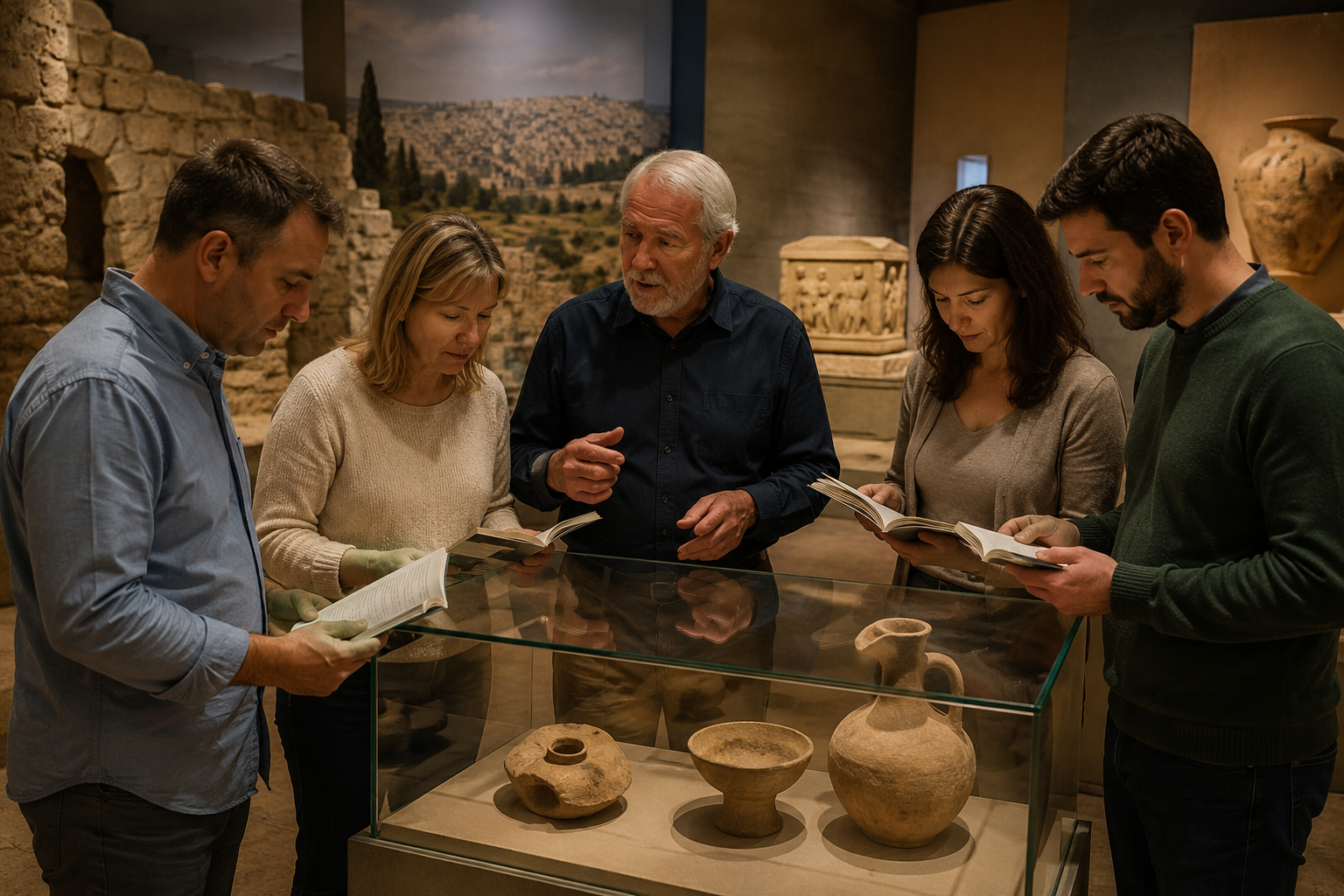
The museum floor is rarely enough for a small group. The most helpful biblical museum resources translate exhibit content into structured conversations that can happen in living rooms, church classrooms, and weekday evenings. This is where a museum can serve pastors and group leaders who are already carrying heavy formation responsibilities.
Leader guides that do not patronize the church
Effective leader guides do three things. They summarize key claims clearly, they state what is known and what is debated, and they connect the historical material to biblical texts without forcing applications the text will not bear. Mature donors should expect this level of care, because shallow interpretive materials can create shallow disciples.
A strong guide also respects denominational differences without flattening doctrine. It can say, for example, that Christians share the confession that Jesus is Lord, while acknowledging that churches may teach differently on the sacraments or church polity. That kind of clarity keeps a small group from mistaking museum education for ecclesial authority.
Small group discussion prompts that aim at Scripture
Discussion prompts should send people back to the biblical text rather than leaving them impressed with the exhibit. When the prompts are faithful, they press on observation and interpretation before application. They also make space for confession and worship, because the goal is not mastery of facts but growth in love for God and neighbor.
Groups that want a broader view of the landscape often begin with Biblical Museum Ministries, since many ministries in this field offer materials beyond what is visible on-site, including downloadable studies and church partnerships.
Digital resources matter because small groups are limited by time and geography
Many donors underestimate how constrained a small group’s attention can be. People are balancing work, family, and church commitments, and travel budgets are real. Digital museum resources are not secondary; they are often the primary way a small group receives a museum’s teaching.
Virtual tours and artifact libraries
Virtual tours can be effective when they are more than a marketing slideshow. The strongest ones provide guided narration, high-resolution views of objects, and the interpretive context that keeps artifacts from becoming curiosities. Searchable artifact libraries can also help group members pursue questions between meetings without turning the group into a lecture hall.
Donors should also look for restraint. Museums that present speculative identifications as certain may generate clicks, but they can erode trust in the long run. Small groups do not need sensational claims; they need reliable ones.
Short videos that respect attention without diluting content
Short-form teaching is now normal, but not all short videos are equal. The most useful resources for small groups are tightly scripted, theologically anchored, and transparent about evidence. They can introduce topics like manuscript transmission, ancient near eastern treaties, or first-century burial practices without promising more than the data allows.
For donors, this is a measurable place to ask questions about outcomes. A museum ministry that can show how its digital resources are used in churches, and how they are reviewed for accuracy, is signaling seriousness about stewardship.
On-site experiences serve small groups best when they are guided and pastorally aware
Small groups typically do not need a self-directed experience. They need a guided encounter that makes space for questions and acknowledges the pastoral realities people bring: doubts, prior bad teaching, grief, or fear of being embarrassed for not knowing.
Docent-led tours that teach without performing
Docents matter because they embody the museum’s interpretive posture. A well-trained docent can distinguish between what is broadly accepted, what is plausible, and what is debated. That distinction is essential for discipleship, because it teaches Christians how to handle truth claims with integrity.
The best tours also keep Scripture central. They do not treat the Bible as merely a historical artifact among others, but as the church’s living canon. That does not require anti-intellectualism; it requires theological clarity about what kind of book the Bible is.
Workshops that equip small group leaders
Some museum ministries offer workshops on how to teach archaeology responsibly, how to address common objections, or how to read difficult passages without defensive shortcuts. When done well, these sessions honor the limits of a small group leader and strengthen the church’s teaching ministry rather than competing with it.
- Text-and-context workshops that pair a biblical passage with material culture and historical setting
- Manuscripts and canon sessions that explain transmission without sensational claims
- Hermeneutics training that clarifies genre, audience, and authorial intent
- Pastoral Q&A formats that make room for doubt without rewarding cynicism
- Family discipleship tracks that help parents translate museum content to children
These offerings also surface a donor-relevant question: Is the ministry building capacity in the local church, or building dependence on itself? The former tends to align more closely with long-term fruit.
For donors, the central question is credibility and accountability
Small groups will often assume a museum is careful simply because it looks professional. Mature donors know better. Museums can be costly institutions with complex funding models, and their credibility depends on governance, financial integrity, and transparency as much as on exhibit design.
What to look for in a museum ministry worth funding
Across our verification work, ministries that meet The Most Trusted Standard tend to document their leadership oversight, conflict-of-interest protections, and financial practices in ways a careful donor can review. They also communicate clearly about their educational claims, including the limits of what an exhibit can establish.
Because donor confidence rests on more than inspiring content, we encourage asking practical questions before giving: Who provides theological oversight? How are scholars and pastors involved? How are exhibit claims reviewed and revised? What is the ministry’s posture when credible critique arises?
How to connect verification to disciple-making outcomes
Effectiveness in education is not always easy to quantify. Attendance counts can be meaningful but incomplete. A more faithful question is whether the ministry’s resources actually strengthen the church’s ability to teach Scripture and to endure cultural pressure with confidence and charity.
Donors who want this work situated within a broader educational and discipleship context often consult How Biblical Museum Ministries Support Education and Discipleship, where the field’s opportunities and limitations come into sharper view.
FAQs for What biblical museum resources help small groups
Are biblical museum resources primarily apologetics tools for small groups?
They can support apologetics, but their best use is formation: helping believers read Scripture in context, distinguish strong claims from speculative ones, and grow in reverent confidence. A small group that learns intellectual humility and careful interpretation is better prepared for apologetic conversations without becoming dependent on sensational arguments.
How can donors tell whether a biblical museum ministry is responsible with scholarship?
Responsible ministries distinguish consensus from debate, cite reputable sources, correct errors publicly, and avoid marketing claims that outrun evidence. Donors can also examine whether the organization is transparent about governance and finances, since credibility is not only an academic matter but a stewardship matter.
Funding museum resources that actually serve the church
Biblical museum resources help small groups most when they are built for the church’s ordinary rhythms: Scripture-centered discussion, patient learning, and pastoral care for real questions. Donors can strengthen that kind of work by funding ministries that treat interpretive integrity as a moral obligation and accountability as a form of discipleship. That is the kind of cultural and ecclesial service that merits serious Christian generosity.



