
What it means to sponsor a Bible translation team is more than underwriting a set of technical tasks. It is a form of Christian partnership that helps a local church receive Scripture in the language of the heart, with the training, accountability, and long-term presence required to translate faithfully. For donors, it is also a stewardship decision: funding work that is spiritually significant, operationally complex, and unusually vulnerable to both romanticized storytelling and quiet breakdowns in execution.
Scripture itself frames why this matters. The gospel is proclaimed in intelligible speech, not sacred syllables; at Pentecost, the hearers recognized “the mighty works of God” in their own languages (Acts 2:11). The church has long understood translation as an act of love toward neighbor and obedience to Christ’s command to teach all nations (Matthew 28:19–20). Sponsorship is one way donors participate in that obedience without pretending the work is simple.
Sponsorship is covenantal partnership, not a transaction
Translation work is personal, local, and accountable
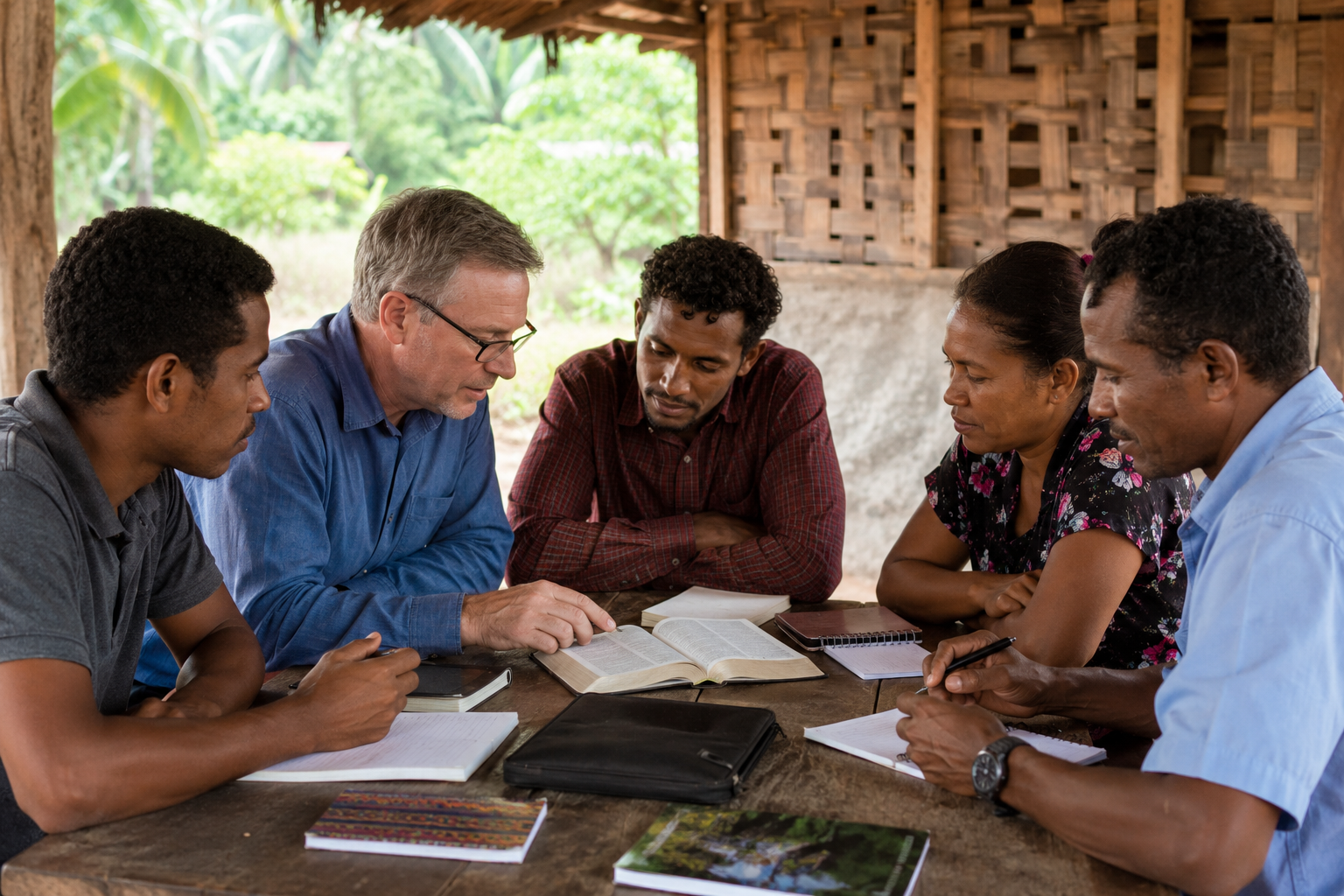
Healthy sponsorship begins with a sober understanding of what a “team” actually is. A Bible translation team is typically a group of mother-tongue translators and reviewers, supported by exegetical and linguistic consultants, project management, and community engagement roles. The work is done in and for a real community, with real church dynamics and real disagreements about wording, style, and theological terms.
In practice, sponsors help make room for the slow, careful work of drafting, checking, revising, and testing Scripture with the community. That means paying for salaries or stipends where appropriate, travel to villages, literacy materials, office costs, technology, consultant time, and the patient overhead of administration. The donor is not “buying a verse.” The donor is resourcing a disciplined process meant to guard meaning and build trust.
Sponsorship has spiritual aims and measurable responsibilities
Christians sometimes divide “spiritual” and “operational” giving as though the first were holy and the second suspect. Bible translation refuses that divide. The aim is spiritual formation through Scripture; the means are real governance, real budgets, and real quality control. A mature sponsor asks about both.
Across our verification work at Most Trusted, we observe that ministries most worthy of confidence treat sponsorship as shared stewardship. They set clear expectations about timelines, communicate setbacks without theatrics, and describe outcomes with appropriate restraint. They do not confuse donor enthusiasm with theological proof that a deadline will hold.
A sponsored team needs linguistic competence and theological fidelity
Accuracy requires more than fluency
It is easy to underestimate the technical rigor involved. Translation is not simply substituting words from Greek and Hebrew into a local language. It involves discourse analysis, semantic domain decisions, sociolinguistic realities, and literacy constraints. Many projects operate in languages with limited written tradition, requiring orthography development and literacy support alongside translation.
The modern Bible translation movement has also had to reckon with differing philosophies of translation. Some donors prefer a more formally equivalent approach; others prioritize clarity for first-time readers. Christians genuinely disagree about trade-offs in readability, precision, and ecclesial continuity. A responsible ministry can articulate its approach plainly, show how it guards core doctrine, and explain how local churches are involved in making key decisions.
Consultant checking is a safeguard, not a luxury
One of the clearest markers of seriousness is how a project handles review. Consultant checking—where trained consultants evaluate drafts for accuracy, clarity, and naturalness—is time-consuming and expensive, but it is a principal protection against error. It also prevents the subtle drift that can happen when a team grows tired, a community dispute intensifies, or a key translator leaves.
Donors can appreciate the spiritual stakes without turning translation into a heroic myth. Even strong teams need external review. Even faithful translators can miss nuance. Sponsorship that funds careful checking is not “administration”; it is part of honoring the Word we are putting into people’s hands.
The hardest part is often the long middle: time, turnover, and trust
Translation timelines are long because communities are complex
Many projects take years, and often longer than early projections. That is not necessarily mismanagement; it can reflect the reality of language development, literacy levels, consultant availability, security concerns, and the demands of community review. Donors should be wary of ministries that treat speed as the primary sign of faithfulness.
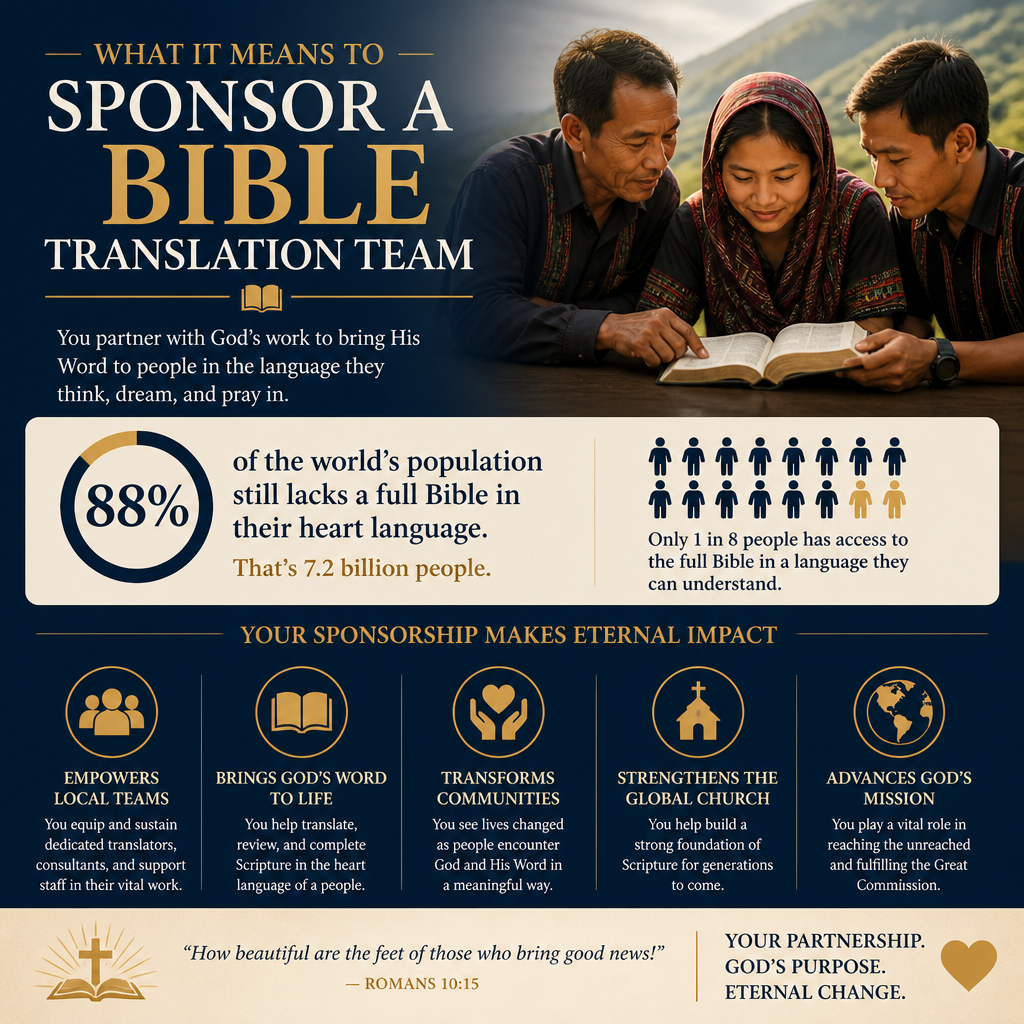
The scale of the global need is still significant. As of 2023, full Bible translations exist for 736 languages and New Testament translations for 1,658, leaving thousands of languages without complete Scripture access, according to Wycliffe Global Alliance. Sponsorship is often a decision to fund the “long obedience” rather than the quick win.
Turnover and community politics can derail projects quietly
Translation teams are made of people, and people carry the pressures of family, health, local conflict, church splits, and economic necessity. Turnover is a persistent challenge. A translator who is respected in the community may be offered a better-paying job elsewhere; a reviewer may lose standing after a leadership change; a key stakeholder may insist on wording that serves a faction rather than the text.
What this means in practice is that donors should ask how a ministry plans for continuity. Does it train multiple translators and reviewers? Does it have a credible succession plan for project leadership? Does it document decisions so the work is not trapped in one person’s head? Sponsorship that ignores these questions can end up paying repeatedly for restarts.
Donors who want broader context on the landscape of ministries in this space can refer to Bible Translation Ministries, where we track recurring patterns that distinguish durable work from fragile initiatives.
Wise sponsorship includes accountability that protects both donors and communities
Transparent reporting should match the moral weight of the work
Because Bible translation carries spiritual weight, it also carries a temptation: to present inspiring narratives without the unglamorous details that reveal whether the work is actually progressing. Mature donors should expect reporting that includes milestones, quality assurance steps, and financial clarity.
We encourage sponsors to evaluate a translation ministry with the same seriousness they would apply to any stewardship decision. Most Trusted exists for that purpose: we evaluate ministries against The Most Trusted Standard, a 15-criteria framework spanning faith commitments, financial integrity, governance and leadership, and transparency and effectiveness. For donors, the aim is not cynicism; it is confidence grounded in verifiable evidence.
What to ask before sponsoring a team
The most useful due diligence questions are neither hostile nor naïve. They are concrete. A short list that often clarifies whether sponsorship is being stewarded well includes:
- How is the translation philosophy defined, and who has authority to resolve contested wording?
- What review process is used, including consultant checking and community testing?
- What milestones are expected in the next 12 to 24 months, and what could realistically delay them?
- How are local churches meaningfully involved without turning translation into a political contest?
- How are funds allocated between field work, training, administration, and member care?
When donors ask these questions, they also serve the community. Strong ministries generally welcome them because clarity strengthens trust. Weak ministries often resist them because vagueness is protective.
Sponsorship should strengthen the church, not substitute for it
Translation and church formation belong together
Scripture is given to the people of God, not merely to individuals. A sponsored team should be accountable to local Christian communities and oriented toward the long-term life of the church: public reading, teaching, catechesis, and worship. Donors should pay attention to whether a ministry’s strategy anticipates distribution, literacy, and Scripture engagement, not only the completion of a draft.
The field has matured here. Many organizations now integrate literacy and Scripture engagement as part of a holistic approach. The research on literacy’s broader social impact is substantial; for example, UNESCO has long linked literacy to participation and development outcomes, while acknowledging that literacy initiatives must be contextually designed and sustained over time, per UNESCO. Donors should still ask what is being funded and why, but the underlying logic is coherent: a translation that cannot be read or heard well will not form a community deeply.
A sponsor’s role includes patience, prayer, and restraint
Sponsorship can be spiritually formative for donors as well. It requires patience that resists the demand for constant novelty. It invites prayer that is tethered to real needs: protection for translators, unity among churches, wisdom in contested terms, and perseverance in the long middle of the work.
It also requires restraint. Donors should be cautious about imposing branding expectations, photo-driven storytelling demands, or annual “impact” claims that pressure teams into distortion. The goal is not to produce a marketing artifact; it is to place faithful Scripture in the hands of a community and to do so in a way that honors Christ.
For donors thinking specifically about how to combine prayerful support with responsible partnership, Praying for and Partnering with Bible Translation Ministries captures the questions we see serious givers returning to over time.
FAQs for What it means to sponsor a Bible translation team
Does sponsoring a translation team mean funding the whole project?
Not necessarily. Some sponsors underwrite a defined portion of a project: a set of consultant-checking trips, translator training, literacy materials, or a year of team support. The key is clarity about what the sponsorship covers, how progress is measured, and how the ministry will communicate if assumptions change.
How can donors tell whether a translation ministry is trustworthy?
Trustworthiness shows up in governance, financial integrity, and transparent communication, not merely in spiritual language. Donors should look for audited or reviewed financial statements where appropriate, clear leadership accountability, a defined translation and review process, and reporting that names obstacles honestly. At Most Trusted, we assess ministries using The Most Trusted Standard so donors can give with confidence grounded in evidence rather than sentiment.
What sponsorship ultimately signifies
To sponsor a Bible translation team is to join a work that is both sacred and demanding. It affirms that God speaks to his people in comprehensible words, and it accepts the cost of getting those words right. For Christian donors, the aim is not merely to fund a project, but to strengthen the church’s access to Scripture through partnership marked by patience, accountability, and reverence for the Word.



