
What happens after a New Testament translation is finished is rarely explained to donors with the seriousness the work deserves. Many supporters assume the moment a translation team delivers a completed manuscript, the remaining work is largely administrative. In practice, that “finished” New Testament is the beginning of a long sequence of spiritual, linguistic, and institutional responsibilities that determine whether communities actually receive Scripture, trust it, and are formed by it.
Christian donors tend to fund translation because we believe, with Paul, that “faith comes from hearing, and hearing through the word of Christ” (Romans 10:17). Yet the pathway from a final draft to sustained Scripture engagement is not automatic. It requires careful publishing decisions, durable local ownership, and honest measurement—especially in contexts where literacy is limited, church leadership is under-resourced, or political pressures make public distribution risky.
Finished does not mean ready for the church
Final manuscripts still require validation
A New Testament can be “finished” in the sense that translators have completed the draft and the team has agreed the text is accurate and natural. But in most mature translation models, that is not the end of the validation process. The next steps often include broader community review, readability testing, and checks designed to identify whether the wording communicates clearly to ordinary speakers rather than only to a small circle of reviewers.
This is not academic perfectionism. A translation that is technically accurate but opaque to the people it is meant to serve will not function as Scripture in a living church. Ministries that treat post-draft testing as dispensable frequently pay for it later in low adoption, ongoing controversy, and the need for costly revisions.
Translation philosophy and church trust remain live questions
Christians genuinely disagree about how to balance formal correspondence, functional equivalence, and local idiom—especially where key theological terms do not map neatly into receptor languages. These debates do not disappear when the manuscript is complete; they often become more visible. Pastors may ask why certain terms were rendered one way rather than another, and denominational leaders may weigh whether the new translation should be read publicly in worship.
Donors can help by funding not only the production of the text but also the trust-building work around it: pastor workshops, explanatory materials, and accountable processes for handling objections. The goal is not to suppress disagreement; it is to handle it with humility and clarity so that the church receives the Scriptures as a gift rather than as a provocation.
Publishing and distribution are theological and operational choices
Scripture access depends on format, rights, and supply chains
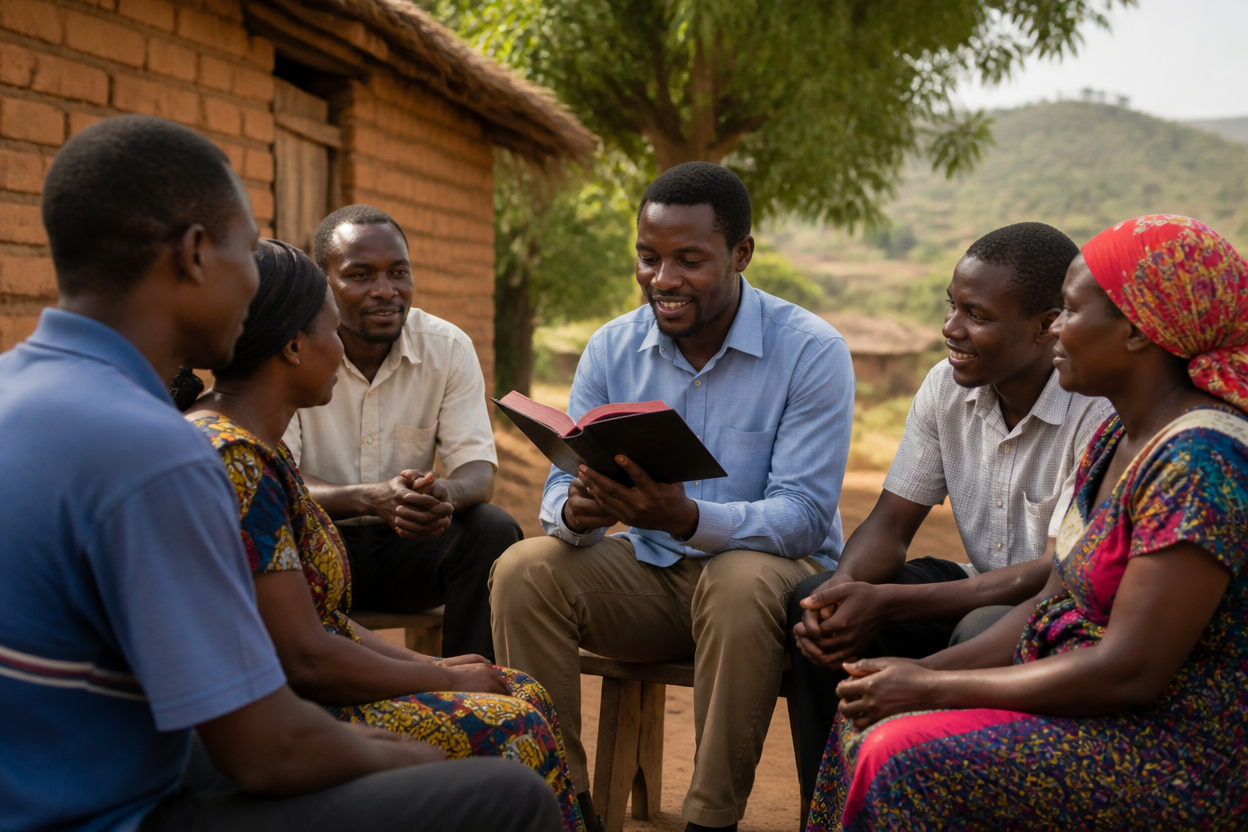
After a New Testament translation is finished, ministries must decide how the text will be made available: print, audio, digital, or a combination. These are not merely technical decisions. They are decisions about who will be able to hear and read Scripture, under what conditions, and with what long-term stewardship of permissions and licensing.
In many language communities, a significant portion of adults cannot read fluently. UNESCO estimates that around one in four adults worldwide lack basic literacy skills, which makes audio Scripture and oral approaches central rather than optional. A ministry that treats distribution as “printing and shipping” may unintentionally exclude the very people the translation was meant to serve.
Safety and sustainability complicate distribution
Some settings allow open distribution through churches, bookstores, and schools. Other settings require careful risk management because public Christian materials can expose believers to harassment or legal consequences. Wise ministries take counsel from local leaders, assess security realities, and avoid well-meant visibility that increases danger.
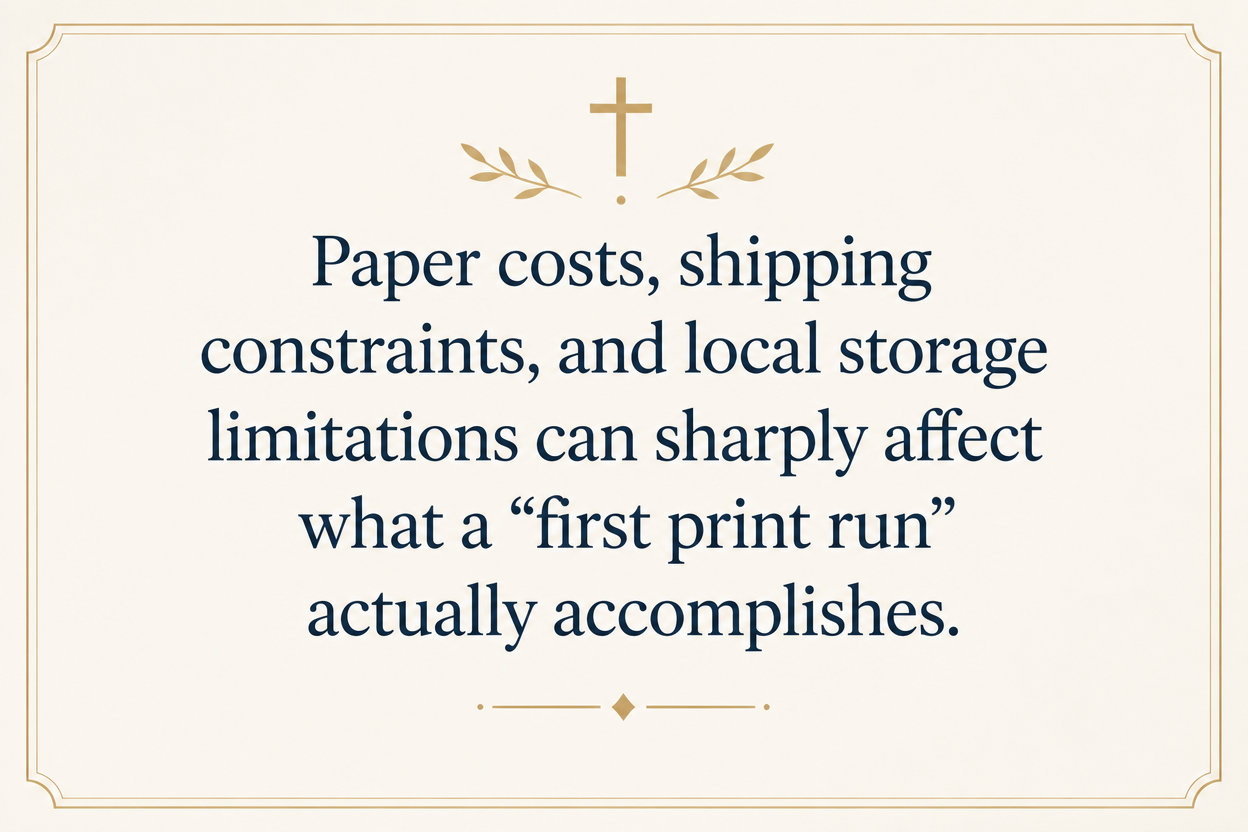
Supply chains also matter. Paper costs, shipping constraints, and local storage limitations can sharply affect what a “first print run” actually accomplishes. These are not glamorous issues, but they often determine whether Scripture arrives on time, remains affordable, and can be replenished without repeated crisis fundraising.
Scripture engagement is the real handoff
Church leaders need tools, not just texts
A completed translation is a foundation, not a curriculum. Communities typically need sermon helps, reading plans, glossary resources, and training for pastors and lay leaders—especially where many leaders have never had sustained access to Scripture in their heart language. The first generation of preaching and teaching from a new translation can shape whether the church experiences the text as clear, trustworthy, and pastorally usable.
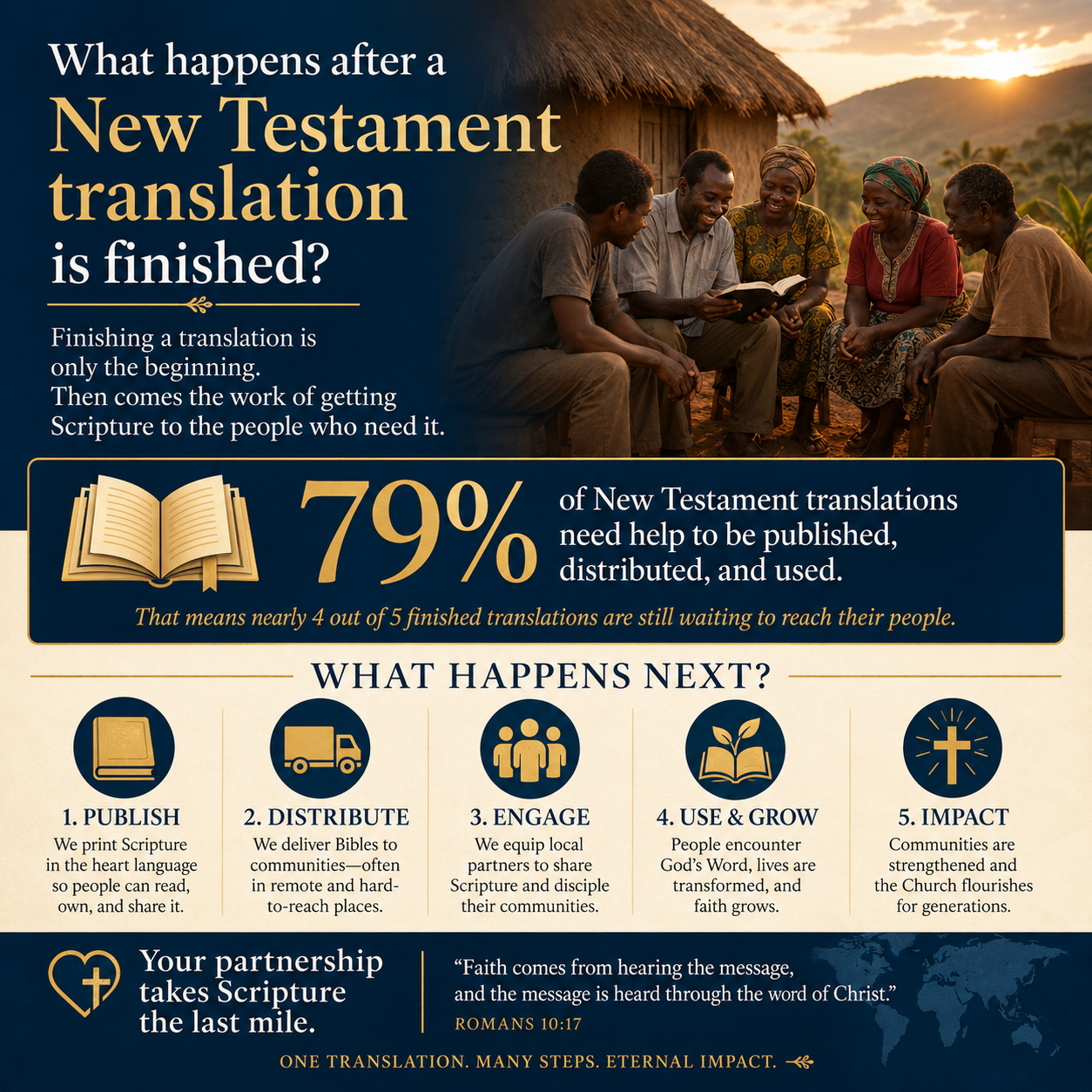
Many translation ministries collaborate with local denominations or networks to train leaders in using the text responsibly. This work does not compete with translation; it completes it. It also reflects a theological conviction: Scripture is given to build up the body, not to sit on a shelf.
Orality and discipleship strategies must fit the community
Where oral communication predominates, Scripture engagement is often most faithful when it is embodied in storying, dramatized readings, and audio listening groups. That can unsettle donors accustomed to measuring impact by the number of books distributed. Yet in oral cultures, group listening and retelling may be the most effective way to place God’s word in the communal memory.
What this means in practice is that donors should ask how a ministry moves from “translation delivered” to “Scripture used”: Who is trained? What materials accompany the text? How are women, youth, and marginalized groups included in access and learning? These are questions of stewardship as much as strategy.
Measuring impact after completion requires restraint and rigor
Counting copies is not the same as counting formation
Donors are often offered simple post-completion metrics: copies printed, copies distributed, downloads, listening hours. These numbers have real value, but they can also create a false confidence. Distribution is an output; discipleship, church strengthening, and theological clarity are outcomes that are harder to measure and easier to overstate.
There is also a time horizon problem. The most meaningful effects of Scripture in a new language—pastoral formation, biblical preaching norms, intergenerational catechesis—often take years. Mature ministries do not promise immediate transformation. They design for long-term adoption and can describe what signals they track along the way.
What trustworthy evaluation tends to include
Across our verification work at Most Trusted, we observe that ministries that meet The Most Trusted Standard usually treat post-translation measurement as a discipline of truth-telling rather than a marketing exercise. They collect evidence that is proportionate to claims, and they are transparent about uncertainty.
Well-governed translation ministries commonly track a mix of indicators, such as:
- Rates of Scripture use in churches and small groups, gathered through structured local reporting
- Audio engagement through app analytics when feasible and safe
- Pastor and facilitator training participation and follow-up assessments
- Qualitative feedback on comprehension and acceptability from diverse segments of the community
- Reprint or redistribution demand over time, which can signal sustained adoption
The harder question is whether these indicators are collected with independence and integrity. Donors should not assume that any ministry publishing strong numbers has necessarily built a credible measurement system. Transparent methods, clear definitions, and appropriate external accountability matter.
For donors who want to understand how ministries approach evidence after publication, our coverage of How Bible Translation Ministries Measure Impact addresses common metrics and the temptations that accompany them.
Stewardship after completion is where trust is proven
Governance and financial integrity remain central
When a New Testament translation is finished, new financial patterns often begin: ongoing printing costs, platform maintenance, staff to support engagement, and sometimes a shift toward Old Testament work. Donors should expect ministries to explain these transitions in budget terms that are intelligible and accountable.
This is also where governance matters. Boards should have the competence to oversee intellectual property decisions, partnerships, and risk. Ministries should separate enthusiasm from accountability and ensure that major post-completion commitments are reviewed with sober judgment.
Transparency builds confidence for long-term partnership
Scripture translation is rarely a one-time transaction. Languages change, orthographies are refined, and churches raise new questions as they teach from the text. Responsible ministries plan for revision processes and can name who has authority to request changes and how those requests are adjudicated.
Transparency about these realities is not a weakness. It is one of the clearest signals that a ministry understands both the holiness of Scripture and the limitations of human work. Donors looking to support the field more broadly will find additional context in our coverage of Bible Translation Ministries, including how different models handle post-publication stewardship.
The field has had to reckon with the fact that trust can be lost quickly. Controversies over translation choices, unclear licensing terms, or exaggerated impact claims can damage adoption within the church. Donors can encourage a healthier ecosystem by rewarding ministries that tell the truth, welcome appropriate scrutiny, and serve local churches with patient humility.
FAQs for What happens after a New Testament translation is finished
Does finishing a New Testament translation mean the project is complete?
It usually means the draft has reached an approved stage, but it does not mean the work is complete in the sense donors often assume. Additional steps typically include community testing, publishing preparation, distribution planning, and Scripture engagement efforts that help churches actually use the text. In many contexts, these post-completion steps require as much operational discipline as the translation work itself.
What should donors ask a translation ministry after a New Testament is finished?
Donors should ask how the ministry will ensure access (print, audio, and digital), how local church leaders will be equipped to teach from the translation, and how adoption will be measured without overstating claims. It is also prudent to ask about governance of licensing and revision decisions, financial plans for ongoing distribution, and the safeguards the ministry uses when working in higher-risk environments.
Why the post-translation season deserves donor attention
A finished New Testament is a profound milestone, but it is not yet the full fruit of the work. The decisive question is whether the people of God receive the Scriptures in a form they can understand, trust, and pass on. Donors who fund what happens after a New Testament translation is finished are often funding the difference between a completed manuscript and a living Word proclaimed in the language of the heart.



