

When Christians ask what do Bible translation ministries do, they are usually asking two questions at once: what the work actually entails on the ground, and whether the work is worthy of long-term, sacrificial giving. Both questions deserve a serious answer, because Scripture itself binds the church to the ministry of the Word, and because the modern translation movement requires unusual patience, technical rigor, and accountability.
At their best, Bible translation ministries serve the church by helping ordinary believers hear God speak in the language of their heart. Pentecost is not a rejection of languages, but a declaration that the gospel addresses real peoples in real tongues (Acts 2). Translation, done well, is an act of love toward the nations and an act of fidelity toward the text.
They begin with the conviction that the Word should be understood
Translation is not only a text project
Bible translation ministries exist because comprehension is not automatic. Christians may affirm verbal inspiration and still recognize that people cannot obey what they cannot understand. Nehemiah 8 describes public reading of the Law accompanied by explanation so the people could grasp its meaning. Many translation organizations see their vocation in that same arc: making Scripture intelligible in a community’s primary language so the church can read, teach, sing, counsel, and disciple with clarity.
This is also why many ministries pair translation with Scripture engagement: literacy efforts, oral Bible storying, audio Scripture distribution, and training for local pastors and teachers. These activities are not “extras” when the language community is primarily oral, when literacy rates are low, or when a written form of the language is still developing.
The scope is global, but the work is local
The scale of need is often described in terms of “languages without Scripture,” but the more important reality is “communities without accessible Scripture.” A single language name can cover multiple dialects; a printed New Testament can exist without being readable; a translation can exist without being trusted by local churches. For donors, this means the most faithful ministries tend to think beyond counting languages and toward measuring access, use, and local ownership.
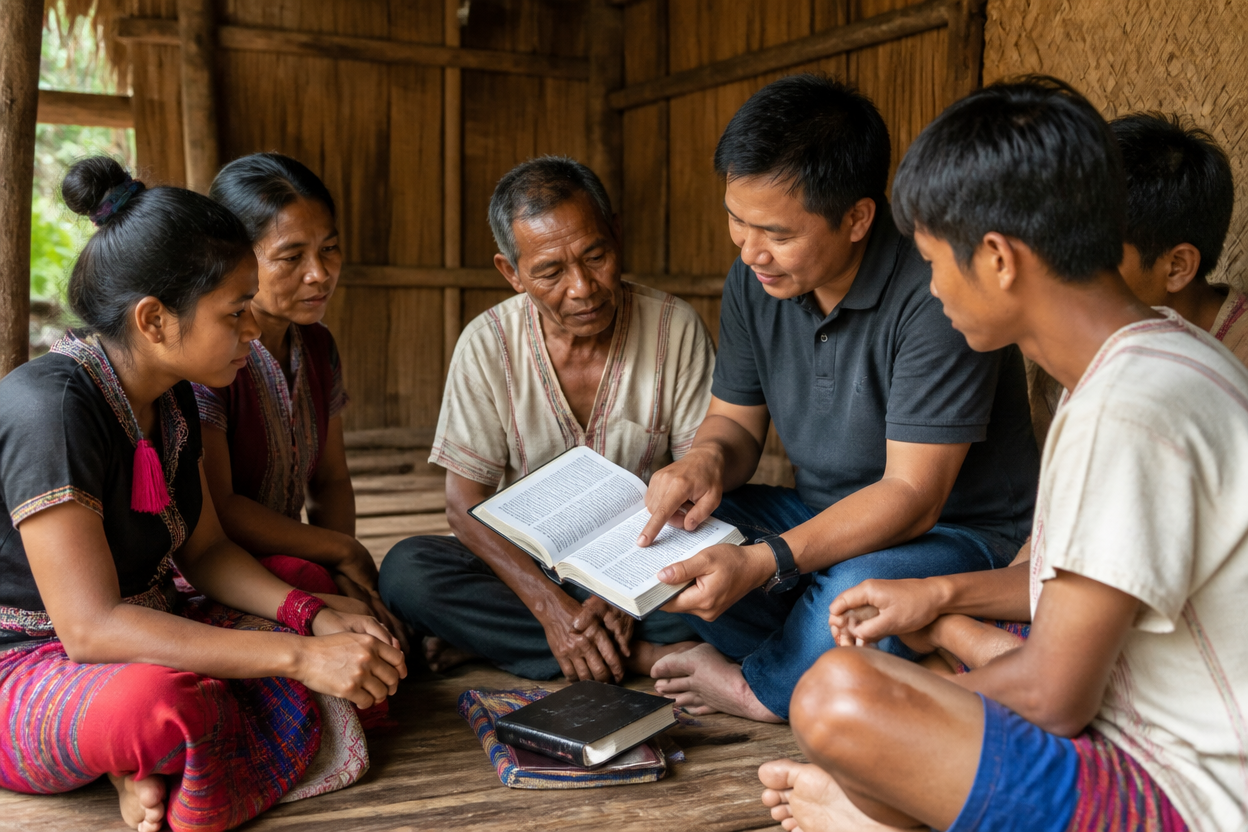
They do the linguistic and exegetical work that most donors never see
Language analysis and orthography development
In many communities, translators begin by studying the language itself. They may create or refine an orthography, develop basic grammar descriptions, and produce early reading materials. This groundwork is slow, but it is often what makes long-term Scripture access possible. Ministries that work among oral-preference peoples may also produce audio-first translations and testing methods designed for spoken comprehension rather than print fluency.
Drafting and translation checking
Translation involves disciplined decisions about meaning, not merely word substitution. Teams draft from the biblical languages or from a trusted source translation, then test that draft with speakers in the community. The best programs build iterative checking into the process: internal team review, community testing, consultant checks, and theological review. This is where many of the field’s debates reside. Christians genuinely disagree about how to handle gender language, idioms, or the translation of key terms. Those disagreements cannot be solved by slogans; they require documented methodology, accountable leadership, and a demonstrated commitment to serve the church rather than a donor market.
For donors who want category-level orientation, our overview of How Bible Translation Ministries Work addresses the recurring patterns our team evaluates when we look for clarity and integrity in a translation ministry’s approach.
They partner with local believers and churches rather than replacing them
Healthy models share authority, not only tasks
Bible translation is frequently described as “partnering with the local church,” but partnership can mean many things. Some approaches effectively outsource the most meaningful decisions to outside experts, while others romanticize “local” in ways that ignore the need for technical competence and doctrinal safeguards. Mature ministries tend to hold both truths: translation must be grounded in the language community, and translation is a specialized craft that requires training, supervision, and peer review.
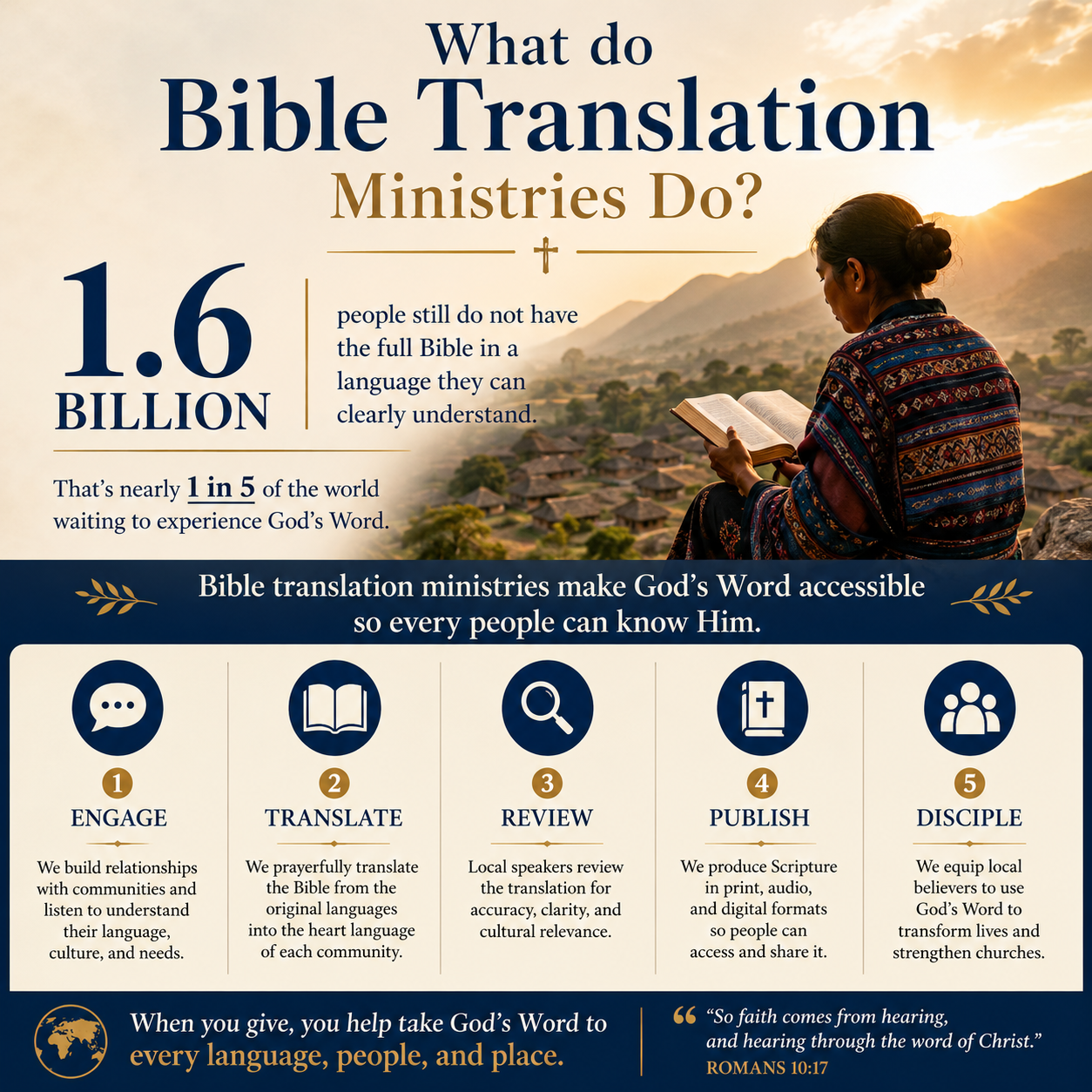
In practice, many ministries recruit and train mother-tongue translators and reviewers, support local translation committees, and build relationships with networks of pastors who can help evaluate clarity and faithfulness. Where denominational diversity is high, the ministry must decide whether it is producing a translation aimed at broad ecumenical use, a translation for a particular communion, or multiple editions. Each path has trade-offs that should be stated plainly.
Scripture engagement and discipleship are often intertwined
It is common to see translation ministries involved in literacy, trauma-aware pastoral care, leadership development, and church planting movements. Some donors worry that this “mission drift” dilutes translation. The harder question is whether translation without pathways for use leaves communities with a book that sits on a shelf. Strong ministries define their scope clearly, explain why adjacent programs exist, and show how those programs are governed and evaluated.
They manage long timelines, complex budgets, and real risks
Translation is slow for reasons that are often morally necessary
A responsible translation process is slow because it requires repeated testing, careful checking, and the formation of local capacity. Rushing can produce a text that is inaccurate, unnatural in the receptor language, or rejected by the churches it is meant to serve. The modern world’s impatience can be a donor temptation here: outcomes that are easy to count are not always the outcomes that matter most.
The broader funding environment adds pressure. In 2023, giving to religion declined by 1.6% in current dollars, according to Giving USA. Ministries that depend on donor revenue may feel the strain acutely, especially when projects span a decade or more and require sustained specialist staffing.
Security, ethics, and governance shape credibility
Many translation teams work in politically sensitive contexts. That can constrain public reporting, but it does not remove the obligation to govern well. Donors should expect ministries to articulate security protocols, data handling practices, and ethical safeguards around vulnerable communities. The field has had to reckon with questions about paternalism, dependency, and the stewardship of outside money. Corbett and Fikkert’s When Helping Hurts framework has shaped many Christian discussions by insisting that good intentions are not enough; helping must be designed to avoid harm and preserve dignity (When Helping Hurts).
For donors, a practical way to think about ministry maturity is to look for disciplined patterns like these:
- Clear translation methodology and published checking processes
- Documented local church and community involvement with defined decision rights
- Transparent financial reporting that distinguishes translation costs from adjacent programs
- Independent governance with conflict-of-interest safeguards
- Evidence of Scripture use and comprehension testing, not only distribution numbers
- Security-aware transparency that still gives donors meaningful accountability
They should be evaluated with standards that fit their unique work
Donors need more than a compelling story
Translation work is particularly susceptible to emotional fundraising: a single village, a single language, a single “first Bible.” Those stories can be true and still incomplete. Mature donor stewardship asks for verifiable evidence: who is accountable for theological decisions, how funds are segregated by project, what happens when local churches disagree, and whether the ministry can explain its results without exaggeration.
At Most Trusted, our role is not to pick theological winners in every translation debate, but to assess whether an organization demonstrates integrity, competence, and candor under The Most Trusted Standard. Across our verification work, we observe that ministries worthy of sustained support typically show strength in four areas: a coherent faith foundation that shapes practice, financial integrity that can bear scrutiny, governance and leadership that are not personality-driven, and transparency about both outcomes and limitations.
What transparency can and cannot mean in sensitive contexts
Some donors expect translation ministries to publish the same level of detail as domestic charities. That expectation can be unrealistic where exposure could endanger local believers. Still, “security” must not become a blanket excuse for opacity. Responsible organizations provide audited or professionally reviewed financials when feasible, explain risk management at a high level, and disclose how they handle complaints, misconduct allegations, and conflicts of interest. When donors cannot see everything, they should at least be able to understand the controls that prevent misuse of power or funds.
For a broader view of the organizations and models in this space, our Bible Translation Ministries coverage reflects the recurring verification questions donors ask when they are deciding whether to fund translation work for the long haul.
FAQs for What do Bible translation ministries do
Do Bible translation ministries only translate the Bible, or do they do other ministry too?
Many translate Scripture and also support Scripture engagement, literacy, audio production, and training for local church leaders. The question is not whether adjacent work exists, but whether it is clearly governed, appropriately funded, and demonstrably connected to Scripture access and use. Donors should expect a ministry to define its scope and explain how it prevents translation from becoming a fundraising label for unrelated programs.
How can donors assess quality if they do not know the language being translated?
Donors can evaluate process and accountability even without linguistic expertise. Look for published methodology, evidence of multi-stage checking, qualified consultants or reviewers, documented local church involvement, and transparent reporting on project timelines and expenditures. Independent oversight, clear conflict-of-interest policies, and candid discussion of challenges are often better indicators of long-term reliability than ambitious completion claims.
Why this work merits patient, discerning generosity
Bible translation ministries do far more than produce a book. They undertake a long, demanding act of service so that churches can be formed by Scripture in their own language, with understanding and confidence. Donors serve this work best when they pair generosity with seriousness: supporting organizations that can explain their methods, govern themselves with integrity, and tell the truth about both progress and limits under the pressures that accompany global ministry.



