
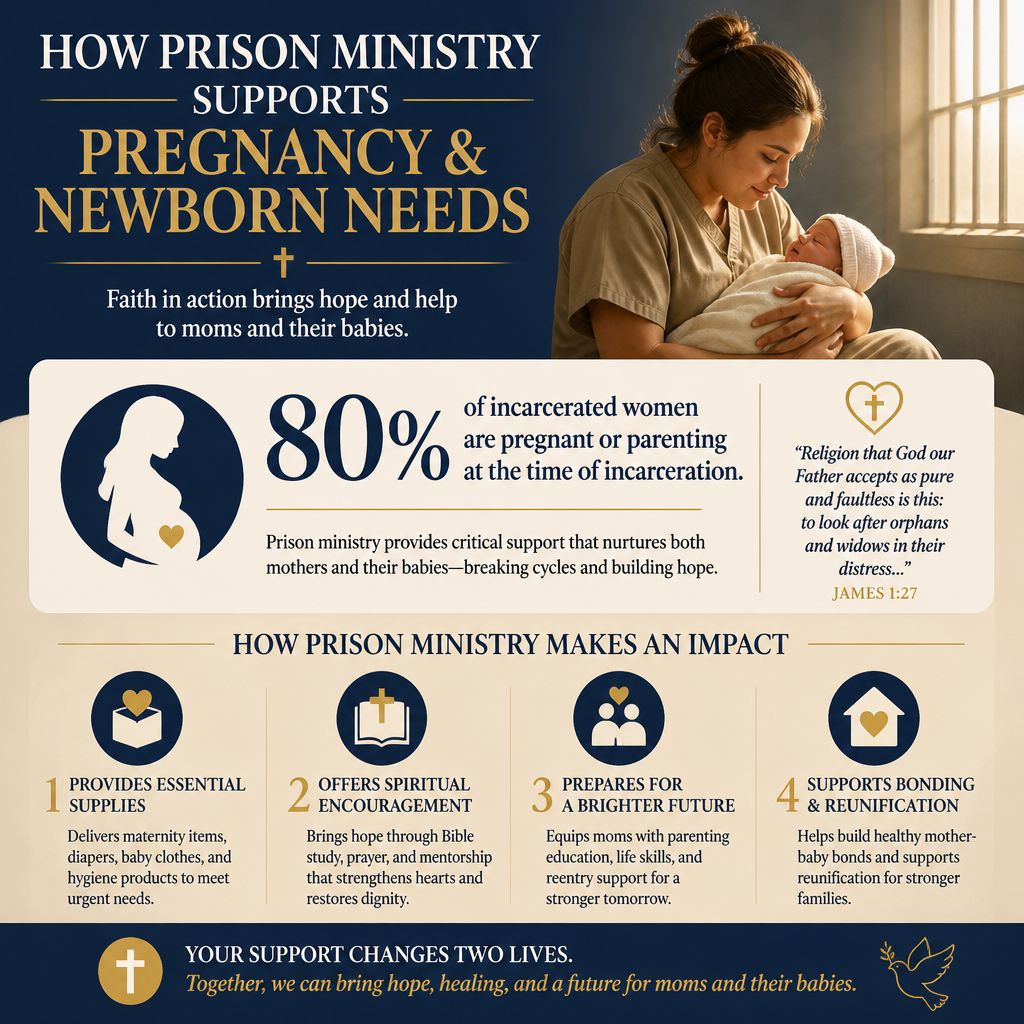
How prison ministry supports pregnancy and newborn needs is a question that quickly exposes our theology of mercy and our standards of stewardship. Pregnancy does not pause for a sentencing date, and childbirth does not wait for a release hearing. For Christian donors, the moral claim is not abstract: a mother bears God’s image, and so does the child she carries.
The harder reality is that incarcerated pregnancy sits at the intersection of public health, family law, trauma, and institutional custody. Donors who want to help must weigh urgent compassion against programs that are sometimes poorly measured, inconsistently governed, or disconnected from local medical systems. The ministries most worthy of confidence tend to treat pregnancy and newborn needs as both a sacred calling and a compliance-heavy, high-accountability responsibility.
Pregnancy behind bars is a medical and spiritual crisis
Pregnancy care cannot be improvised
Pregnancy care inside a correctional facility is not simply a matter of distributing diapers and onesies. It involves prenatal monitoring, nutrition, chronic disease management, infection prevention, mental health screening, and safety planning. The stakes are heightened because women in custody often have higher rates of prior trauma, substance use disorder, and interrupted medical care before incarceration.
Verifiable evidence suggests the need is widespread. The Bureau of Justice Statistics reported an estimated 3,000 pregnant women were admitted to local jails in a single year in its study of pregnancy in correctional facilities (Bureau of Justice Statistics). That number alone should sober any donor who assumes pregnancy in custody is rare.
Scripture’s prison mandate meets a particular vulnerability
When Jesus names going to those in prison as a mark of faithful discipleship, he does not narrow the command to those whose needs are uncomplicated. The pregnant woman in custody is both accountable before the law and vulnerable in body. Christian ministry that respects both realities can communicate the Gospel’s moral seriousness: we do not excuse sin, and we do not abandon people.
Christians genuinely disagree about criminal justice policy, sentencing, and the best path to reform. But the duty of mercy toward a mother and child in immediate need is far less contested. What differs is how well ministries translate that duty into safe, lawful, durable support.
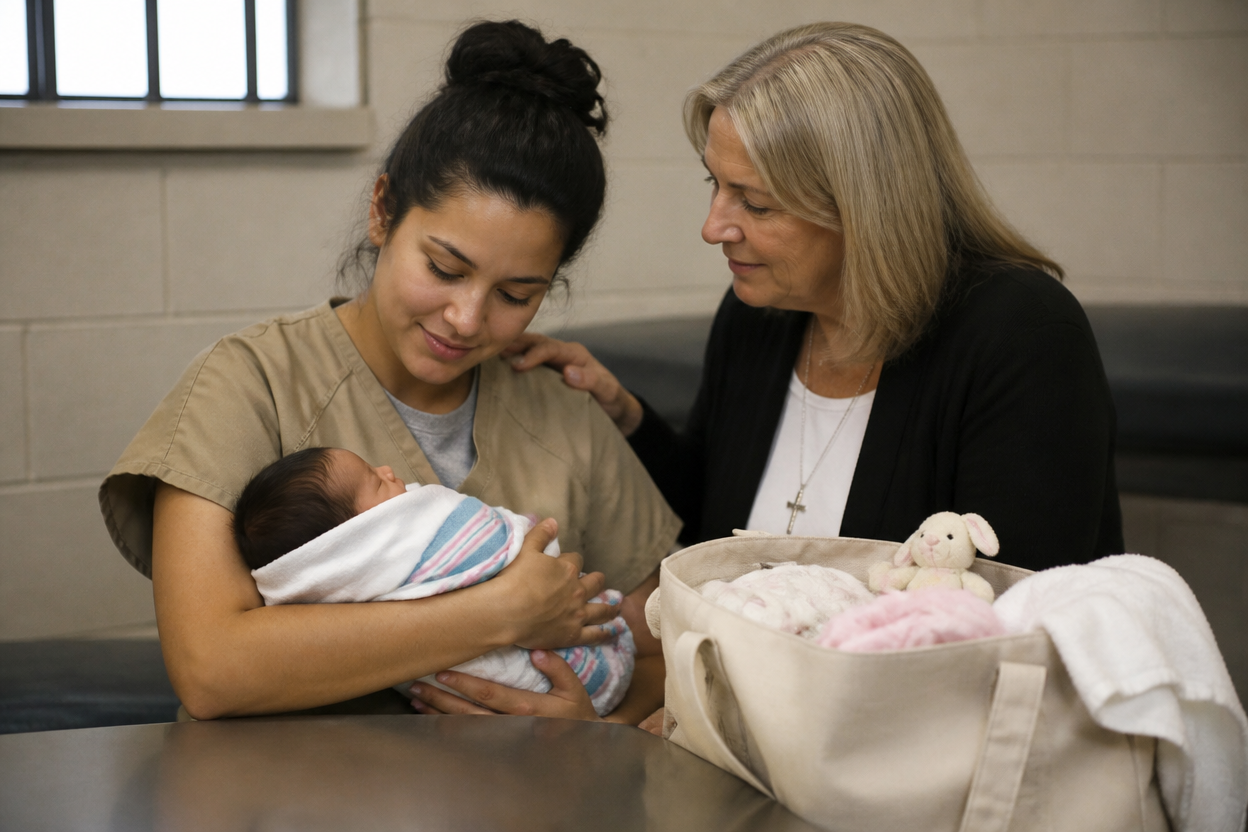
What pregnancy and newborn support actually requires inside correctional systems
Meeting needs without undermining medical authority
The most effective prison ministries do not try to replace clinicians, and they do not treat pregnancy as a purely spiritual matter. They build cooperative relationships with jail and prison administrators, medical contractors, and sometimes local hospitals. This posture matters because pregnancy care is regulated, liability-sensitive, and time-bound. A ministry that refuses coordination can unintentionally increase risk for mother and baby.
One concrete issue is restraints during pregnancy and postpartum transport. Many states have restricted or banned routine shackling, but practices vary, especially in local jails. Donors should recognize that ministries advocating for humane treatment are often navigating institutional norms, security concerns, and uneven policy enforcement. The donor question is not whether the need exists, but whether the ministry has the credibility and governance to work constructively in a high-control environment.
The newborn question forces a family-systems approach
Unlike many prison ministry programs, pregnancy inevitably raises the question of who will care for the infant. Most incarcerated mothers do not bring their newborns back to a cell. That means a ministry’s work quickly touches kinship care, foster care, maternal bonding, and reentry stability. The field has had to reckon with a truth donors sometimes prefer to avoid: helping the mother and helping the child cannot be separated for long.
Family separation is also a measurable social reality. The Bureau of Justice Statistics has reported that a majority of incarcerated mothers had minor children (Bureau of Justice Statistics). When pregnancy is added to that family context, ministries must plan for multiple children, multiple caregivers, and legal timelines that rarely match ministry calendars.
How prison ministries support mothers and babies before birth
Material support that is clinically informed
Some of the most practical support is also the easiest for donors to understand: maternity clothing, hygiene items, pregnancy-safe nutrition supplementation when permitted, and transportation coordination for prenatal visits. Yet even simple giving can become counterproductive if it disregards facility rules or medical guidance. Effective ministries coordinate with chaplains and administrators so that what is given can actually be received and used.
Across our verification work at Most Trusted, we observe that high-performing ministries document what they provide, how they select recipients, and how they safeguard against favoritism or informal gatekeeping. In correctional settings, informal favoritism can undermine both trust and safety, and donors should treat clear policies as a ministry strength, not as bureaucracy.
Trauma-aware discipleship and pregnancy education
Pregnancy intensifies questions of identity, shame, and hope. Ministries that serve well do not reduce women to their offenses, but they also do not offer sentimentality as healing. They combine Scripture-anchored pastoral care with practical preparation: birth planning, coping skills, parenting education, and relapse prevention for those with substance use histories.
The When Helping Hurts framework, articulated by Steve Corbett and Brian Fikkert, has reshaped many donors’ assumptions about help that unintentionally harms. In pregnancy ministry behind bars, this often means resisting the temptation to “rescue” in ways that displace agency or bypass accountability. Mature programs build dignity by requiring participation, consistency, and honest engagement rather than offering benefits disconnected from growth.
What happens after delivery shapes outcomes for both mother and child
Supporting bonding when separation is likely
Some jurisdictions operate nursery programs that allow eligible mothers to live with their infants for a period, while others do not. Even where nursery programs exist, eligibility restrictions can exclude women with certain convictions, disciplinary histories, or sentence lengths. Ministries that support pregnancy and newborn needs therefore prepare for both possibilities: supported bonding when allowed, and supported grief when separation occurs.
Bonding support can include supervised visitation coordination, breastfeeding or pumping logistics where feasible, and coaching mothers to communicate with caregivers. It can also include pastoral care that names sorrow without collapsing into despair. Christian donors should not underestimate the spiritual weight of postpartum separation; it can be a precipitating factor for depression, self-harm, and relapse after release if unaddressed.
Reentry is where newborn support becomes a long-term discipleship question
For many mothers, childbirth is followed not by family stability but by a complex reentry landscape: housing barriers, employment gaps, probation requirements, and strained family relationships. The newborn’s needs do not lessen because the mother is under supervision. If anything, the demand for stability intensifies.
When donors consider pregnancy and newborn work, we recommend they also assess whether a ministry has credible pathways into community support: maternity housing partnerships, church-based mentorship, trauma-informed counseling, legal aid referrals, and job readiness programs. This is also where many donors broaden their view into Prison and Post-Prison Ministries that integrate jail visitation with reentry continuity.
How donors can evaluate prison pregnancy ministries with confidence
Trust requires more than a compelling story
Some ministries in this space communicate with deep sincerity but operate with weak controls. That can place women at risk, expose facilities to security breaches, and waste donor funds. The ministries that meet The Most Trusted Standard tend to show their work: clear theological commitments, competent leadership, transparent finances, and measurable outcomes that do not oversell what is hard to measure.
Donors should also be alert to the unique ethical risks of correctional environments. Power dynamics are heightened, consent can be complicated, and privacy is fragile. A ministry should have explicit policies for safeguarding, data handling, and volunteer boundaries, and it should be willing to submit to external accountability.
A practical donor checklist for pregnancy and newborn support
Before funding a program in this category, donors should look for concrete evidence in a few key areas:
- Facility partnership: written permission, chaplain coordination, and clarity on what is allowed and why
- Clinical alignment: deference to medical guidance and clear protocols for distributing pregnancy-related goods
- Safeguarding: background checks, boundary training, incident reporting, and survivor-sensitive care
- Continuity planning: documented handoffs to caregivers and community partners after delivery
- Transparency: accessible financial reporting and honest outcome claims
For donors who want to focus more specifically on mothers, custody, and family separation dynamics, many programs are best understood within Prison Ministry for Incarcerated Women and Mothers, where pregnancy support is one part of a broader ministry ecosystem.
FAQs for How prison ministry supports pregnancy and newborn needs
Do prisons and jails provide adequate prenatal and newborn care on their own?
Provision varies widely by jurisdiction, facility resources, and medical contractor quality. Correctional systems are legally responsible for medical care, but operational realities and inconsistent standards can create gaps in continuity, dignity, and maternal mental health support. Prison ministries cannot replace clinical care, but they can strengthen support through advocacy, material aid that fits policy, trauma-aware discipleship, and reentry continuity when implemented with strong safeguards.
What kinds of gifts are most helpful for supporting pregnant incarcerated women and newborns?
Effective giving is usually coordinated giving: funds that support approved prenatal supplies, maternity clothing, hygiene items, transportation coordination for medical visits when permitted, and post-release support such as safe housing and parenting stabilization. The most helpful gifts are those a ministry can document, distribute within facility rules, and connect to a larger plan for mother-and-child stability after delivery.
Mercy that endures beyond delivery
Pregnancy in custody confronts the Church with a time-sensitive form of neighbor-love that cannot be postponed. When prison ministry supports pregnancy and newborn needs with competence and accountability, it embodies the conviction that no human life is disposable and no suffering is beneath Christ’s attention.
For donors, the stewardship question is whether a ministry can carry that conviction into disciplined practice: lawful access, safeguarded relationships, transparent finances, and measurable faithfulness that does not depend on sentiment. This is where verification matters, and why Most Trusted evaluates ministries against The Most Trusted Standard so Christian generosity can be both compassionate and sound.



