
How families can access orphan care ministry support is not merely a question of logistics; it is a question of what kind of church we believe God is forming. Scripture consistently binds true worship to the defense of the vulnerable, including children without safe parental care. James is unambiguous that “religion that God our Father accepts as pure and faultless” includes “to look after orphans and widows in their distress” (James 1:27). Donors who fund orphan care ministries are not underwriting a sentimental cause; they are participating in a moral obligation with real-world consequences.
Yet the mature orphan care movement has also learned that access to “support” can be distorted. Some systems incentivize institutionalization over family preservation. Some well-meaning programs offer material help without attending to power dynamics, local capacity, or the long horizon of trauma recovery. Families attempting to foster, adopt, or reunify often find themselves navigating legal complexity, spiritual warfare, secondary trauma, and financial pressure at the same time. What they need is not only funding, but wise, verifiable ministry practice.
Begin with the family, not the program
Many families first encounter orphan care ministry through an event, an adoption story, or a moving video. A more durable approach begins with discernment: What is the child’s actual situation, and what does faithful care require in that context? The best ministries resist one-size-fits-all answers because the needs of a kinship caregiver, a licensed foster parent, and a family pursuing international adoption are meaningfully different.
Clarify which “orphan care” pathway you are supporting
“Orphan care” is a broad label. It can include family preservation services, domestic foster care support, kinship care stabilization, adoption assistance, reunification services, and—more controversially—residential care. Christians genuinely disagree about when residential settings are appropriate, particularly in contexts of war, trafficking, disability, or the absence of a functioning child welfare system. What is not contested is that family-based care is the developmental ideal when it is safe and feasible.
For donors, this means asking ministries to define their theory of care and their boundaries. When ministries can explain how they prioritize family preservation and reunification where appropriate, and how they safeguard children when family care is not possible, families are more likely to receive support that is both compassionate and competent.
Know the practical questions families must answer early
In the first months, families are usually trying to answer concrete questions: What training is required? Who provides respite? What therapies are covered? Who will advocate in court? How will we handle contact with biological family? Strong ministries help families name these questions without shame. They also avoid spiritualizing what is often a genuinely clinical reality: early childhood adversity can shape attachment, regulation, and learning in ways that require specialized support.

Map the local ecosystem of support and accountability
Families access orphan care ministry support most effectively when they understand the ecosystem around them. The child welfare system, the local church, licensed agencies, trauma clinicians, schools, and community-based nonprofits all play distinct roles. Confusion about roles often becomes a crisis later, particularly when a placement destabilizes or when an adoption enters a season of acute strain.
Start with the church, then add specialized capacity
Local churches are uniquely positioned to offer long-term relational support: meals, transportation, childcare, prayer, and the steady presence that bureaucratic systems cannot provide. But churches are not child welfare agencies, and they should not pretend to be. Families are best served when churches partner with specialized ministries that understand licensing requirements, mandated reporting, trauma-informed caregiving, and the ethical risks of volunteer engagement with vulnerable children.
One helpful way to frame this partnership is to separate “care” from “case management.” The church can supply durable care. Specialized agencies and trained professionals supply case management, legal coordination, and clinical interventions. When these roles are confused, families can feel pressured to accept counsel from people who are loving but unqualified, or to rely on systems that are qualified but relationally thin.
Use public resources without outsourcing moral responsibility
Many families will access government-funded services, and that is neither shameful nor inherently problematic. In the United States, for example, the foster care system is publicly administered and relies on public funds. However, public funding does not remove the church’s responsibility to pursue the child’s good in a distinctly Christian way, including honesty, advocacy, and protection for the vulnerable.
For donors evaluating ministries that interface with public systems, transparency matters. Ministries should be able to explain how they coordinate with state agencies, how they handle conflicts of interest, and how they protect children from being treated as ministry “outputs.” The question is not whether a ministry works with government systems; the question is whether it does so with clarity, accountability, and child-centered ethics.
Evaluate ministry support by what it costs the ministry, not what it promises
Promises are easy to make in orphan care. The true test is what a ministry is structured to sustain: trained staff, vetted volunteers, measurable outcomes, and governance that can withstand pressure. Across our verification work at Most Trusted, we observe that the ministries with the strongest reputations among families tend to have two characteristics: they fund the unglamorous work of ongoing care, and they can demonstrate consistent safeguards.
Look for support that is relational and operational
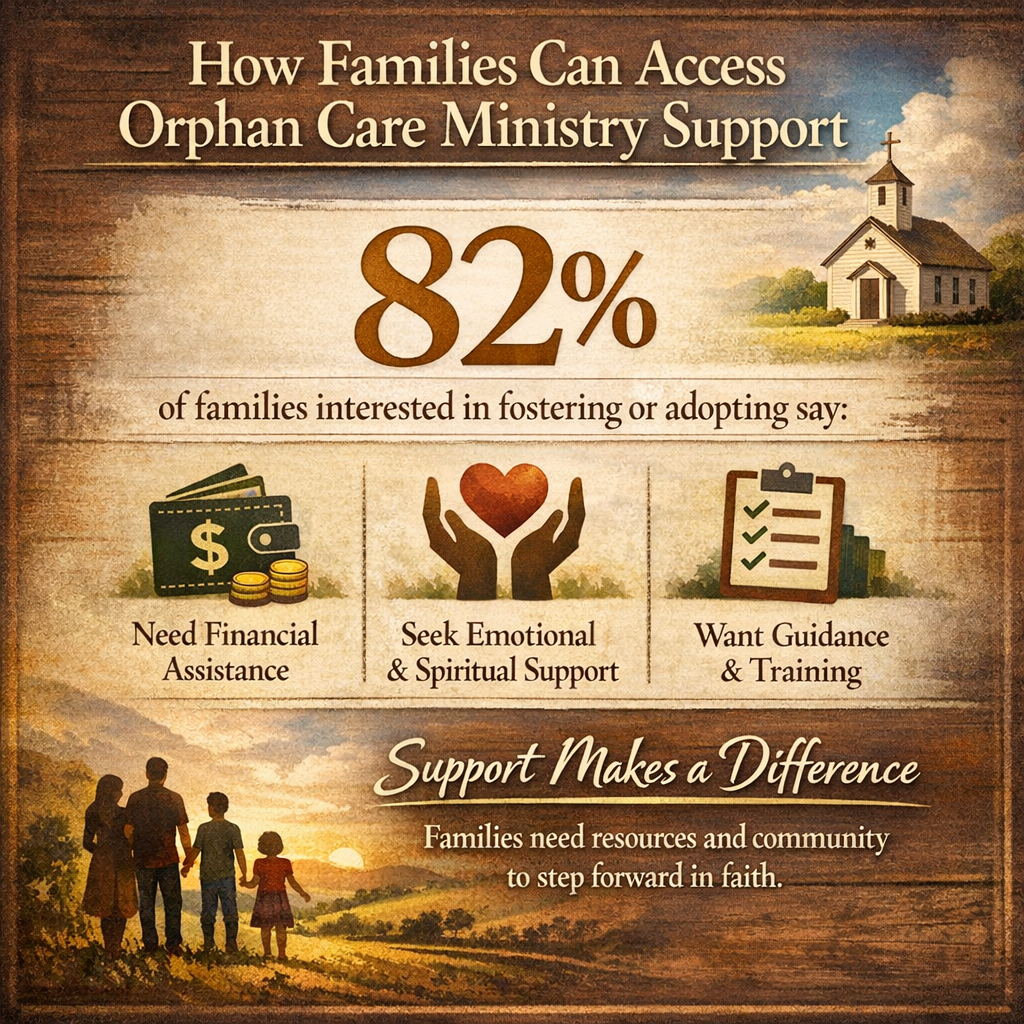
Families need both. Relational support includes mentoring, peer groups, pastoral care, and respite that respects the family’s dignity. Operational support includes help navigating benefits, finding trauma-informed clinicians, coordinating with schools, and preparing for court. Ministries that offer only inspiration often leave families isolated when the long work begins.
The field has also had to reckon with the limits of short-term engagement. Well-intentioned volunteers can unintentionally intensify attachment disruptions when children form bonds that are repeatedly broken. Donors should ask how ministries train volunteers, limit child contact when appropriate, and prioritize stable caregivers over rotating visitors.
Ask for evidence that safeguards are real
In orphan care, harm is often preventable. A credible ministry can explain its child protection policies, background checks, mandated reporting practices, and incident response procedures. It can also explain how it handles reputational risk without silencing families. Ministries should not treat whistleblowing, complaints, or critical questions as disloyalty. They should treat them as part of moral seriousness.
What this means in practice is that donors should prioritize ministries with documented governance, clear financial reporting, and public-facing transparency about leadership and outcomes. The Christian donor’s aim is not merely to fund “more good,” but to avoid funding avoidable harm.
What families should expect from a trustworthy orphan care ministry
Families are often hesitant to ask for help because they fear judgment, privacy loss, or being labeled “not cut out” for adoption or foster care. A trustworthy ministry makes it easier—not harder—for families to seek help early. It does not reward crisis. It does not shame limits. It treats support as a normal part of faithful caregiving in a broken world.
Core supports that tend to stabilize families
Programs differ, but several forms of support consistently matter. When families can access these, placement stability and caregiver endurance are more plausible over the long term.
- Regular respite provided by trained, vetted caregivers
- Peer support groups led with clinical and pastoral awareness
- Practical help that reduces household strain, including meals and transportation
- Connections to trauma-informed counseling and evidence-based parenting tools
- Advocacy help for school services and case planning meetings
A realistic theology of suffering and sanctification
Some ministries unintentionally promise that faithfulness will prevent hardship. Families know better within a few months. The ministries that serve well tend to speak with theological sobriety: God is near to the brokenhearted, and obedience may include sustained difficulty. That sobriety is not pessimism; it is a refusal to manipulate families with triumphalism.
It also keeps ministries from turning children into symbols. Children in foster care and adoption are not illustrations of redemption; they are image-bearers with histories, losses, and agency. A ministry’s communications should reflect that: careful language, privacy protection, and a posture of humility before complex family stories.
How donors can make access easier and safer
Donors often focus on “impact,” but in orphan care, the more precise question is whether impact is achieved without hidden costs. The best donor support reduces barriers for families while strengthening the ministry’s accountability. Funding that is flexible enough to cover unglamorous needs—training, staff supervision, clinical consultation, and child protection infrastructure—often does more to keep families stable than restricted gifts tied to visible events.
Fund capacity that families feel but rarely see
Families experience ministry quality through response times, staff competence, crisis protocols, and continuity. Those require staffing and governance, not only passion. The “Overhead Myth” statement, signed by Charity Navigator, Candid (GuideStar), and the BBB Wise Giving Alliance, argues that overhead ratios are a poor proxy for nonprofit performance and can pressure organizations to underinvest in the very systems that protect beneficiaries (Charity Navigator). In orphan care, underinvestment in safeguards is not an efficiency; it is a risk.
Donors can also strengthen access by funding targeted family supports: respite scholarships, counseling stipends, emergency placement kits, and sustained mentoring programs. The goal is to make it normal for families to ask for help before a crisis becomes irreversible.
Use verification to reduce the guesswork
Families rarely have the time or emotional margin to vet every organization that offers help. Donors can serve them by funding ministries that have demonstrated integrity. Most Trusted exists to help donors give with confidence by evaluating Christian nonprofits against The Most Trusted Standard, a 15-criteria framework covering faith foundation, financial integrity, governance and leadership, and transparency and effectiveness. When donors take verification seriously, they are not merely protecting their giving; they are protecting families and children from the downstream effects of weak oversight.
For donors who want a broader view of the field, we encourage engagement with Orphan Care Ministries as a category where prevention of harm matters as much as the multiplication of services. And when the focus is specifically adoption and foster care, Orphan Care Ministries in Adoption and Foster Care is often where families experience the most immediate need for durable, local support.
FAQs for How families can access orphan care ministry support
Where should a foster or adoptive family start if they are overwhelmed?
Families should begin with one trusted point of contact who can coordinate next steps: a church leader with appropriate discretion, a licensed agency worker, or a ministry case manager trained in foster and adoption support. The first aim is stabilization: respite, a safe plan for the next two weeks, and connection to trauma-informed care. A trustworthy ministry will not require a family to “prove” they deserve help, and it will not treat crisis as a branding opportunity.
How can donors tell whether a ministry is helping families without causing harm?
Donors should look for verifiable safeguards and transparency: child protection policies, governance that is independent and competent, financial reporting that is accessible, and program claims that are proportionate to evidence. Healthy ministries speak honestly about limitations, avoid emotionally coercive storytelling, and can explain how they coordinate with public systems and licensed professionals. Verification against an established framework such as The Most Trusted Standard is one practical way to reduce guesswork.
A faithful answer requires both compassion and competence
Families access orphan care ministry support most safely when the church refuses false choices: compassion without competence, or competence without spiritual care. Children who have experienced loss and instability require steady love, and steady love is strengthened by accountable organizations. Donors can help build that steadiness by funding ministries that tell the truth, protect the vulnerable, and sustain families for the long work of faithful care.



