
Orphan care ministries in adoption and foster care sit at a difficult intersection: clear biblical obligation, real human trauma, and the modern realities of public child welfare systems. Christian donors often feel the weight of Scripture’s call to defend the fatherless while also recognizing that good intentions do not automatically produce good outcomes.
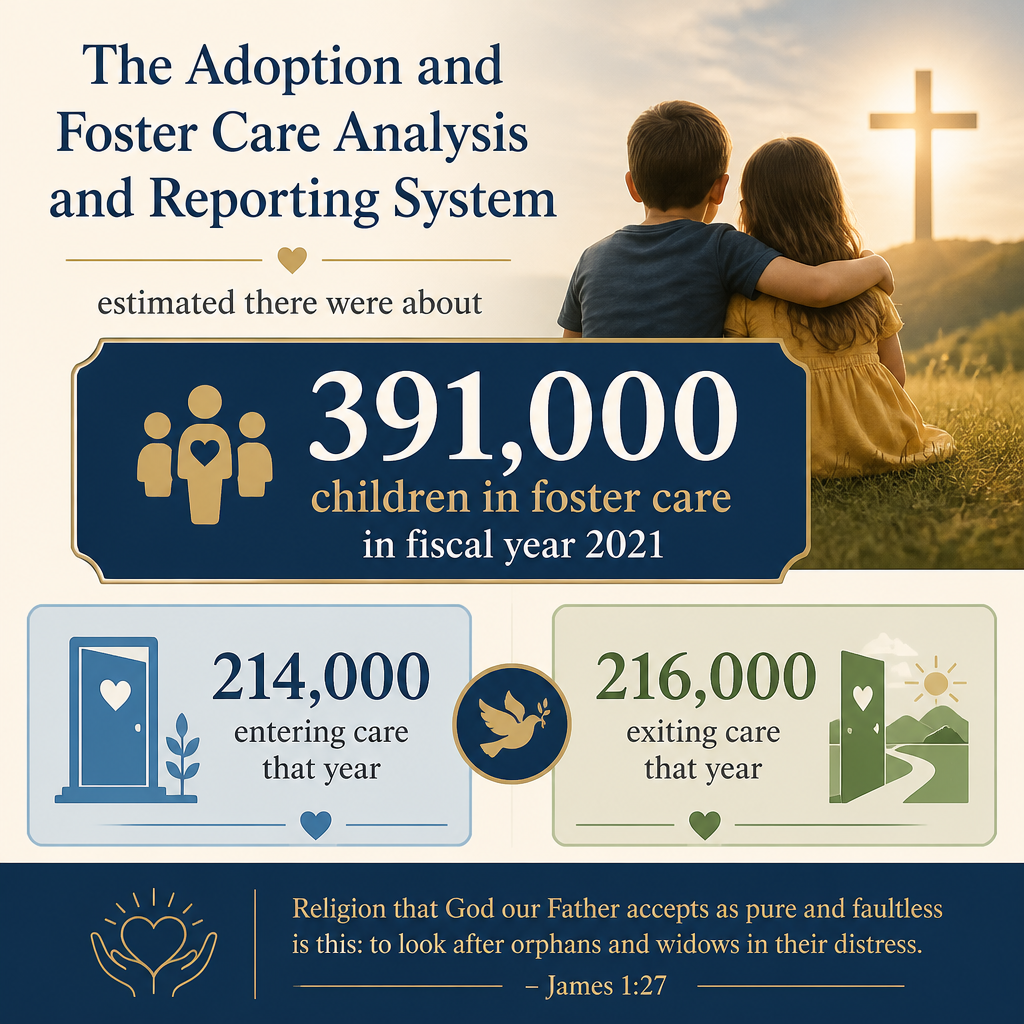
James describes “religion that God our Father accepts as pure and faultless” as caring for orphans and widows in their distress (James 1:27). Yet the field has had to reckon with a sober truth: certain models once celebrated as “orphan care” have contributed to family separation, unnecessary institutionalization, and avoidable harm. Mature giving requires both compassion and discernment.
Why adoption and foster care require different kinds of ministry
Adoption and foster care are often discussed together, but they are not the same moral or operational project. Adoption is a permanent legal change of family identity; foster care is a temporary, state-regulated intervention meant to protect children and, when possible, support reunification. Orphan care ministries that speak as though all vulnerable children need adoption can unintentionally distort what the child welfare system is designed to do.
In the United States, the public foster care system is large, complex, and administered through state and county agencies. The Adoption and Foster Care Analysis and Reporting System estimated there were about 391,000 children in foster care in fiscal year 2021, with 214,000 entering care and 216,000 exiting that year U.S. Department of Health and Human Services, Administration for Children and Families. Those headline numbers matter for donors because they underscore scale: even excellent ministries will not “solve” the system, but they can strengthen families, equip churches, and stabilize placements in measurable ways.
Christian donors also need to hold two truths together. First, God hates injustice and commands protection for the vulnerable. Second, the state’s coercive power to remove children from homes can be misused or unevenly applied. Christians genuinely disagree about how to weigh family preservation against intervention in ambiguous cases. Responsible ministries do not treat these tensions as distractions; they build guardrails for them.

What effective orphan care ministries actually do for families
Donors often encounter orphan care ministries through an emotionally compelling moment: a family facing an adoption match, a foster placement in crisis, or a local church responding to a child in need. But the most durable outcomes tend to come from less visible work—patient, repeated support that keeps families steady over time.
Adoption expenses and the ethics of financial help
Adoption can be financially punishing even for stable families, especially when agencies, legal services, home studies, travel, and post-placement requirements accumulate. This is one reason adoption grants exist. A well-run orphan care ministry can provide grants, low-interest loans, or matching funds without turning giving into a reward for the most compelling story.
The ethical questions are real. Financial assistance can create perverse incentives if it pressures families into taking on more than they can sustain, or if it drives demand that contributes to unethical practices in vulnerable contexts. Donors should ask whether the ministry has written criteria, third-party accountability, and a theology of stewardship that treats donor funds as sacred trust rather than discretionary benevolence.
For U.S. donors, the federal adoption tax credit is often part of the affordability equation, but it is not immediate cash and it does not help equally across income levels. The Internal Revenue Service provides the current adoption credit guidance and limits Internal Revenue Service. Ministries that counsel families well will explain these constraints plainly and help them plan without false assurance.
Foster care training, respite care, and placement stability
The foster care system relies on ordinary families entering a high-stress environment with limited preparation for trauma, attachment disruptions, and bureaucratic complexity. Some orphan care ministries support churches by funding evidence-informed training, coordinating respite care, and building care teams that reduce caregiver burnout. These interventions are not flashy, but they can prevent disruptions that retraumatize children.
Respite care is sometimes misunderstood as “time off.” In practice it can be a stabilizing measure that keeps a placement intact, especially when a foster parent is navigating a child’s acute behaviors, court dates, or medical needs. Donors should look for ministries that treat respite as structured support with screening, supervision, and clear communication with the child’s case plan.
Church-based support that does not replace professional roles
At their best, orphan care ministries help the local church do what it is uniquely positioned to do: offer enduring community, practical aid, and spiritual care without claiming to be the child welfare system. That distinction protects children. It also protects churches from overconfidence.
Many effective models emphasize “wraparound” support: meals, transportation, childcare, prayer, peer support groups, and mentoring for foster and adoptive parents. Donors should ask whether the ministry trains volunteers in confidentiality, mandated reporting, and trauma-aware care, and whether it maintains clear boundaries so that well-meaning volunteers do not complicate court-involved cases.
Where the movement has had to mature and where donors should be cautious
Orphan care has been one of the most energized sectors of modern Christian philanthropy. That energy has also exposed fault lines. Some ministries emerged from sincere zeal but lacked the governance, child protection controls, and evidence base appropriate to the vulnerability of the populations they serve.
Institutional care and the limits of orphanage-centered models
Decades of research have driven a growing consensus that large-scale institutional care is associated with poor developmental outcomes, particularly for young children. The American Academy of Pediatrics has stated that institutional care is linked to delays and social-emotional harm, recommending family-based alternatives when possible American Academy of Pediatrics. Donors should be wary of ministries that present orphanage building as the primary solution rather than a last-resort intervention during emergencies.
This does not mean every residential setting is identical or that every context has the same foster and adoption infrastructure. The harder question is whether a ministry is actively moving toward family-based care, reintegration, kinship support, and community strengthening—or whether it is financially dependent on keeping beds full.
Family separation, incentives, and safeguarding against harm
Christians are right to want children protected. Yet the field has also had to confront uncomfortable incentives: money flows toward compelling “rescues,” and donors can unintentionally subsidize systems that separate children from families who could have remained together with modest support. This is why reputable orphan care ministries invest in family preservation and kinship care where safe and appropriate.
Donors should look for concrete safeguards: child protection policies, background checks, incident reporting protocols, and an independent mechanism for complaints. When a ministry works internationally, additional questions apply: partnerships with local authorities, compliance with local law, and policies aligned with international child welfare principles. Ministries that resist scrutiny in these areas are not asking donors to trust God; they are asking donors to trust an organization without adequate verification.
Short-term missions and the problem of attachment
Many churches have a history of short-term trips to orphanages. The movement has increasingly recognized that repeated cycles of attachment and separation can be damaging for children with trauma histories. The issue is not whether donors or volunteers care, but whether the program design is centered on the child’s long-term wellbeing rather than the visitor’s spiritual experience.
Some ministries have shifted toward supporting local caregivers, funding family strengthening initiatives, and limiting direct child contact to trained professionals. Donors can encourage this maturity by prioritizing ministries that can articulate why they do not default to “volunteer access” as a measure of impact.
How Christian donors can evaluate ministries with confidence
Because orphan care ministries touch children, courts, and highly vulnerable families, the bar for integrity should be higher, not lower. Emotional resonance is not a substitute for governance, and compelling stories cannot carry the weight of accountability.
At Most Trusted, our verification work applies The Most Trusted Standard, a 15-criteria framework across Faith Foundation, Financial Integrity, Governance and Leadership, and Transparency and Effectiveness. What this means in practice is that donors can ask consistent questions across very different orphan care models—domestic foster care support, adoption grant funds, international family preservation, or therapeutic services—without reducing evaluation to overhead ratios or marketing polish.
Several markers repeatedly distinguish ministries that are prepared to steward donor funds in this space:
- Clear theological commitments joined to restraint. A ministry can affirm the biblical call to care for the fatherless while refusing simplistic narratives that imply every vulnerable child needs adoption.
- Evidence of child-safeguarding maturity. Written policies, documented training, background checks, and transparent incident procedures should be normal, not exceptional.
- Program design aligned with best practice. Ministries should articulate how they support family-based care, trauma-informed services, and collaboration with qualified professionals.
- Transparent reporting that respects dignity. Donors should not be asked to fund impact through the exposure of children’s private histories. Responsible storytelling protects confidentiality and avoids sensationalism.
- Financial integrity under real oversight. Independent boards, audited financials when appropriate, and clear grantmaking processes reduce the risk of favoritism or mission drift.
For donors seeking a broader frame for this work, we also encourage engagement with the wider conversation around Orphan Care Ministries as a category. The most faithful giving is rarely the most reactive giving. It is sustained, informed, and willing to fund the unglamorous structures that keep children safe.
Giving that protects children and strengthens families
Orphan care ministries in adoption and foster care deserve serious, disciplined generosity because the stakes are so high. Christian donors are not only funding services; we are shaping incentives in a fragile ecosystem where children’s lives can be improved or harmed by the systems we reinforce.
The biblical command to defend the fatherless is not in question. The central question is whether a given ministry’s methods are coherent with that command—protecting children, strengthening families when possible, and operating with the governance and transparency worthy of the church’s trust.



