
How donors can fund biblical museum ministry acquisitions is ultimately a question of stewardship: whether a gift strengthens the church’s witness to the historical reality of Scripture, or unintentionally subsidizes speculative collecting, inflated valuations, or careless provenance. Biblical museums sit at a sensitive intersection of scholarship, public testimony, and the ethics of the antiquities market. Christian donors who want to serve truth must fund acquisitions with discernment, not sentiment.
Christians genuinely disagree about what museums should emphasize—apologetics, education, preservation, evangelism, or cultural engagement. Yet most serious disagreements converge on one nonnegotiable: the church must not bear false witness. When a museum claims too much for an object, when it cannot document lawful ownership, or when it prizes publicity over rigorous review, the scandal is not merely reputational. It is theological. Our giving should make it easier for ministries to tell the truth, even when the truth is slower, costlier, and less marketable.
Begin with the moral and theological stakes of acquisition
Provenance is not a technicality
In biblical museum work, “acquisition” is never only a purchase. It is the taking of responsibility for an object’s story: where it was found, how it was removed, whether it was exported legally, and whether scholars can test and review it without manipulation. The modern antiquities market includes well-documented incentives for looting and forgery, especially when demand rises for items associated with the Bible. Donors should assume that the more “perfect” a headline artifact appears, the more scrutiny it deserves.
International norms reflect these realities. The 1970 UNESCO Convention was created to address the illicit import, export, and transfer of cultural property and remains a key reference point for ethical collecting UNESCO. Many reputable museums and scholars treat alignment with these norms—along with documented ownership history and export permits—as baseline requirements, not optional best practices.
Christian witness is harmed when acquisition shortcuts become public
When a museum’s acquisition practices are questioned, donors may be tempted to frame criticism as hostility toward the faith. Sometimes it is. But the harder possibility is that criticism may be warranted. Scripture’s concern is not only personal integrity but public justice: “Let justice roll down like waters” (Amos 5:24). Museum acquisitions implicate justice because they touch vulnerable source communities, national patrimony laws, and the integrity of scholarship.
The field has had to reckon with prominent cases where institutions paid significant sums and returned materials after government action. For example, Hobby Lobby agreed to forfeit thousands of artifacts and pay a $3 million settlement related to unlawfully imported Iraqi artifacts U.S. Department of Justice. Donors do not need to become legal experts to learn the lesson: acquisition decisions can create liabilities that divert resources from mission and can undermine credibility for years.
Fund the systems behind the artifact, not only the artifact
Acquisitions require governance discipline
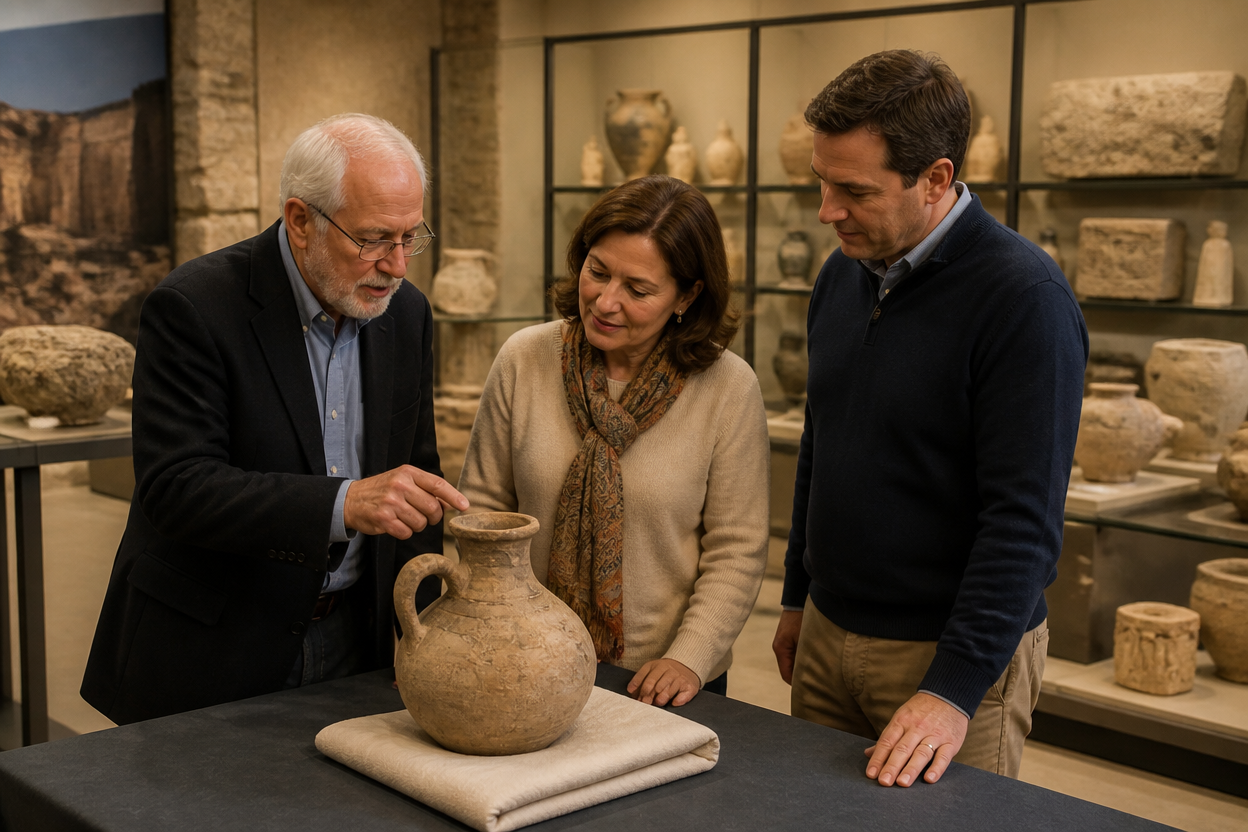
Many donors have a natural instinct to fund tangible objects: a manuscript leaf, a coin, a ceramic lamp, a codex fragment. The stronger long-term gift is often less visible: underwriting the governance and controls that prevent impulse buying, insider dealing, or inadequate review. Museums that handle biblical material responsibly tend to formalize acquisition policies, set clear thresholds for board approval, require independent scholarly review, and document conflict-of-interest safeguards.
Across our verification work at Most Trusted, we observe that ministries that meet The Most Trusted Standard typically treat major purchases and restricted gifts as governance matters, not merely development opportunities. They can articulate who approves acquisitions, what documentation is required, and how they respond when new information calls prior decisions into question.
Due diligence is a legitimate program cost
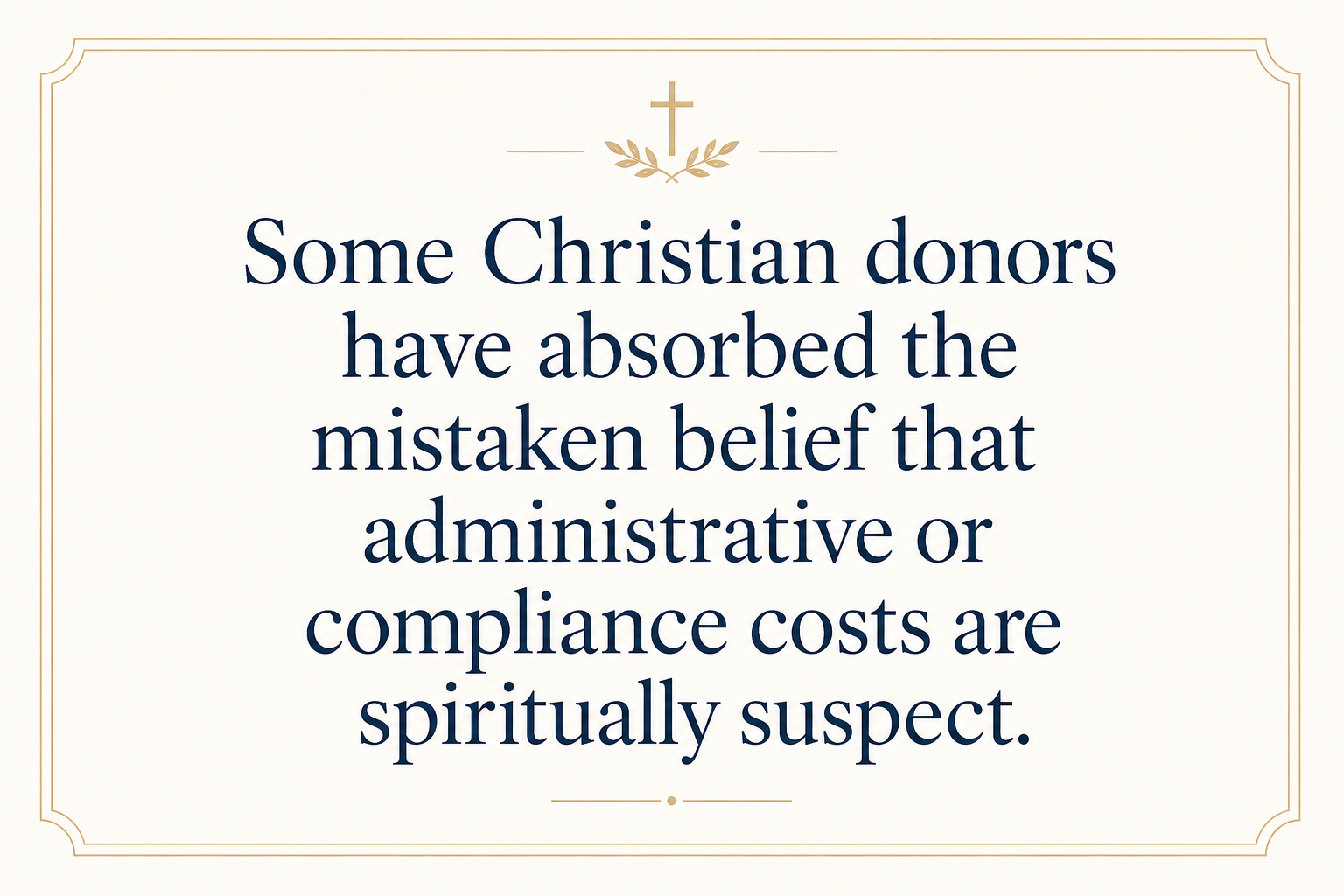
Some Christian donors have absorbed the mistaken belief that administrative or compliance costs are spiritually suspect. That premise has harmed many ministries, and it can be especially damaging in acquisitions. Provenance research, legal review, scientific testing, secure storage, and conservation are not overhead in the pejorative sense. They are part of what it means to keep faith with truth.
What this means in practice is that a donor who funds only the purchase price may inadvertently pressure a museum to cut corners elsewhere. A wiser approach is to fund a complete acquisition budget line: independent valuation, provenance documentation, conservation assessment, scholarly consultation, insurance, and secure transport. The artifact is the headline; the system is what keeps the headline honest.
Structure gifts to prevent pressure, speed, and secrecy
Restricted giving can help, but it can also distort
Restricted gifts are common in museum contexts, and sometimes they are appropriate. Yet restrictions can also create perverse incentives. If a museum is offered funds that must be spent quickly, leadership may feel compelled to acquire “something” rather than the right thing. If funds are restricted to acquisition but not documentation and testing, leadership may postpone verification work to meet a deadline. The donor’s good intention becomes a pressure system.
We recommend donors treat speed as a red flag. Serious acquisitions take time because reputable institutions invite scrutiny. A museum that asks donors to move quickly “before someone else buys it” may be describing a real market dynamic, but it may also be signaling that transparency would weaken the deal.
Practical gift terms that strengthen integrity
Donors can protect both the ministry and their own stewardship by attaching clear integrity conditions. The most credible ministries will not be offended by such terms; they will recognize them as aligned with their own commitments. Consider requesting that an acquisition gift include:
- Documented provenance and lawful export documentation to the extent available
- Independent scholarly review, including the freedom to publish findings
- Independent appraisal and a written valuation rationale for the board
- Testing and conservation assessment when the object warrants it
- A public-facing disclosure standard for what is known and unknown
These terms are not a substitute for trust, but they are a form of ordered love. They make it easier for leadership to say no when a donor, a dealer, or a moment of publicity pushes toward haste.
Evaluate acquisition claims with the same rigor as gospel claims
Ask what the museum is willing to say out loud
Responsible biblical museums can describe their acquisitions without rhetorical inflation. They distinguish between “possibly first century” and “first century.” They avoid presenting scholarly debates as settled. They clarify whether an item is an original, a later copy, a facsimile, or a teaching replica. Mature donors should expect this restraint.
When considering support for a museum, donors will be better served by reviewing how the institution communicates uncertainty. Does it acknowledge contested questions of dating, authorship, or origin? Does it correct the record publicly when new research emerges? Does it provide citations and allow peer review? A museum’s posture toward correction is often a clearer integrity signal than its promotional materials.
Verification is a donor service, not a suspicion
Donors cannot personally audit every claim in an acquisitions proposal. That is precisely why independent evaluation matters. Most Trusted exists to help donors give with confidence by evaluating ministries against The Most Trusted Standard, a 15-criteria framework across Faith Foundation, Financial Integrity, Governance and Leadership, and Transparency and Effectiveness. In a museum context, these criteria surface concrete questions: Who holds decision rights? How are conflicts managed? Are financial statements clear? Are results and claims communicated plainly?
For donors building a long-term portfolio of cultural and educational giving, it is worth situating individual acquisition decisions within broader understanding of Biblical Museum Ministries. The institutions that handle objects responsibly are typically the same institutions that handle money, governance, and public claims responsibly.
Choose outcomes that outlast headlines
Access, preservation, and education are often better outcomes than ownership
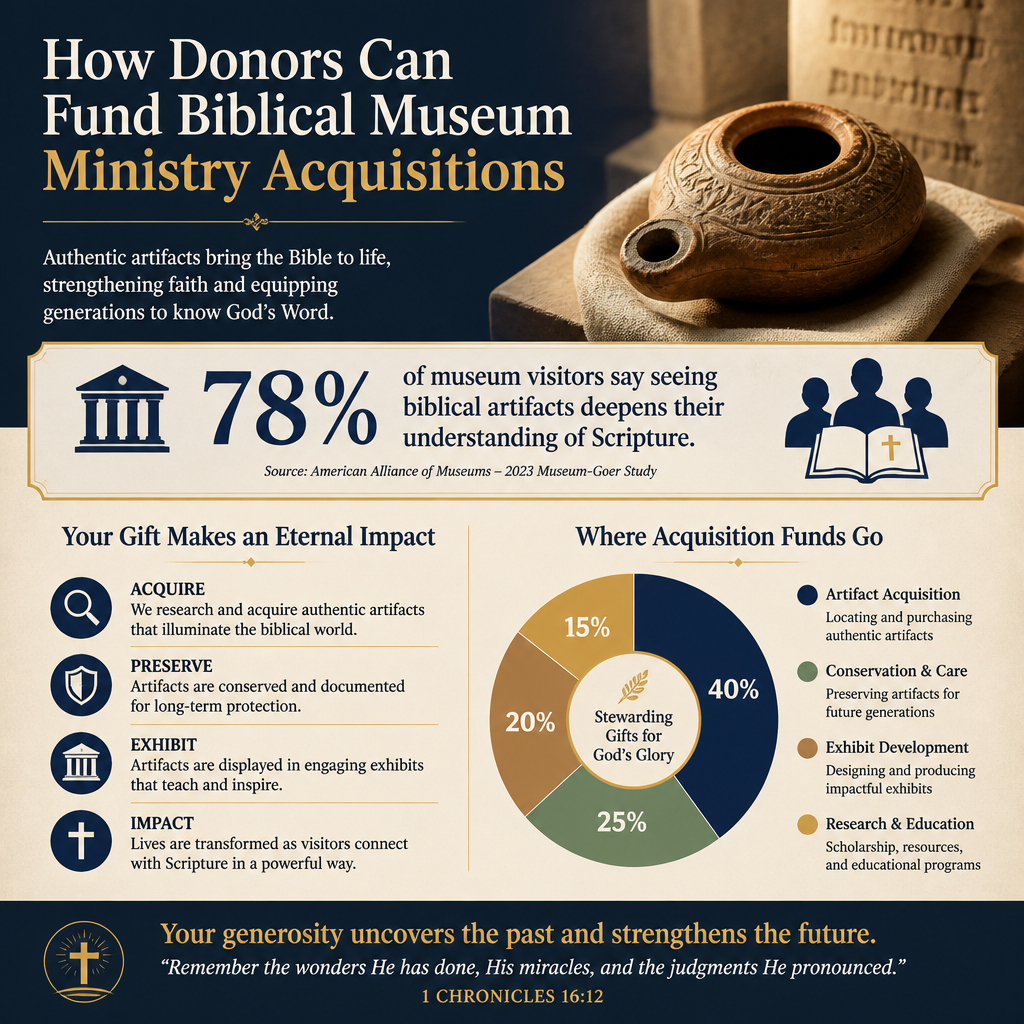
Not every meaningful acquisition ends with a museum owning an object. Many of the most ethically sound outcomes involve funding conservation for objects already held, underwriting digitization and scholarly access, or supporting traveling exhibits that educate without stoking market demand for newly surfaced artifacts. Donors who care about long-term witness should prioritize outcomes that increase verifiable knowledge and public access rather than simply expanding a collection.
Digitization and public access also align with mature Christian stewardship: what is preserved should be shared responsibly. For donors who want their giving to serve pastors, educators, students, and families, funding interpretive materials, curricula, and transparent cataloging can bear fruit for decades.
Acquisitions are one part of preservation work
Acquisitions are often framed as the heart of museum ministry, but preservation is the daily discipline that makes museums credible. Conservation labs, secure storage, climate control, catalog systems, and trained staff are not glamorous, yet they are where integrity is tested. Donors can serve the cause of truth by funding the less visible work that prevents deterioration and enables scholars to examine materials without compromising them.
Donors who want to understand this wider context should connect acquisitions to the broader practices described in How Biblical Museum Ministries Preserve Artifacts. Museums that preserve well tend to acquire carefully, because they know that every new object creates ongoing stewardship responsibilities.
FAQs for How donors can fund biblical museum ministry acquisitions
Should Christian donors avoid funding biblical antiquities acquisitions altogether?
Not necessarily. The ethical risks are real, but they do not make acquisition inherently wrong. A more faithful approach is to fund acquisitions only where the museum can demonstrate rigorous provenance standards, independent scholarly review, and transparent public communication. In many cases, donors may find that funding conservation, digitization, or education better advances the museum’s mission with fewer ethical complications.
What are the clearest red flags in an acquisitions appeal?
The most consistent red flags include urgency-based fundraising, vague provenance, resistance to independent review, exaggerated claims that outpace scholarly consensus, and budgets that fund purchase price without funding documentation, testing, and conservation. Donors should also be cautious when a ministry treats questions about ethics or governance as spiritual opposition rather than as a normal part of responsible stewardship.
Funding acquisitions as Christian stewardship
Donors who fund biblical museum ministry acquisitions are not merely buying objects; they are underwriting a public claim about truth. The most constructive gifts strengthen the systems that keep museums honest: documented provenance, patient review, disciplined governance, and transparent communication. When donors insist on those conditions, they honor both the biblical command not to bear false witness and the church’s calling to commend the gospel with integrity in the public square.



