
How churches can fundraise for adoption assistance is ultimately a question of whether the local church will treat adoption as a private burden some families carry alone, or as a shared work of mercy the whole body bears together. Christian donors often want to help, but they also want to know that generosity will be administered with integrity, humility, and real pastoral wisdom rather than sentimentality.
Scripture is unambiguous about God’s concern for the fatherless and for the vulnerable (Psalm 68:5). The harder question is how a congregation converts that concern into concrete financial help without creating perverse incentives, undermining family dignity, or treating adoption as a fundraising mascot. Churches that do this well build a fund that is transparent, well-governed, and carefully tethered to a theology of stewardship.
Adoption assistance is discipleship before it is fundraising
Set the theological frame donors can trust
Adoption is not a church program we sponsor; it is a gospel-shaped reality that trains Christians in costly love. The New Testament repeatedly uses adoption to describe God’s saving action toward us (Romans 8:15; Ephesians 1:5). That theological frame matters for donors because it keeps the work from collapsing into either romanticized storytelling or mere crisis relief.
When a church asks its donors to give toward adoption assistance, it should be clear about what the gift is and is not. It is not a payment for a child. It is not a guarantee of placement. It is not a way to purchase a happy ending. It is a sober, accountable way to reduce financial barriers so that qualified families can pursue ethical adoption or, where appropriate, permanency through foster care.
Name the complexities that mature donors already see
Christians genuinely disagree about how adoption, foster care, and international child welfare should relate. The field has had to reckon with documented abuses in some international adoption pipelines and with the harmful effects of institutionalization when children are separated from family unnecessarily. Fundraising that ignores these debates signals naiveté. Fundraising that acknowledges them—and then commits to clear safeguards—signals seriousness.
That is one reason many donors increasingly ask for verifiable standards: they want to support orphan care without unintentionally supporting practices that pressure vulnerable parents or weaken family preservation. A church can honor that concern by aligning its assistance with reputable agencies, ethical guidelines, and evidence-informed child welfare principles.

Build an adoption fund with governance that deserves confidence
Establish clear eligibility and boundaries
Adoption assistance is easiest to administer poorly when it is improvised. Churches should treat an adoption fund as a restricted benevolence account with a written policy approved by elders or an appropriate governing body. The policy should specify eligibility (for example, church membership or a defined pastoral relationship), types of expenses covered (home study fees, agency fees, travel, legal costs), and excluded uses (personal fundraising reimbursements without documentation, “cash gifts” without invoices, or expenses unrelated to adoption or placement stability).
Donors care about fairness. A policy helps a church avoid favoritism, avoid last-minute emotional decision-making, and protect families from public pressure to perform their need. It also makes it possible for a church to answer legitimate donor questions without violating personal privacy.
Separate pastoral care from financial approval
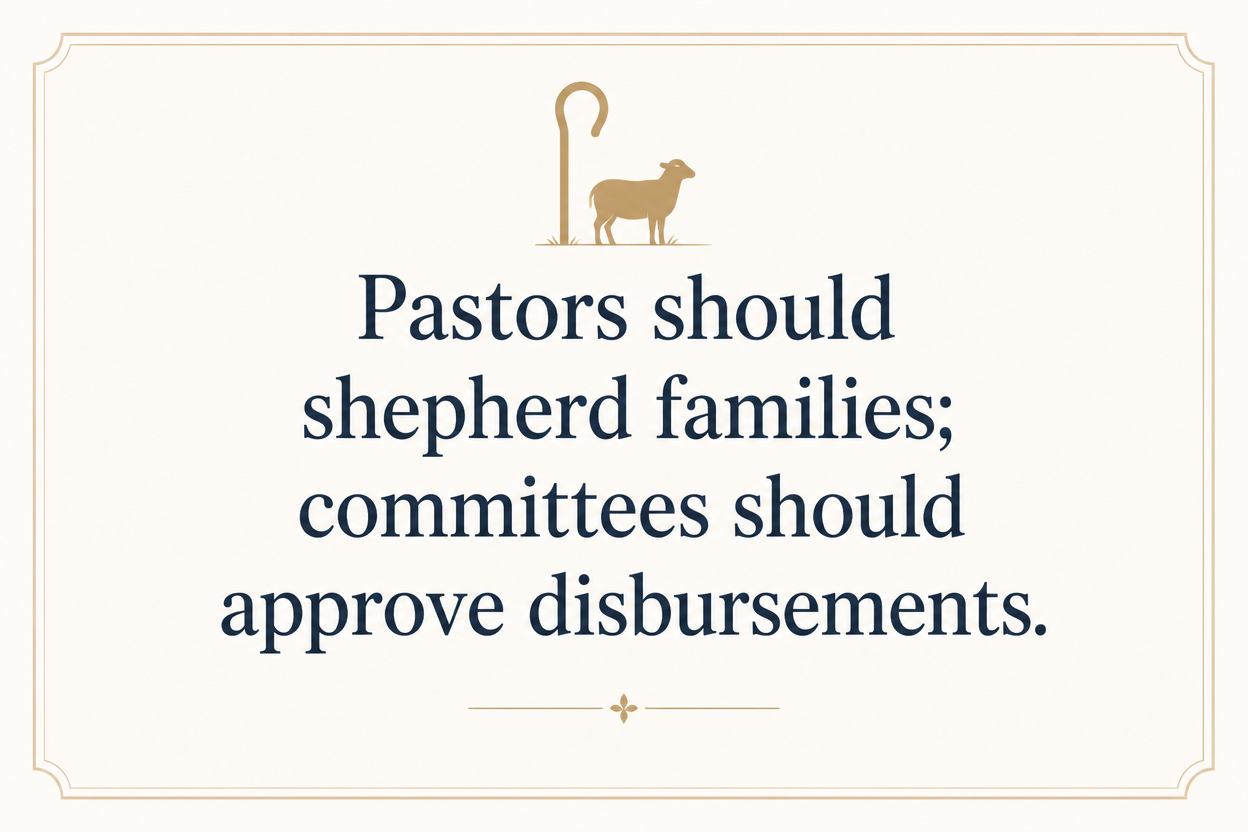
Pastors should shepherd families; committees should approve disbursements. When a single leader carries both roles, conflicts of interest become more likely, even when motives are pure. A simple safeguard is a small team—ideally including someone with finance experience—who reviews requests, verifies documentation, and records decisions. When the process is clear, families are cared for without being put on display.
For donors who want a broader view of how churches and ministries structure compassionate, accountable care, we encourage engagement with Orphan Care Ministries as a category that includes prevention, family strengthening, foster care support, and adoption assistance.
Choose fundraising methods that are truthful and trauma-informed
Reject crisis marketing and protect the child
Adoption fundraising can drift into ethically compromised storytelling: oversharing family details, implying a child is “waiting for your donation,” or treating a child’s image as a tool to meet a budget. Donors increasingly recognize that this is not only distasteful; it can be harmful. Children have a right to privacy. Birth families have a right to dignity. Churches should adopt a default posture of restraint.
This does not require sterile communication. It requires truthful communication. Emphasize the church’s commitment to long-term support, ethical practice, and verified expenses rather than emotionally loaded narratives. When a family chooses to share their story, churches should ensure consent is informed, limited, and revocable, and that the story does not include identifying details that could harm a child now or later.
Use donor pathways that match different convictions
Most congregations include donors who care deeply about adoption but differ on strategy. Some will give to direct family assistance. Others will prefer funding counseling, respite care, or foster family support. Churches can serve both by offering multiple giving options under a coherent mission. The goal is not to multiply funds for complexity’s sake, but to reduce friction for conscientious donors while preserving governance clarity.
A practical model is to raise funds through a standing adoption assistance fund rather than only through one-time, family-specific appeals. Standing funds reduce the pressure to “sell” a particular story and allow the church to respond when needs arise without scrambling publicly.
Make the financial case with discipline, not clichés
Explain the cost without treating money as the villain
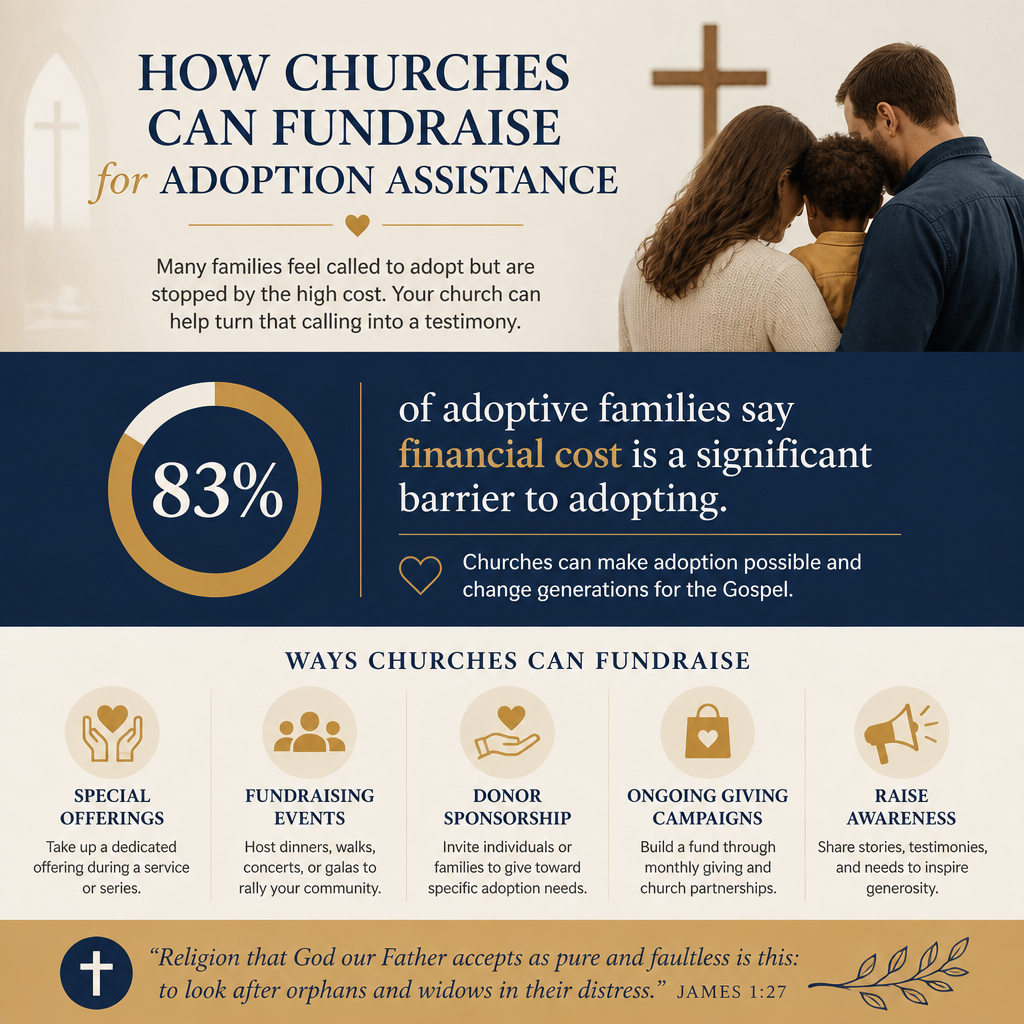
Domestic and international adoptions can involve significant professional and legal costs. While costs vary widely by route and jurisdiction, the basic truth is that many faithful families are financially constrained in ways that are not resolved by goodwill alone. Donors respond well when churches name this reality without moralizing, and when they explain how assistance is administered (what is paid, to whom, and under what documentation).
Church leaders should also avoid implying that high cost automatically signals corruption, or that low cost automatically signals virtue. Some expenses reflect legitimate legal safeguards, travel requirements, or required professional services. Mature donors want to see discernment rather than blanket judgments.
Communicate outcomes that are appropriate and verifiable
Unlike many ministries, adoption assistance is not measured primarily by “decisions” or “attendance.” The appropriate outcomes are quieter: reduced financial barriers for qualified families, strengthened placement stability through post-placement support, and a congregation better formed for long-term care. Churches can report aggregate data without compromising privacy (for example, number of families assisted, total disbursed by expense category, and the presence of required documentation).
When donors ask how to evaluate an outside partner ministry involved in adoption or foster care, we advise them to look for evidence consistent with The Most Trusted Standard: a clear faith foundation, credible financial integrity, accountable governance and leadership, and transparency about effectiveness. Most Trusted exists to serve that exact donor need—giving with confidence when emotions run high and information is uneven.
Pair adoption assistance with prevention and long-term support
Do not fund the finish line and neglect the marathon
Adoption is not the end of a story; it is the beginning of a family’s long-term formation under God. Churches that fundraise for adoption assistance should also prepare to fund and provide durable supports: counseling, trauma-informed pastoral care, respite for overwhelmed parents, and practical help during disruptions or crises. Donors often prefer to invest in a church that has counted this cost rather than one that celebrates placements and then disappears.
Research and practice in child welfare have increasingly emphasized family-based care and the importance of stable attachment relationships. The National Scientific Council on the Developing Child, convened at Harvard, has summarized how toxic stress and early adversity affect development, underscoring why stable, responsive caregiving matters for children who have experienced loss or trauma (Center on the Developing Child at Harvard University).
Offer donors concrete ways to give beyond a single check
Some donors are ready to make a substantial gift. Others can offer steady, smaller support that compounds over time. Churches can honor both by offering clear lanes of participation that do not depend on public recognition.
- Give to a standing adoption assistance fund with published policies and annual reporting
- Underwrite post-placement counseling or trauma-informed caregiver training
- Provide respite care resources for adoptive and foster families
- Fund emergency stability grants for families at risk of disruption
- Support vetted community partners working in family preservation and reunification
When donors want to compare the kinds of ministries operating in this space—adoption support, foster care mobilization, family strengthening, and related work—Orphan Care Ministries in Adoption and Foster Care is a helpful reference point for understanding the range of approaches and the accountability questions each approach raises.
FAQs for How churches can fundraise for adoption assistance
Should churches fundraise for specific adopting families or only for a general fund?
Both models can be done ethically, but a general fund is typically easier to govern well and less likely to create pressure for oversharing. If a church supports specific families, the church should still route gifts through a documented, restricted process: written eligibility criteria, invoices or receipts, and disbursements paid directly to providers when feasible. Mature donors generally prefer the model that best protects privacy and reduces emotional manipulation.
What should a donor look for before giving to a church adoption fund?
Donors should look for a written policy, accountable decision-making (not one person’s discretion), clear documentation standards, and basic financial reporting that shows how restricted gifts were used. Where the church partners with outside ministries or agencies, donors should also ask whether those partners can demonstrate ethical practice and credible governance. The closer an effort aligns with The Most Trusted Standard—faithful mission, financial integrity, responsible leadership, and transparent reporting—the easier it is to give with confidence.
A fundraising approach worthy of the church’s witness
Churches can fundraise for adoption assistance in a way that honors the gospel by combining theological clarity with administrative competence. Donors are not asking for perfection. They are asking for a church that tells the truth, protects the vulnerable, and treats restricted gifts with the seriousness Scripture assigns to stewardship. When a congregation builds that kind of fund, adoption assistance becomes not merely a project to finance, but a shared ministry that forms a people.



