
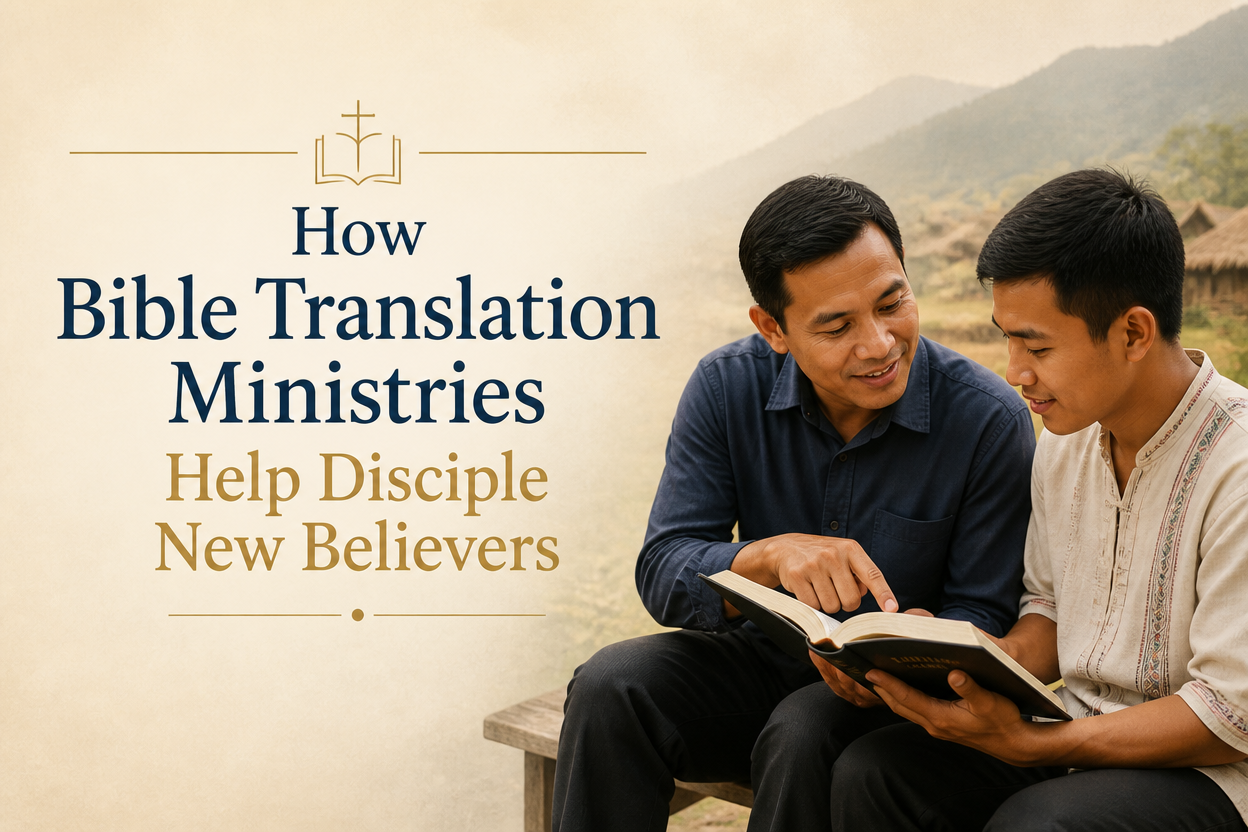
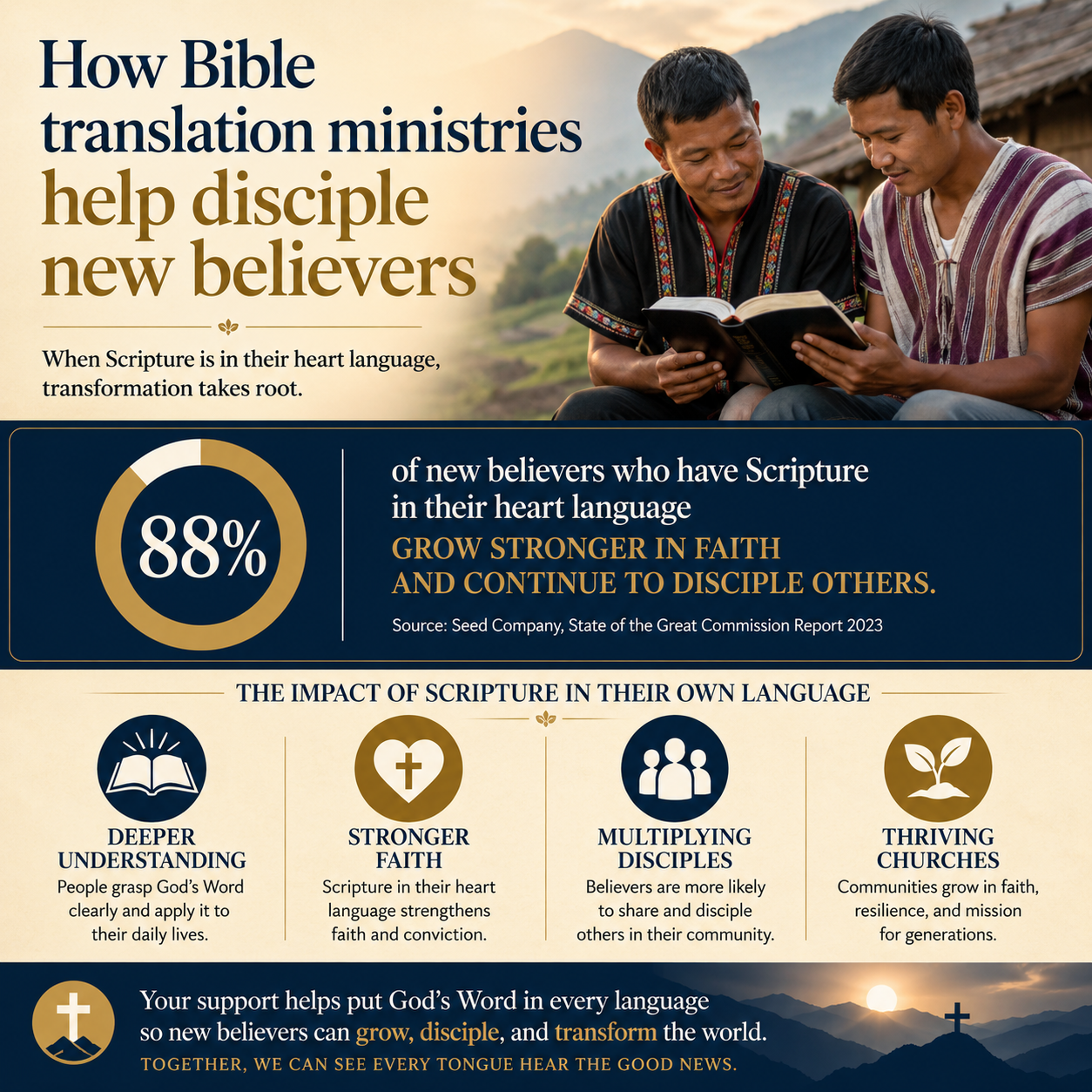
How Bible translation ministries help disciple new believers is not a secondary question of communications or literacy. It is a question of whether the church can obey Christ with clarity, depth, and endurance where the gospel is newly received and the Scriptures are newly heard.
Christian donors often sense the urgency instinctively: a local congregation can gather, sing, pray, and serve in Jesus’ name, yet remain dependent on outside teachers if Scripture is not accessible in the language people actually think and dream in. The harder question is what “help” should mean. Translation can empower discipleship, or it can unintentionally replace local responsibility with external expertise. Mature giving insists on the difference.
Discipleship begins with Scripture in the language of the heart
The Word is not an accessory to the church
The New Testament does not separate the church’s growth from the church’s reception of apostolic teaching. Paul tells Timothy that “all Scripture is breathed out by God and profitable” for forming a people equipped for every good work (2 Timothy 3:16–17). That claim carries practical implications: if Scripture is materially inaccessible, discipleship becomes structurally dependent on secondhand instruction.
This is why Bible translation is not merely a front-end evangelism project. It is a long-term ecclesial investment. When the Word is available, local pastors can preach expository sermons rather than retelling stories from memory. Parents can catechize their children from a text rather than from fragments. Believers can test teaching, including teaching from visiting outsiders, rather than receiving it uncritically (Acts 17:11).
Access is still incomplete in measurable ways
The global translation movement has made substantial progress, but the remaining gaps are not marginal. As of 2024, full Bible translations exist in 756 languages, with the New Testament in 1,726 languages, according to Wycliffe Global Alliance (https://www.wycliffe.net/). The same reporting notes that significant numbers of languages still have no Scripture at all or only limited portions, which means many Christian communities remain structurally constrained in how they disciple new believers.
Donors sometimes assume the work is essentially finished because major world languages are well-served. Yet discipleship often grows fastest along the edges of linguistic reach: minority languages, oral cultures, displaced populations, and regions where public Christian education is restricted. Translation ministries operate in precisely those contexts where the church’s normal discipleship channels are most fragile.
Translation strengthens the ordinary means of disciple-making
Preaching and teaching can move from dependency to maturity
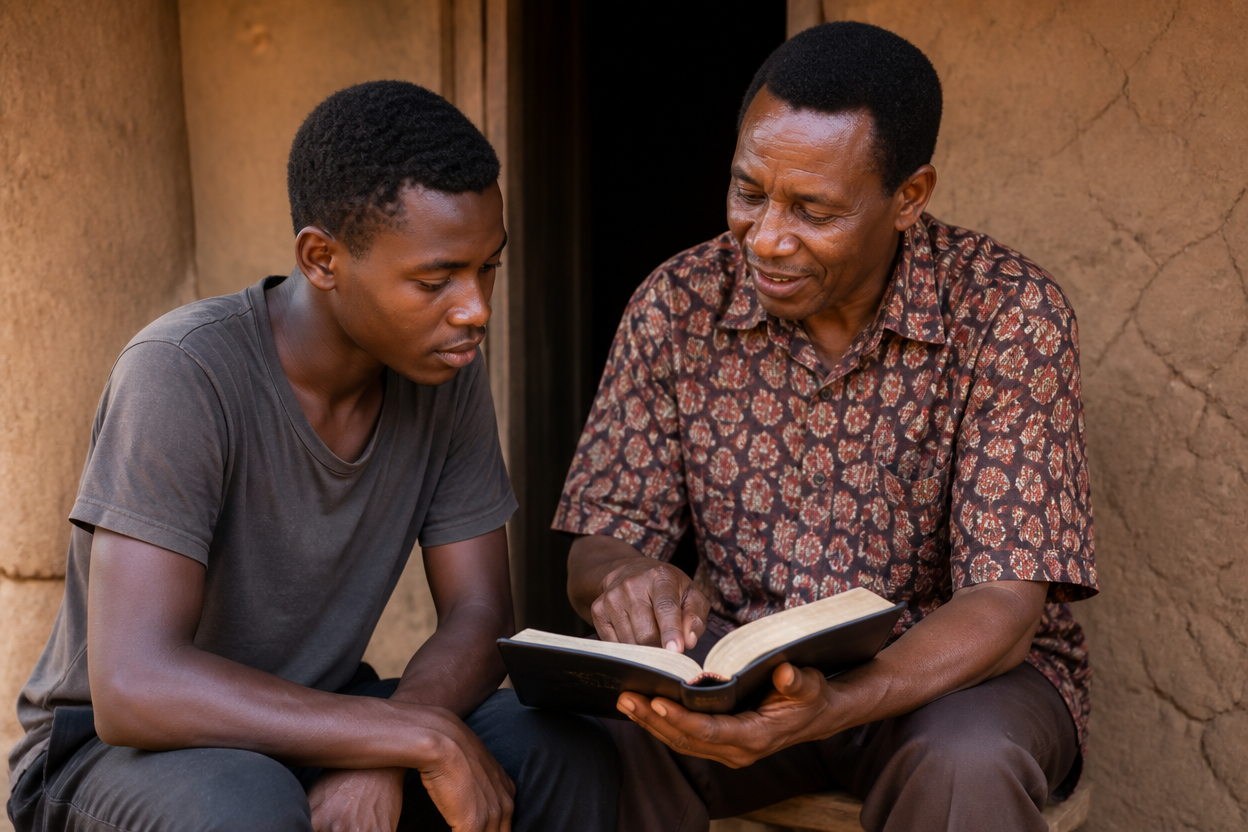
New believers learn the faith through habits: hearing Scripture read, receiving faithful preaching, practicing prayer, and being formed in community. A translation project directly serves these ordinary means. It changes what is possible week by week for a local congregation. The fruit is not primarily “content distribution.” The fruit is the slow formation of a church capable of feeding itself from the Word.
What this means in practice is that a translation ministry’s most important outcomes are often mediated through local leadership development. Translators and consultants are not the end; they are scaffolding. The end is local pastors and elders who can teach with confidence because the text is present and comprehensible.
Scripture engagement is not automatic
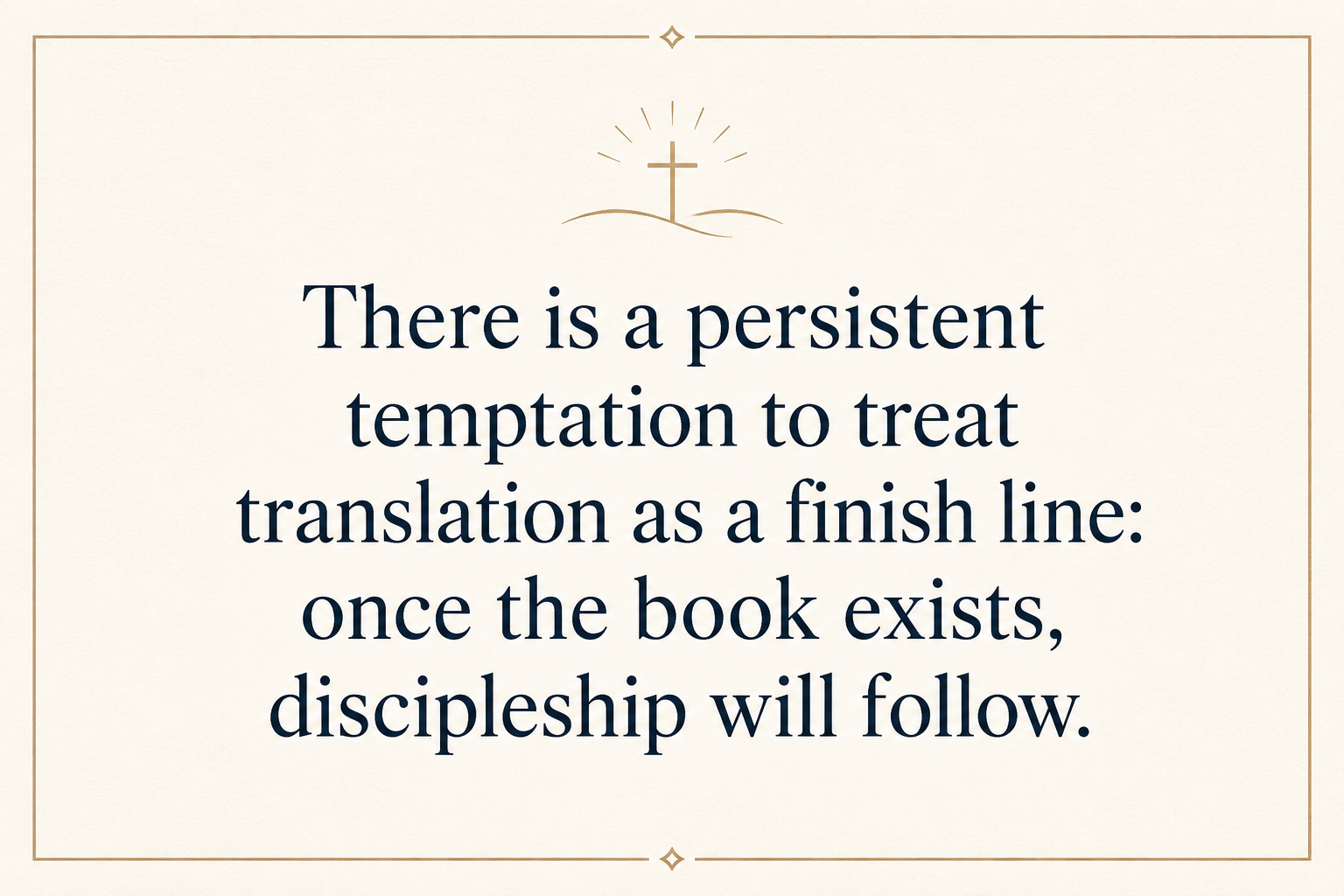
There is a persistent temptation to treat translation as a finish line: once the book exists, discipleship will follow. The field has had to reckon with the reality that “availability” does not guarantee “use.” Literacy rates may be low, reading may not be the dominant learning mode, and trauma or displacement may compress people’s capacity for sustained study.
This is why many translation organizations pair translation with Scripture engagement: audio Scriptures for oral learners, small-group materials, and training for local facilitators. The donor implication is straightforward: translation projects should be evaluated not only on pages completed, but on whether local churches are being equipped to use the Scriptures faithfully over time.
Healthy translation work honors local agency and ecclesial authority
Who owns the work matters as much as the work itself
Christians genuinely disagree about the best models for mission partnership, but the direction of travel in the translation movement has been clear: toward local leadership, local governance, and local church ownership. Translation done “for” a community can drift into a form of benevolent control. Translation done “with” and “by” the church can become an instrument of maturity.
Across our verification work at Most Trusted, we observe that ministries most likely to produce durable discipleship outcomes can explain, in concrete terms, how local churches are involved in decisions about dialect choice, key terms, testing, and distribution. They do not treat local believers as a focus group; they treat them as the responsible stewards of the Word in their own language community.
Key theological terms require more than technical skill
Translation is never value-neutral. Decisions about terms like “Son of God,” “righteousness,” “covenant,” “repentance,” and “spirit” can shape doctrine for generations. The field has faced public debates where well-intentioned efforts to reduce misunderstanding introduced doctrinal confusion. Sophisticated donors do not need the debates minimized; they need them handled with seriousness.
A credible translation ministry typically has (1) a transparent statement of faith, (2) clear theological accountability structures, and (3) a documented review process that includes qualified church leaders and trained consultants. Those are not bureaucratic preferences. They are safeguards for the church’s confession and the new believer’s formation.
What donors can responsibly evaluate beyond inspiring stories
Impact is real, but it must be defined carefully
Donors often ask for measurable results. That is appropriate. The risk is measuring what is easy rather than what is true. Counting languages “started” can obscure whether a project has a viable local team, community testing, and a realistic plan for long-term revision and distribution. Counting “people reached” can collapse into inflated estimates that no one can audit.
In the category of How Bible Translation Ministries Measure Impact, we repeatedly see that trustworthy reporting distinguishes between outputs (drafts completed, checks finished, audio recordings produced) and outcomes (Scripture use in churches, comprehension, local teaching capacity). Mature ministries state their assumptions and limitations rather than presenting a single number as proof of spiritual fruit.
Markers of a ministry likely to disciple, not merely publish
Donors who want their giving to strengthen discipleship can ask for evidence in areas that map to long-term church health. The following questions often clarify whether a translation ministry’s work is designed to serve the local church rather than build a standalone project:
- Is there formal partnership with local churches or a recognized church network in the language community?
- Are local translators and reviewers trained and paid fairly, with a plan for continuity rather than short-term contracting?
- Is there a defined process for community testing that includes new believers and non-literates, not only educated elites?
- Are Scripture engagement plans appropriate to the culture, including audio where reading is not dominant?
- Is theological accountability clear, including how key terms are handled and who signs off on final decisions?
These are not “extra.” They are the difference between a text that exists and a text that disciples.
Why verification matters in Bible translation giving
High trust is required because the work is complex
Bible translation involves long timelines, restricted-access locations, and specialized expertise. Those features make the work both worthy and difficult to evaluate. They also create conditions where donors can be asked to give on the basis of vision alone, without adequate clarity on finances, governance, and measurable effectiveness.
Most Trusted exists because Christian generosity should not be forced to choose between cynicism and naïveté. We evaluate ministries against The Most Trusted Standard, a 15-criteria framework covering faith foundations, financial integrity, governance and leadership, and transparency and effectiveness. For donors considering translation work, that kind of verification is not a substitute for prayerful discernment; it is a means of stewardship that respects the gravity of the task.
Translation ministries face distinctive integrity pressures
Several tensions recur in this field. Restricted contexts can limit what ministries can disclose publicly, which can be legitimate, but it also reduces external accountability. Long projects can encourage overstated progress reporting. And because the cause is emotionally compelling, donors may under-ask basic questions about reserves, related-party transactions, or leadership oversight.
The ministries that meet The Most Trusted Standard tend to demonstrate disciplined transparency without endangering partners. They can explain what they will not publish, why they will not publish it, and what alternative accountability mechanisms are in place. That posture protects local believers and honors donor trust.
FAQs for How Bible translation ministries help disciple new believers
Does translation alone create discipleship, or is additional ministry required?
Translation is a necessary foundation in many contexts, but it is rarely sufficient by itself. Discipleship typically requires Scripture engagement, local teaching capacity, and church structures that can sustain reading and obedience over time. Strong translation ministries plan for this by equipping local churches to use the text through oral resources, training, and accessible formats.
What should donors prioritize when choosing a Bible translation ministry?
Donors should prioritize theological accountability, local church ownership, credible project management, and transparent reporting that distinguishes outputs from outcomes. It is also wise to examine governance and financial integrity, since long timelines and restricted settings create real accountability risks. Many donors begin by reviewing ministries in Bible Translation Ministries to compare approaches with clarity.
A mature vision for translation as discipleship infrastructure
Bible translation ministries help disciple new believers when they serve the church’s ordinary life: preaching, teaching, worship, family formation, and the testing of doctrine. The enduring question for donors is not whether translation is inspiring, but whether it is being carried out in a way that strengthens local responsibility and preserves theological faithfulness. That is the kind of giving that honors both the Word of God and the people of God.



