
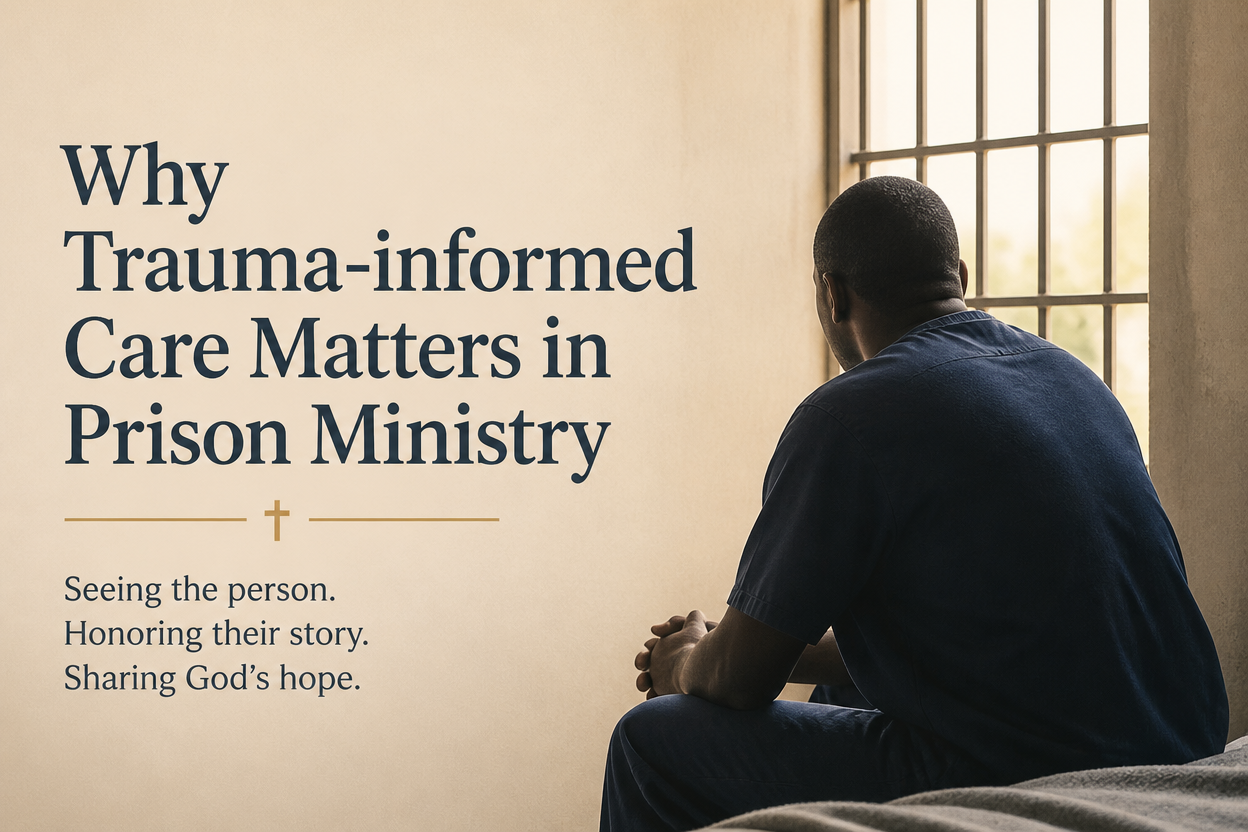
Why trauma-informed care matters in prison ministry is not a question of ministry “style.” It is a question of whether our discipleship and our care for people made in God’s image are aligned with what we now know about trauma, sin, shame, and healing. Incarcerated women and mothers are disproportionately shaped by violence, coercion, addiction, and profound relational loss; a ministry that ignores that reality can unintentionally intensify the very wounds it hopes to name and redeem.
Jesus’ words in Matthew 25 place prison visitation among the works of mercy that mark allegiance to him. Yet serious prison ministry has always required more than presence. It requires wisdom about power, vulnerability, and the long work of restoration. Trauma-informed care provides a set of practices that help ministries avoid re-harming people while holding fast to the Christian claims of repentance, forgiveness, and new life.
Trauma is not peripheral to incarceration for many women and mothers
What trauma looks like behind the visiting room door
Trauma is not merely a difficult memory; it is often a pattern of bodily and relational survival responses formed under threat. In women’s incarceration, those responses may show up as hypervigilance, dissociation, volatility, compliance that is not consent, or a numbness that masks despair. A volunteer may interpret these as “resistance” or “lack of hunger for God,” when they are frequently symptoms of a nervous system trained by danger.
Verifiable evidence suggests that trauma exposure is common among incarcerated women. The Bureau of Justice Statistics has reported high rates of prior abuse among people in custody, including women reporting histories of physical or sexual abuse before incarceration (Bureau of Justice Statistics). The exact prevalence varies by study and population, but the direction is consistent: many women entering prison carry a history of victimization that predates their offense and shapes their coping.
Why mothers in custody require particular pastoral seriousness
Motherhood concentrates trauma rather than diluting it. Separation from children can trigger acute grief, shame, and panic, especially when a mother has already experienced coercive control, family disruption, or the loss of a caregiver role. The Administration for Children and Families has documented that parental incarceration is an adverse childhood experience with measurable implications for children’s stability and well-being (Administration for Children and Families). For prison ministries serving mothers, trauma-informed care is not an add-on; it is often the difference between a momentary spiritual high and a sustainable path of reunification and stability.
This is one reason donors who care about family restoration should look closely at ministries working with incarcerated mothers. The work is spiritually urgent, but it is also clinically complex. Scripture does not require us to be naïve about human damage. It requires us to be truthful.
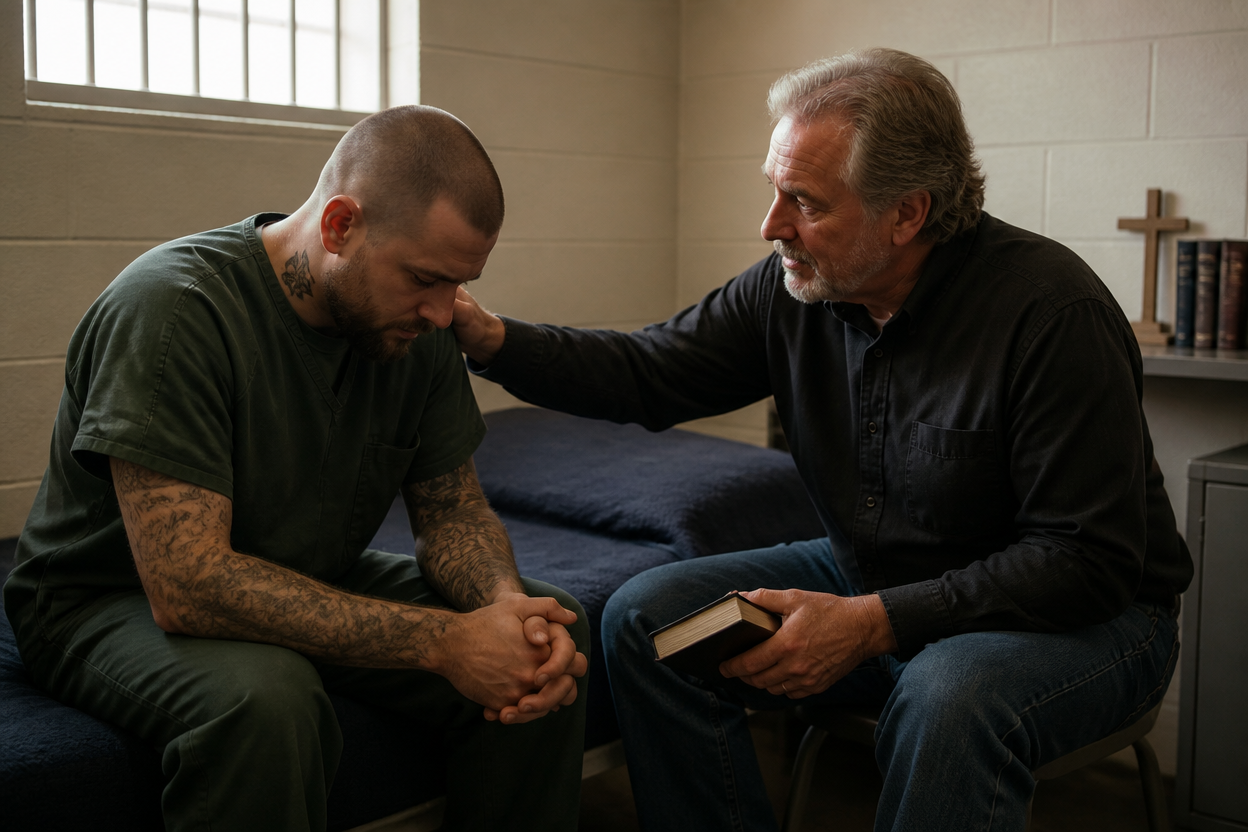
Trauma-informed care protects the gospel from being misapplied
Forgiveness language can be weaponized without wisdom
Christians genuinely disagree about how quickly the language of forgiveness should be introduced in trauma-heavy settings, and the disagreement is not trivial. Forgiveness is central to the gospel, but forced forgiveness can become a spiritual tool for silencing victims, hastening reconciliation, or bypassing lament. Trauma-informed care does not diminish forgiveness; it insists that forgiveness be taught in ways that honor truth, safety, and moral accountability.
In prison ministry, the stakes are elevated because many incarcerated women have been harmed by someone with greater power: a partner, a family member, a trafficker, or a system. When a ministry speaks about submission, reconciliation, or “honoring authority” without careful context, it can mirror the dynamics of coercion. A trauma-informed posture asks: Are we using biblical language to draw people toward Christ, or to make them easier to manage?
Repentance is real, but shame is not a sacrament
Some ministries fear that trauma-informed care will soften the moral clarity of the gospel. That fear deserves a direct answer. Trauma-informed care is not moral relativism. It is a disciplined refusal to confuse shame with conviction. Conviction is specific, tethered to truth, and oriented toward life. Toxic shame is global, corrosive, and oriented toward hiding.
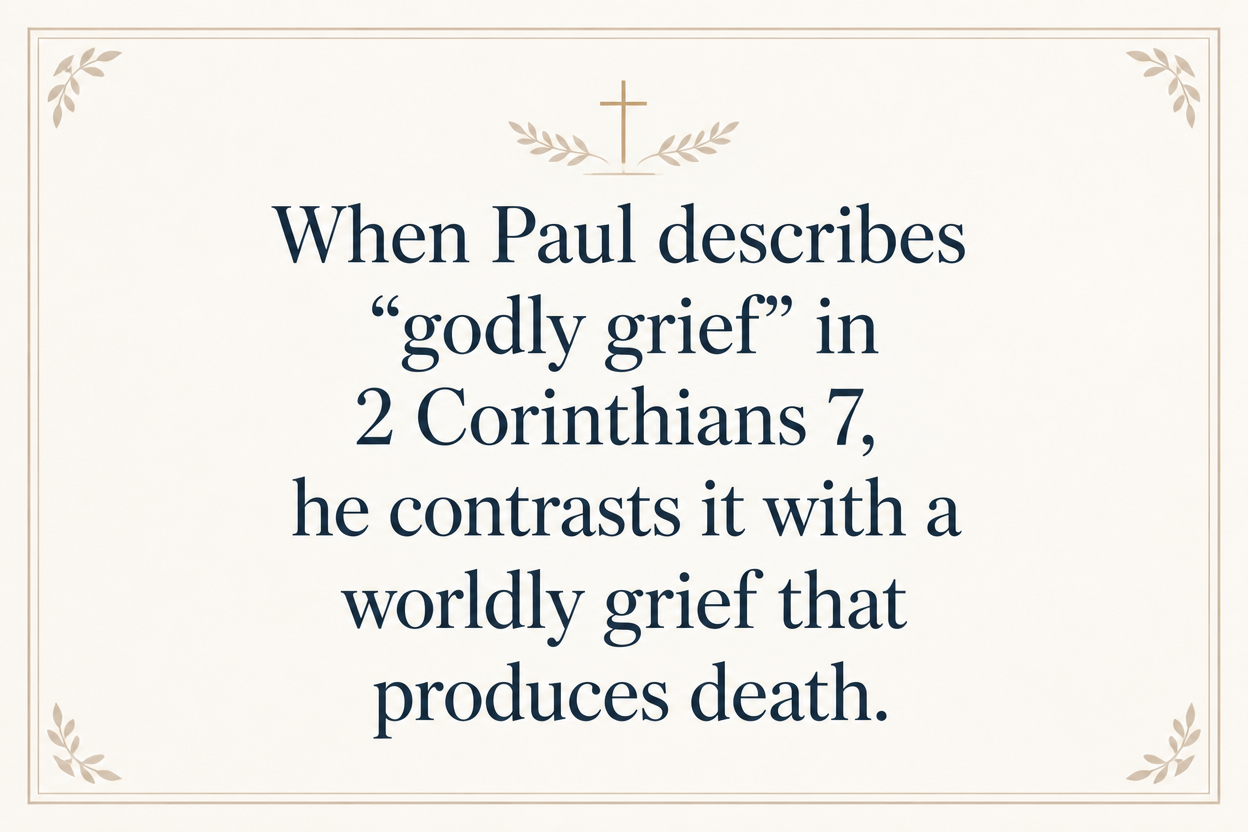
When Paul describes “godly grief” in 2 Corinthians 7, he contrasts it with a worldly grief that produces death. A ministry that repeatedly triggers shame responses may produce compliance, tears, and dramatic testimonies while quietly increasing despair, self-harm risk, or relapse after release. Trauma-informed care helps a ministry pursue repentance that bears fruit rather than a cycle of collapse and self-contempt.
Trauma-informed prison ministry requires practices, not slogans
Safety is spiritual, not merely procedural
In correctional environments, “safety” can sound like a bureaucratic word. In practice, safety is often the precondition for honest confession, prayer that is not performative, and relationships that are not transactional. Trauma-informed care typically centers a few core commitments—often described in the clinical literature as safety, trustworthiness, choice, collaboration, and empowerment. Those commitments translate cleanly into ministry practice without requiring a ministry to adopt a secular worldview.
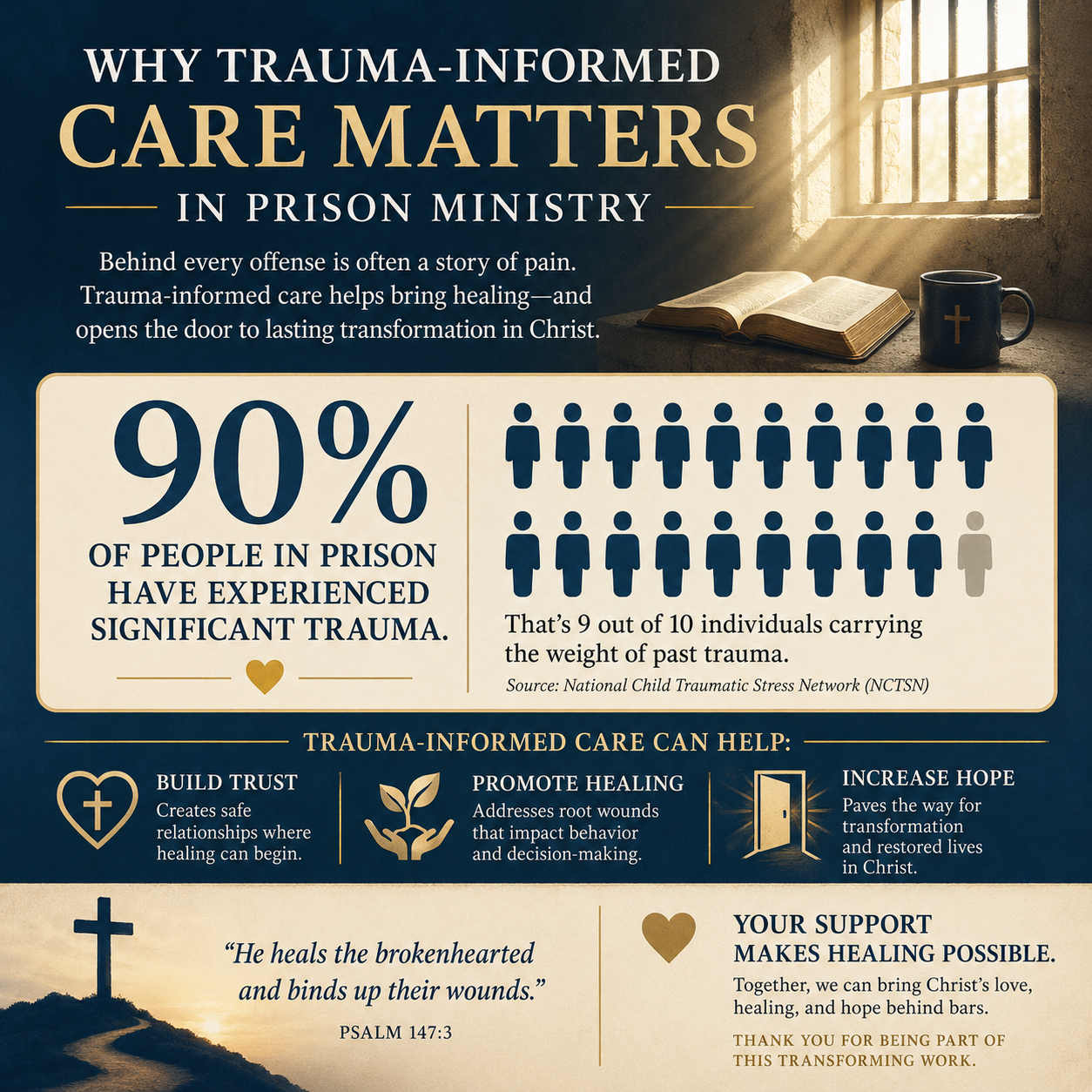
What this means in practice is that volunteers learn to avoid public disclosures that pressure women to recount abuse histories; leaders set clear boundaries about communication and favoritism; and programs are predictable rather than emotionally volatile. Many ministries already do some of this instinctively. Trauma-informed care makes it intentional and accountable.
Concrete marks donors can look for
Donors often want to know what trauma-informed care looks like on the ground. The following practices are not exhaustive, but they are observable and verifiable:
- Volunteer training that includes boundaries, power dynamics, and how trauma responses can appear in group settings
- Clear protocols for disclosures of abuse, self-harm, or imminent risk, including coordination with facility rules
- Program design that minimizes coercion, including realistic expectations for attendance and participation
- Partnerships with qualified counselors or reentry clinicians when clinical needs exceed pastoral scope
- Care plans that anticipate release transitions, especially around housing, addiction recovery, and family contact
These practices do not replace prayer, Scripture, or the ministry of the church. They remove avoidable obstacles so that the ordinary means of grace are not tangled with fear and confusion.
Donors exploring the broader landscape of this work may benefit from the resources and organizations gathered in Prison and Post-Prison Ministries, especially where ministries address both incarceration and the fragile months after release.
Women and mothers face distinct vulnerabilities that ministries must not ignore
Power, coercion, and the risk of re-traumatization
Women in custody are not simply “men with different needs.” Many have histories of sexual victimization, coercive relationships, and survival economies. That changes how they experience authority figures, group settings, and even well-meaning attention from volunteers. Trauma-informed care urges ministries to be explicit about boundaries, to avoid favoritism, and to design discipleship that does not depend on emotional intensity or public disclosure as proof of spiritual seriousness.
There is also a question of institutional trust. Many incarcerated women have learned to protect themselves by telling authorities what they want to hear. A ministry can inadvertently train “church talk” rather than nurture true transformation if it rewards performative vulnerability. Trauma-informed care resists that temptation by honoring choice, pacing, and private pastoral conversations when appropriate.
Mother-child connection is both a ministry opportunity and a risk point
Ministries that serve mothers often facilitate parenting classes, letter-writing programs, supervised contact, or coordination with caregivers on the outside. These efforts can be profoundly redemptive. They can also stir grief and destabilization if handled carelessly. A trauma-informed approach anticipates that parenting content will activate shame, fear of losing children, anger at caregivers, and memories of how a mother herself was parented.
This is where specialized programs for women and mothers become essential rather than optional. Donors who want their giving to reflect careful stewardship can look for ministries rooted in the realities of maternal separation and reunification, such as those highlighted in Prison Ministry for Incarcerated Women and Mothers.
Donor discernment should reward ministries that treat trauma with moral clarity and measurable integrity
Trauma-informed care can be performative without accountability
The field has had to reckon with the fact that “trauma-informed” can become a label rather than a discipline. Some organizations adopt the vocabulary without changing their practices, governance, or reporting. Others use trauma language to excuse poor leadership or to sidestep moral responsibility. Donors should not accept branding in place of evidence.
Across our verification work at Most Trusted, we observe that ministries most capable of sustaining trauma-informed prison ministry tend to combine theological depth with operational maturity. They know what they do, why they do it, and how they handle the foreseeable risks. They also understand their limits, referring clinical needs to clinicians and building partnerships rather than attempting to be everything.
How The Most Trusted Standard aligns with trauma-informed prison ministry
The Most Trusted Standard evaluates ministries across 15 criteria in four domains: Faith Foundation, Financial Integrity, Governance and Leadership, and Transparency and Effectiveness. In a trauma-heavy context, these domains are not administrative details; they are safeguards for vulnerable people and for donor stewardship.
Governance and leadership matter because poorly governed ministries are more prone to boundary failures, charismatic overreach, and uncorrected harm. Financial integrity matters because crisis-driven giving can be exploited, and because women leaving prison often need stable, coordinated support rather than dramatic but unsustained interventions. Transparency and effectiveness matter because good intentions are not the same as outcomes—especially in reentry, where relapse, recidivism, and family instability are real possibilities.
Donors can ask ministries direct questions without suspicion or cynicism: How are volunteers trained? What is the protocol when someone discloses abuse? How do you coordinate with facility rules? What outcomes do you track after release? A trustworthy ministry will answer with clarity, not defensiveness.
FAQs for Why trauma-informed care matters in prison ministry
Does trauma-informed care conflict with preaching repentance and personal responsibility?
No. Trauma-informed care does not deny moral agency; it clarifies what healthy responsibility looks like in a traumatized body and community. It helps ministries distinguish conviction from toxic shame, avoid coercive dynamics, and teach repentance in ways that produce durable fruit rather than short-lived compliance.
What should donors prioritize when funding trauma-informed prison ministry for women and mothers?
Donors should prioritize ministries that demonstrate trained volunteers, clear safeguarding protocols, mature partnerships for clinical and reentry needs, and transparent reporting on both spiritual formation and practical outcomes. Strong governance and financial integrity are not distractions from ministry; they are part of loving people who are especially vulnerable to harm.
Why this deserves donor seriousness
Trauma-informed care matters in prison ministry because the Church is called to go to those in prison with truth and mercy, not with spiritual shortcuts. For incarcerated women and mothers, ministry that ignores trauma often mistakes survival responses for spiritual failure and can unintentionally deepen shame and distrust. Donors who want their giving to carry the weight of Matthew 25 should fund ministries that combine theological clarity with practices that protect the vulnerable and make healing credible.



