

How donors can fund prison parenting classes is not first a question of programming; it is a question of what we believe about redemption, responsibility, and the family. When parents are incarcerated, children rarely have the option of waiting for the criminal legal system to finish its work before their need for stable love and guidance becomes urgent.
Christian donors often feel the weight of competing obligations. We want to honor the reality of crime and its victims, avoid sentimental narratives that deny harm, and still obey Jesus’ unmistakable call to remember those in prison. In Matthew 25, Christ places prison ministry alongside feeding the hungry and welcoming the stranger as a mark of fidelity to him. Parenting classes inside correctional facilities are one concrete way to pursue mercy with moral clarity.
Why prison parenting classes belong in serious Christian stewardship
Children carry the sentence they did not receive
A parent’s incarceration rearranges a child’s life: caregiving, housing, schooling, and identity formation. The U.S. Department of Justice’s Bureau of Justice Statistics has long documented that a large share of people in state and federal prisons are parents of minor children, which means the downstream effects are not marginal to the justice system; they are part of its social footprint. Donors should expect a ministry’s rationale for parenting programs to be rooted in the welfare of children as well as the discipleship of parents. Bureau of Justice Statistics
Scripture’s concern for children is not abstract. God repeatedly identifies himself as a defender of the vulnerable, and the church’s care for households is not optional philanthropy; it is a lived expression of the gospel. Funding parenting formation in prison is one way to reduce the likelihood that a child’s future is shaped by absence, instability, and intergenerational patterns of sin and suffering.
Mercy does not deny accountability
Christians genuinely disagree about the relationship between mercy and justice in criminal punishment. Some fear that services for incarcerated parents minimize offense severity or distract from victim care. The better ministries name the tension plainly: a parent can be guilty and still be a parent; a child can need protection and still need a father or mother who is being rebuilt rather than merely warehoused.
Prison parenting classes are not a substitute for justice. They are an investment in the kinds of repentance, self-control, and relational repair that justice should aim to cultivate. Donors should look for programs that include victim-awareness components where appropriate, insist on personal responsibility, and coordinate with facility expectations rather than undermining them.
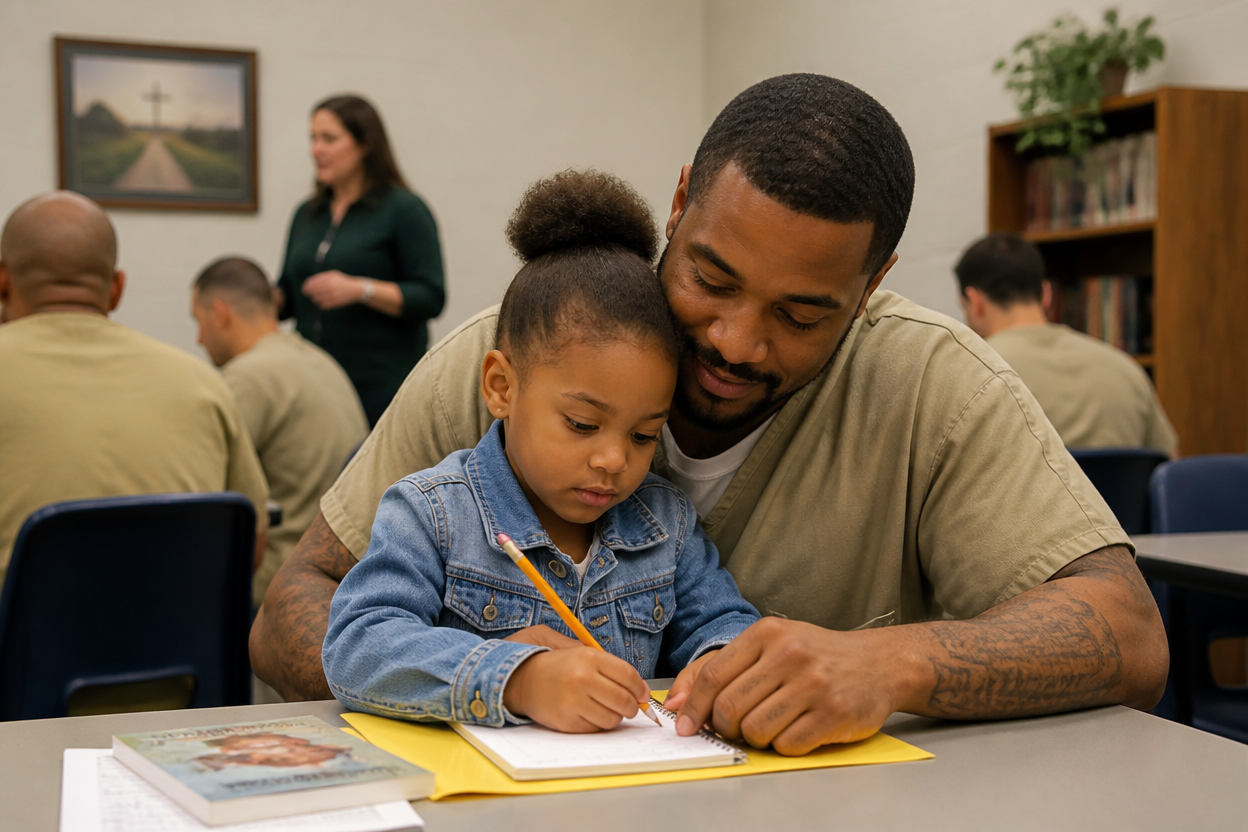
What effective prison parenting classes actually require
Curriculum is the easy part
Many donors assume the primary cost is printed material or a licensed curriculum. In practice, the hard costs often sit elsewhere: security clearance processes, volunteer training, facility scheduling constraints, trauma-informed practice, and continuity when transfers happen. A program that looks inexpensive on paper may be fragile in the real operating environment of a jail or prison.
Across our verification work at Most Trusted, we observe that programs with durable outcomes treat parenting education as formation rather than information. They build repetition, coached practice, and reinforcement through chaplaincy partnerships or reentry support. They also plan for discontinuity as a normal condition, not an exception.
Mothers and fathers face distinct barriers
Women’s incarceration often carries particular family consequences because mothers are frequently primary caregivers before incarceration. When women enter prison, children may cycle through relatives, foster placements, or unstable arrangements, and the mother’s shame can be acute. Parenting classes that serve incarcerated women well tend to incorporate grief processing, sober attention to trauma histories, and practical planning for reunification.
Fathers, by contrast, may face a different set of relational barriers: estrangement, limited prior involvement, or complex dynamics with the child’s mother or caregivers. Effective classes for men often include accountability, honest confrontation of past absence, and coaching for respectful co-parenting.
Donors who want a broader view of the field can situate this work within Prison and Post-Prison Ministries, where the strongest approaches combine in-prison discipleship with post-release support rather than treating them as separate charitable interests.
How donors can fund prison parenting classes without causing predictable harm
Fund what makes the program trustworthy, not merely visible
Donors are often offered compelling graduation photos and heartfelt testimonies. These can be legitimate fruit, but they are not verification. The field has had to reckon with a recurring problem: underfunding the “unseen” work that keeps programs safe and credible—background checks, supervision, data stewardship, staff development, and coordination with prison administration—while rewarding ministries that market the easiest stories.
The Overhead Myth letter, signed by GuideStar, BBB Wise Giving Alliance, and Charity Navigator, argued that simplistic overhead ratios can distort donor behavior and weaken nonprofits’ capacity to deliver outcomes. Parenting programs inside prisons are a clear example: the invisible infrastructure is often what protects participants and makes the program replicable. Candid GuideStar
Choose funding structures that strengthen consistency
Parenting change is typically slow, and the institutional environment is unstable. What this means in practice is that one-time gifts can help, but multi-year support and restricted-to-purpose operating support often help more. Donors can fund prison parenting classes through several responsible pathways:
- Multi-year funding for program staff and facilitator training tied to clear deliverables
- Underwriting curriculum licenses plus coaching and supervision, not materials alone
- Support for secure communication options that allow parent-child contact where permissible
- Funding evaluation capacity to track completion, engagement, and post-release continuity
- Covering transportation or child-care assistance for caregivers attending family-focused sessions
Christians who have followed the development field will recognize a parallel to the insights of Corbett and Fikkert in When Helping Hurts: money can unintentionally reinforce dependency or undermine dignity if it funds activity without formation. Parenting work behind bars should aim at responsibility, repaired relationship, and realistic planning, not merely emotional uplift. Chalmers Center
Due diligence questions Christian donors should ask before funding
Questions that test for integrity and competence
Christian donors have a duty to be both generous and discerning. The biblical warnings about partiality and the love of money do not negate prudence; they require it. Before funding a prison parenting program, donors should ask for concrete answers, not general assurances.
We recommend questions that reveal whether the ministry can operate responsibly in a high-risk context:
- What formal agreement or authorization exists with the facility, and who is the point of contact?
- How are facilitators trained for trauma, mandated reporting, and appropriate boundaries?
- What is the plan when participants transfer, enter segregation, or lose program access?
- How does the program address accountability for harm and, where appropriate, victim awareness?
- What outcomes are tracked, and how does the ministry protect participant privacy in reporting?
For donors particularly focused on mothers, the category Prison Ministry for Incarcerated Women and Mothers is a useful lens because it highlights ministries that understand the distinct realities of maternal separation, reunification processes, and the practicalities of family stabilization.
How Most Trusted verification can clarify the decision
Many ministries do meaningful work and still lack the governance, financial controls, or reporting practices that protect donors and beneficiaries over time. Most Trusted exists to help donors give with confidence by evaluating Christian nonprofits against The Most Trusted Standard, a 15-criteria framework covering faith foundation, financial integrity, governance and leadership, and transparency and effectiveness.
In prison parenting programs, these criteria are not theoretical. Governance determines whether a ministry has sober oversight in a high-risk environment. Financial integrity matters because restricted gifts for incarcerated families can be easily misallocated without strong controls. Transparency and effectiveness shape whether a donor receives clear reporting that respects privacy without resorting to unverifiable claims.
FAQs for How donors can fund prison parenting classes
Should donors fund prison parenting classes if the research on recidivism is mixed?
Yes, if the ministry’s goals are stated honestly and measured appropriately. Recidivism is influenced by employment, housing, supervision conditions, substance use, and community support; a parenting class rarely controls those variables. A responsible ministry will avoid promising that classes “solve” reoffending and will instead track nearer-term outcomes such as completion, demonstrated skills, improved family contact where appropriate, and continuity into reentry support. Donors can still fund the work because strengthening parent-child bonds and responsible parenting practices is a morally serious end even when downstream justice metrics are complex.
What is the most strategic way to give if we care about both parents and children?
Fund programs that connect the in-prison classroom to the child’s real life. The strongest models coordinate with caregivers, support appropriate communication, and plan for post-release reunification steps with clear boundaries. Donors can also pair a gift to parenting classes with support for reentry case management or family stabilization services, provided the ministry has the partnerships and safeguards to do this without overpromising.
Funding that honors both redemption and responsibility
Prison parenting classes are not sentimental charity. They are a disciplined investment in formation under constraint, where small gains in responsibility and relational steadiness can matter profoundly to children who did not choose their circumstances. Christian donors can fund this work with open eyes—honoring victims, respecting the demands of justice, and still bearing witness to the God who restores sinners and rebuilds families.



