
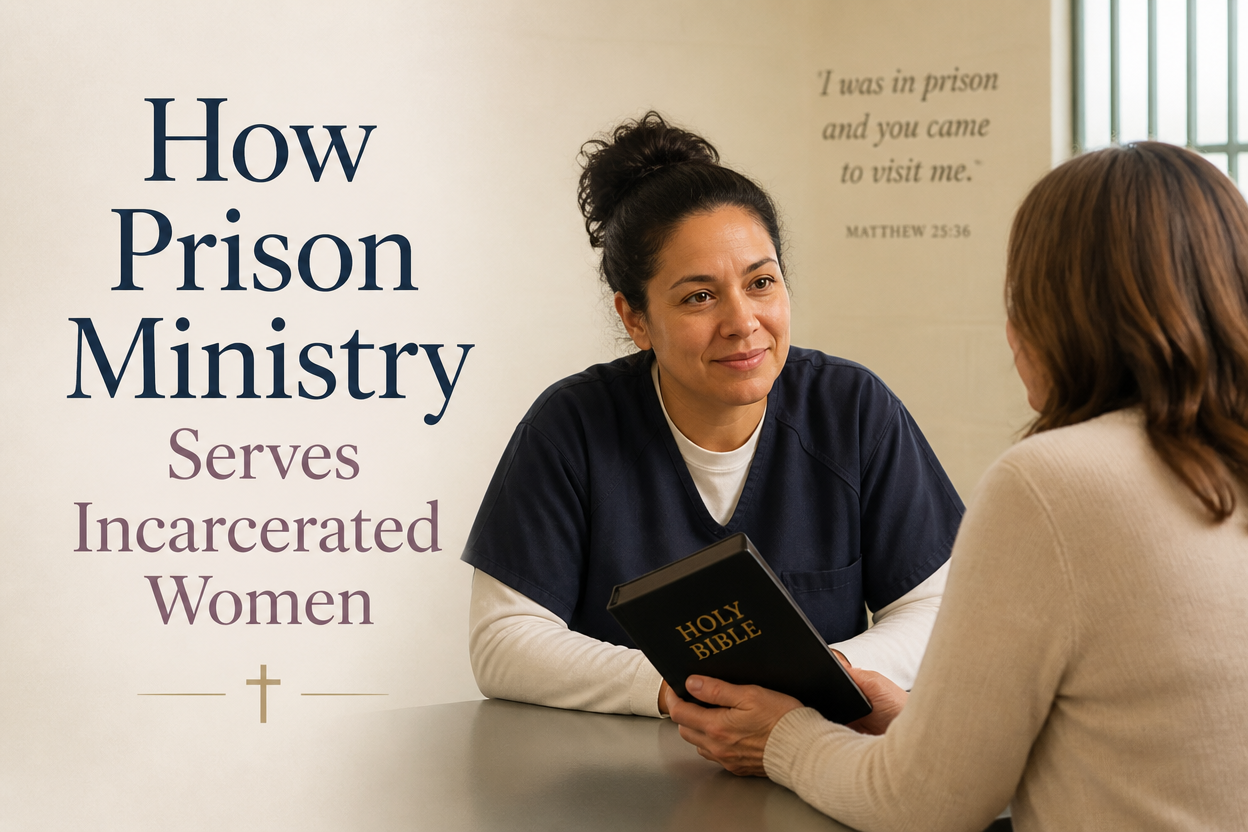
How prison ministry serves incarcerated women is not primarily a question of sentiment; it is a question of Christian obedience and moral clarity. When Jesus names “I was in prison and you came to me” among the works that distinguish his people, he places prison visitation alongside feeding the hungry and clothing the naked (Matthew 25:36). The church’s duty is not exhausted by evangelism alone, nor is it satisfied by occasional holiday outreach. Women in custody face layered vulnerabilities that demand sustained, competent mercy.
For Christian donors, this work can feel difficult to evaluate. The need is real, but the environment is regulated, outcomes are hard to measure, and public narratives about incarceration can swing between denial and despair. Across our verification work at Most Trusted, we find that the strongest women’s prison ministries hold together three commitments that do not always coexist: a clear theological center, disciplined operational integrity, and a long view of restoration that continues after release.
Women in prison carry distinct burdens that shape effective ministry
Trauma, separation, and the spiritual aftermath of coercion
Women in correctional settings are more likely than men to have histories of trauma, coercion, and domestic violence, which changes what “care” must look like. Trauma is not only a clinical category; it is a spiritual reality that often includes betrayal, fear, shame, and disrupted attachment. The ministry that treats women as generic “inmates” will miss the actual pastoral situation in front of it.
Maternal separation is one of the most acute pressures. Many incarcerated women are mothers of minor children, and the grief of disrupted bonding can become a spiritual crisis: “Has God abandoned my family because of what I did?” While precise figures vary by definition and dataset, the U.S. Department of Justice has documented that a majority of women in state prison are mothers of minor children, and many lived with those children before incarceration Bureau of Justice Statistics. Ministries that serve women well tend to integrate Scripture, grief work, and concrete support for maintaining appropriate family contact where permitted.
Risk does not disappear, and neither does dignity
Prisons exist because crime is real and victims are real. Christians genuinely disagree about policy questions—sentencing, alternatives to incarceration, and the proper relationship between justice and mercy. But within whatever policy framework a society adopts, the imago Dei is not revoked by conviction. Women in prison need ministry that is neither naïve about harm nor cynical about redemption. “Remember those in prison, as though in prison with them” (Hebrews 13:3) assumes moral seriousness and shared humanity at the same time.
Prison ministry serves women through presence that is consistent and accountable
The power and limits of visitation
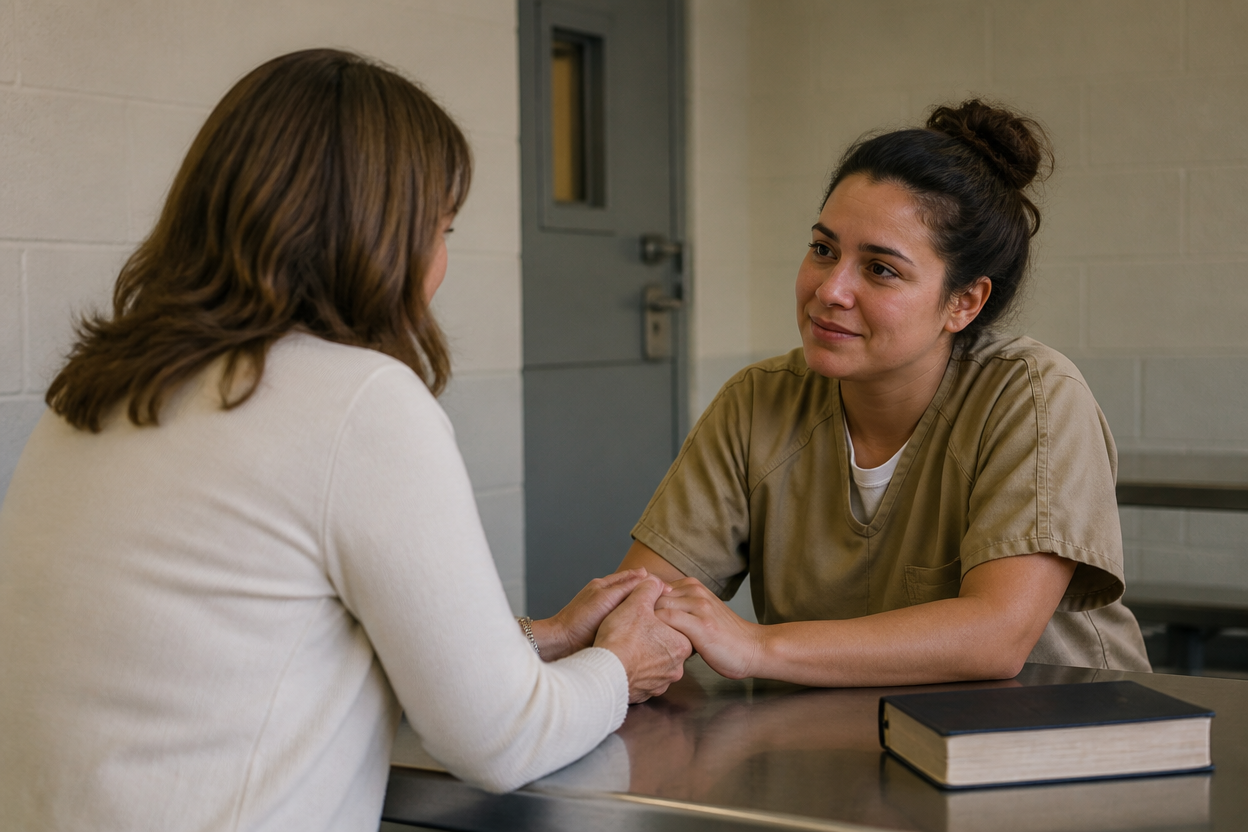
Visitation is often described as “showing up,” but its real value is covenantal steadiness. A woman in custody is surrounded by systems that must, by design, be procedural rather than personal. When trained volunteers return week after week, the message is not “you are a project,” but “you are not forgotten.” In many facilities, access is fragile—subject to lockdowns, staffing shortages, and policy changes—so ministries that promise more than they can deliver unintentionally deepen disappointment.
What this means in practice is that trustworthy ministries build reliable rhythms: chaplain coordination, security compliance, and volunteer retention plans that prevent constant turnover. They also establish clear boundaries, because unguarded compassion can become unsafe compassion. For donors, “accountable presence” is a better indicator of maturity than dramatic stories.
Discipleship that respects the constraints of incarceration
Women’s prison discipleship must be realistic about the setting. Program rooms are limited, attendance can be disrupted without notice, and personal autonomy is constrained. Effective ministries use simple, repeatable formats: Scripture-centered small groups, trauma-informed pastoral care, and opportunities for confession and reconciliation that do not force disclosure. The goal is not to manufacture emotional catharsis; it is to form durable Christian practices under pressure.
This is also where donors should expect theological precision. Vague moral uplift is not the gospel. Ministries that serve incarcerated women well speak plainly about sin and grace, personal responsibility and God’s mercy, restitution and forgiveness. They avoid a functional prosperity gospel that implies faith guarantees favorable legal outcomes, and they resist cynicism that treats women as permanently defined by their worst day.
Serving incarcerated mothers requires ministry to families, not only individuals
Children are not collateral
When a mother is incarcerated, children often enter unstable care arrangements, and caregivers absorb sudden burdens. Supporting the mother while ignoring her children and caregivers narrows the church’s vision of mercy. Many women describe the pain of missing birthdays, school events, and ordinary meals as a kind of ongoing bereavement. Ministry that takes motherhood seriously will seek lawful, appropriate ways to strengthen family bonds rather than assuming family fracture is inevitable.
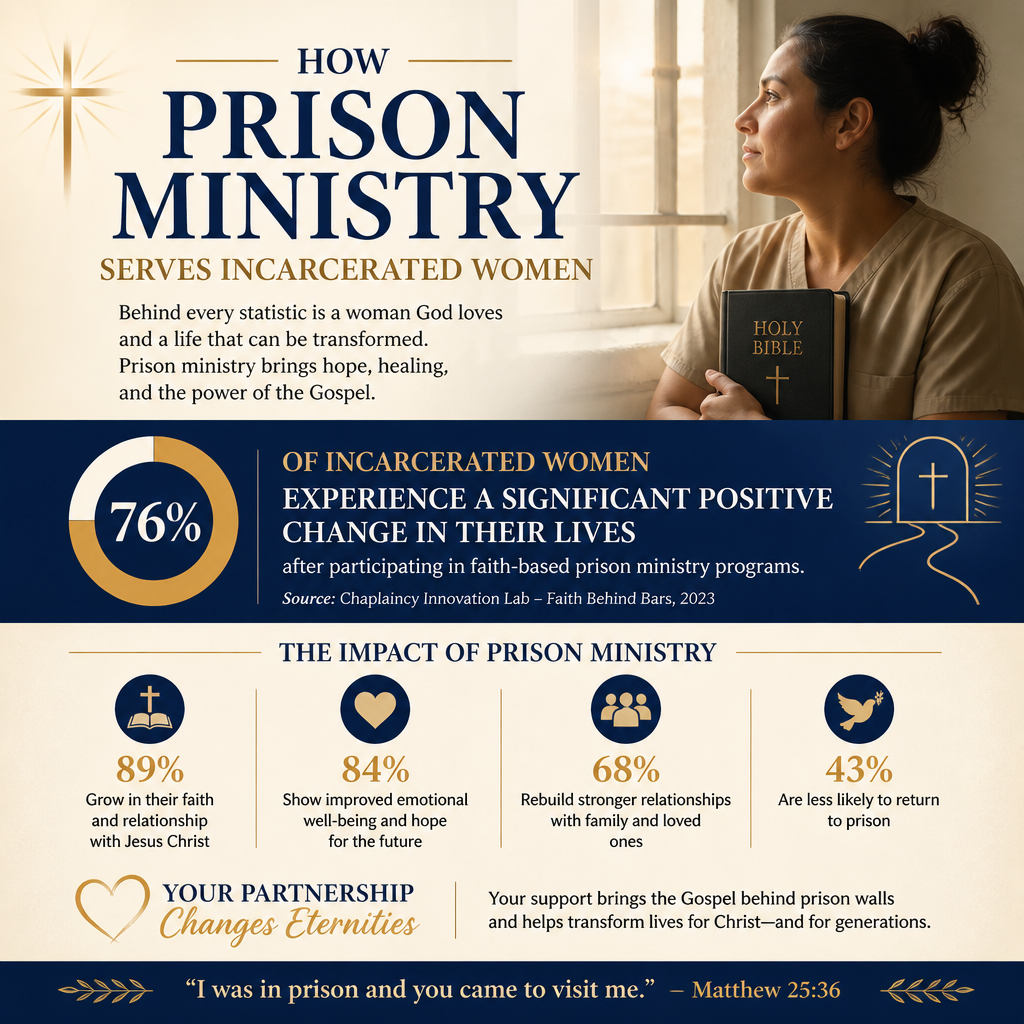
Some programs facilitate family contact through letter-writing initiatives, parenting classes, and family-focused events in partnership with the facility. These approaches require careful coordination and humility, since correctional policies and child welfare realities vary widely. Donors should be wary of ministries that offer simplistic “reunification” promises; the safer claim is that faithful support can increase the likelihood of healthier relationships when reunification is appropriate and permitted.
Reentry planning begins before release
Women who are preparing for release face immediate practical questions: housing, employment, transportation, documentation, addiction recovery, and custody arrangements. The transition is often abrupt, and the first weeks can be destabilizing. The U.S. Department of Justice has reported that within ten years of release, a large majority of formerly incarcerated people are arrested again, underscoring how persistent the reentry challenge is National Institute of Justice. While that statistic is not women-specific, donors should treat it as a warning against ministries that focus only on the prison gate and neglect the long work that follows.
We recommend that donors consider ministries operating across the broader ecosystem of Prison and Post-Prison Ministries, because the strongest work often connects in-prison discipleship with post-release community, employment partnerships, and church integration. Continuity matters: a Bible study without a next step can become a moment of hope followed by isolation.
What trustworthy women’s prison ministries tend to do differently
They pair compassion with governance and safeguarding
Correctional ministry is unusually vulnerable to mission drift and boundary failures. The setting can invite saviorism on one side and institutional complacency on the other. Ministries that merit serious donor confidence typically have written volunteer policies, training that includes safeguarding and trauma awareness, and governance structures that do not concentrate power in one charismatic leader.
For mature donors, the question is not whether a ministry’s stories are moving. The question is whether the ministry can be trusted with access to vulnerable people under state authority. Our use of The Most Trusted Standard emphasizes precisely these questions: faith commitments that are explicit, financial practices that are legible, leadership that is accountable, and transparency that allows donors to see what is actually happening.
They resist common donor distortions
Prison ministry is frequently harmed by well-meant donor expectations. Some donors want visible “decisions,” rapid transformation narratives, or overhead skepticism that punishes ministries for spending on training and compliance. Yet competent work in correctional environments requires administration, documentation, and sustained volunteer development. The sector has had to reckon with the “Overhead Myth” critique advanced by major charity evaluators and nonprofit watchdogs, which argues that overhead ratios alone are poor measures of impact Charity Navigator.
A brief checklist can clarify what to look for when evaluating a women’s prison ministry:
- Clear partnership with chaplains and adherence to facility rules, without improvising “workarounds”
- Volunteer screening and training appropriate to the risk and vulnerability of the setting
- Discipleship materials that are biblically anchored and pastorally responsible
- Evidence of continuity into reentry, such as mentorship, housing partnerships, or church placement pathways
- Financial reporting that explains programs plainly, not merely totals
Donors should also evaluate whether the ministry’s posture toward victims is morally coherent. Work that serves women in prison should not erase the suffering of those harmed by crime. The most credible ministries speak with gravity about restitution, repentance, and the slow work of repair, even when that work cannot be completed inside a prison sentence.
How donors can give with confidence without reducing women to projects
Ask for evidence that matches the reality of discipleship
Some outcomes are measurable; others are real but less quantifiable. A prison ministry can report participation, retention, volunteer training completion, chaplain partnership status, and post-release connection rates. It can also describe how it handles discipline, volunteer misconduct, or doctrinal disputes. Those are not peripheral details; they are signs of whether a ministry is stable enough to serve women over years rather than seasons.
The harder question is how a ministry speaks about “success.” If success is defined only as reduced recidivism, the ministry may drift into a secular performance frame. If success is defined only as professions of faith, it may ignore the ethical and practical responsibilities of reentry. The New Testament frame is thicker: repentance, endurance, reconciliation, and growth in holiness within community.
Support the unglamorous work that makes restoration plausible
Housing deposits, transportation assistance, documentation fees, counseling referrals, and case management are rarely dramatic. They are often decisive. In our review of Prison Ministry for Incarcerated Women and Mothers, the most effective programs are those that can coordinate spiritual care with practical stabilization, without confusing the two.
Christians are not giving to purchase an outcome. We are giving to participate in mercy that reflects God’s character: “to loose the bonds of wickedness… to share your bread with the hungry” (Isaiah 58:6–7). For donors, giving wisely in this space requires patience, sobriety about complexity, and a preference for ministries that can be examined without defensiveness.
FAQs for How prison ministry serves incarcerated women
Is evangelism the main purpose of prison ministry for women?
Evangelism is central, but a faithful ministry approach is broader than a single moment of proclamation. In Scripture, the gospel creates a people and forms a way of life—repentance, reconciliation, and perseverance. For incarcerated women, that formation often includes trauma-aware pastoral care, community accountability, and reentry support that helps them live out discipleship under intense pressure.
What should donors watch for to avoid funding harmful or immature prison ministry?
Donors should look for ministries with clear facility partnerships, strong safeguarding policies, transparent finances, and leadership accountability. Warning signs include ministries that bypass chaplains, lack volunteer screening, promise guaranteed legal outcomes, or rely on emotionally charged stories while providing little operational clarity. A ministry that welcomes scrutiny and can explain its practices plainly is usually a safer steward of donor trust.
Why this work belongs near the center of Christian mercy
Prison ministry to women is not an alternative to caring for families, protecting children, or honoring victims; it is part of a comprehensive Christian witness to justice and mercy. When the church serves incarcerated women with truthful compassion and disciplined integrity, it testifies that no one is beyond the reach of Christ’s redeeming power and that repentance can be met with patient, practical love. For donors, the calling is to fund that work in ways that are verifiable, accountable, and worthy of the gospel we confess.



