
When returning citizens need reentry ministry most is rarely when a church first notices them. The highest-risk moments often come quietly: the week after release when paperwork collapses, the first job rejection that reopens old shame, the first family argument that triggers relapse, the first probation appointment missed because a bus did not come.
Jesus’ words about those in prison in Matthew 25 are not an isolated appeal for compassion; they describe a discipleship test that extends beyond the prison gate and into the destabilizing months that follow. The church’s calling is not only to visit but to receive, to accompany, and to help rebuild a life that can withstand pressure without returning to harm. Donors who care about faithfulness and measurable outcomes are right to ask a hard question: when is support most urgent, and what kind of ministry is actually responsible in those windows?
The first ninety days after release are a moral and practical emergency
Mortality and instability spike immediately after incarceration ends
Reentry is commonly framed as a “fresh start,” but the earliest period after release often carries elevated risk of death, relapse, and disorientation. A widely cited analysis of people released from Washington State prisons found a markedly elevated risk of death in the first two weeks after release compared to the general population, driven by overdose, cardiovascular causes, homicide, and suicide; the first days are especially volatile for people with substance use history and untreated trauma (The New England Journal of Medicine).
What this means in practice is that ministries that wait for stability before offering care frequently arrive too late. In our verification work at Most Trusted, the ministries that meet The Most Trusted Standard tend to plan for “day one” realities: no phone, no ID, no stable address, no prescriptions, no transportation, and no safe people to call. Those needs are not peripheral to spiritual care; they can determine whether a returning citizen can even show up for discipleship, work, or family reconciliation.
Donors should think in terms of immediate stabilizers
Reentry ministry is sometimes judged by visible outputs: a graduation ceremony, a job placement, a testimony on a Sunday morning. Yet the earliest wins are usually quiet and logistical: obtaining identification, arranging transportation to probation, setting up a primary care visit, and securing a safe place to sleep. These are not merely social services. They are a form of neighbor-love that protects a person from avoidable spirals and makes obedience plausible.
For donors, the tension is real: short-term emergency assistance can drift into dependency or manipulation if it is unstructured. Responsible ministries address this by pairing immediate help with clear expectations, case management, and a defined pathway toward self-governance. The goal is not to “do for” what a person can do; it is to remove barriers that incarceration itself created and to walk with someone as they rebuild.

Housing and documentation are often the make-or-break constraints
Without an address and ID, nearly every other good goal becomes unreachable
Returning citizens may leave prison with minimal property and limited documentation. Without a stable address, many employers will not hire, many clinics will not schedule, and many parole plans become impracticable. Housing is not simply a “program area.” It is the platform upon which every other intervention stands.
Reentry ministries that focus on housing face legitimate scrutiny because housing work can be expensive, complex, and vulnerable to mismanagement. The question is not whether housing matters, but whether the ministry’s approach is disciplined: clear eligibility, safety policies, staff training, coordination with supervision requirements, and transparent reporting. These are precisely the kinds of operational realities donors should expect to see addressed in any ministry that claims to serve returning citizens well.
Support must be tethered to accountability and dignity
The best reentry housing models balance dignity with structure. Some rely on host homes; others operate transitional housing with curfews, employment requirements, drug testing, and mentoring. Christians genuinely disagree about how strict these expectations should be, especially when relapse is part of a person’s history. A mature ministry names the trade-offs: overly permissive environments can endanger residents and neighbors, while excessively punitive rules can reproduce the very institutional dynamics that returning citizens are trying to escape.
Donors trying to understand the landscape can situate specific ministries within the broader field of Post-Prison Reentry Support for Returning Citizens, where the most responsible organizations tend to articulate how they combine grace, boundaries, and measurable plans toward stability.
Employment is necessary but rarely sufficient for lasting reentry
Work is formative, but the labor market is not neutral
Employment is a critical factor in reentry because it provides lawful income, routine, and social belonging. Yet it is naïve to treat job-seeking as a mere motivation problem. A criminal record affects eligibility, licensing, background checks, and employer risk tolerance. Many returning citizens also have educational gaps or untreated mental health conditions that make early work instability likely.
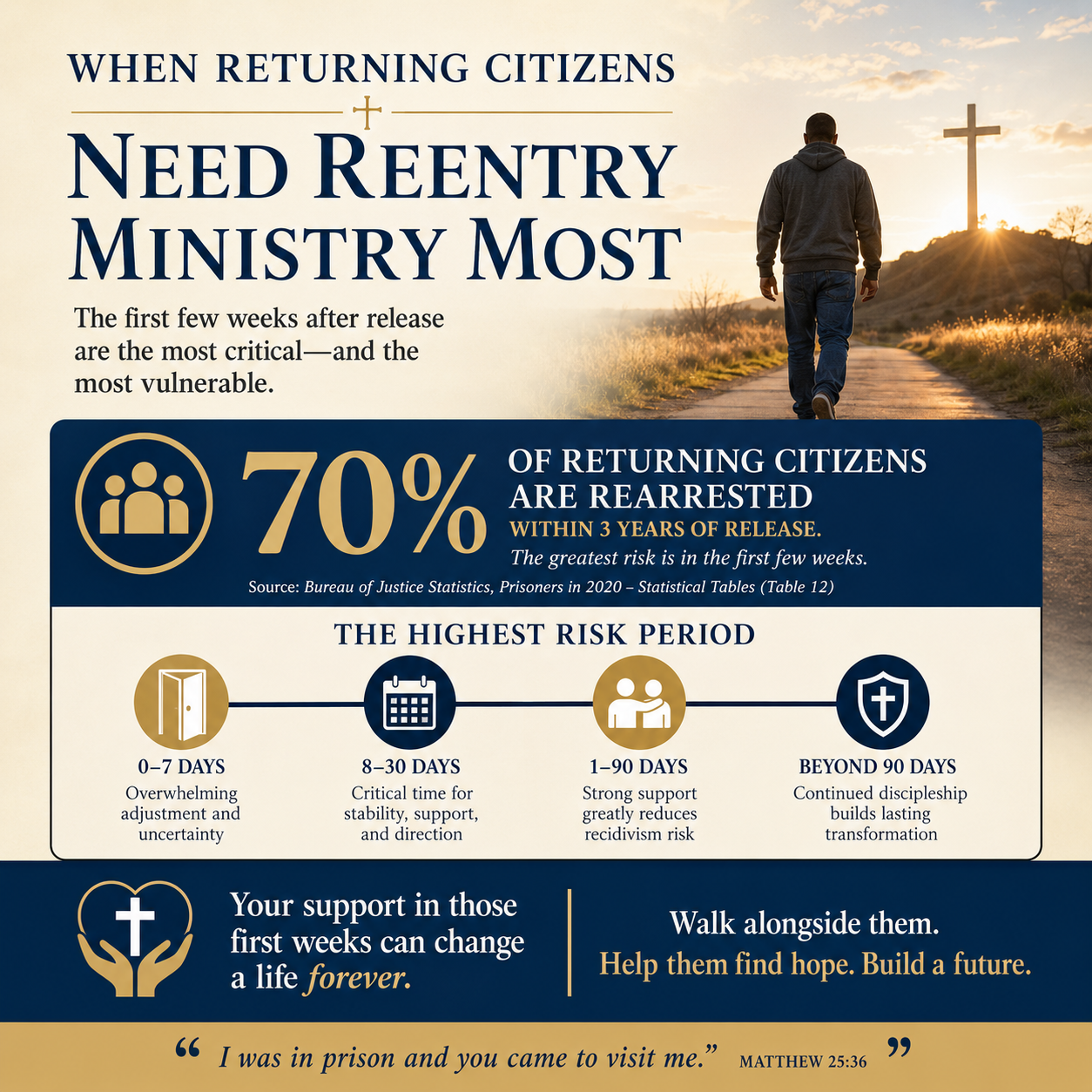
The data should sober us. The U.S. Bureau of Justice Statistics reports that a large share of people released from state prisons are arrested again within years of release, underscoring how persistent the churn can be even when intentions are sincere (Bureau of Justice Statistics). Reentry ministry that promises quick, universal “life transformation” without addressing the structural and clinical realities should not be trusted.
Donors should prioritize integrated pathways, not isolated job placement
Ministries often advertise job placement numbers, but donors can ask more discerning questions: Are placements retained at 90 or 180 days? Are wages sufficient for rent in the local market? Does the program address transportation, tools, uniforms, and workplace conflict? Are employers vetted for predatory practices? A job secured and lost within a month may not be a success; it can deepen despair and financial instability.
In our evaluation work, we look for ministries that connect employment to discipleship, mentoring, and practical coaching, not as a veneer but as an integrated theory of change. Work forms character over time, and time is exactly what many returning citizens have not been allowed to practice in freedom.
Family reconciliation and church belonging are fragile and decisive
Homecoming is often contested terrain
The moment of release is frequently portrayed as a joyful reunion. In reality, families may be carrying years of betrayal, financial loss, fear, and exhaustion. A returning citizen may come home to a spouse who has learned to survive alone, children who do not know them, and extended family members who do not want them near the household. In some cases, reunification is unsafe due to past violence, sexual abuse, or ongoing substance misuse. A faithful ministry refuses simplistic narratives and protects the vulnerable while still holding out the possibility of repentance and restoration.
Churches also face tensions. Congregations want to practice welcome, but they also bear responsibilities for child safety, women’s safety, and wise oversight. Mature reentry ministry helps churches develop clear policies and trained teams so that welcome is not a matter of improvisation. When a church is unprepared, the returning citizen often experiences a second rejection, one that can harden resentment toward the faith itself.
Mentoring and pastoral care must be sustained, not episodic
One of the clearest patterns we observe is that short bursts of enthusiasm often fade when progress is slow. Trauma does not resolve on a donor timeline. Addiction recovery does not move in a straight line. A returning citizen’s sanctification will be tested in ordinary frustrations: bills, parenting, loneliness, conflict at work, and the ongoing stigma of a record.
Effective ministries plan for long horizons: consistent mentors, small groups that can absorb setbacks, partnerships with licensed counselors when needed, and careful collaboration with parole and probation requirements. This is where a donor’s role becomes especially meaningful: stable funding supports steady presence, which is often the rarest gift a returning citizen receives.
Reentry ministry is most needed when systems collide and a person must choose under pressure
Predictable flashpoints should shape program design
Returning citizens often fail not because they do not want change, but because multiple systems demand compliance at once: supervision, child support, court fines, treatment mandates, job requirements, and family expectations. The stress is compounded by limited transportation, limited digital access, and fear of asking for help. Donors should expect credible ministries to name these collision points and to prepare participants for them.
Several moments repeatedly show up as inflection points where support matters most:
- Release week, when transportation, ID, and first appointments determine whether momentum begins or collapses.
- The first relapse or serious temptation, when shame can drive isolation and concealment.
- The first housing crisis, when couch-surfing turns into technical violations and renewed criminal opportunity.
- The first major family conflict, when old patterns can reassert themselves quickly.
- The first year mark, when external supervision may loosen but internal supports are still fragile.
These flashpoints also clarify what responsible donor funding looks like. It is less about paying for an inspiring event and more about underwriting a coordinated set of responses that can be mobilized quickly: staff availability, emergency funds with controls, partnerships with treatment providers, and trained volunteers who understand boundaries.
Verification matters because good intentions are not enough
Reentry work carries unusual risks: financial controls around participant assistance, safeguarding practices in mixed-gender environments, and truthfulness in reporting outcomes where the “success” definition can be manipulated. Donors are right to demand evidence of integrity because the people served are vulnerable to exploitation and the public trust in Christian mercy can be damaged by preventable failures.
Most Trusted exists to help donors give with confidence by evaluating Christian nonprofits against The Most Trusted Standard, a 15-criteria framework that examines faith foundations, financial integrity, governance and leadership, and transparency and effectiveness. In the reentry space, that kind of verification is not bureaucracy; it is a form of protection for returning citizens, churches, and donors who want their giving to bear durable fruit.
For donors who want broader context on how prison and reentry ministries function, accountability questions to ask, and the different models in the field, we maintain a central resource on Prison and Post-Prison Ministries.
FAQs for When returning citizens need reentry ministry most
Is the most urgent need spiritual discipleship or practical help like housing and employment?
Faithful reentry ministry does not force that choice. Scripture does not separate love of God from love of neighbor, and returning citizens often cannot participate meaningfully in discipleship when they are sleeping in unsafe places or cannot report to supervision. Donors should prioritize ministries that integrate pastoral care with disciplined practical support, with clear boundaries and transparent reporting.
What should donors look for to identify a trustworthy reentry ministry?
We recommend looking for clear safeguarding policies, documented financial controls for participant assistance, board oversight that is not merely symbolic, and outcome reporting that is specific about definitions and time horizons. Strong ministries also name limitations candidly: relapse rates, housing constraints, and the reality that reconciliation is not always possible or safe. Verification against The Most Trusted Standard is designed to surface precisely these trust indicators so donors can support reentry work with both compassion and sobriety.
Receiving returning citizens as neighbors requires timely, structured mercy
When returning citizens need reentry ministry most is often when the public story has moved on and the private pressures are intensifying: early release weeks, housing instability, first failures, and family conflict. Christian donors have a rare opportunity to fund ministries that respond in those moments with both grace and governance, offering the kind of steady, truthful support that makes repentance sustainable and communities safer.



