
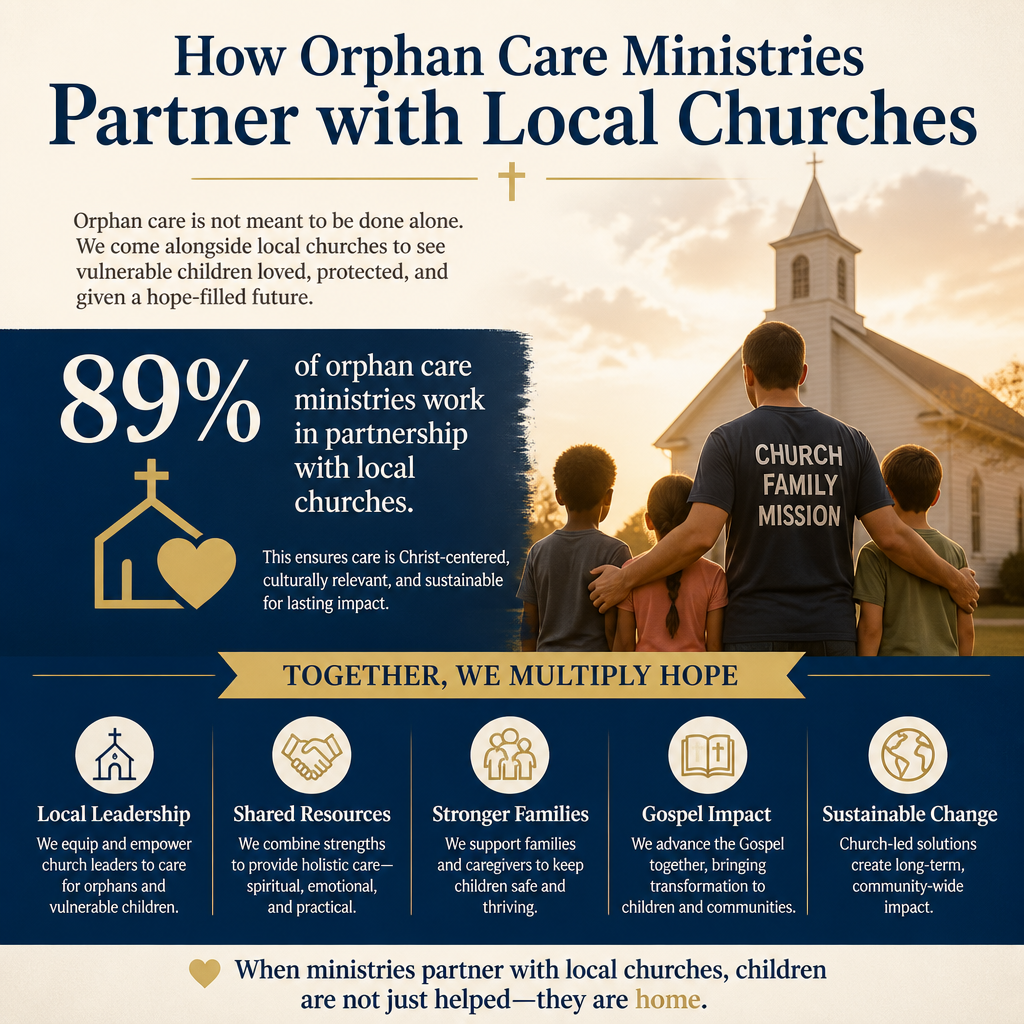
How orphan care ministries partner with local churches is not a peripheral operational question. It is one of the clearest tests of whether orphan care is being practiced as Christian discipleship or as distant benevolence. Scripture repeatedly locates care for vulnerable children inside the covenant community’s public faithfulness, not merely inside private compassion (James 1:27; Psalm 68:5). For donors, the church partnership question is often where confidence rises or collapses: Is a ministry strengthening families and congregations, or quietly replacing them?
The modern orphan care movement has also had to reckon with hard evidence. Institutionalization itself is associated with measurable developmental harm, particularly for young children, and the church must not ignore this simply because institutional care photographs well. A leading synthesis in The Lancet concluded that children in institutions are at increased risk for developmental delays and mental health problems, and that family-based care is generally preferable where safely possible (The Lancet). Good partnerships with local churches tend to move ministries away from dependency on institutions and toward family strengthening, kinship care, and stable domestic foster and adoption pathways.
Partnership begins with ecclesiology, not projects
The local church is not a fundraising channel
In faithful orphan care, the local church is not treated as a donor list, a volunteer pool, or a branding asset. The church is Christ’s body in a particular place, with spiritual authority and pastoral responsibility for its people. When a ministry approaches a church primarily as a means to an end—money, trips, social media reach—the partnership is already compromised, even if the outcomes appear productive in the short term.
Healthy orphan care ministries begin with an ecclesiology that honors pastoral oversight, local discipleship, and the slow work of forming families. They ask what the church is already called to do—care for vulnerable neighbors, protect children, welcome the stranger, pursue justice—and then align their specialized capabilities to serve that calling. That alignment is one reason donors see more durable fruit: the work is not built on episodic enthusiasm but on ordinary church faithfulness.
Subsidiarity keeps authority close to the child
Christian donors increasingly ask whether an orphan care ministry practices something like subsidiarity: decisions should be made as close as possible to the affected child and family, by those with relational knowledge and moral responsibility. Local churches are often positioned to know which families are struggling, which caregivers are trustworthy, and what pressures may lead to family separation. When ministries centralize decisions far from communities, they can inadvertently incentivize separation, create perverse economic dynamics, or miss safeguarding red flags.
What this means in practice is that strong partnerships give churches meaningful voice—within clear safeguarding boundaries—rather than token consultation. It also means ministries must sometimes accept slower growth and more complex coordination, because healthy authority structures rarely scale like marketing programs.
Effective partnerships strengthen families, not institutions
The field has learned to prioritize family-based care
Christians genuinely disagree about how quickly institutional models should be replaced in contexts where alternatives are under-resourced. Yet the broad direction of the evidence and global best practice has been toward family-based care and away from long-term residential institutions. UNICEF has repeatedly emphasized that children belong in families and that institutionalization should be a last resort, not a default (UNICEF).
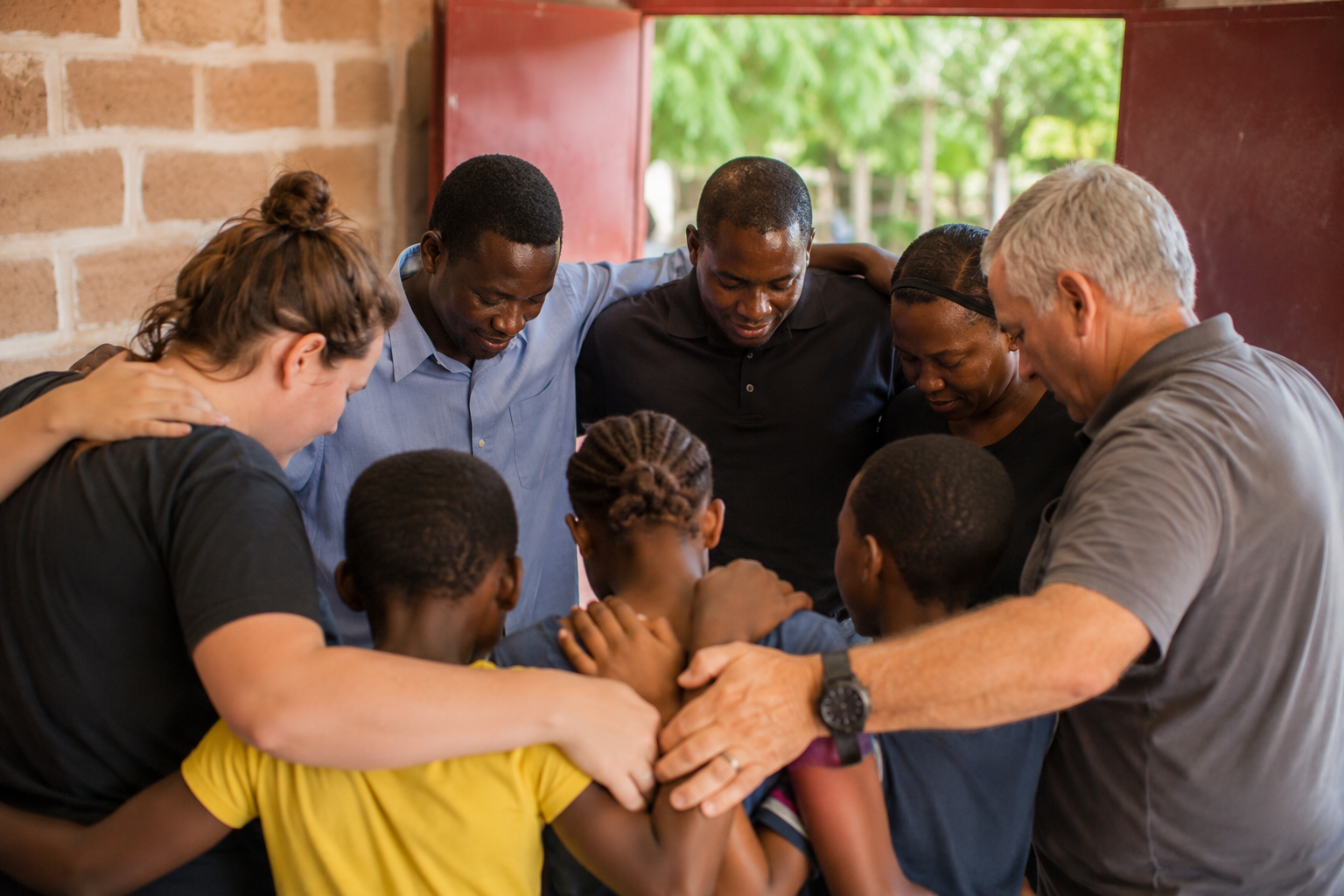
Local churches can be decisive partners here because they are often the first responders when poverty, disability, addiction, incarceration, or migration destabilize a household. Orphan care ministries that partner well with churches invest in practical supports that keep children safe in families when possible: emergency rent, trauma-informed counseling, parenting coaching, substance abuse referrals, legal aid, and respite care for kinship caregivers. Donors should recognize the theological and moral difference between “we built a home for children” and “we prevented unnecessary separation.” Both can be costly; only one is consistently aligned with the long arc of the research.
Church-based foster and kinship networks are a distinctive contribution
In many countries, the most practical alternative to institutional care is not immediate adoption; it is safe kinship care and foster care supported by community. Congregations can recruit, train, and surround caregivers in ways no standalone nonprofit can replicate. This is where partnerships move from sentiment to infrastructure: background checks, safeguarding training, meal rotations, childcare coverage for court dates, and financial coaching for families under strain.
For donors evaluating ministries, we recommend asking whether the ministry’s church partnerships are producing measurable increases in stable family placements, reductions in re-entry to care, and improved child well-being. If a ministry can only report the number of beds filled, sponsorships sold, or trips hosted, the partnership may be oriented toward maintaining an institution rather than reducing the need for it.
Good partnerships demand child protection and clear governance
Safeguarding must be shared and enforceable
Local churches are capable of extraordinary generosity, but they are not automatically equipped for modern child-protection requirements. Orphan care ministries partner responsibly when they bring rigorous safeguarding systems and insist on compliance across the partnership: screening, reporting protocols, boundaries around photography, and trauma-informed practices that reduce re-traumatization. This is not distrust of the church; it is love for children expressed through mature systems.
Short-term teams are a recurring pressure point. Many churches want to send volunteers to “love on kids,” but attachment science and survivor testimony have raised serious concerns about repeated short-term bonding and separation. The wisest partnerships often shift visiting teams away from direct child contact and toward capacity-building, professional training, and behind-the-scenes support. Donors should not be surprised when a credible ministry says no to certain kinds of trips; that refusal can be a sign of maturity.
Governance clarity prevents blurred authority
Partnerships fail when no one can answer basic questions: Who makes placement decisions? Who has authority to remove a child? Who investigates allegations? Who controls money? Good ministries define roles in memoranda of understanding, publish safeguarding commitments, and keep financial flows auditable. They also resist the temptation to hide complexity behind spiritual language. A church can be a faithful partner and still need clear accountability.
This is one reason donors turn to independent verification. At Most Trusted, our evaluations against The Most Trusted Standard examine whether ministries have credible governance, financial controls, and transparency practices that protect children and donors alike. Donors cannot personally inspect every partnership in every community, but they can insist on evidence that a ministry is governed with discipline and disclosed with honesty.
Partnerships should be financially honest and theologically coherent
Designing funding that does not separate families
Some of the most painful failures in orphan care have been driven by funding structures. When an institution’s budget depends on the number of children in residence, there is a built-in incentive to keep beds full. When “orphan sponsorship” communications imply that a child has no family, donors may unintentionally fund separation rather than preservation. Ethical partnerships with churches face this directly and design funding that rewards reunification, kinship stability, and safe permanency.
A credible ministry will be able to explain, in plain terms, how it avoids perverse incentives. It will also be willing to discontinue programs that attract donations but undermine long-term child welfare. Donors should treat that willingness as a mark of theological seriousness: Christian stewardship is not merely about raising funds; it is about refusing profit from harm.
Transparency is a form of respect for the church and the donor
Donors often sense when language is doing work that data will not. Strong ministries publish financial statements, governance information, program outcomes, and safeguarding policies because they understand that trust must be earned. The well-known “Overhead Myth” statement—signed by GuideStar (now Candid), Charity Navigator, and the BBB Wise Giving Alliance—helped correct simplistic overhead ratios, but it also raised expectations that nonprofits communicate results and governance clearly (Candid).
For orphan care partnerships with churches, transparency includes candor about hard realities: cases where reunification was attempted and failed, the limits of local social-service systems, and the moral risks of cross-cultural intervention. This kind of reporting does not weaken a ministry; it signals that the ministry understands the weight of what it is handling.
What donors should look for in church partnerships
Signals of a partnership built for long-term faithfulness
Donors do not need to become child welfare specialists to ask wise questions. The goal is to discern whether a ministry’s church partnerships are oriented toward the child’s best interest and the church’s health, not toward the ministry’s growth. The ministries that operate with integrity tend to make their partnership logic visible: they can explain why a program exists, how it protects children, and how it strengthens local congregations rather than bypassing them.
- Clear safeguarding standards shared with church partners, including reporting pathways and training
- Evidence of family preservation and reunification efforts when safe and appropriate
- Church engagement that includes pastoral leadership, not only missions committees
- Funding models that do not depend on keeping children in institutions
- Published governance and financial disclosures, with accessible explanations for donors
Where to situate this question within the wider field
Donors who want a fuller view of the orphan care landscape can situate church partnership questions within the broader category of How Orphan Care Ministries Serve Children and Families. The form of care matters: prevention, kinship support, foster care, domestic adoption support, and residential care all have distinct risks and requirements. Church partnership is the common thread because it shapes how power, money, and moral responsibility are distributed.
We also encourage donors to understand the wider scope of Orphan Care Ministries as a ministry category. The most consequential donor decisions are rarely about intentions. They are about models, incentives, and accountability—especially when work involves children who cannot protect themselves or tell their own stories safely.
FAQs for How orphan care ministries partner with local churches
What does a healthy partnership between an orphan care ministry and a church usually include?
A healthy partnership typically includes shared safeguarding expectations, a clear division of authority, and a mutual commitment to family-based care when safely possible. Churches bring relational presence, discipleship, and community support for caregivers; ministries bring specialized child welfare expertise, case management systems, and accountable program oversight. Donors should expect written agreements, transparent finances, and reporting that prioritizes child well-being over promotional storytelling.
How can donors tell whether church involvement is protecting children or creating risk?
Donors can ask whether the ministry requires background checks and training for anyone with child access, whether it has a published safeguarding policy with mandatory reporting procedures, and whether it limits practices that can harm children through repeated attachment and separation. Donors should also look for evidence that the ministry is reducing unnecessary family separation rather than depending on institutional care for its funding model. Independent verification, including review against The Most Trusted Standard, can help donors confirm that these safeguards and governance commitments are real and consistently applied.
Partnership that honors both the child and the church
The church’s call to care for the fatherless is not in doubt; the question is whether our methods are worthy of that calling. Orphan care ministries partner well with local churches when they treat congregations as spiritual communities with responsibilities, not as mechanisms for fundraising or volunteer deployment. For donors, the most responsible giving tends to follow partnerships where safeguarding is uncompromising, incentives are honest, and the long-term goal is stable family life under the care of a strengthened local church.



