
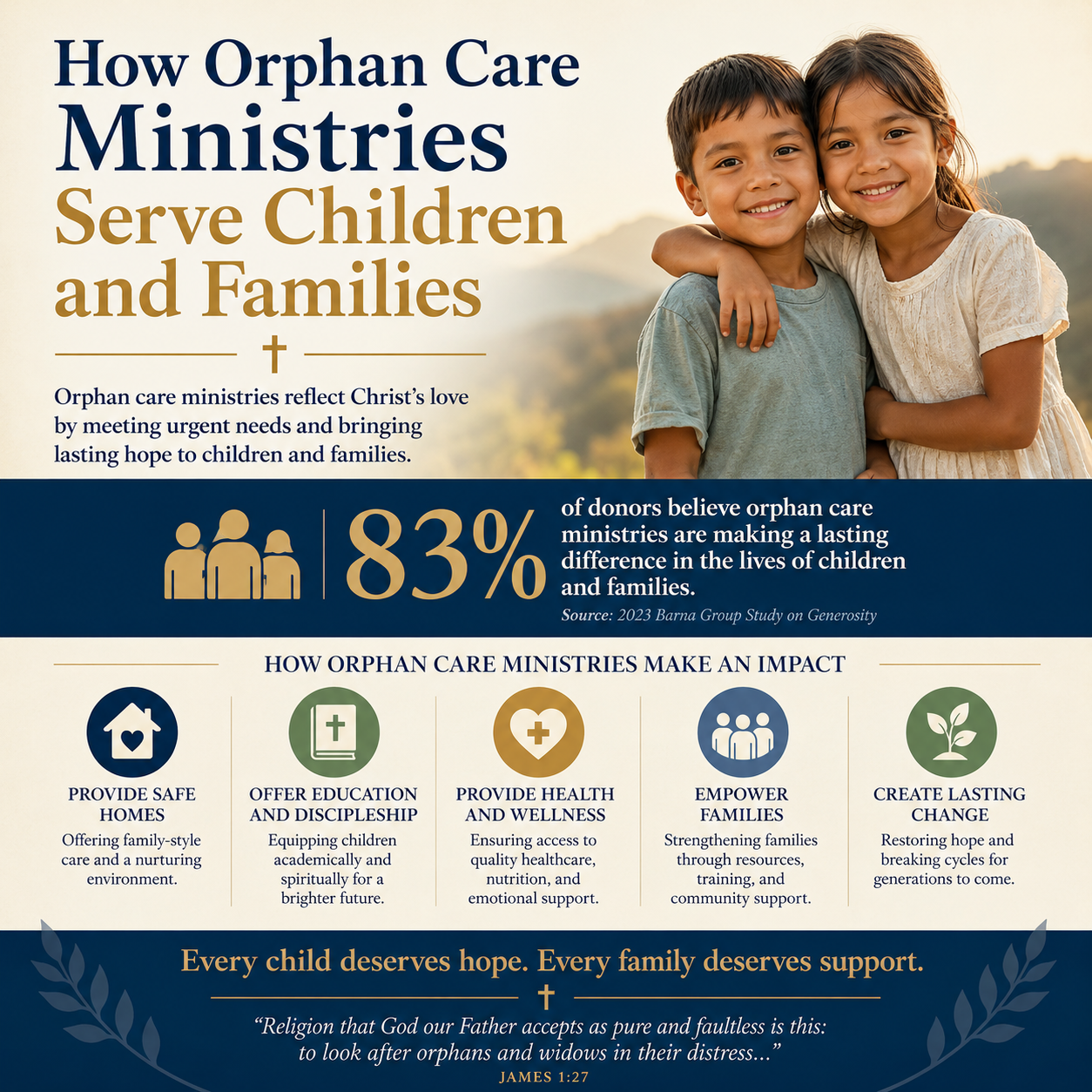
How orphan care ministries serve children and families is ultimately a question of whether Christian compassion is ordered by truth. Scripture’s mandate is not ambiguous: God “executes justice for the fatherless” (Deuteronomy 10:18), and James defines “religion that is pure and undefiled” as care for orphans and widows (James 1:27). The harder work is discerning which forms of care actually protect children, strengthen families, and honor the image of God in settings marked by poverty, conflict, disability, and trauma.
Over the last several decades, the field has had to reckon with evidence that some well-funded models can unintentionally separate children from families or deepen harm. The most responsible ministries have responded by shifting from child-rescue narratives toward family strengthening, kinship care, trauma-informed practice, and careful partnership with local churches and public systems. Donors who want faithfulness, not merely activity, will ask what a ministry is building: dependency or durable care; institutions or families; publicity or protection.
Orphan care begins with a sober definition of the problem
Christian donors often use “orphan” as a moral category, while the realities on the ground are administrative and economic. Many children living in residential care are not double-orphans; they have at least one living parent or relatives who could provide care with adequate support. UNICEF has long emphasized that poverty and family crisis, rather than orphanhood alone, drive separation and institutional placement; it also notes that most children in institutions have a living parent or relatives in many contexts (UNICEF).
What this means in practice is that ministries can either reinforce the reasons children are separated from family, or they can confront those reasons directly. The difference is not rhetorical; it is programmatic. Family strengthening requires casework, cash-flow realism, and local accountability. It is more difficult to photograph than an orphanage building, but it aligns more closely with the biblical pattern of preserving households and restoring what sin and suffering have fractured.
Institutions may feel compassionate, but they carry documented risks
Christians genuinely disagree about whether any form of residential care can be healthy. The field’s consensus is not that every institution is abusive, but that institutionalization as a dominant model is hazardous for children, especially younger ones. A major review in The Lancet concluded that children in institutional care are at increased risk for delays and harm, and recommended prioritizing family-based care (The Lancet). Faithful donors should treat these findings as a call to prudence: if a ministry relies heavily on residential placement, donors should ask why, for how long, and under what safeguards.
“Orphan care” includes prevention, not only placement
When prevention is taken seriously, ministries spend money on rent stabilization, food security, maternal health access, disability supports, addiction recovery, and legal documentation—interventions that keep families intact. This work can feel less dramatic, but it is often the most child-protective outcome available. Theologically, it reflects God’s concern not only for the vulnerable child, but for the integrity of family life and the responsibilities of community.
The public system is part of the moral landscape
In many countries, child welfare is regulated by government agencies, courts, and licensed providers. Effective ministries do not treat those systems as enemies or mere obstacles. They understand mandatory reporting, due process, and child protection standards as a form of neighbor-love in a fallen world—imperfect, but necessary. Donors should be wary of ministries that describe accountability as persecution or that appear to operate beyond regulatory reach.
What faithful orphan care ministries actually do for children
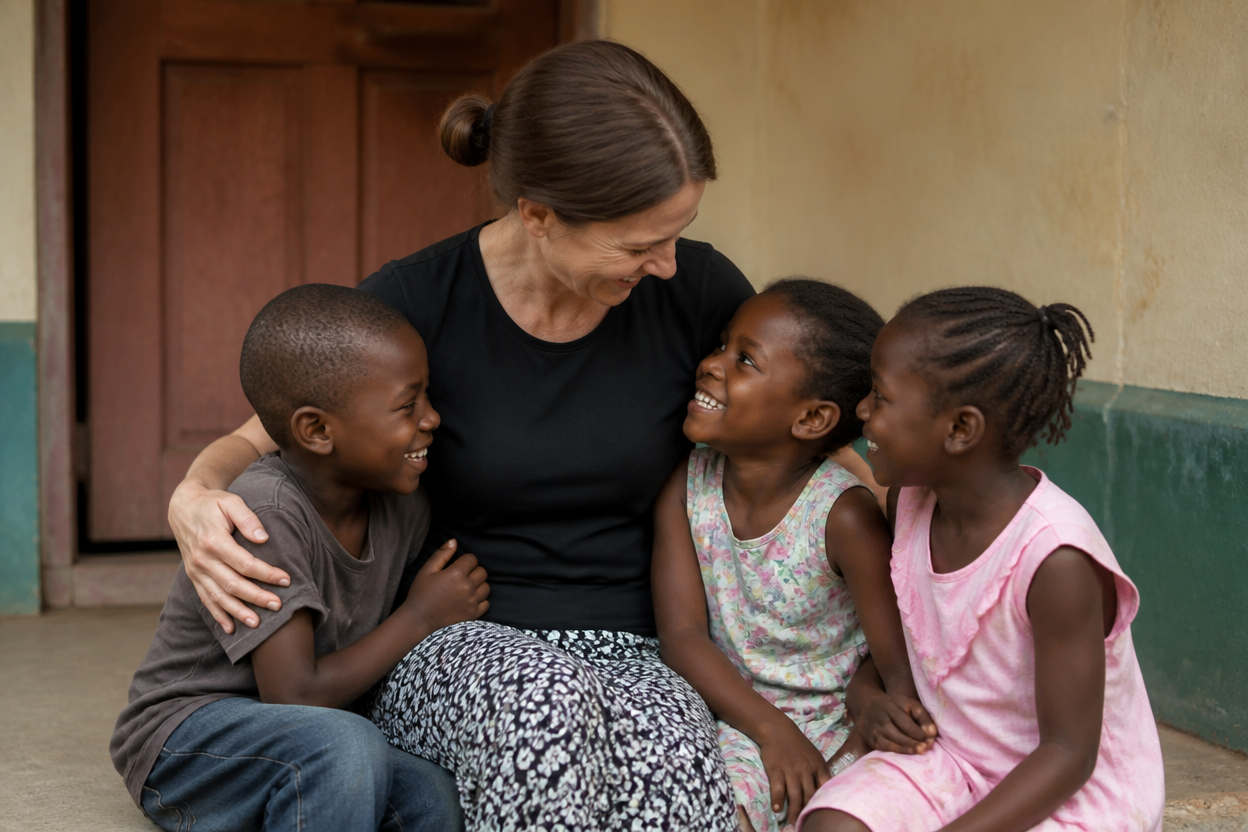
The question is not whether a ministry loves children. Nearly all do. The question is whether it delivers care that is stable, developmentally appropriate, and protective over time. Across our verification work at Most Trusted, ministries that meet The Most Trusted Standard tend to demonstrate clarity on the pathway from crisis to stability: immediate safety, careful assessment, a family-based plan, and measurable follow-through.
Immediate safety and stabilizing care
Some children require urgent intervention: abandonment, trafficking risk, acute abuse, or a caregiver’s sudden death. In those cases, short-term shelter or transitional homes can be appropriate. What distinguishes a healthy approach is time-bounded placement, low caregiver-to-child ratios, and a casework plan aimed at reunification or kinship care rather than indefinite residence.
Donors should ask specific questions: How quickly does a ministry begin family tracing? What criteria trigger placement, and who authorizes it? How does the ministry ensure children are not recruited from intact families to fill beds? These are uncomfortable questions, but avoidance is not protection.
Trauma-informed care and attachment-sensitive practice
Orphan care ministries increasingly speak the language of trauma, but donors should look for operational evidence. Trauma-informed care is not a slogan; it is a set of practices that reduce re-traumatization and support healing. Ministries can point to training curricula, supervision standards, screening and referral relationships for mental health care, and protocols that prioritize stable attachment over volunteer turnover.
Here the field has matured. Many ministries now restrict short-term volunteer contact with children in residential settings, recognizing that repeated attachment and loss can compound harm. This restraint is not a lack of zeal; it is a form of moral seriousness about what children need.
Family-based alternatives that preserve dignity
High-quality ministries invest in kinship care, foster care development, and domestic adoption where appropriate. The most child-centered models focus on preparing families rather than simply “placing” children: caregiver coaching, respite support, and ongoing case management. Donors can listen for whether a ministry speaks about children as individuals with histories and relationships, not as units of need.
When Christians support family-based care, we are not choosing sentiment over action. We are choosing the form of action that best approximates what children are made for: durable belonging and consistent love.
How ministries serve families and communities, not only children
Orphan care is sustainable only when it strengthens the ecosystems that keep children safe: parents, extended family, churches, and local social services. Ministries that focus narrowly on the child without addressing household fragility often find themselves reproducing the conditions that create vulnerability in the first place.
Family reunification as a moral and practical priority
Reunification is not always possible or safe. There are cases of severe abuse, ongoing addiction, or criminal exploitation where reunification would expose a child to renewed harm. Yet the field’s broader movement toward reunification reflects a Christian realism: God’s work is often restorative rather than merely substitutive. When reunification is appropriate, responsible ministries support it with parenting plans, home visits, income stabilization, and accountability measures rather than sentimental return.
Donors should expect documentation: risk assessments, safety plans, and follow-up outcomes. Ministries that celebrate reunification without describing post-reunification support may be placing children back into instability.
Supporting foster and kinship families so placements endure
Foster and kinship families face predictable pressures: secondary trauma, bureaucratic demands, school disruptions, and isolation. Ministries serve these families through respite care, support groups, training, emergency financial help, and advocacy with schools and agencies. This is where donors can make a uniquely strategic contribution, because under-supported placements are more likely to disrupt, and disruption is costly to children.
When ministries invest in caregiver support, they are not shifting attention away from children. They are investing in the adults who will still be present after the ministry staff have left the room.
Partnering with local churches without bypassing expertise
Many Christian donors want to see the local church involved, and rightly so. Churches can provide relational stability, meals, mentoring, transportation, and a community of belonging. Yet churches also need training to avoid well-intentioned harm—particularly around confidentiality, appropriate boundaries, and complex trauma.
The healthiest partnerships treat the church as essential and bounded: essential because discipleship includes works of mercy; bounded because child welfare requires specialized competence and legal compliance. Ministries that honor both tend to build durable community ownership rather than perpetual dependence on visiting teams.
How donors can evaluate orphan care ministries with moral clarity
Christian donors are rarely asking whether a ministry is sincere. The more pressing question is whether a ministry is structured to be accountable, financially honest, and demonstrably effective in protecting children. This is where independent verification matters. Most Trusted evaluates Christian nonprofits against The Most Trusted Standard, a 15-criteria framework spanning faith foundation, financial integrity, governance and leadership, and transparency and effectiveness.
Evidence of child protection is more than program volume
Outputs—beds funded, meals served, children enrolled—can matter, but they are not the same as outcomes. Donors should look for signs that a ministry tracks safety, permanency, and well-being over time: placement stability, school attendance, health follow-through, reunification durability, and credible external oversight. In many contexts, the best ministries submit to licensing, audits, and child safeguarding standards even when doing so increases cost and slows growth.
Financial signals that often predict downstream harm
Some of the most painful failures in orphan care have not been theological; they have been governance failures. Weak oversight can allow inflated claims, restricted gifts used improperly, or fundraising that exploits children’s stories. Donors should read audited financial statements where available, evaluate related-party transactions, and pay attention to whether a ministry’s fundraising language promises certainty it cannot deliver.
Wise donors also resist the “cheap ministry” impulse. Underfunded programs can cut corners in training, supervision, and safeguarding—areas where scarcity becomes a risk factor. The “Starvation Cycle,” described by Ann Goggins Gregory and Don Howard, explains how chronic underinvestment can hollow out capacity and performance over time (Stanford Social Innovation Review).
Questions we recommend donors ask before giving
- How does the ministry decide between family preservation, reunification, kinship care, foster care, and residential care? A coherent decision framework matters.
- What child safeguarding policies are in place? Screening, supervision, reporting, and confidentiality should be explicit.
- How are outcomes defined and reported? Look for candor about setbacks, not only success stories.
- How does the ministry work with local authorities and local churches? Healthy partnership usually includes both.
- What would it take for this work to be locally sustainable? Durable impact is a better goal than perpetual external funding.
For donors seeking a wider view of the field and how different models compare, we encourage engagement with Orphan Care Ministries as an area of giving that requires both compassion and disciplined discernment.
Giving that protects children and honors families
Orphan care ministries are at their best when they refuse false choices: spiritual seriousness without naïveté, generosity without romanticism, and urgency without recklessness. The mandate to care for vulnerable children remains clear, but faithfulness requires that we support the forms of care most likely to preserve attachment, prevent unnecessary separation, and strengthen families for the long haul. Donors who give with moral clarity help build a movement that is not merely well-intentioned, but truly protective.



