
How child sponsorship ministries respond to emergencies is one of the clearest tests of whether “compassion” is primarily a fundraising message or a practiced discipline. When a flood displaces families, when conflict closes schools, or when an outbreak interrupts local health systems, sponsors understandably ask a direct question: what happens to the child, and what happens to the gift?
Christian donors carry a second question as well: what does faithful mercy require when urgent need collides with long-term development commitments? Scripture’s call to care for the vulnerable is not suspended during crisis (Isaiah 1:17), but neither does biblical stewardship allow emotion to replace prudence. Mature sponsorship ministries learn to hold both truths at once.
Emergencies expose the difference between a program and a covenant
Sponsorship is often presented as a direct relationship between sponsor and child, but operationally it is a structured model that relies on local staff, partner churches, schools, clinics, banks, and supply chains. Emergencies strain every part of that system. What donors experience as “a crisis update” is usually the end result of dozens of operational decisions made under pressure.
Across our verification work at Most Trusted, we observe that crises tend to reveal whether a ministry has built sponsorship as a covenantal commitment—bound to the child’s long-term wellbeing and local resilience—or as a transactional program with limited flexibility. The covenantal approach does not promise uninterrupted normalcy. It promises faithful presence, truthful communication, and competent action.
What sponsors usually fear and why it is reasonable
Many sponsors have seen public failures in the broader aid sector: inflated claims, vague reporting, and projects that are more photogenic than effective. The fear is not cynical; it is a stewardship instinct. When a ministry says, “your child is safe,” donors want to know how that is verified. When a ministry says, “funds were redirected,” donors want to know who authorized it and how it will be accounted for.
Why the best ministries resist simplistic narratives
Christians genuinely disagree about how much discretion a ministry should have to redirect funds during emergencies. Some donors expect a strict one-to-one designation; others want maximum agility. The strongest ministries do not resolve this tension with marketing. They resolve it with clear gift policy, disciplined accounting, and sponsor communication that treats adults as adults.
Immediate response requires preparation long before the emergency
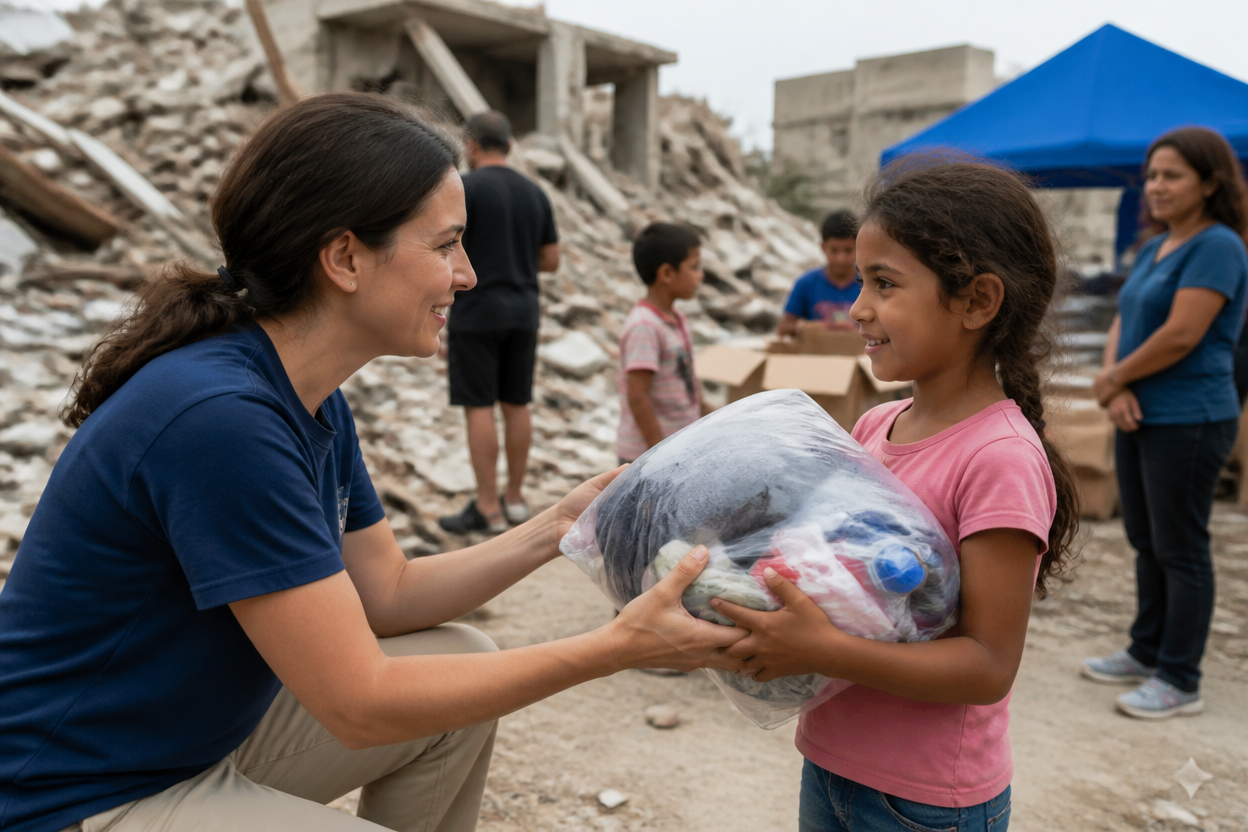
Emergency response is often described as “rapid,” but rapid response is usually the fruit of slow work: contingency planning, staff training, vetted vendors, pre-positioned supplies, and memoranda of understanding with local authorities. When those pieces are absent, ministries may still act quickly, but haste can produce waste—or harm.
In practice, the child sponsorship organizations that respond well tend to have defined triggers for shifting operations: when attendance collapses, when transport becomes unsafe, when local markets fail, or when a government order closes schools. They also tend to have a clear incident command structure: who decides, who documents, and who communicates.
Local presence is not a slogan
Emergencies reward proximity. A ministry that depends on short visits from outside staff is structurally limited in crisis. A ministry that has established, accountable local teams can verify conditions, coordinate with churches and community leaders, and adapt programming without waiting for international travel to reopen.
This is one reason donors often ask whether a sponsorship ministry works through indigenous churches and local institutions. The question is not ideological. It is operational. When crisis comes, local partners are not optional.
Safeguarding becomes more difficult, not less important
Displacement, school closures, and economic stress increase the risk of exploitation. This is widely recognized in humanitarian practice, and Christian ministries should not pretend otherwise. The U.S. State Department has documented how trafficking risks rise in contexts of instability and displacement, particularly for children and families with limited protection networks U.S. Department of State.
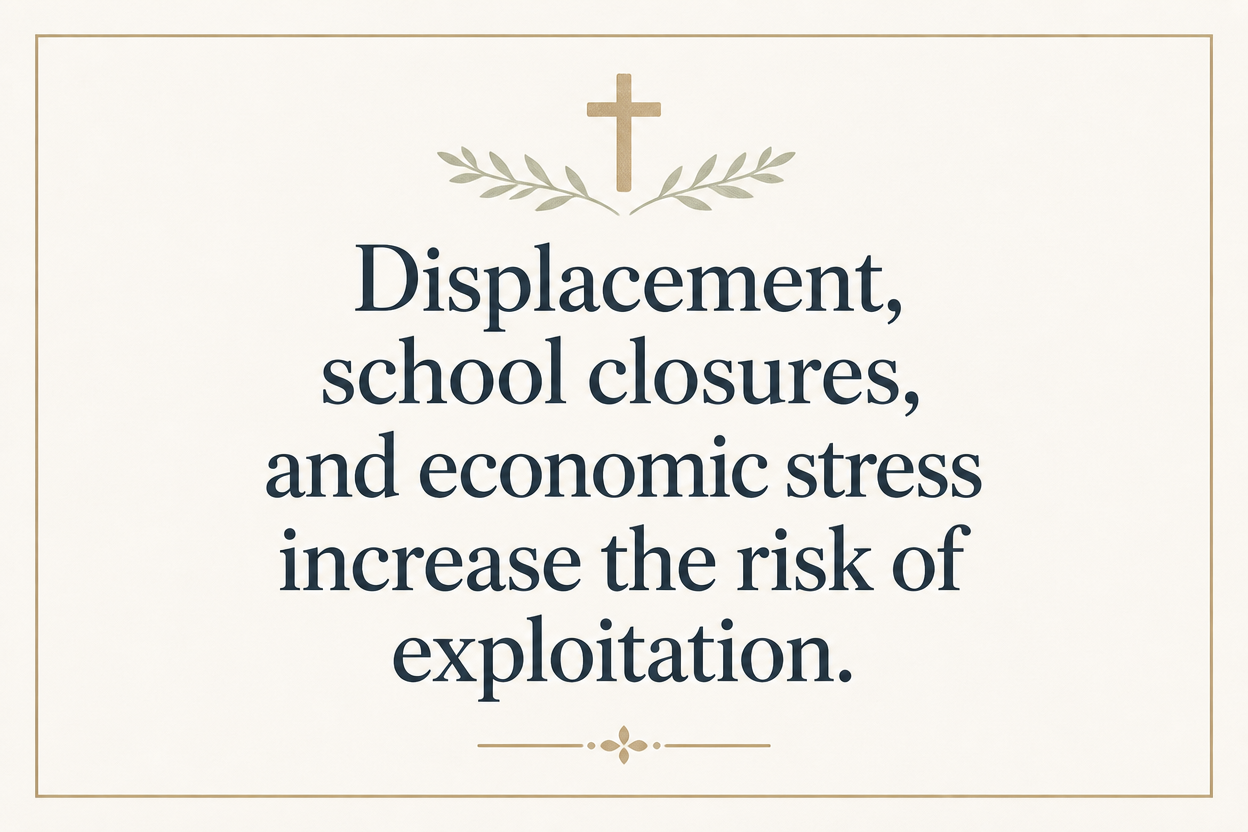
A sponsorship ministry’s emergency competence should therefore be evaluated not only by how much it distributes, but by how it protects: child safeguarding policies, trained staff, reporting pathways, and partner accountability when normal oversight is disrupted.
Fund redirection is a stewardship question, not a public relations one
When an emergency hits, ministries often face a legitimate dilemma. Sponsor funds may be restricted to ongoing child development activities—education support, nutrition, mentoring, spiritual formation—yet the immediate need may be water, shelter, medical care, or evacuation. Redirecting funds can be morally compelling. It can also be financially and ethically improper if done without clarity.
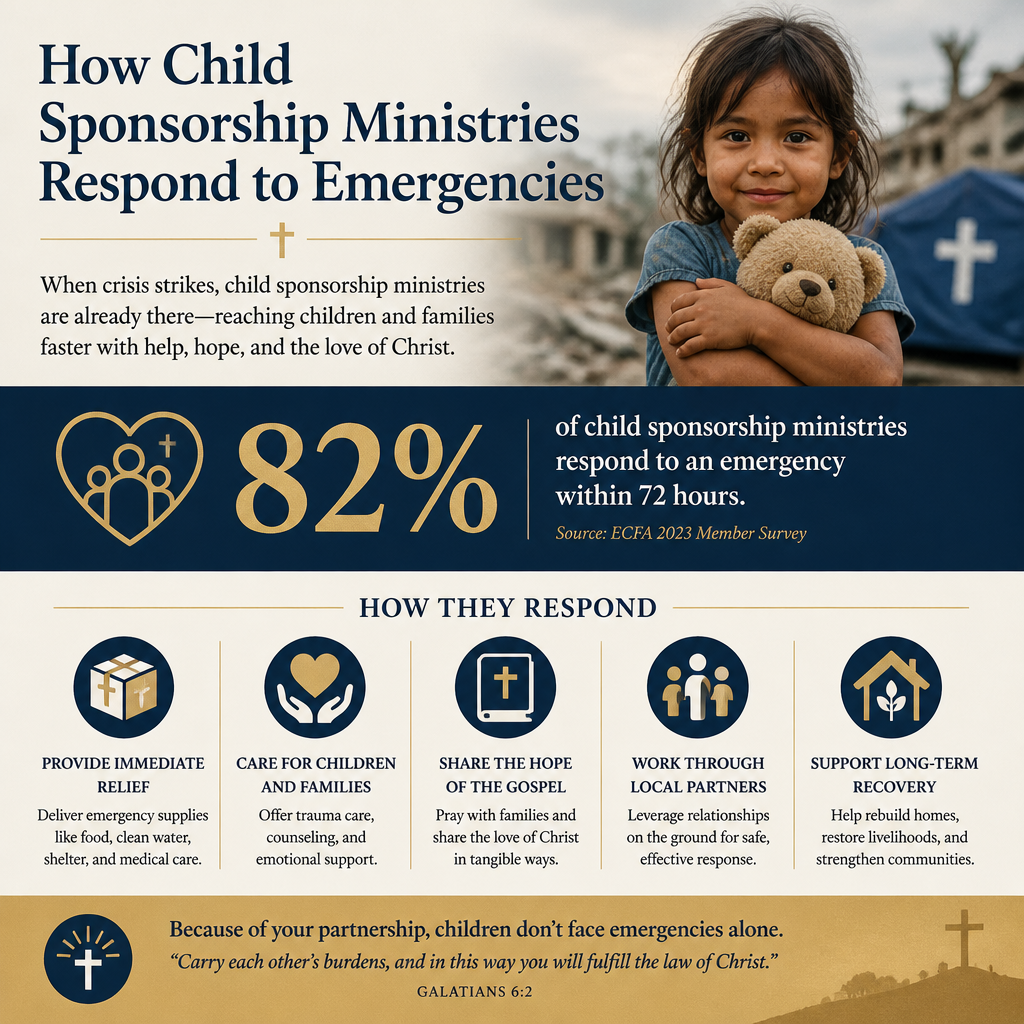
The ministries that meet The Most Trusted Standard tend to treat this as a governance and transparency matter. They document what is restricted and what is not, what approvals are required, and what communication will be provided to sponsors. Donors should not have to guess whether “emergency response” means re-labeled spending or genuinely additional capacity.
What a serious gift policy should make clear
- Whether monthly sponsorship gifts are restricted, and to what purposes
- What circumstances permit temporary reallocation, and who authorizes it
- How the ministry tracks the reallocation in its accounting system
- How sponsors are informed, including whether opt-out options exist
- How the ministry restores normal program funding after the acute phase
Why overhead ratios tell donors very little in a crisis
During emergencies, donors sometimes default to a familiar metric: “How much goes to the field?” The field has had to reckon with the distortions produced by this question. The leaders of Charity Navigator, GuideStar, and the BBB Wise Giving Alliance argued publicly that overhead ratios can mislead donors and pressure nonprofits into underinvesting in systems that drive effectiveness Charity Navigator.
For sponsorship ministries, those “systems” often include safeguarding, financial controls, monitoring, and staff training—precisely the capacities that determine whether emergency spending is responsible. A low administrative percentage is not a substitute for audited financials, internal controls, and truthful reporting.
Communication in crisis should be specific, sober, and verifiable
Christian donors do not need ministries to sound optimistic when children are suffering. They need ministries to speak truthfully, to avoid speculation, and to give evidence proportionate to what is known. A crisis update that is emotionally intense but operationally vague often erodes trust over time.
The best emergency communication usually includes three layers: the condition of the child and family (when verifiable), the condition of the program operations (what has changed and why), and the condition of finances (what is being funded and what is being requested). Done well, this kind of reporting honors sponsors as stewards rather than treating them as an audience.
When the ministry cannot confirm a child’s status
In conflict or displacement, a ministry may temporarily lose contact with a child. Mature organizations will say this plainly, describe the steps being taken to re-establish contact, and explain what happens to sponsorship funds during the gap. Minimizing uncertainty may feel reassuring in the moment, but it tends to create a deeper breach when later reports contradict earlier confidence.
Privacy and dignity still govern what should be shared
Emergency updates can easily slip into “crisis storytelling” that trades a child’s dignity for donor reassurance. Christian ethics requires more. Children are not fundraising assets. Ministries should avoid identifiable details that increase risk, and they should not publish images that expose a child’s vulnerability without meaningful consent and safeguarding review.
Donors who want a wider view of how sponsorship ministries handle funds across circumstances can reference How Child Sponsorship Ministries Use Donations for the broader stewardship questions that emergencies intensify rather than replace.
What donors can responsibly ask before and during an emergency
Emergency response should not be evaluated only in the heat of the moment. A wise sponsor asks questions early, when a ministry is not under pressure to reassure. The goal is not suspicion. The goal is clarity—so that generosity remains confident even when circumstances are unstable.
Across our team’s review work, the most helpful donor questions are those that invite documentation: policies, audit practices, safeguarding systems, partner standards, and outcome reporting. These are the sorts of questions that The Most Trusted Standard is designed to operationalize for donors who want to give with confidence, not simply with urgency.
Questions that clarify governance and accountability
Donors can ask: Is the ministry independently audited? How does it track restricted gifts? What is the board’s role in emergency approvals? How does it vet and monitor local partners? These questions are not distractions from compassion. They are how Christians practice stewardship in a fallen world where money can be misspent and children can be harmed.
Questions that clarify theology and practice together
Emergency response always raises a deeper issue: what is the ministry ultimately trying to build? If sponsorship is merely a transfer of goods, the crisis response will focus on distribution. If sponsorship is a long-term discipleship and community resilience effort, emergency response will aim to stabilize the child and strengthen the local structures that keep children safe after the headlines fade.
Donors exploring sponsorship as a category can situate these questions within Child Sponsorship Ministries, where the central tensions—child-centered care, local partnership, truthful reporting, and holistic formation—can be evaluated across organizations.
FAQs for How child sponsorship ministries respond to emergencies
Do sponsorship ministries keep charging sponsors when a child cannot be located during a crisis?
Practices vary, and donors should not assume uniformity. Responsible ministries explain, in writing, what happens when contact is interrupted: whether gifts are held temporarily, redirected to the broader community response, or reassigned only after defined efforts and time thresholds. The essential issue is not which policy is chosen, but whether it is communicated clearly, authorized appropriately, and tracked transparently.
Is it appropriate for a sponsorship ministry to use sponsorship funds for community-wide emergency relief?
It can be appropriate when the ministry’s gift policy allows it and when the relief directly supports the sponsored child’s wellbeing and protection within a broader household and community context. It becomes problematic when a ministry implies one-to-one child benefit while routinely using funds for unrelated purposes without disclosure. Donors should look for explicit restriction language, documented approvals for temporary reallocation, and reporting that distinguishes emergency relief from ongoing sponsorship programming.
Emergency response is where trust becomes measurable
Emergencies compress time and expose incentives. They make it easier to tell inspiring stories and harder to document careful work. For Christian donors, this is precisely where verification matters. The question is not whether a ministry feels compassion in crisis, but whether it can demonstrate competent, accountable care for children and families when normal systems break down.
The ministries most worthy of long-term sponsorship support are rarely those that promise uninterrupted stability. They are those that prepare diligently, act with humility, and tell the truth—because they understand that Christian stewardship answers to God before it answers to donors.



