
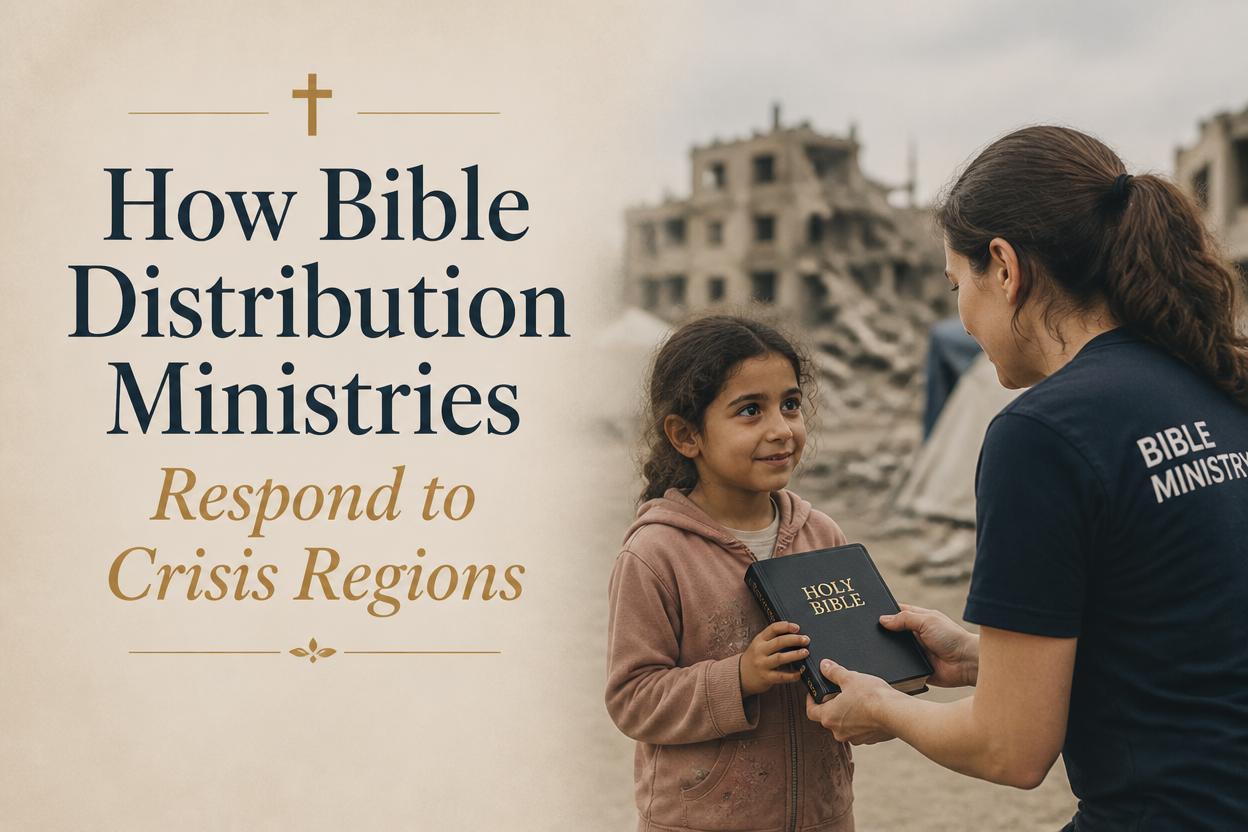
Bible distribution ministries respond to crisis regions under conditions where speed can save lives and haste can also do harm. War, displacement, and state collapse create genuine spiritual hunger, but they also create misinformation, diversion risk, and the temptation to measure faithfulness by pallets shipped rather than disciples formed. Mature Christian donors are right to ask not only whether Bibles arrive, but whether the ministry’s presence is honest, lawful, culturally literate, and accountable before God.
Scripture does not treat the Word of God as a luxury item for stable societies. The church is built by the Word proclaimed and received (Romans 10:14–17), and believers have long carried Scripture into danger when rulers resisted it. Yet the New Testament’s commitment to truthfulness and order also applies under pressure: “We have renounced disgraceful, underhanded ways” (2 Corinthians 4:2). Crisis response is precisely where that renunciation must be visible.
1) Crisis response begins before the crisis with networks, permissions, and doctrine
Local church relationships are the first line of distribution
When a region destabilizes, the ministries that respond best are usually those already embedded through local church partnerships, translation work, and training. Crisis zones punish newcomers. Local believers know which roads are open, which checkpoints are predatory, and which “aid corridors” are propaganda. They also know which formats matter: a full Bible, a New Testament, a Scripture portion, audio Scripture for low-literacy contexts, or trauma-informed Bible engagement that helps people read under distress.
What this means in practice is that Bible distribution in crisis is often less about international airlifts and more about resourcing trusted local networks with the right inventory, in the right language, in the right form. Donors sometimes undervalue the quiet, years-long work that makes fast response possible.
Sound theology shapes what a ministry counts as success
Christians genuinely disagree about emphasis: some prioritize the widest possible distribution, others prioritize deeper engagement and local church strengthening even if distribution is smaller. The tension is real. A crisis creates a genuine urgency to place Scripture into people’s hands, but the Great Commission is not satisfied by logistics alone. Ministries with doctrinal clarity tend to speak plainly about their end: Scripture received in faith, read in community, taught by the church, and lived in obedience.
Our team at Most Trusted sees a consistent pattern: the ministries that meet The Most Trusted Standard can explain, without theatrics, how their doctrine informs their distribution strategy, their partnerships, and their reporting. They know that the Word is not a commodity and that the church is not a downstream add-on.
2) The crisis region itself changes the ethics of distribution
Security and dignity are not optional
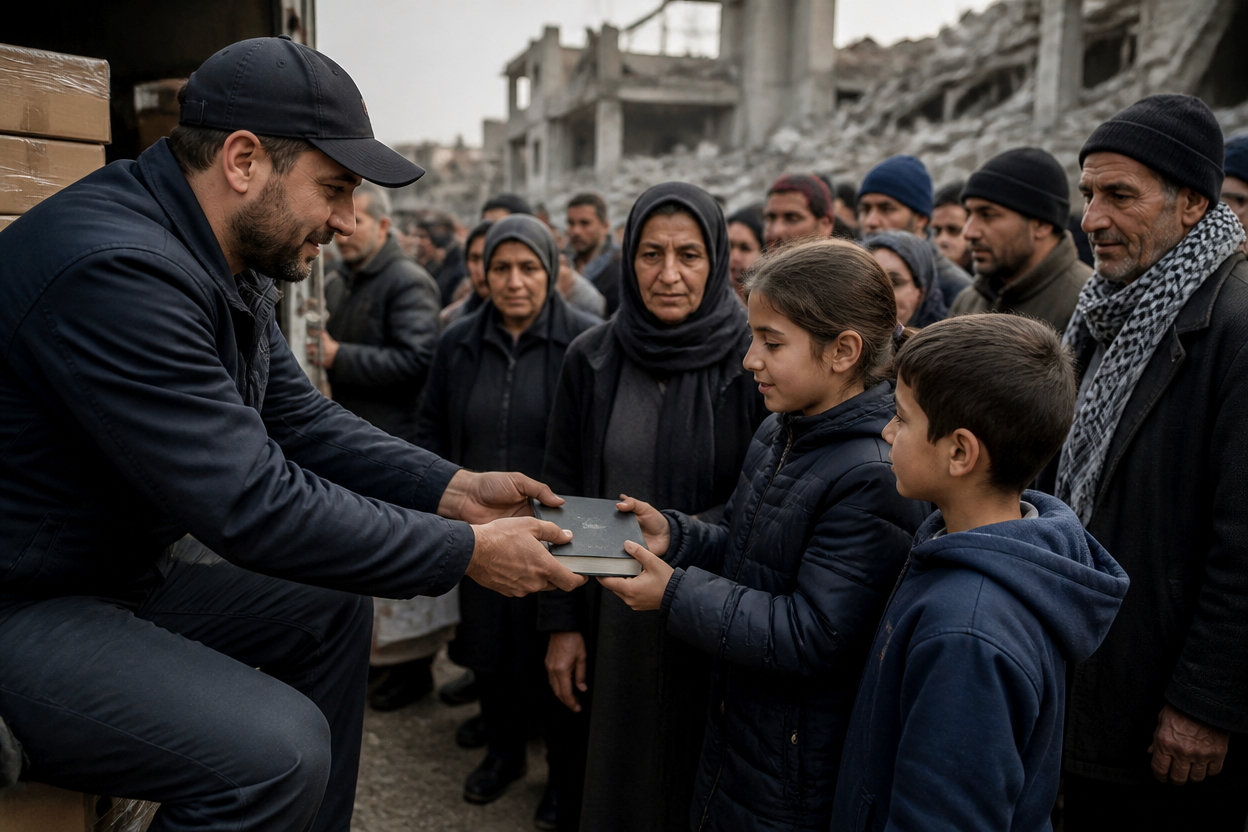
In conflict settings, a Bible can endanger a recipient if it marks them as a target. It can also endanger local partners if foreign support is criminalized. Mature ministries plan for that reality by offering discreet formats (including digital access and audio), limiting identifiable branding, and training partners in risk mitigation. Public “distribution footage” may satisfy donor appetite, but it can expose vulnerable believers.
Displacement compounds these risks. The United Nations High Commissioner for Refugees reports that forced displacement has risen to historically high levels, which increases both need and operational complexity for ministries working along borders and in camps. UNHCR
Legal compliance is part of Christian integrity
Some donors assume that operating “under the radar” is spiritually heroic. In certain places, discreet work is necessary for safety. Even so, ministries still face moral obligations to handle funds lawfully, protect staff, and avoid bribery and diversion. Where sanctions regimes apply, compliance is not bureaucratic caution; it is a stewardship duty. A ministry that cannot articulate how it navigates export controls, in-country import restrictions, and local legal constraints should not be treated as “more faithful” for being vague.
The harder question is whether a ministry’s operating model incentivizes reckless risk. Crisis response can become a branding strategy. Discernment requires asking who bears the risk: expatriate visitors, or local believers and their families.
3) Logistics in crisis regions is less heroic and more accountable than donors expect
The supply chain is where integrity is tested
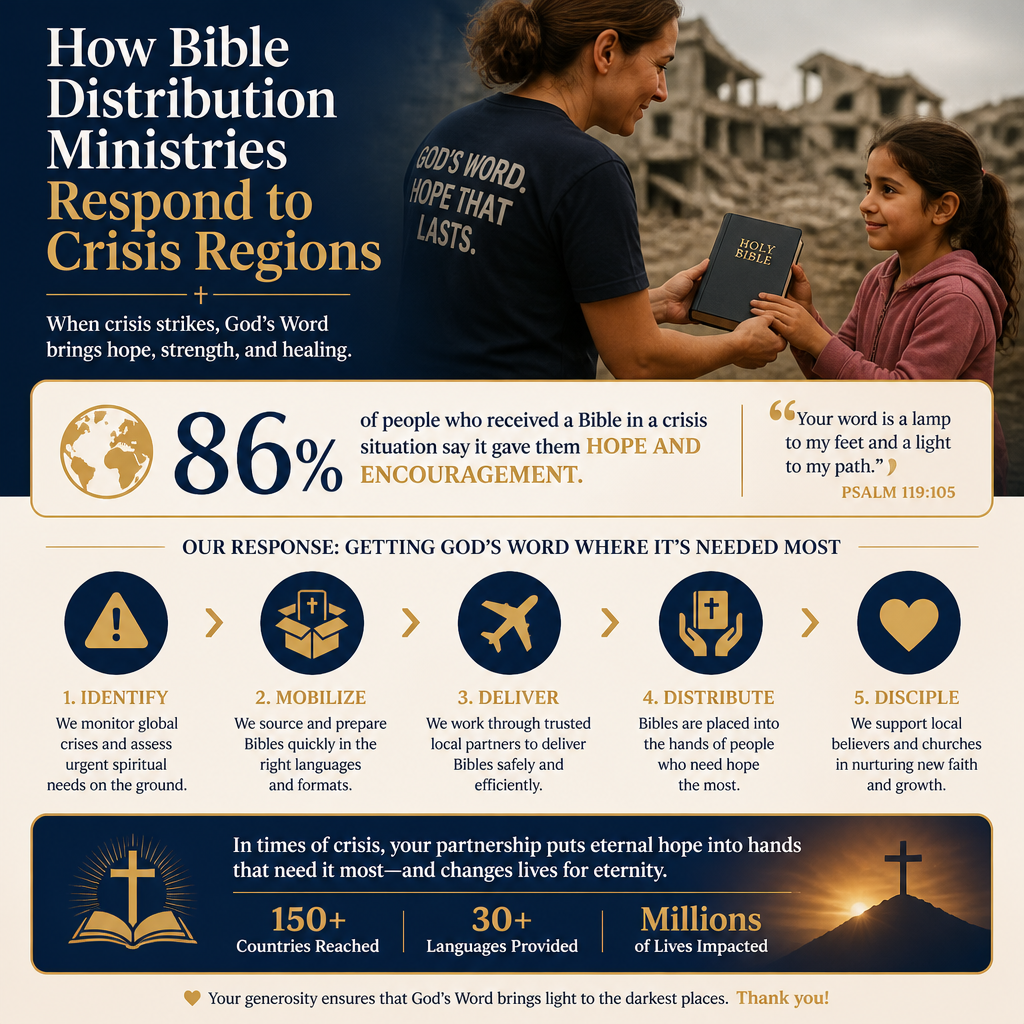
In stable settings, Bible distribution can be planned around predictable printing schedules and shipping lanes. In crisis settings, fuel shortages, port closures, militia checkpoints, and sudden policy changes force constant adaptation. Ministries may use regional hubs, print nearer to the field when possible, or shift from print to audio and digital delivery.
Accountability is not a spiritual distraction from mission; it is one of the ways the church avoids scandal and protects the witness of Christ. The apostolic pattern included careful handling of gifts to prevent reproach (2 Corinthians 8:20–21). Crisis does not suspend that obligation; it intensifies it.
Digital Scripture helps, but it is not a simple substitute
Mobile access can expand reach in unstable contexts, particularly where physical shipment is blocked. Yet digital distribution has its own constraints: internet shutdowns, surveillance, data privacy, device scarcity, and literacy barriers. Ministries that treat “app downloads” as interchangeable with Scripture access often inflate impact. Sophisticated donors should expect ministries to differentiate between “content available” and “content safely accessible,” and between “downloaded” and “used.”
For donors evaluating Bible distribution ministries as a category, Bible Distribution Ministries is a useful starting point for understanding common operating models and the questions each model raises under pressure.
4) Evidence, reporting, and the danger of crisis storytelling
Metrics should serve truth, not fundraising
Bibles “distributed” is a legitimate output, but crisis donors also need credible indicators of stewardship: loss rates, partner vetting, delivery confirmation, and post-distribution engagement where feasible. The field has had to reckon with how easily numbers can be overstated when distribution occurs through intermediaries. A mature ministry will describe verification methods plainly and admit what cannot be confirmed without putting people at risk.
Donors should also be wary of emotional certainty created by selective images. Crisis communications can cross from witness to exploitation. The goal is not sanitized reporting; it is truthful reporting that treats recipients as neighbors, not props.
Translation and language decisions matter in emergencies
In many crisis regions, displacement pushes minority-language communities into new geographies. The “right” language choice is not always the official language. Ministries that partner with established translation organizations are often better equipped to respond without improvising theology through rushed, low-quality translations. The complexity here is technical and pastoral: accuracy, readability, and acceptance among churches on the ground.
Donors seeking a broader view of how these ministries operate across contexts may also find How Bible Distribution Ministries Reach the World helpful for seeing how crisis work fits within longer-term strategies.
5) What discerning donors should ask before funding crisis distribution
Questions that reveal readiness and integrity
When a crisis breaks, donors often face an urgent decision with limited information. A few well-chosen questions can distinguish mature operations from reactive ones. The goal is not to burden ministries with paperwork, but to clarify whether the work is governed by conviction, competence, and accountability.
- Who are the local partners? Are they identifiable to the ministry, vetted, and accountable to local church leadership where appropriate?
- How is recipient safety protected? What practices govern photography, public updates, and discreet delivery?
- What is the chain of custody? How does the ministry confirm delivery and reduce diversion in unstable settings?
- How are funds and materials handled under law? Does the ministry describe sanctions and compliance risks with clarity?
- What does follow-up look like? Is there a plan for Bible engagement, pastoral care, or connection to churches when feasible?
How Most Trusted evaluates crisis readiness
Most Trusted exists because donors need more than a compelling story; they need verified confidence. Under The Most Trusted Standard, we examine faith commitments, financial integrity, governance, and transparent reporting in ways that translate directly to crisis work. In practice, that means looking for clear doctrinal accountability, sober risk management, controlled handling of restricted funds, and public communication that is truthful and non-exploitative.
Not every ministry will share the same tactical approach. Some will focus on print distribution through church networks; others will emphasize audio Scripture, digital access, or refugee-focused engagement. The decisive question is whether their approach is accountable, lawful, and consonant with the character of Christ.
FAQs for How Bible distribution ministries respond to crisis regions
Do Bible distribution ministries ever create security risks for local believers?
Yes. In some contexts, possession of Christian materials can increase surveillance, harassment, or violence. Responsible ministries plan for discreet delivery, limit identifiable branding, and avoid public storytelling that exposes recipients or partners. Donors should treat security practices as a core part of integrity, not an optional operational detail.
Should donors prioritize speed or accountability in a crisis?
Christian stewardship requires both. Speed matters when people are displaced and churches are cut off from resources, but accountability protects the vulnerable and guards the witness of the gospel. The most trustworthy ministries can describe how they move quickly while still maintaining partner vetting, lawful compliance, and credible reporting.
A faithful crisis response is measured by truthfulness and love
Crisis regions reveal what a ministry is made of: whether it is driven by the fear of missing a moment or by the patient courage that serves the church without exploiting suffering. Bible distribution in emergencies is a holy task, but it is not exempt from the moral demands of honesty, prudence, and neighbor-love. Donors best honor the urgency of the moment by funding ministries whose crisis response is both courageous and verifiably accountable.



