
When Christian donors ask what share of donations funds biblical museum ministry work, they are rarely asking for a single percentage. They are asking whether a museum ministry’s spending is ordered toward faithful witness, responsible stewardship, and measurable public benefit rather than self-preservation.
That question deserves a serious answer because biblical museum ministries occupy a particular space in the Kingdom’s economy. They are neither simply local-church ministry nor simply cultural institution. They steward physical collections, educational programming, and often high fixed costs. Donors can honor that complexity without surrendering the biblical demand for integrity in weights and measures.
1 Expense ratios can clarify stewardship but they cannot define it
Why donors gravitate to a clean percentage
Most donors have learned the basic nonprofit categories: program services, fundraising, and management and general. It is reasonable to want a ministry’s annual report to show that most dollars go to mission. Yet the category labels do not always map neatly onto what a biblical museum is actually doing. Collections care, conservation, insurance, exhibition design, and security may be foundational to ministry impact while appearing to outsiders as overhead.
The sector has also had to reckon with how donors can unintentionally pressure organizations into underinvesting in governance, financial controls, and staff development. That concern is widely recognized in the broader nonprofit world, including the joint statement sometimes called the Overhead Myth, signed by Charity Navigator, GuideStar, and the BBB Wise Giving Alliance, which warns that overhead ratios alone can mislead donors and distort nonprofit behavior Charity Navigator.
What a biblical museum adds to the complexity
Museum ministry work often includes education, public scholarship, pastoral sensitivity, and cultural engagement. Some outputs are quantifiable, such as school field trip attendance or digital course enrollments. Others, such as equipping believers to trust Scripture or helping seekers engage the historicity of the biblical world, are harder to quantify without reducing spiritual formation to a marketing funnel. Christians genuinely disagree about how much should be measured, and how.
What this means in practice is that donors should treat the “share of donations” question as a starting point: a way to identify plausible stewardship, not a way to replace judgment. A museum can spend heavily on programs and still betray its calling through poor governance, weak theological accountability, or manipulative fundraising. A museum can also carry higher administrative costs because it is responsibly maintaining collections, paying for independent audits, and investing in safety and compliance.
2 Biblical museum ministry work should be defined before it is measured
Program spending is only meaningful if the program is faithful
“Biblical museum ministry work” is not merely the existence of exhibits with biblical themes. It includes the integrity of interpretation, the ethical acquisition and handling of artifacts, the formation of staff and docents, and the ministry’s posture toward truth. Scripture repeatedly ties righteousness to honesty in commerce and representation; the call against false scales is not limited to marketplaces. For museum ministries, truthfulness includes provenance, claims made in fundraising, and the clarity with which the ministry distinguishes confidence from conjecture.
Donors should ask ministries to define their mission deliverables in plain language: Who is served, what is provided, and what change is sought. A museum that says, in effect, “we exist to persuade the public that the Bible is trustworthy,” must then show that its scholarship, acquisitions, and communications meet that standard, not merely that it hosted an impressive event schedule.
Common categories of ministry work in museum settings
Across our verification work at Most Trusted, the ministries that communicate most credibly tend to describe mission work in categories that can be inspected, not merely celebrated. In museum ministries, those categories often include:
- Public exhibitions and interpretive content rooted in responsible scholarship
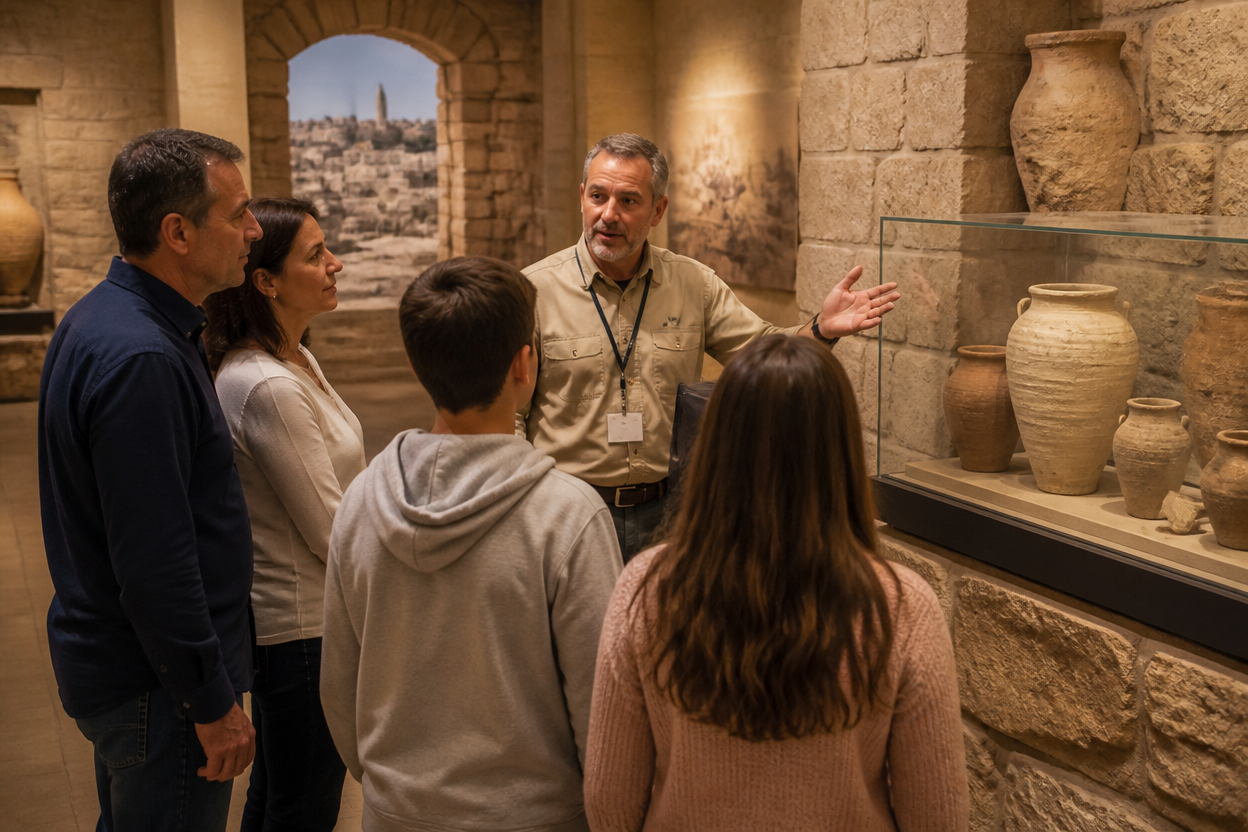
- Educational programming for churches, families, and schools
- Collections care, conservation, and documentation
- Research, publication, and translation of technical work into accessible teaching
- Digital engagement that extends access beyond visitors on-site
Some of these will sit in “program services.” Some will sit in administrative lines but function as essential ministry infrastructure. The donor’s task is to test whether the categories are being used to clarify or to conceal.
3 A healthier question is whether donations are advancing mission with integrity
Benchmarks help, but they must be handled with care
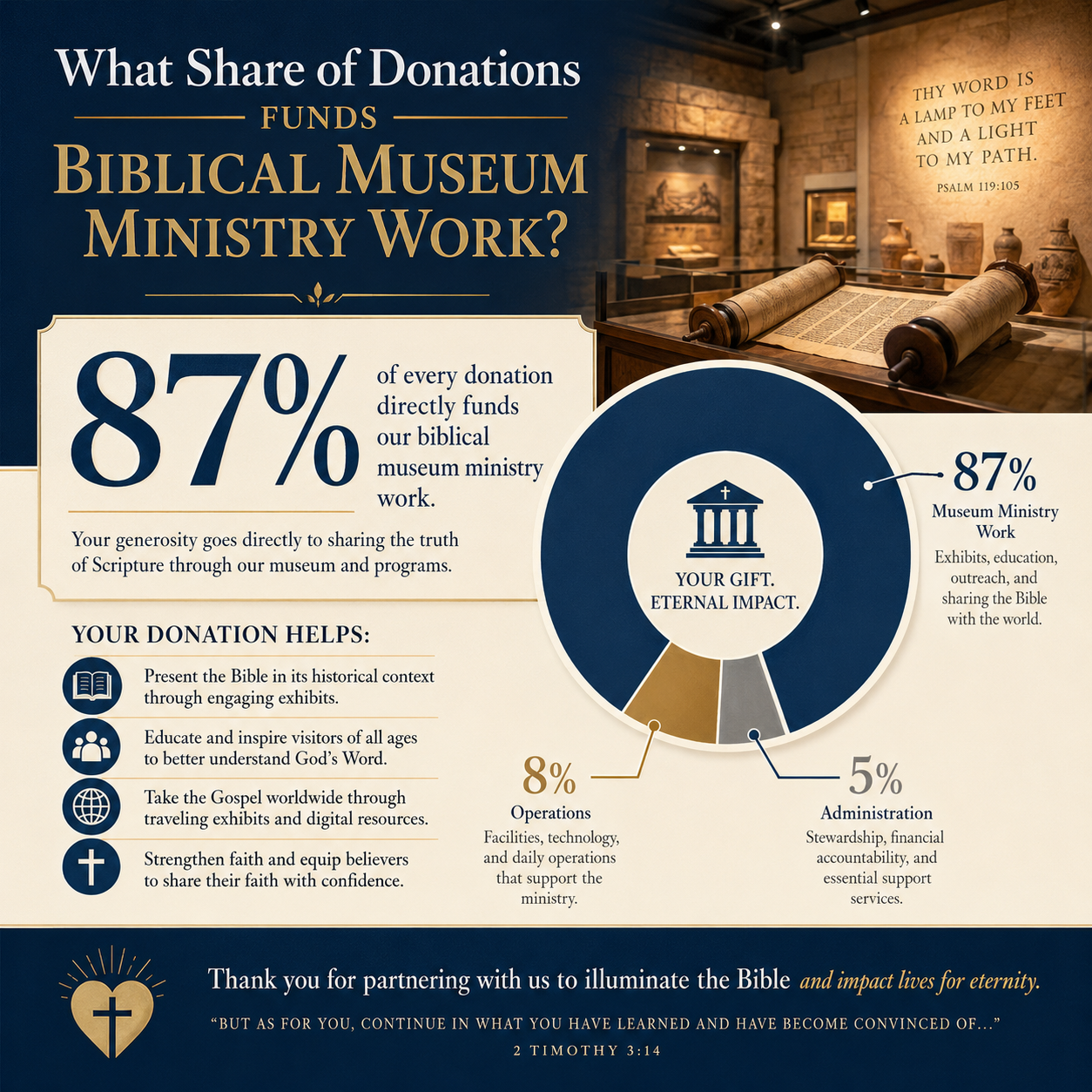
It is understandable to want a benchmark such as “at least 75% to programs.” Many charity evaluators use program expense ratios as one indicator of financial stewardship. But museum ministries are not all structured the same. A ministry that owns a facility may have different cost allocations than a ministry that leases space, tours traveling exhibits, or operates primarily through digital content and partnerships.
What can be assessed more consistently is whether financial reporting is clear, consistent, and externally validated. In the United States, larger nonprofits often provide audited financial statements, and many file IRS Form 990, which allows donors to review revenue sources, expenses, compensation, and related-party transactions. Donors looking for a grounded starting point can consult the IRS guidance on tax-exempt organizations and filings Internal Revenue Service.
Integrity shows up in the lines donors rarely ask about
In museum contexts, some of the most consequential stewardship decisions involve costs that do not feel “ministry-like” to a donor reading a pie chart. Security, insurance, facilities maintenance, collections management systems, and compliance work can protect artifacts and guests, and can prevent reputational crises that undermine gospel credibility. A ministry that skimps here may achieve a flattering ratio while increasing long-term risk and cost.
Conversely, high fundraising costs can be a warning sign, especially if donor acquisition becomes the ministry’s hidden engine. The question is not whether fundraising exists; Paul himself organized a complex collection across churches with careful administration “to avoid any criticism” (2 Corinthians 8:20–21). The question is whether fundraising is proportionate, truthful, and governed, or whether it has become a substitute for substantive mission delivery.
4 What we examine when we verify museum ministries
The Most Trusted Standard as a donor-facing lens
Most Trusted exists to help Christian donors give with confidence. We evaluate ministries against The Most Trusted Standard, a 15-criteria framework across four areas: Faith Foundation, Financial Integrity, Governance and Leadership, and Transparency and Effectiveness. Donors often come to us after encountering competing narratives: glossy impact claims on one side and cynical “overhead” critiques on the other. Serious stewardship rejects both naïveté and cynicism.
For museum ministries, we pay close attention to whether the ministry’s theological commitments meaningfully govern public messaging and curatorial choices, whether financial statements are accessible and coherent, and whether governance structures are adequate for an organization that may handle restricted gifts, complex capital assets, and reputationally sensitive claims.
Practical donor questions that surface the real allocation of gifts
If a donor’s goal is to understand what share of donations funds biblical museum ministry work, the most revealing questions are often specific:
How are restricted gifts handled? If a donor gives to a stated purpose, the ministry should track and report restricted funds clearly, and the board should ensure that restrictions are honored. Sloppy restriction practices create both ethical and legal problems.
How does the ministry allocate shared costs? Museums often share expenses across programs, administration, and fundraising. Allocation methods should be consistent year to year and described plainly, not manipulated to improve optics.
What is the ministry’s posture toward transparency? Mature ministries make it easy to find audited financials, annual reports, board oversight disclosures, and clear explanations of major initiatives. This is where donors will naturally engage with Accountability and Transparency in Biblical Museum Ministries as they evaluate what is normal, what is concerning, and what is exemplary.
Does governance match organizational complexity? Larger budgets and higher public profile require stronger internal controls, independent oversight, and conflict-of-interest management. Donors should not assume these safeguards exist simply because the mission feels spiritually aligned.
Are claims calibrated to evidence? The ministry should not imply that artifacts “prove” more than they do, or that scholarship is unanimous when it is not. In a museum setting, truthfulness is part of witness.
5 How to interpret the share of donations in light of Christian stewardship
Faithful giving is not only efficient giving
Christian stewardship is not reducible to efficiency. The New Testament commends careful administration, but it also commends honor, trustworthiness, and love. A ministry can be “efficient” and yet careless with truth, harsh with staff, or dismissive of accountability. Donors should seek ministries that honor Christ not only in mission statements, but in governance, reporting, and the treatment of the public.
What this means for the donor asking about “share of donations” is that a credible answer should include both numbers and narrative: audited financials that show overall spending, plus a coherent explanation of how the ministry’s core activities advance its stated mission. In museum contexts, the narrative should address how exhibits are developed, how scholarship is handled, and how acquisitions are ethically managed.
A disciplined way to proceed as a donor
We recommend donors take a disciplined sequence. First, confirm basic transparency: current financials, clear governance, and consistent reporting. Second, test whether the museum’s ministry work is defined in ways that can be evaluated. Third, interpret expense ratios in light of the museum’s operating model and its risk responsibilities. Fourth, examine whether the ministry’s public claims reflect integrity and theological seriousness. Donors who want a deeper orientation to the space will benefit from engaging Biblical Museum Ministries in order to understand the distinct stewardship and credibility issues that arise in this field.
FAQs for What share of donations funds biblical museum ministry work
Is there a healthy percentage a biblical museum should spend on programs?
There is no single faithful percentage that applies to every biblical museum ministry. Program expense ratios can be a useful indicator, but museums carry legitimate fixed costs and shared infrastructure that may not fit donor expectations of “program” spending. A more reliable approach is to review audited financials, understand how shared costs are allocated, and test whether the reported programs represent substantive ministry outcomes rather than marketing activity.
What documents should donors request to verify where donations go?
At minimum, donors should look for an annual report, audited financial statements when available, and IRS Form 990 filings for U.S. nonprofits. Donors should also expect clear explanations of restricted funds, major projects, and governance oversight. Where a ministry resists basic transparency, donors should treat that resistance as a meaningful data point rather than a minor inconvenience.
Stewardship that honors truth and strengthens witness
What share of donations funds biblical museum ministry work is a legitimate stewardship question, but it becomes most fruitful when it is framed as a question about integrity, governance, and credible impact rather than optics. Museum ministries can serve the Church and the public well, but only when their financial practices, curatorial claims, and accountability structures are worthy of the message they carry.



