
What Scripture says about disability and dignity is not a question for specialists. It is a question that clarifies whether the Church will treat image-bearing people as neighbors to be honored or as problems to be managed. For Christian donors, that question becomes practical: the ministries we fund will, over time, teach congregations what to notice, whom to listen to, and what kind of “help” is worthy of the name.
The Bible refuses two easy errors. It does not romanticize disability as a moral improvement plan, and it does not treat disability as a disqualifier from full participation in God’s people. Scripture’s vision of dignity is sturdy enough to hold lament and hope together, and specific enough to expose the quiet indignities that can hide inside well-funded compassion.
1. Dignity begins with the image of God, not with ability
Genesis grounds dignity in God’s claim, not our capacity
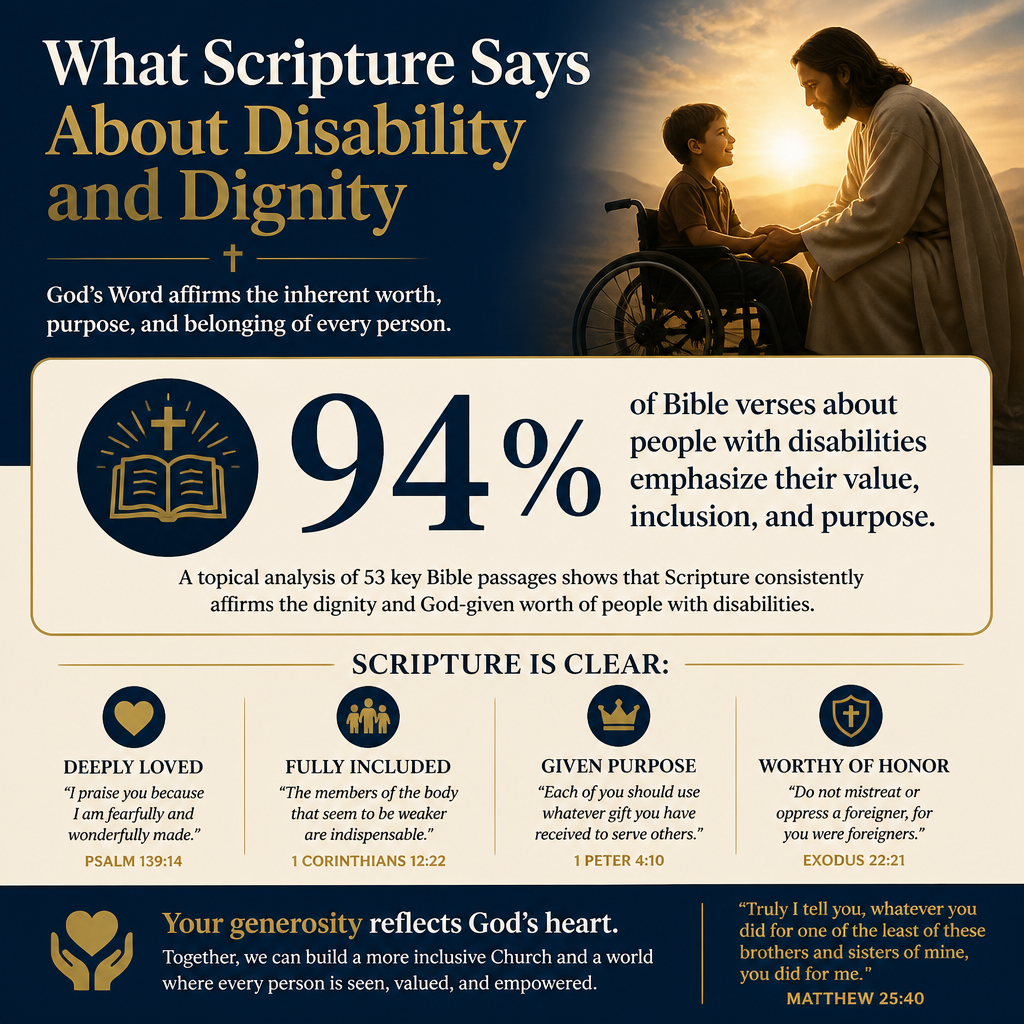
The starting point is unambiguous: “God created man in his own image” (Genesis 1:27). Dignity is not earned by productivity, verbal fluency, independence, or a socially legible life. It is given, because God gives it. When donors implicitly measure human worth by what a person can contribute, even benevolently, we quietly trade a biblical anthropology for a market anthropology.
This matters because modern systems do. Disability scholarship has long described how “ableism” functions as a background assumption that normalizes certain bodies and minds as the baseline for full membership in society. Christians may use different vocabulary, but we face the same temptation: to treat a person’s needs as evidence that they are less fully present, less fully called, less fully “us.” Scripture does not permit that move.
The Psalms and the prophets insist that vulnerability is not marginal
Scripture consistently treats vulnerability as a site of God’s attention. The Psalms are filled with the language of weakness, dependence, and pleading for help. The prophets condemn those who exploit the weak, not merely those who commit spectacular injustices. The biblical imagination forms donors to see the vulnerable not as a fundraising category, but as neighbors whose lives disclose what kind of community we are becoming.
For donors supporting Disability Ministries, this means the first question is theological before it is programmatic: does this ministry describe people with disabilities as image-bearers with agency and callings, or as objects of care whose primary role is to receive?
2. Scripture names brokenness without collapsing it into personal blame
John 9 rejects moralizing accounts of disability
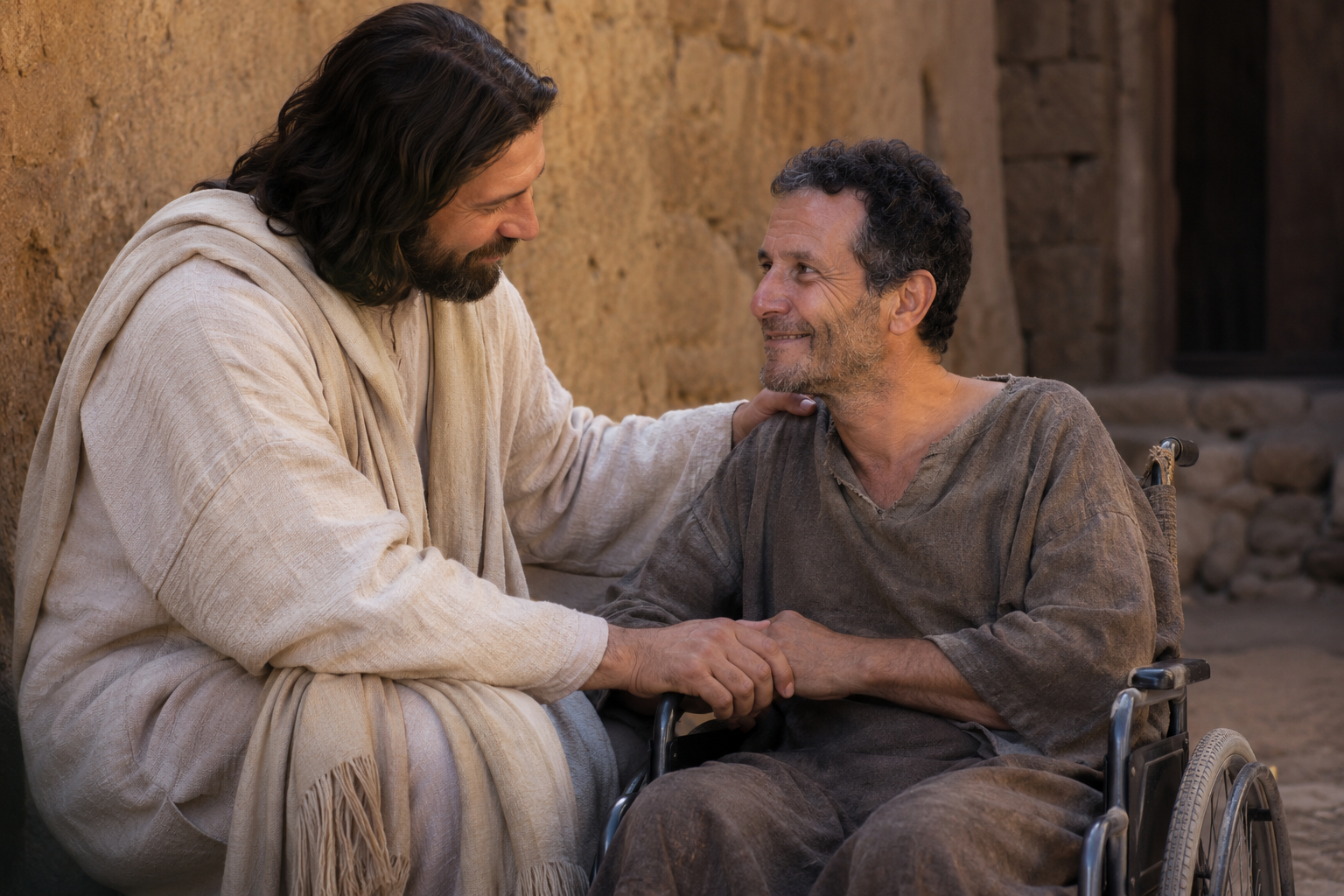
Christians genuinely disagree about how to speak of disability in relation to the Fall, healing, and suffering. Yet Jesus draws a clear boundary around one common distortion. When the disciples ask about the man born blind, “Who sinned, this man or his parents?” Jesus answers, “Neither… but that the works of God might be displayed in him” (John 9:2–3). The point is not that blindness is good; the point is that disability is not a moral verdict. The ministry posture implied by Jesus’ response is patience, attentiveness, and refusal to assign shame.
That refusal matters in donor ecosystems because shame travels easily through religious language. Some ministries inadvertently communicate that a family’s difficult situation must be the fruit of hidden sin, weak faith, or a failure to “claim” the right promises. A biblically grounded approach can speak honestly about pain without building a theology of suspicion around parents, caregivers, or the person with the disability.
Lament is a form of faith, not a lack of faith
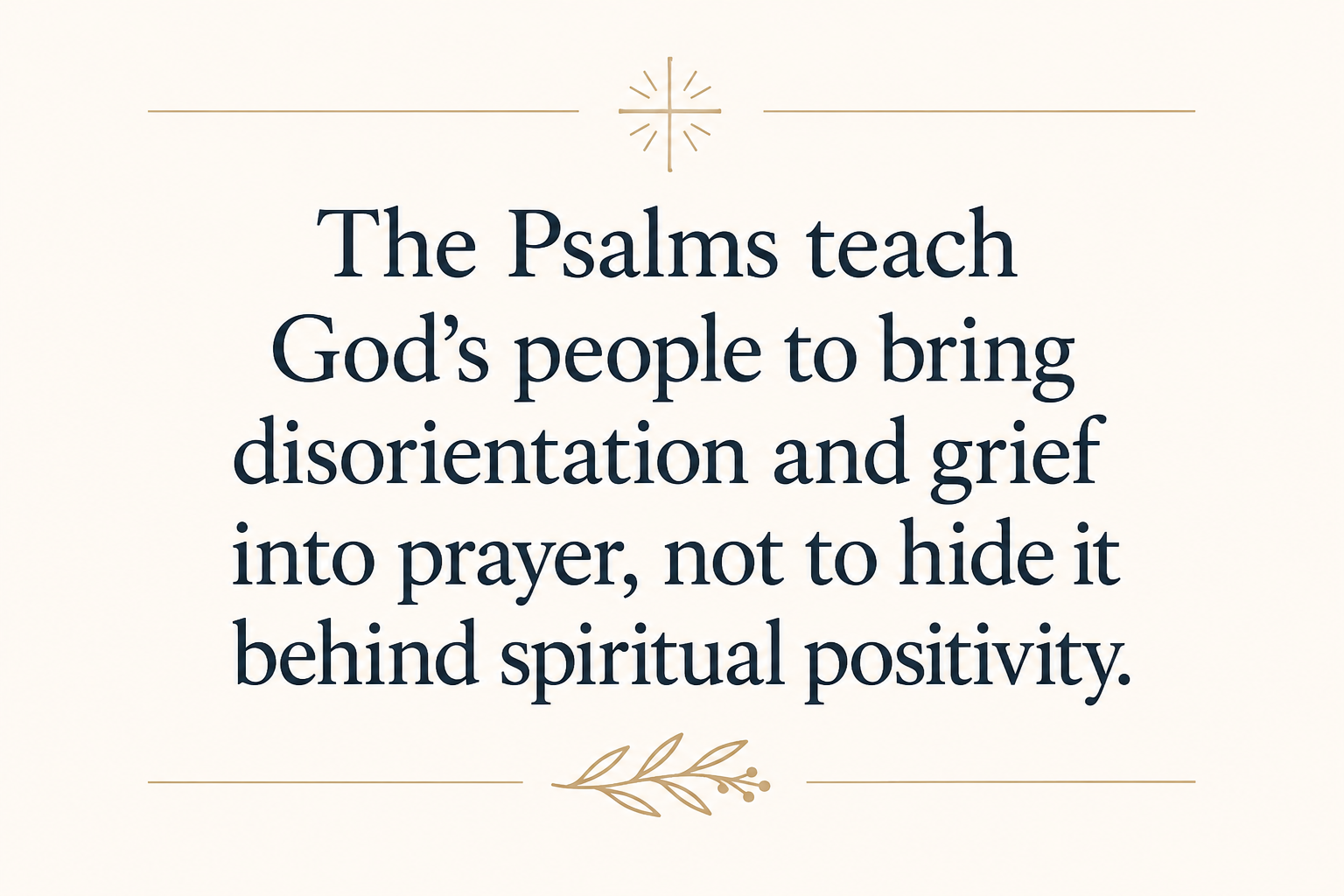
Scripture gives believers permission to lament. The Psalms teach God’s people to bring disorientation and grief into prayer, not to hide it behind spiritual positivity. For disability ministry, this means we should resist narratives that require constant triumphalism. Some conditions are chronic. Some progress is slow. Some grief is recurring. Donors can do real good by funding ministries that can hold suffering truthfully without reducing people to their suffering.
3. Jesus heals, but he also restores social belonging and moral agency
Healing accounts are not merely medical stories
The Gospels contain many healings, and Christians have long debated how to apply them today. Yet one feature is often missed: Jesus’ healings are frequently acts of social restoration. He touches the untouchable, speaks with those treated as invisible, and re-situates people within community. The man with leprosy is not merely cleansed; he is told how to return. The bent-over woman is called “a daughter of Abraham” (Luke 13:16), an explicit claim of covenant belonging.
For donors, the implication is concrete: ministry outcomes are not only about symptom change. They are also about belonging, voice, and participation. A disability ministry shaped by the Gospels will care about whether a person is known by name, heard without condescension, and treated as capable of worship, service, and decision-making.
Jesus does not treat disabled people as sermon illustrations
Jesus’ encounters with disabled people are personal and particular. He asks questions. He listens. He addresses people directly. The contrast with some modern fundraising is uncomfortable. Donor communications can easily slide into inspiration or pity, using a person’s disability primarily to generate emotion. That approach may raise money, but it corrodes dignity.
Across our verification work at Most Trusted, we observe that ministries most aligned with The Most Trusted Standard tend to show restraint in storytelling: clear consent, non-exploitative imagery, and language that emphasizes personhood rather than spectacle. This is not only ethical. It is discipleship in public.
4. The Church is a body with needed members, not a crowd with projects
First Corinthians 12 makes inclusion a doctrinal claim
Paul’s metaphor in 1 Corinthians 12 is not sentimental. It is ecclesiological. “The parts of the body that seem to be weaker are indispensable” (1 Corinthians 12:22). Indispensable is a high bar. It means the community is not fully itself without those members.
This challenges a common donor instinct: to fund “services” for people with disabilities without also funding pathways to leadership, contribution, and mutuality. The New Testament vision is not a one-direction flow of help from the strong to the weak. It is a community where honor is redistributed, and where need does not preclude calling.
James warns against status hierarchies in worship
James confronts a church that seats the rich in the best places and marginalizes the poor (James 2:1–4). The principle extends beyond wealth. Any system that assigns honor based on social desirability is a denial of the gospel’s logic. Disability ministry therefore cannot be restricted to a side room, a separate service, or a charitable add-on that leaves the main life of the church untouched.
Donors can support ministries that help congregations change their shared life, not merely their programming. That includes training greeters and ushers, adapting discipleship environments, and developing leaders with disabilities. These changes are often unglamorous and not easily captured in a single photograph. They are also closer to the New Testament’s vision of the Church.
5. Dignity requires accountability because good intentions can still harm
Compassion without wisdom can create dependency and exclusion
Christians rarely enter disability ministry with harmful intent. But the field has had to reckon with the difference between feeling compassion and practicing justice. The When Helping Hurts framework, articulated by Steve Corbett and Brian Fikkert, has reshaped many conversations about poverty by naming how unexamined “help” can undermine agency and reinforce power imbalances. The same dynamics can appear in disability contexts: programming that speaks about people rather than with them, or “support” that assumes incapacity and never revisits the assumption.
What this means in practice is that donors should look for ministries that build feedback loops, invite critique, and share decision-making. The easiest ministries to fund are not always the most faithful ones. Faithfulness is often visible in how a ministry handles complaint, consent, and power.
Verification strengthens trust, especially in emotionally charged giving
Disability is emotionally proximate for many donors. Families live with it. Churches encounter it weekly. Because the need feels immediate, donors may skip due diligence. Yet the New Testament repeatedly joins love with discernment. Paul prays that love “may abound… with knowledge and all discernment” (Philippians 1:9). Wise generosity asks not only whether a ministry is compassionate, but whether it is stable, governed well, financially responsible, and transparent about outcomes and limitations.
Most Trusted exists for that purpose. We evaluate Christian nonprofits against The Most Trusted Standard, a 15-criteria framework covering faith foundation, financial integrity, governance and leadership, and transparency and effectiveness. Donors should not have to choose between theological confidence and verifiable accountability. Both are part of faithful stewardship.
When evaluating disability ministries in particular, our team encourages donors to ask questions like these:
- Does the ministry include people with disabilities and their families in leadership and program design?
- Are safeguarding and consent practices clear, documented, and consistently followed?
- Does fundraising avoid pity-based or exploitative storytelling?
- Are financial statements, board oversight, and conflict-of-interest policies accessible and credible?
- Does the ministry describe outcomes with humility, including what has not worked?
For a more theological frame that donors can use when assessing ministries, the wider conversation in The Theology Behind Christian Disability Ministry can help clarify what is at stake beyond program selection.
FAQs for What Scripture says about disability and dignity
Does Scripture teach that disability is a result of personal sin?
Scripture recognizes that sin and suffering are connected in a fallen world, but it rejects simplistic moral accounting that treats disability as a personal verdict. Jesus explicitly refuses that interpretation in John 9:1–3. The wiser biblical posture is humility: naming the reality of brokenness while refusing to assign blame where God has not spoken.
How should donors think about healing in disability ministry?
Christians hold different convictions about healing, and prudent donors should avoid making a single practice the litmus test of orthodoxy. The Gospels show that Jesus’ works include healing, but also restoration of belonging, voice, and dignity. Donors can support ministries that pray with faith, tell the truth about chronic conditions, and pursue forms of flourishing that do not require a “success story” to justify a person’s worth.
A faithful vision of dignity forms faithful giving
What Scripture says about disability and dignity is ultimately a test of whether we believe the Church is Christ’s body in truth, not merely in metaphor. Image-bearing dignity is not fragile; it does not depend on autonomy, capacity, or social approval. Donors who give from that conviction will fund ministries that honor agency, protect the vulnerable, and build churches where people with disabilities are not an audience for care, but indispensable members of the people of God.



