
When Christian donors ask what outcomes donors can expect from homeless outreach, they are usually asking two questions at once: what changes in the lives of people served, and what evidence a ministry can responsibly claim. Street-level compassion is commanded in Scripture, but faithful stewardship requires more than goodwill. It requires clarity about what outreach can accomplish, what it cannot, and how fruit is measured without reducing a person to a metric.
Across the rescue mission movement, outcomes range from immediate crisis stabilization to long-term restoration. Some ministries emphasize street outreach and emergency services; others emphasize residential discipleship and workforce development. Christians genuinely disagree about the proper balance between mercy ministry and programs aimed at self-sufficiency. What donors can rightly expect is not a single universal pathway, but a set of outcomes that are both theologically coherent and verifiable.
1. Immediate outcomes are often crisis stabilization, not transformation
Safety, food, and connection to services are legitimate first outcomes
In homeless outreach, the first outcomes are often simple: a meal, hydration, basic medical attention, a blanket, a ride to shelter, a connection to case management. Scripture does not treat such acts as morally trivial. Jesus’ description of mercy in Matthew 25 is concrete—feeding the hungry and welcoming the stranger are named as marks of his people, not as optional preliminaries to “real” ministry.
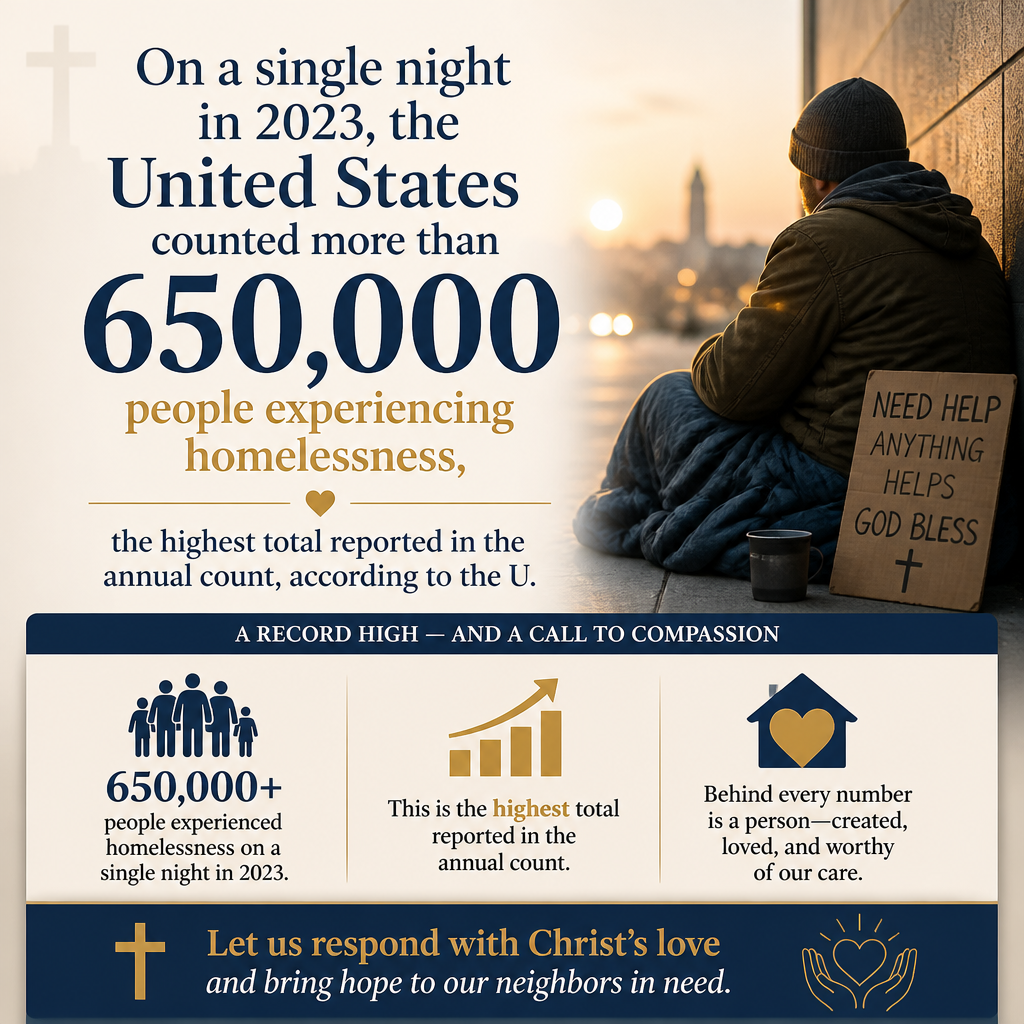
Christian donors should still expect ministries to describe these outcomes with precision. “We served 400 meals” is an output. The more meaningful immediate outcome is whether outreach consistently results in safer nights, reduced exposure to violence, and a documented pathway into shelter or treatment for those who want it. In many communities, the need is not marginal. On a single night in 2023, the United States counted more than 650,000 people experiencing homelessness, the highest total reported in the annual count, according to the U.S. Department of Housing and Urban Development’s 2023 Annual Homeless Assessment Report to Congress (HUD).
Outreach also produces trust, which is difficult to quantify but not optional
Effective street outreach is relational work with people who have often been harmed by institutions, including sometimes by churches. Donors should expect ministries to speak candidly about the time required to build rapport and the limits of coercion. If an outreach team claims consistent “same-day transformation,” skepticism is warranted. Trust is not a sentimental concept; it is an operational requirement for referrals to shelter, detox, medical care, or legal aid to be accepted.

2. Medium-term outcomes should show movement toward stability
Shelter entry, documentation, and treatment engagement are measurable
When outreach is connected to a rescue mission or partner agencies, donors can reasonably expect to see measurable movement: entry into safe shelter, completion of intake processes, recovery documentation, replacement IDs, benefits enrollment, and attendance at medical or behavioral health appointments. These are often the hinge points between chronic street homelessness and a realistic path forward. They are also the points where many people disengage, which is why ministries should report retention and follow-through, not only referrals made.
Substance use and mental illness are central realities in many outreach contexts. National data does not reduce the situation to a single cause, but it does clarify the complexity donors must reckon with. Among sheltered adults experiencing homelessness, about one in five reported serious mental illness and about one in six reported substance use disorder in the 2023 point-in-time count, according to HUD’s AHAR (HUD). A ministry’s outcomes should be credible in light of those burdens. “Housing everyone” is not an outcome any single mission can promise; consistent engagement with treatment pathways is a meaningful medium-term outcome.
Wise donors look for coordinated care, not isolated charity
Homelessness is rarely solved by a single intervention. Ministries that treat outreach as an isolated act, detached from shelter operations, case management, and community partnerships, usually plateau at short-term relief. Ministries that show coordinated care—clear handoffs, referral tracking, and shared plans with partners—are better positioned to show real movement toward stability without claiming credit for what other organizations did.
3. Long-term outcomes are slower and require disciplined reporting
Housing, employment, and restoration are the outcomes donors most hope for
Christian donors often long to see someone move from street homelessness into stable housing, from unemployment into dignified work, from addiction into sobriety, and from isolation into community. Those are worthy hopes. They are also outcomes that take time, and in many cases involve relapse, program exits, and re-entry. A ministry should not be penalized for honest reporting of setbacks; it should be evaluated on whether its approach is effective over time and whether it tells the truth about results.
Because donors often ask about “what works,” it is worth naming what the broader field has learned about housing outcomes. Research on Housing First models—programs that prioritize housing without preconditions—has shown improved housing stability in many settings, though debates continue about how best to integrate recovery expectations and discipleship in explicitly Christian programs. A 2014 review in the U.S. Department of Housing and Urban Development’s Office of Policy Development and Research found Housing First is associated with improved housing stability and reduced use of emergency services in multiple studies (HUD User). Christian missions may adopt different program philosophies, but they should be conversant with the evidence and clear about why they structure services as they do.
Spiritual outcomes should be described with theological care
For Christian donors, the restoration sought is never merely economic. Many ministries aim to see people reconciled to God, grounded in the local church, and formed in patterns of discipleship. Yet spiritual claims require theological and ethical restraint. A mission can report participation in Bible studies, worship attendance, baptisms, and ongoing church involvement where appropriate, but it should avoid treating conversion as a performance metric or pressuring vulnerable people to profess faith as the price of services.
We recommend donors ask whether a ministry can articulate how it protects religious freedom and dignity while still bearing clear witness to Christ. This is not a matter of secular respectability; it is a matter of Christian integrity. The gospel is proclaimed, not traded.
4. What donors should ask a mission to track and what not to demand
Credible outcomes include both numbers and narratives with verification
Most donors have learned, sometimes painfully, that ministries can unintentionally overstate impact. The more vulnerable the population, the greater the temptation to report inspiring stories without disclosing the full arc. Mature reporting does not eliminate testimony; it locates testimony within accountable measurement. The strongest ministries define a small set of outcomes, track them consistently, and explain limitations openly.
What this means in practice is that donors can ask for outcome reporting such as:
- Number of unique individuals engaged and the frequency of contact
- Shelter placement rates and length of stay where relevant
- Program completion and retention rates for residential programs
- Employment placement and job retention at 30, 90, and 180 days when feasible
- Housing placement and housing stability at defined intervals when feasible
At the same time, donors should not demand metrics that distort ministry. “Cost per life changed” is a category mistake. Human beings are not units of production, and the New Testament’s vision of faithful service includes perseverance in hidden places. The question is not whether outcomes can be reduced to a single number, but whether a ministry’s reporting is honest, consistent, and aligned with its stated mission.
Outputs are not useless, but they are not the whole story
Meals served, hygiene kits distributed, and nights of shelter provided matter, especially in extreme weather and in communities with scarce alternatives. But outputs become misleading when they are presented as if they were durable change. A ministry that reports only outputs may still be doing valuable work, but donors should interpret those figures as evidence of activity, not evidence of long-term restoration.
Donors who want a deeper view of the rescue mission landscape can orient themselves within Rescue Missions and Homeless Outreach, where the core ministry models and common outcome claims can be compared without reducing them to marketing categories.
5. How Most Trusted helps donors connect outcomes to credibility
The outcome question is inseparable from governance, finances, and theological clarity
Outcomes in homeless outreach are not produced by programs alone. They are shaped by leadership stability, staff training, safeguarding practices, financial discipline, and a theology of mercy that does not collapse into either mere relief or mere moralism. In our verification work at Most Trusted, we observe that ministries with the strongest outcome reporting also tend to have clearer lines of accountability: board oversight that is more than nominal, audited or competently reviewed financials, transparent disclosure practices, and a willingness to name both successes and failures.
That is why Most Trusted evaluates ministries against The Most Trusted Standard, a 15-criteria framework across Faith Foundation, Financial Integrity, Governance and Leadership, and Transparency and Effectiveness. Donors should not treat outcomes as a standalone scoreboard. They should view outcomes as the visible edge of deeper institutional realities.
What ministries that meet The Most Trusted Standard tend to do differently
While approaches vary, ministries that meet The Most Trusted Standard tend to define outcomes in ways that are both pastorally faithful and empirically restrained. They often distinguish between outreach contact, program participation, and long-term stability. They explain what they measure, why they measure it, and what their numbers cannot prove. They avoid manipulating donor expectations with inflated success rates and instead invite donors into long obedience—supporting work that is often slow, contested, and still worthy.
Donors who want to compare ministries within a shared accountability framework can start with How Rescue Mission Donations Make Impact, where the question of “impact” is treated as a matter of evidence, theology, and stewardship together.
FAQs for What outcomes donors can expect from homeless outreach
Should donors expect a rescue mission to prove that outreach permanently ends homelessness for most people served?
No. Donors can expect a mission to report outcomes honestly and to demonstrate that its model produces meaningful movement for a defined portion of participants over time. Permanently ending homelessness is a community-wide goal involving housing supply, public systems, and multiple providers. A mission’s responsibility is to describe its contribution with integrity—crisis stabilization, shelter placement, recovery engagement, job readiness, or housing outcomes—without claiming what it cannot verify.
How can donors evaluate spiritual outcomes without turning faith into a statistic?
Donors can ask whether the ministry’s faith practices are clear, voluntary, and pastorally sound, and whether the ministry can describe discipleship pathways beyond the program itself. A mission may report participation in worship services, Bible studies, chaplaincy engagement, or connections to local churches, but it should not treat professions of faith as a quota. Christian donors can honor spiritual fruit best by supporting ministries that proclaim Christ openly while safeguarding the dignity and freedom of those served.
What faithful expectations look like
Homeless outreach invites Christian donors into a tension Scripture does not let us escape: urgent mercy for the person in front of us, and wise stewardship for the resources entrusted to us. The outcomes donors can expect are real, but they are rarely quick—safety before stability, stability before long-term restoration, and restoration that often includes setbacks. The ministries most worthy of support are those that tell the truth about the work, measure what they can, and serve with perseverance shaped by the mercy of Christ.



