
When donors ask what outcomes donors can expect from Christian medical ministries, they are rarely asking for a single number. They are asking whether their gifts will relieve real suffering, strengthen the church’s witness, and honor Christ in both method and result.
Healthcare is one of the clearest places where mercy becomes visible. Jesus’ concern for the sick was not abstract; it took the form of touch, presence, and restoration. Yet medical work is also technical, regulated, and culturally complex. Mature donors therefore need outcomes that are clinically meaningful, spiritually faithful, and verifiable without turning the patient into a metric.
Outcome expectations begin with a Christian definition of healing
Mercy that treats persons, not cases
Christian medical ministries serve in the tension between measurable clinical outcomes and the biblical insistence that each patient bears God’s image. Ministries that are faithful over time tend to define success as more than “services delivered.” They aim for appropriate care that protects dignity, reduces preventable suffering, and refuses coercion—especially where evangelism and vulnerability can intersect.
Scripture does not treat physical healing as irrelevant to the gospel. It also does not treat the body as the whole story of a person. The New Testament presents a layered picture: immediate acts of mercy, honest recognition that sickness persists in a fallen world, and a long horizon of restoration. Donors can reasonably expect ministries to pursue excellent care while speaking with theological restraint about what any program can guarantee in the present age.
Why clarity matters for donor trust
Ambiguous promises are not a virtue. A ministry that implies “we will fix communities” with a short-term clinic is not being spiritually ambitious; it is being imprecise. The more transparent organizations generally name what is realistic: triage, acute care, chronic-disease management, preventive services, training, and system strengthening—each with different timelines and evidence standards.
This is one reason our verification work at Most Trusted emphasizes The Most Trusted Standard as a whole: faithful intentions must be matched by financial integrity, governance, and public transparency about effectiveness. Christian compassion does not exempt a ministry from the discipline of truth-telling.
Clinical and public-health outcomes donors can reasonably look for
Direct care outcomes that can be documented
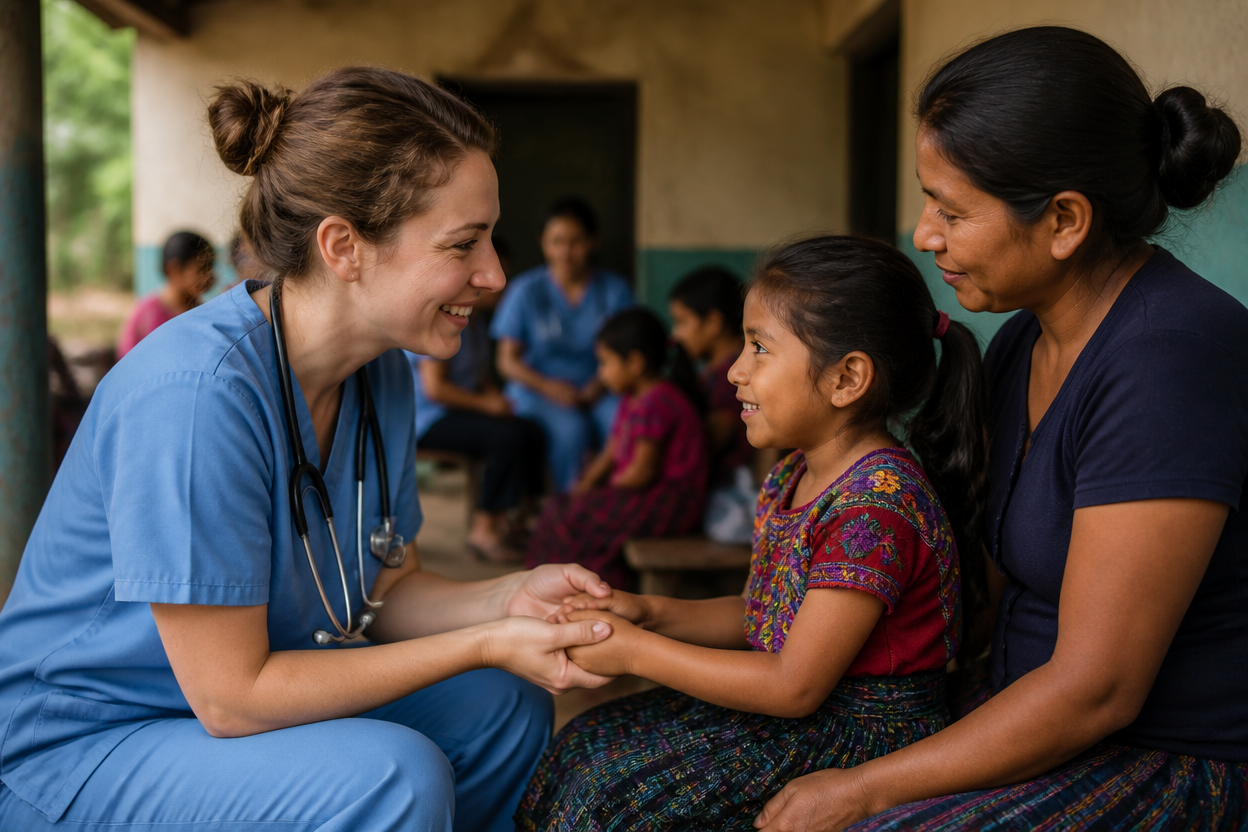
Many Christian medical ministries operate hospitals, clinics, mobile units, or surgical programs. When done well, donors can expect reporting that distinguishes between volume and impact: not only how many patients were seen, but what conditions were treated, what follow-up was achieved, and what safety practices were used. In lower-resource settings, appropriate benchmarks often include reductions in preventable complications, improved adherence to treatment protocols, and continuity of care for chronic illness.
Donors should also expect humility about attribution. Healthcare outcomes are influenced by infrastructure, nutrition, education, local staffing, and government policy. A credible ministry does not claim sole credit when an entire ecosystem contributed.
Preventive outcomes that rarely feel dramatic but matter
Some of the most meaningful health outcomes are quiet: safer births, earlier detection of disease, consistent access to essential medications, and reliable referral pathways. The global health field has accumulated strong evidence that basic interventions—vaccination, maternal care, clean water, and child nutrition—can shift population health when delivered consistently. For example, UNICEF reports that childhood immunization prevents an estimated 4.4 million deaths each year, a scale of impact that helps explain why prevention deserves donor attention alongside emergency care (UNICEF).
Christian donors sometimes prefer visible, immediate relief because it feels closer to the mercies of Christ. It can be. But faithfulness also includes patient investment in prevention, even when the “saved suffering” is harder to photograph or narrate.
Outcomes that strengthen local capacity and dignity
Training and retention of local clinicians
One of the most durable outcomes Christian medical ministries can produce is not a procedure but a person: a nurse trained, a physician mentored, a community health worker equipped, a local administrator strengthened. In many settings, the binding constraint is not goodwill but workforce. The World Health Organization has described a projected global shortfall of 10 million health workers by 2030, underscoring why training and retention are outcome categories, not administrative side notes (World Health Organization).
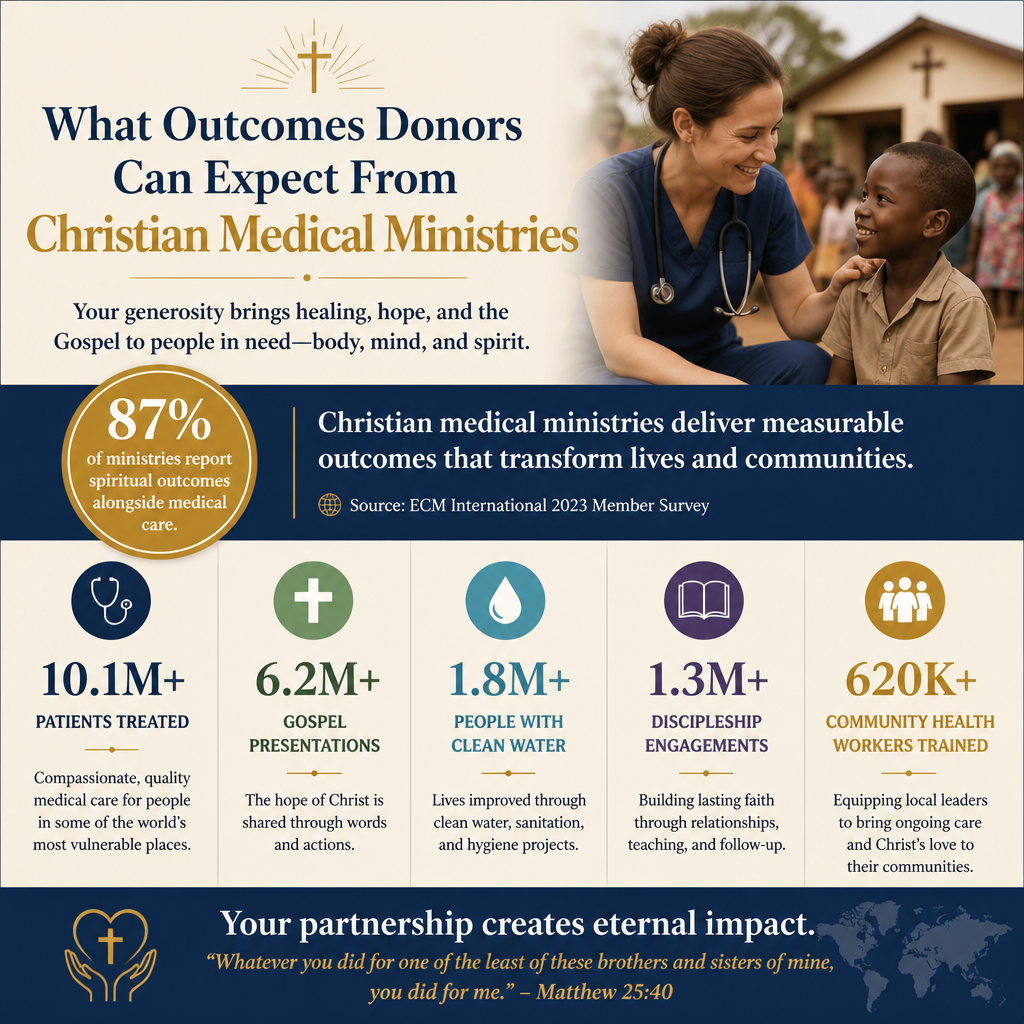
Where ministries are serious about long-term capacity, they often report outcomes such as credentials earned, clinical competencies achieved, supervision ratios, retention rates, and handoff of leadership to local professionals. They also build partnerships with ministries, churches, and institutions already serving in the community, rather than displacing them.
Systems that outlast visitors and funding cycles
Short-term trips can be a genuine form of service, but the field has had to reckon with the risk of episodic care: inconsistent records, limited follow-up, and clinical decisions made without context. Donors can rightly ask whether a ministry’s model produces continuity—medical records, referral networks, pharmacy reliability, maintenance plans for equipment, and safeguarding policies that protect patients.
The Christian Medical Ministries landscape includes organizations with very different approaches. Some provide specialized surgery; others strengthen primary care; others integrate medical work with church-based community health. What matters for outcomes is alignment between mission, method, and local reality.
Spiritual and relational outcomes that are faithful and non-coercive
Witness expressed as presence and integrity
Christian donors often ask, understandably, whether a medical ministry is “sharing the gospel.” A careful answer is better than a quick one. In healthcare, power dynamics are real: patients may be in pain, frightened, or dependent on a clinician’s judgment. Ministries that honor Christ tend to hold a clear line: care is not a bargaining chip, and spiritual conversation must be voluntary, contextually wise, and free of pressure.
What donors can expect, when ministries are faithful, is witness that is coherent: staff who pray, serve, and speak truthfully; chaplaincy or pastoral care offered with consent; partnerships with local churches that receive patients who ask for spiritual support; and a pattern of compassion that commends the gospel rather than instrumentalizing it.
Trauma-aware care and safeguarding
Many patients served by Christian medical ministries have experienced displacement, abuse, or prolonged crisis. Outcomes in these settings are not only clinical. They include whether a patient felt safe, respected, and listened to, and whether vulnerable people were protected from exploitation. Donors can expect credible ministries to publish and enforce safeguarding policies, to train staff on abuse prevention, and to maintain clear reporting pathways.
The harder question is that spiritual “results” are not fully measurable and should not be inflated. Christian ministry can and should report what it can verify—such as chaplain visits, referrals to pastoral care, or patient-requested prayer—while resisting the temptation to market conversion as a medical deliverable.
What accountable outcome reporting looks like in practice
Better questions donors can ask
Serious outcome reporting is not a glossy impact story. It is a pattern of clear definitions, consistent data, and public candor about limitations. The ministries that tend to meet The Most Trusted Standard usually share not only successes but also constraints: supply-chain interruptions, staff turnover, security risks, and what they are doing to improve clinical quality.
We recommend looking for a ministry that can answer questions in categories like these:
- What health problems are being targeted, and why are these priorities in this context?
- What clinical standards guide care, and how is quality monitored?
- How does the ministry ensure follow-up and continuity, especially for chronic disease?
- What outcomes are tracked over time, not only patient counts?
- How are local clinicians trained, compensated, and advanced into leadership?
- What safeguards protect patients from coercion, abuse, or conflicts of interest?
How to interpret financial ratios without losing the plot
Donors still ask about overhead, and prudence is not unspiritual. The field has also learned that simplistic overhead targets can incentivize underinvestment in staff development, compliance, and evaluation. The “Overhead Myth” statement—signed by major nonprofit evaluators—argues that administrative spending alone is a poor proxy for effectiveness (Charity Navigator).
For Christian medical ministries, the financial story is often more complex than a pie chart. Clinical work requires regulated supply chains, credentialed staff, equipment maintenance, and data security. The better question is whether spending patterns are coherent with the ministry’s model and whether financial statements, governance practices, and outcome claims can be verified. This is central to How Christian Medical Ministries Measure Impact, where donors often need criteria that respect both stewardship and the realities of healthcare delivery.
FAQs for What outcomes donors can expect from Christian medical ministries
Should donors expect Christian medical ministries to report conversions or church growth?
Donors can expect theological clarity and faithful witness, but not marketing claims that reduce spiritual life to counts. In healthcare settings, ministries should be especially careful about power dynamics and consent. Credible reporting may include patient-requested chaplaincy, referrals to local churches, or pastoral care activity, alongside a clear statement that care is never conditioned on participation in religious activities.
What is a reasonable time horizon for outcomes in medical missions?
Time horizons should match the intervention. A surgical program can often report near-term clinical outcomes such as complication rates and functional improvement. Primary care and chronic-disease management require longer tracking to show adherence and stabilized conditions. Training and capacity-building outcomes may take years before leadership transitions and local retention can be evaluated responsibly.
Giving with confidence in a field that is both compassionate and complex
Christian medical ministries are well positioned to embody the mercy of Christ in places where suffering is immediate and resources are thin. Donors can expect outcomes that include credible clinical care, prevention that reduces future harm, strengthened local capacity, and witness marked by integrity rather than pressure. The most trustworthy organizations speak plainly about what they measure, what they cannot, and how their stewardship practices support the people they serve.



