

How to make Bible distribution a giving priority is ultimately a question of spiritual formation and fiduciary stewardship. Christian donors are not merely funding a supply chain; we are participating in the Church’s commission to make disciples by ensuring that ordinary believers can hear God’s voice in words they can understand.
Scripture treats access to God’s Word as a matter of life, not religious preference. Moses commanded that the Word be taught diligently in the home and the public square, shaping imagination and obedience (Deuteronomy 6). Jesus answered temptation with Scripture and opened the minds of his disciples through it. The practical question for donors is how to discern which Bible distribution work is faithful, effective, and worthy of long-term priority amid real complexity.
Begin with a biblical theology of the Word and of stewardship
The Word is not an accessory to ministry
Christian giving priorities often follow visible suffering: hunger, war, trafficking, disaster. These are proper concerns. Yet the Church has always insisted that the Word of God is not a luxury good distributed after “real needs” are met. “Man shall not live by bread alone” is not a slogan but a claim about what human beings fundamentally require (Matthew 4). A Bible in the language of the heart does not erase poverty or persecution, but it does supply what no other intervention can: access to the gospel, the character of God, and the story that reorders a life.
Historically, translation and distribution have been paired with discipleship, literacy, and church formation because Scripture is meant to be read in community and obeyed. Donors who treat Bible distribution as a one-time transaction often end up disappointed. The ministries that endure tend to work patiently, sometimes over decades, because “the word of God is not bound” even when logistics, borders, and hostile powers attempt to bind it (2 Timothy 2).
Stewardship asks for more than sincerity
Christian donors often feel the tension between urgency and discernment. The need is real, and the scale is daunting. At the same time, Scripture warns against zeal without knowledge and commends prudence (Proverbs 14). The question is not whether Bible distribution is good, but which forms of Bible distribution are faithful to the Church and responsible with donor resources.
That is why Most Trusted exists. We are an independent verification service for Christian nonprofits. We evaluate ministries against The Most Trusted Standard, a 15-criteria framework that tests whether a nonprofit’s faith commitments are clear, its finances are handled with integrity, its governance is accountable, and its reporting is transparent enough for serious donors to evaluate outcomes. Donors do not honor God by refusing due diligence; we honor him by giving with both conviction and clarity.
Face the scale of need without treating numbers as the point
Global access remains incomplete, even after major progress
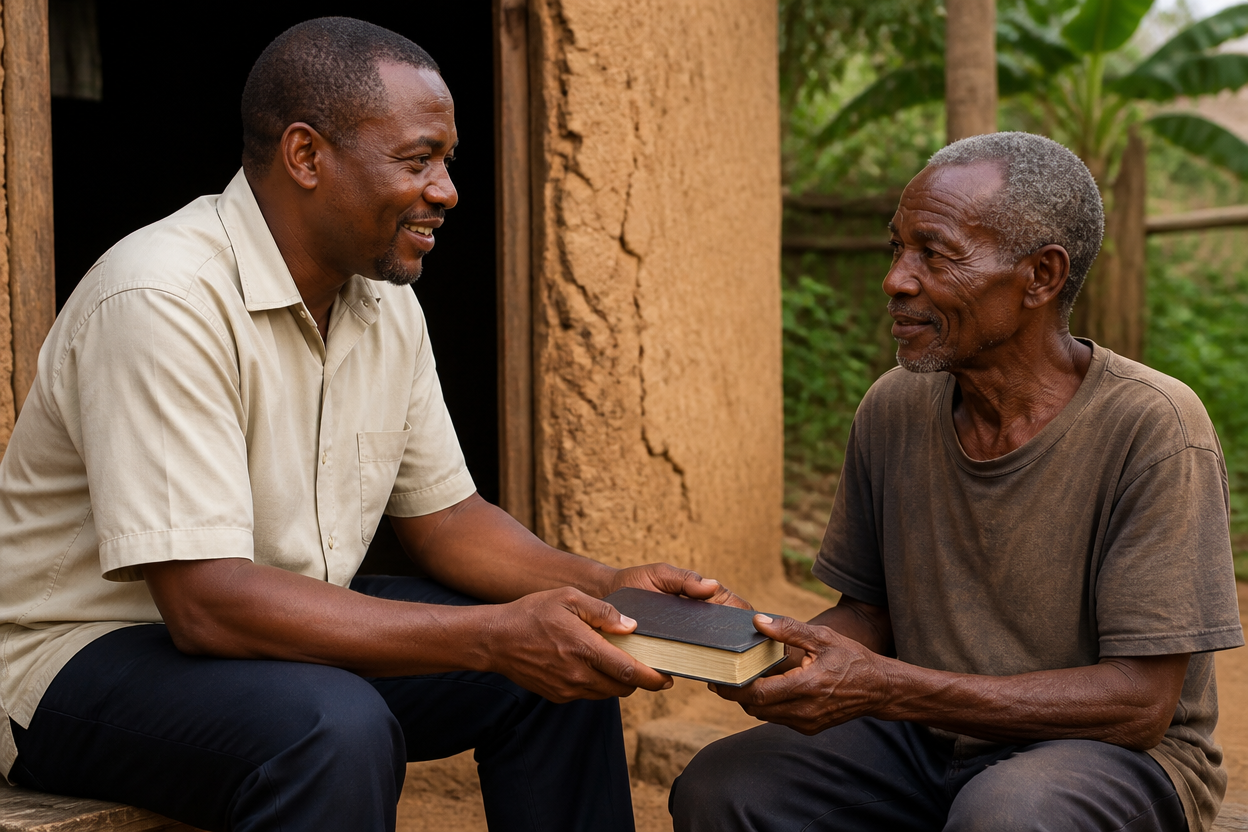
Bible distribution is sometimes spoken of as if the work is essentially finished in a digital era. That assumption is not supported by the data. Large portions of the world still lack Scripture in a language they understand, and millions of believers live in contexts where printed Scripture is scarce, monitored, or dangerous to possess.
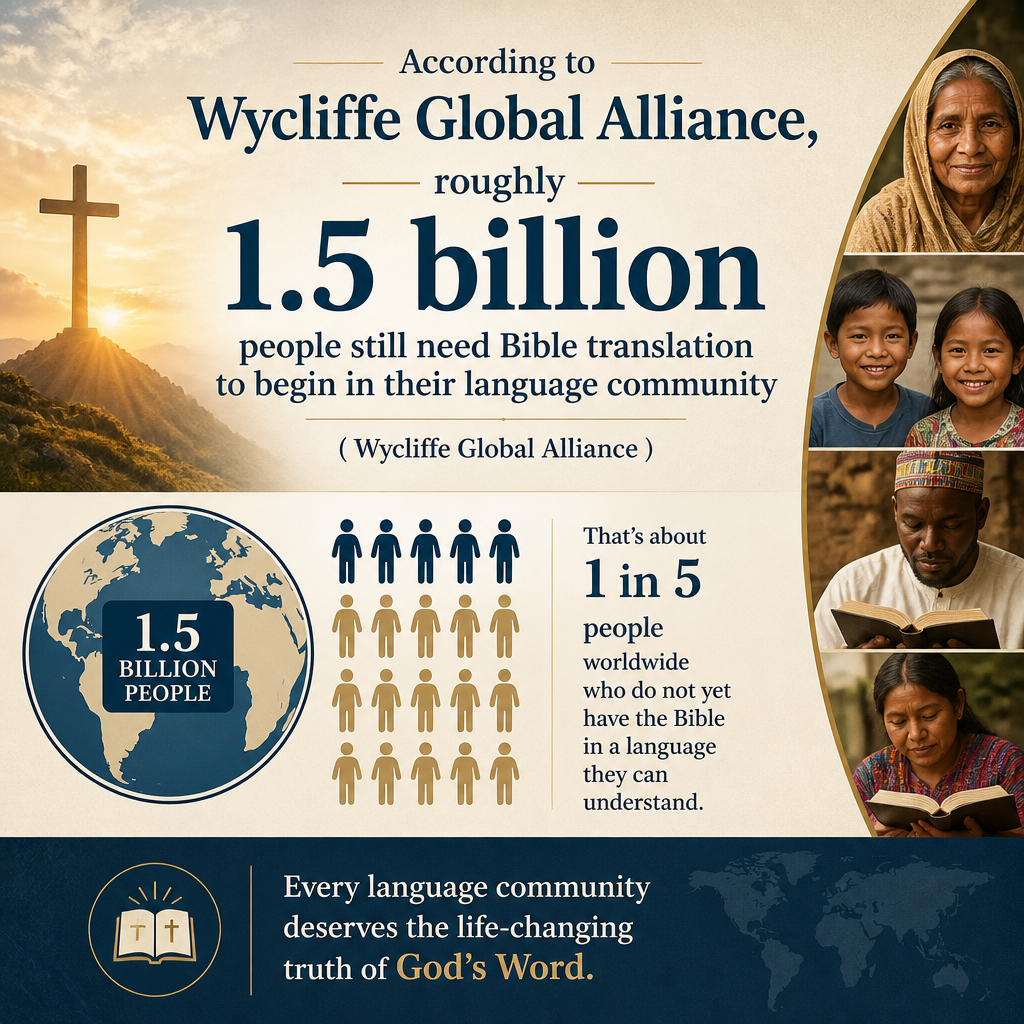
Verifiable reporting from the translation movement underscores the remaining gap. According to Wycliffe Global Alliance, roughly 1.5 billion people still need Bible translation to begin in their language community (Wycliffe Global Alliance). That figure does not by itself tell donors what to fund, but it does correct the illusion that Bible access is now automatic.
Access is also complicated by the realities of literacy and disability. Scripture cannot be “distributed” to a non-reader in the same way. Audio Scripture, sign languages, and oral Bible storying address that reality, but they require serious investment and careful contextualization.
Digital distribution helps, but it does not replace embodied ministry
Digital Scripture has expanded reach and reduced marginal cost, particularly where smartphones are common. Yet digital access is not neutral. It is subject to surveillance, platform shutdowns, data costs, and the fragility of devices. For persecuted believers, a physical New Testament can be safer than an app that leaves a trace. For refugees, the opposite may be true.
What this means in practice is that donors should resist false dichotomies: print versus digital, translation versus distribution, evangelism versus discipleship. Mature Bible distribution ministries typically combine several approaches and make choices that fit local risk, church strength, and infrastructure.
Choose priorities within Bible distribution that match your calling and risk tolerance
Different parts of the work require different kinds of capital
“Bible distribution” is not one activity. It includes translation, publishing, printing, shipping, local church networks, security, discipleship resources, and in some contexts clandestine delivery. Each stage has different time horizons and different forms of risk. Translation is slow, expensive, and deeply collaborative; distribution can be rapid but vulnerable to corruption or confiscation; discipleship follow-up is relational and difficult to quantify.
Christians genuinely disagree about whether donors should prioritize frontier translation, mass distribution in receptive contexts, or resourcing the local church with study Bibles and training tools. Each can be faithful. The more responsible question is whether a ministry is clear about its lane and whether its claims are proportionate to what it can reasonably verify.
For readers comparing approaches across the broader field, many of these distinctions are addressed across Bible Distribution Ministries, including how donors can evaluate translation models, distribution methods, and partner accountability without romanticizing the work.
Practical giving priorities that often hold up over time
Across our verification work, we observe that the most durable donor strategies tend to be coherent rather than reactive. The following priorities are not the only faithful options, but they frequently align with both biblical concerns and operational reality:
- Translation that is church-anchored, with clear linguistic methodology and local review.
- Distribution through accountable local networks, where churches or vetted partners can confirm receipt and use.
- Scripture engagement that pairs distribution with teaching, audio resources, or small-group materials.
- Access for the vulnerable, including refugees, prisoners, and people with disabilities, where appropriate safeguards exist.
- Security-aware work in restricted contexts, with a disciplined approach to what can and cannot be reported publicly.
Notice that these priorities require more than a shipping receipt. They require governance, reporting, and theological clarity. That is also where donor discernment matters most.
Evaluate ministries with the same seriousness you apply to other high-stakes giving
Credible Bible distribution ministries can explain their theory of ministry
Healthy ministries can articulate how their activities plausibly lead to spiritual fruit without claiming to control what only the Holy Spirit can accomplish. They can explain why a certain format is chosen, how languages are selected, what partners do, and what “success” means beyond raw volume.
The field has had to reckon with a broader philanthropic correction sometimes called the “overhead myth.” Charity Navigator, Candid, and the BBB Wise Giving Alliance publicly warned donors against using overhead ratios as a simplistic measure of nonprofit health (Charity Navigator). For Bible distribution, this is especially relevant: translation quality, secure distribution, and partner accountability require trained staff, auditing, and technology. Underfunding these costs often produces unreliable reporting and fragile programs.
What to look for under The Most Trusted Standard
Donors often ask what verification should include when outcomes are difficult to measure and some work cannot be publicly disclosed. Our approach is to distinguish between secrecy and confidentiality. Restricted-context work can be legitimate, but it should still have accountable oversight, disciplined financial controls, and an appropriate level of reporting to donors.
When a Bible distribution ministry meets The Most Trusted Standard, it typically demonstrates several patterns:
Faith Foundation. The ministry’s doctrinal commitments are stated plainly, and its posture toward local churches is collaborative rather than extractive. Scripture is treated as authoritative, and the ministry’s method fits its theology.
Financial Integrity. Audited or review-level financial statements are available where appropriate; internal controls exist for cash, inventory, and international transfers; and fundraising claims are not inflated.
Governance and Leadership. Board oversight is real rather than ceremonial. Conflicts of interest are disclosed and managed. Senior leadership compensation and related-party transactions are handled transparently.
Transparency and Effectiveness. The ministry reports what it actually does, not what it wishes were true. It distinguishes between Bibles printed, delivered, and meaningfully placed through accountable channels. It is candid about risks, losses, and limitations.
These are not bureaucratic preferences. They are practical expressions of Christian truthfulness and neighbor-love, protecting both donors and intended beneficiaries from avoidable harm.
Build a giving plan that is faithful, durable, and proportionate
Make Bible distribution a priority without starving other callings
Some donors hesitate to prioritize Bible distribution because they fear it will crowd out mercy ministry. The New Testament does not permit that division. The Church is called to both proclaim Christ and embody his compassion. Prioritization is not exclusion; it is ordering. A mature giving plan can hold together Scripture access, local church vitality, and works of mercy without turning them into competitors.
A practical approach is to decide what “priority” means for your household or foundation: a fixed percentage of annual giving, a multi-year commitment to one trusted ministry, or a designated stream for frontier contexts alongside local commitments. Multi-year commitments are especially valuable for translation and long-horizon projects, where inconsistent funding can stall work and harm partnerships.
Ask questions that protect the people you hope to serve
We recommend asking questions that reveal whether a ministry is oriented toward the church on the ground rather than toward donor expectations:
Who requests the Scriptures? Is demand driven by local churches and leaders, or by outside campaigns?
How is distribution verified? What evidence exists beyond shipping and printing?
What happens after delivery? Is there a plan for engagement, teaching, or integration into church life?
How are risks handled? Does the ministry have a coherent security posture without using secrecy to avoid accountability?
How are partners treated? Are local believers honored as co-laborers, and are they resourced rather than used?
For donors who want to think carefully about both prayer and financial support in this area, the broader editorial work at Praying for and Supporting Bible Distribution Ministries addresses common donor dilemmas, including how to pray for restricted contexts, how to interpret ministry reports, and how to avoid unintentionally distorting incentives on the ground.
FAQs for How to make Bible distribution a giving priority
Should we prioritize printing and shipping Bibles or funding translation?
Both can be faithful priorities, but they answer different needs. Translation is foundational where no Scripture exists in a heart language and typically requires long-term commitment and rigorous review. Printing and distribution matter where translation exists but access is constrained by poverty, persecution, or weak supply chains. A sound approach is to support at least one ministry with translation competence and one ministry with accountable placement through local churches, provided both demonstrate financial integrity and credible reporting.
How can we evaluate impact when ministries cannot disclose details in restricted countries?
Restricted-context work cannot always be reported publicly without endangering believers. Donors can still expect governance and financial accountability: board oversight, documented controls, third-party financial review where feasible, and reporting that is appropriately specific without being reckless. Credible ministries distinguish between what cannot be disclosed and what should not be withheld, and they avoid using secrecy as a substitute for stewardship.
A priority shaped by Scripture and verified in practice
Making Bible distribution a giving priority is not sentimentality about books; it is a commitment to the means God has promised to use to save, sanctify, and steady his people. Serious donors can honor that conviction by funding ministries that are theologically clear, operationally competent, and accountable enough to warrant trust. Priorities become durable when they are grounded in Scripture, attentive to the real world, and supported by verification that treats truthfulness as part of Christian obedience.



