
How sober living homes work in Christian recovery is, at its best, a disciplined blend of structure, community, and spiritual formation designed to support long-term sobriety. For Christian donors, the question is not merely whether a home “helps people stay clean,” but whether it does so with integrity: protecting residents, stewarding funds, respecting local laws, and grounding recovery in the hope of the gospel without using spirituality as a substitute for clinical wisdom.
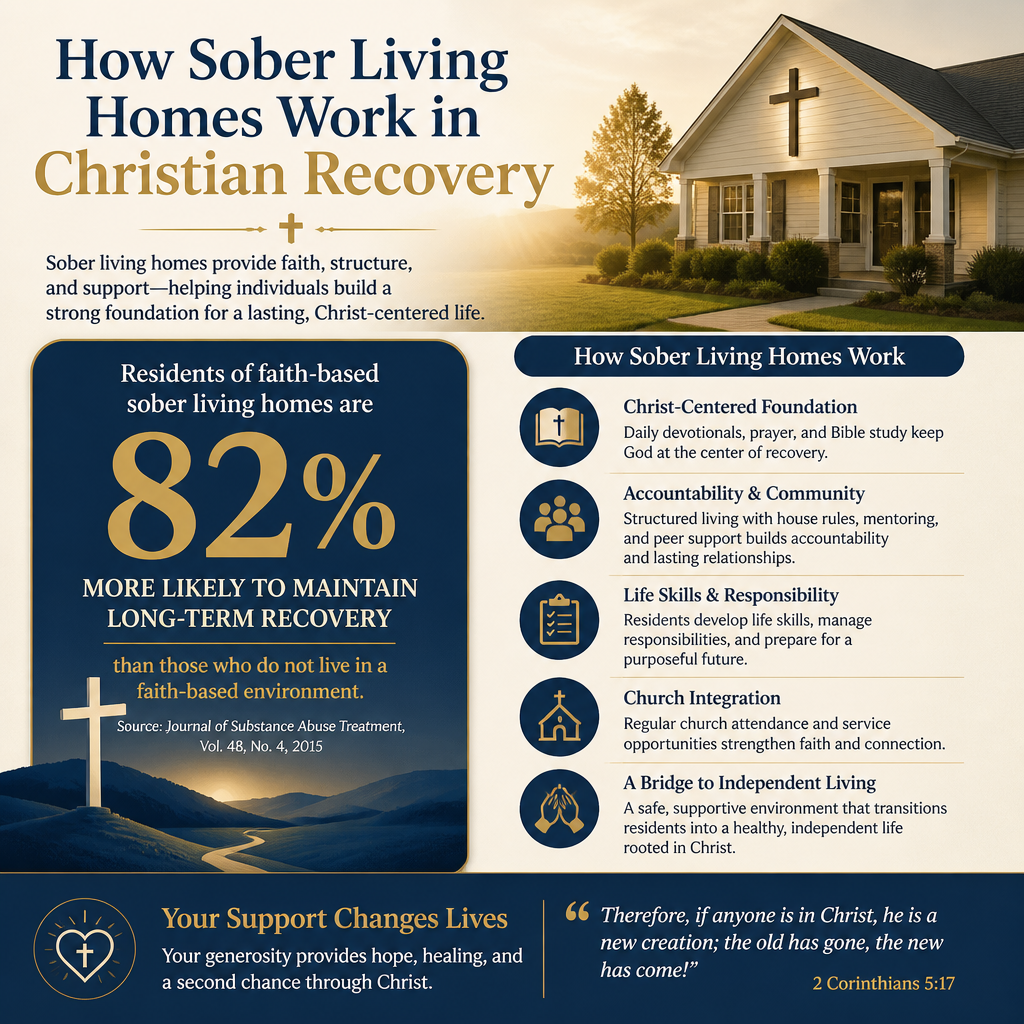
Sober living sits in a contested space. Some models operate as peer-run residences with minimal staffing; others function more like program housing with intensive supervision. Christians genuinely disagree about the right balance between accountability and autonomy, and about how explicitly a home should require Christian practices. Yet the core purpose is consistent: to provide safe, stable housing that reduces relapse risk during a vulnerable transition period, often after detox, inpatient treatment, or incarceration.
What a sober living home is and what it is not
A home with rules, not a treatment center
A sober living home is generally a substance-free residence with expectations that residents maintain sobriety, contribute to the household, and participate in recovery supports. In most jurisdictions, “sober living” is distinct from licensed clinical treatment. That distinction matters for donors. A home should not claim to provide services it is not qualified or permitted to deliver, and it should be clear about what staff can and cannot do.
When sober living is offered in a Christian framework, the home may incorporate prayer, Scripture, church involvement, mentoring, and discipleship expectations. Those practices can be deeply stabilizing, but they do not replace medical care, trauma-informed counseling, or medication management when needed. A credible Christian home names that boundary explicitly and builds referral relationships with licensed providers.
Why housing is a recovery intervention
Addiction recovery is not only a matter of willpower; it is a matter of environment. Stable housing is consistently associated with improved recovery outcomes and reduced exposure to triggers. Federal recovery guidance has long recognized that “recovery housing” can be a key support in a broader continuum of care, including outpatient treatment, peer support, and community reintegration.
For donors who have supported residential discipleship programs, the difference is often one of scope. Many sober living homes emphasize daily life stability—work, budgeting, relationships, and consistent routines—rather than a full-day program schedule. What this means in practice is that residents face real-world pressures with a measure of protective structure, rather than being shielded until discharge day.
The practical mechanics of daily life in a Christian sober living home
Admissions, expectations, and the first thirty days
Most sober living homes begin with an intake process that assesses sobriety history, criminal justice background, mental health concerns, and practical readiness for communal life. The better homes treat screening as a protective measure for the whole house, not as a gatekeeping performance. They also document expectations in writing: sobriety rules, visitor policies, curfews, chores, required meetings, and consequences for violations.
Early sobriety is precarious. National survey data routinely shows that relapse risk is high in the first months after treatment, and overdose risk can spike after a period of abstinence when tolerance is reduced. Donors do not need inflated claims to take this seriously; the stakes are inherently life-and-death for many residents.
Accountability rhythms that are measurable
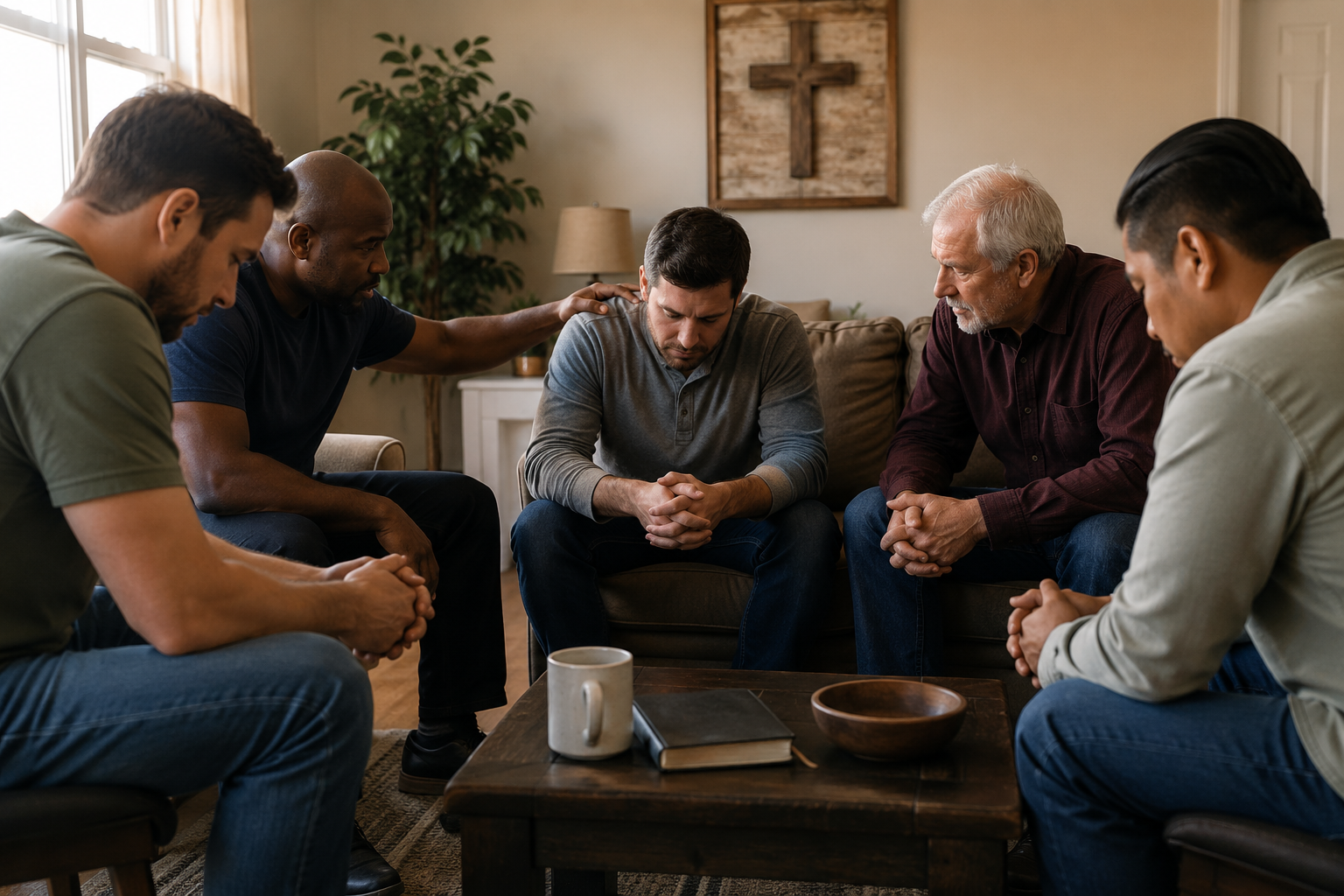
Daily life tends to be organized around predictable rhythms: work or job search, household responsibilities, recovery meetings, and community life. In a Christian home, that rhythm may include a morning devotional, weekly Bible study, church attendance, and mentorship meetings. The mature versions of these practices are framed as formation, not as spiritual coercion.
Accountability is often operationalized through concrete practices: random drug testing, meeting attendance verification, curfews, and peer check-ins. The point is not surveillance for its own sake. The point is to make secrecy harder and honesty safer—two conditions that addicts often need before they can sustain lasting change.
- Written resident covenant and house rules with clear consequences
- Regular sobriety verification through testing protocols
- Required participation in recovery supports such as 12-step or other groups
- Employment expectations and budgeting guidance
- Clear policies for conflict, safety, and emergency situations
Christian donors will recognize the pastoral wisdom in James: “confess your sins to one another and pray for one another, that you may be healed” (James 5:16). Confession, however, must be paired with guardrails that protect residents from manipulation and from the spiritualization of abuse. A home can be both spiritually earnest and professionally sober-minded.
The Christian distinctives that can strengthen recovery
Discipleship as identity repair, not behavior modification
Addiction erodes identity and agency. Christian recovery approaches often speak to this directly: the addict is not merely a bundle of impulses to manage, but a person made in the image of God, capable—by grace—of repentance, repair, and new obedience. This theological claim has practical implications. It reframes recovery from mere symptom control to a long arc of sanctification, reconciliation, and vocation.
When a sober living home is spiritually serious, it will avoid shallow moralism. Residents typically carry layers of trauma, shame, and fractured attachment. Scripture’s moral clarity should not be used to bypass lament, grief, and the slow work of rebuilding trust. Donors should expect Christian language that is anchored in the cross: sin named honestly, mercy offered freely, and change pursued patiently.
Community and church integration that endures after move-out
One of the strongest arguments for Christian sober living is the possibility of durable community beyond the house. A healthy home does not make itself the center of a resident’s universe; it helps residents become part of a local church where they can serve, receive pastoral care, and form friendships that are not contingent on program enrollment.
This is also where discernment is required. Church communities can be life-giving, but they can also be naïve about relapse, boundaries, and mental illness. Responsible homes educate partner churches on appropriate roles, confidentiality, and safety. When the ecosystem matures, residents are less likely to face the spiritual isolation that often follows a relapse or a season of depression.
Donors seeking a broader view of how ministries approach this work will benefit from our coverage of Christian Addiction Recovery Ministries, where the field’s major models and claims can be evaluated side by side.
What can go wrong and how wise donors evaluate risk
Safety, coercion, and the temptation to confuse authority with holiness
Sober living homes can fail residents in predictable ways. Some fail through negligence: weak screening, inconsistent enforcement, or overcrowding that turns communal living into chronic stress. Others fail through misuse of power: leaders demanding undue control, shaming residents publicly, or framing ordinary boundaries as spiritual rebellion. Christian language can intensify these dynamics if leadership lacks humility and oversight.
Homes that handle risk well have explicit safeguarding practices: incident reporting, grievance pathways, clear staff roles, and external accountability. They also acknowledge the limits of their competence. A resident with acute psychosis, suicidal ideation, or serious medical needs requires immediate professional care. A theologically orthodox home can still be practically dangerous if it treats crisis as merely a spiritual problem.
Financial integrity and the dignity of residents
Many homes fund operations through resident fees, donor support, or church sponsorship. The economics are often tight. That tightness can produce hidden pressures: keeping beds full, minimizing maintenance, or underinvesting in staff training. Christian donors should resist simplistic overhead narratives. The “Overhead Myth” letter—signed by major nonprofit evaluators—warned against treating low overhead as a proxy for effectiveness, because such pressure can distort good work and hide risk rather than reduce it (BBB Wise Giving Alliance).
Residents’ dignity is also a financial question. Are fees transparent? Are refunds and deposits governed by written policy? Are work expectations clearly distinguished from exploitative labor? A sober living home may legitimately require chores and personal responsibility, but it should never use “character formation” language to rationalize unfair economic practices.
How Most Trusted assesses sober living ministries under The Most Trusted Standard
What verifiable evidence should exist
Across our verification work at Most Trusted, we find that credible recovery housing ministries share a common posture: they are clear about their model, honest about their limits, and willing to be examined. The Most Trusted Standard asks for evidence that faith commitments are real and accountable, that finances are handled with integrity, that governance has meaningful oversight, and that communication with donors is truthful.
For sober living homes, “evidence” is often practical documentation rather than dramatic success stories. Policies, records, training protocols, financial statements, and board minutes are not glamorous, but they are part of neighbor-love. A ministry that cannot explain how it keeps residents safe is not asking donors for generosity; it is asking them to underwrite unmanaged risk.
Signals that a donor should treat as decisive
Some questions are diagnostic because they reveal whether the ministry has grown into the weight of its calling. These are not traps; they are the ordinary marks of an organization prepared to steward vulnerable lives and donor funds.
We recommend looking for a sober living ministry that can plainly answer:
- What is the home’s model, and how is it distinguished from licensed treatment?
- What are the written rules, and how are they enforced consistently?
- What safeguarding policies exist for abuse prevention, confidentiality, and grievances?
- What financial disclosures are available, and how are resident fees handled?
- How does leadership submit to oversight, and who has authority to intervene?
Donors exploring the mechanics of program models across the sector may also consult How Christian Addiction Recovery Programs Work, where we address common structures and the questions they raise for Christian stewardship.
FAQs for How sober living homes work in Christian recovery
Do sober living homes require residents to be Christians?
Practices vary. Some Christian sober living homes require participation in Christian disciplines such as church attendance or Bible study while not requiring a profession of faith; others restrict residency to Christians as part of a discipleship covenant. The key donor question is whether expectations are disclosed clearly in writing before admission and whether participation is framed as formation rather than coercion. Homes that are transparent about requirements and respectful of conscience tend to avoid the worst forms of spiritual misuse.
Is sober living effective without clinical treatment on site?
Many sober living homes are designed to function as recovery housing rather than clinical treatment, and they often rely on referrals to outpatient counseling, psychiatry, and support groups. Effectiveness depends on fit: resident stability, the home’s accountability structures, and the strength of its external clinical partnerships. A home should not claim to “treat” addiction unless it is licensed and staffed to do so, but it can still be an essential part of a continuum that supports sustained sobriety.
A Christian donor’s most important question
Sober living homes work in Christian recovery when they treat stability as a form of mercy and accountability as a form of love. The gospel offers more than behavior change; it offers resurrection hope for men and women who have learned to despair of themselves. That hope, however, must be expressed through competent safeguards, honest reporting, and humble leadership under real oversight. Christian donors are not only funding beds; they are funding the conditions under which repentance can be practiced without fear and new life can be sustained in community.



