
How much does a Bible translation project cost? The honest answer is that “Bible translation project” names a family of efforts that range from a modest revision of an existing translation to a first-time New Testament in a language with no writing system, no Scripture, and limited literacy resources. Mature Christian donors serve the Church best when we refuse simplistic price tags and instead ask what makes a translation faithful, usable, and sustainably owned by the community it will serve.
Scripture itself gives the stakes. The Word of God is to dwell richly among Christ’s people (Colossians 3:16), and the nations are to hear the mighty works of God in their own tongues (Acts 2:6–11). Translation is therefore not a technical exercise alone. It is a long obedience in the same direction, requiring theological clarity, linguistic competence, and institutional integrity.
1) The cost question is really a scope question
First translation versus revision
A first-time translation in a language with little existing literature typically costs more than a revision of a legacy translation. The reason is not primarily “overhead.” It is the work itself: developing orthography, training local translators, building a lexicon, establishing key biblical terms, and testing comprehension with real readers. A revision project may be able to begin with an established text, a writing system, and a base of church usage.
Donors sometimes assume the financial curve should flatten because software and digital workflows have improved. Tools do help, but translation remains fundamentally human work: meaning, nuance, and theological precision do not yield to automation. The field has also become more careful about quality assurance, community testing, and safeguarding, which can add real cost but often reduces long-term harm.
What “finished” actually means
One reason budgets vary is that “finished” can mean several deliverables: a New Testament, a full Bible, a lectionary, audio Scripture, children’s Scripture engagement materials, or literacy primers that help new readers use what has been translated. When donors compare projects, it is prudent to compare like with like. A New Testament-only project may be the right first milestone in one context, while in another the Psalms or Genesis may be prioritized for discipleship and liturgy.
Across our verification work at Most Trusted, we observe that ministries meeting The Most Trusted Standard tend to name deliverables plainly and show how each deliverable connects to church adoption, not merely publication.
2) The major drivers of Bible translation costs
People and time are the largest inputs
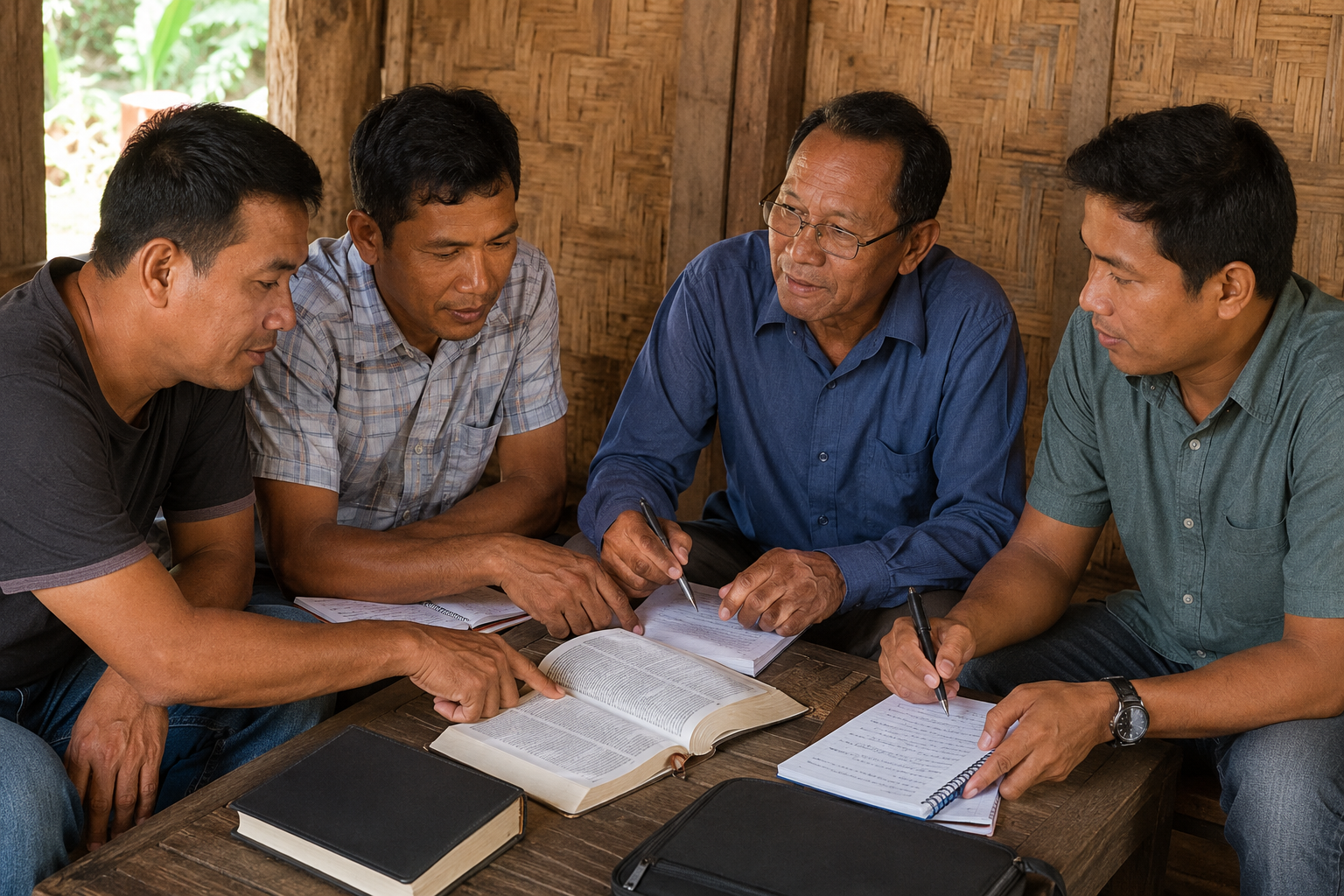
Translation budgets are dominated by personnel: local translators, language specialists, translation consultants, reviewers, and project management. Unlike one-time capital purchases, these costs accrue over years. The time horizon is itself a cost driver; a faithful translation typically requires iterative drafting, checking, testing, and revision.
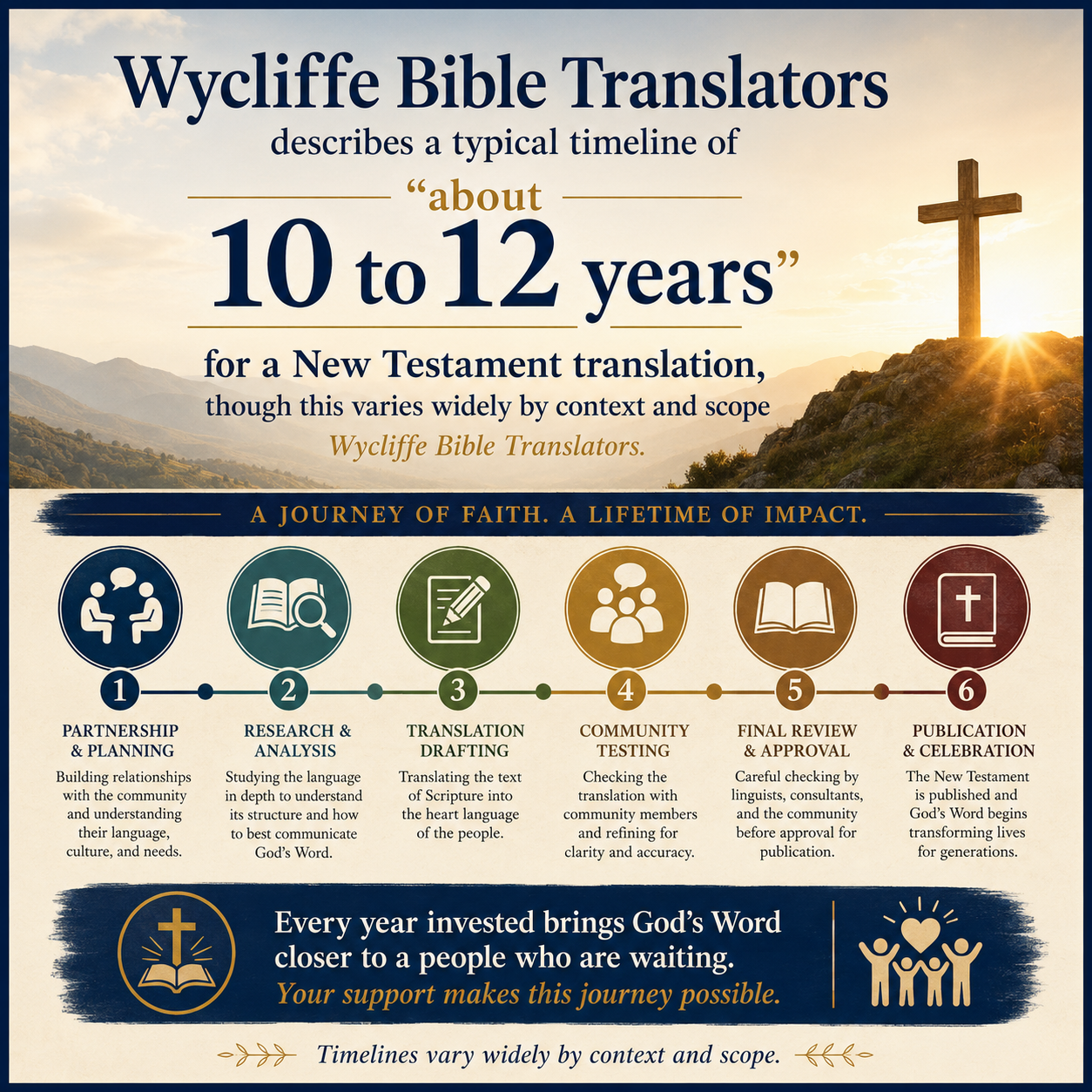
It is common for Bible translation efforts to take many years. Wycliffe Bible Translators describes a typical timeline of “about 10 to 12 years” for a New Testament translation, though this varies widely by context and scope Wycliffe Bible Translators. A decade-long project is not automatically efficient or inefficient; it is an invitation to ask what quality controls, local capacity-building, and adoption plans justify the timeline.
Language complexity and literacy realities matter
Some languages have well-developed grammars, significant written material, and a network of schools and churches that can readily use printed Scripture. Others are primarily oral, dispersed, and under-resourced. In oral-preference contexts, audio Scripture and storying approaches may be central, and that changes the cost structure: recording, voice talent, distribution, and the ongoing maintenance of audio assets can become major line items.
Geography and security also shape cost. Remote areas may require expensive travel and logistics. Conflict-affected regions can require careful security protocols and slower workflows. Donors should not penalize a ministry for realistic risk management, but we should expect evidence that risk is being managed thoughtfully rather than used as a blank check.

3) Reasonable cost ranges and what they should include
Why credible ministries hesitate to quote a single number
Donors often ask for a simple dollar figure: “What does it cost to translate the Bible into one language?” Some ministries do publish per-language estimates, but these should be treated as directional. If a figure is presented without a clear definition of what is included, it can obscure more than it reveals.
As a general frame, many public-facing discussions in the sector place New Testament translation projects in the high hundreds of thousands to several million dollars, depending on context, scope, and support needs. Rather than anchoring giving decisions to a single sector-wide number, we recommend asking each ministry for a project budget that distinguishes translation work from adjacent activities and shows what portion is already funded.
What a donor should expect a full project budget to cover
A serious budget typically accounts for both technical translation and the conditions for durable use in the church. At a minimum, a donor should expect clarity on the following components:
- Translation personnel (local translators, reviewers, consultants, project leadership)
- Quality assurance (checking, back-translation where appropriate, theological review, community testing)
- Training and capacity (equipping local teams, literacy support where necessary)
- Production (typesetting, printing, audio recording, digital publication)
- Distribution and engagement (church adoption, Scripture use, feedback loops)
Christians genuinely disagree about how tightly translation work should be paired with engagement programs. Some argue that translation agencies should focus narrowly on the text. Others emphasize that without Scripture engagement and local ownership, translated Scripture can sit unused. Donors do not need to settle that debate abstractly; we can ask for evidence that a ministry’s approach fits the context and is accountable for real use.
4) Evaluating a translation ministry beyond the price tag
Financial integrity and the Overhead Myth problem
The donor instinct to find the “lowest cost” translation can unintentionally reward weak governance, underpaid staff, and shallow quality controls. Cost discipline matters, but price shopping is a poor substitute for due diligence. The sector has already learned that simplistic overhead ratios mislead donors, a point made in the widely cited “Overhead Myth” letter signed by GuideStar, Charity Navigator, and the BBB Wise Giving Alliance Candid GuideStar.
What this means in practice is that donors should ask how administrative and support functions serve translation quality and integrity. A translation team operating across multiple countries will require compliant finance practices, safeguarding policies, and strong oversight. Those are not distractions from mission; they protect it.
Governance, doctrinal accountability, and local ownership
Bible translation introduces particular theological and ecclesial risks. Translation choices can shape doctrine in practice, especially around key terms related to God, salvation, and the identity of Jesus. A credible ministry should be able to describe its doctrinal basis, its translation philosophy, and how it handles disputed renderings with humility and accountability.
Local ownership is also a moral question, not only a strategic one. If translation is done in a way that sidelines local church leaders, it can replicate dependency patterns rather than strengthening the Church. The When Helping Hurts framework, articulated by Steve Corbett and Brian Fikkert, has helped many Christian donors see how well-intentioned outside help can unintentionally undermine local agency and dignity Moody Publishers. Translation ministries that build local capacity and shared governance are often more costly in the short run, and more faithful in the long run.
5) How Most Trusted encourages donors to assess translation work
What we look for under The Most Trusted Standard
Most Trusted exists because many donors want confidence that a ministry’s spiritual claims are matched by verifiable practices. When we evaluate Christian nonprofits against The Most Trusted Standard, we focus on evidence that faith commitments shape real decisions, that finances are handled with integrity, that governance is competent and independent, and that transparency is meaningful rather than performative.
For Bible translation ministries, we pay particular attention to:
Faith Foundation expressed through doctrinal clarity and a translation philosophy consistent with historic Christian orthodoxy.
Financial Integrity shown in audited financials where appropriate, clear allocation of restricted gifts, and honest reporting about project shortfalls and delays.
Governance and Leadership demonstrated through qualified oversight, conflict-of-interest controls, and safeguarding practices for staff and communities.
Transparency and Effectiveness evidenced by credible project reporting, peer review processes, and indicators of church adoption and Scripture use.
Where to learn more in our editorial coverage
Donors who want a broader view of the field can review our ongoing coverage of Bible Translation Ministries and the specific funding questions that shape them in How Bible Translation Ministries Are Funded. A mature funding strategy does not treat translation as a romantic single expense. It treats it as multi-year work that deserves multi-year accountability.
FAQs for How much does a Bible translation project cost
Should donors prioritize the cheapest translation project to reach more languages faster?
Speed and breadth matter, but lowest cost is not a reliable proxy for faithfulness or effectiveness. A cheaper project may be cheaper because it is a revision rather than a first translation, because literacy conditions reduce distribution costs, or because quality assurance is thin. We recommend prioritizing projects that can document their checking process, theological accountability, and local ownership, and then asking whether the cost structure matches the realities on the ground.
What financial documents should a donor request from a Bible translation ministry?
At minimum, donors should ask for recent financial statements, a clear project budget for the specific language effort, and a description of how restricted gifts are tracked and reported. Larger ministries should often be able to provide audited financials and a current annual report. If a ministry cannot explain its governance and financial controls in plain language, it is difficult to treat its project estimates as trustworthy.
A faithful cost question leads to faithful giving
The right question is not only how much a Bible translation project costs, but what kind of work our giving is actually funding: careful translation, accountable governance, local capacity, and Scripture that can be received and used by the Church. When donors fund translation with patience and rigor, we participate in something larger than a publication milestone. We participate in the Church’s calling to hear and confess Christ with understanding, in the language God has given each people.



