
How Bible translation ministries are funded shapes more than budgets. It shapes timelines, partner relationships, and the credibility of a ministry’s witness. For Christian donors, the question is not merely whether Bible translation is worth supporting, but whether the funding model itself reflects mature stewardship, humility toward local churches, and a sober understanding of long-horizon work.
Scripture treats money as moral terrain. Paul commends giving that is both willing and accountable: “We take this course so that no one should blame us about this generous gift that is being administered by us, for we aim at what is honorable not only in the Lord’s sight but also in the sight of man” (2 Corinthians 8:20–21). Funding structures do not replace faithfulness, but they can either reinforce integrity or pressure ministries toward shortcuts that erode trust.
Where the money comes from and why the mix matters
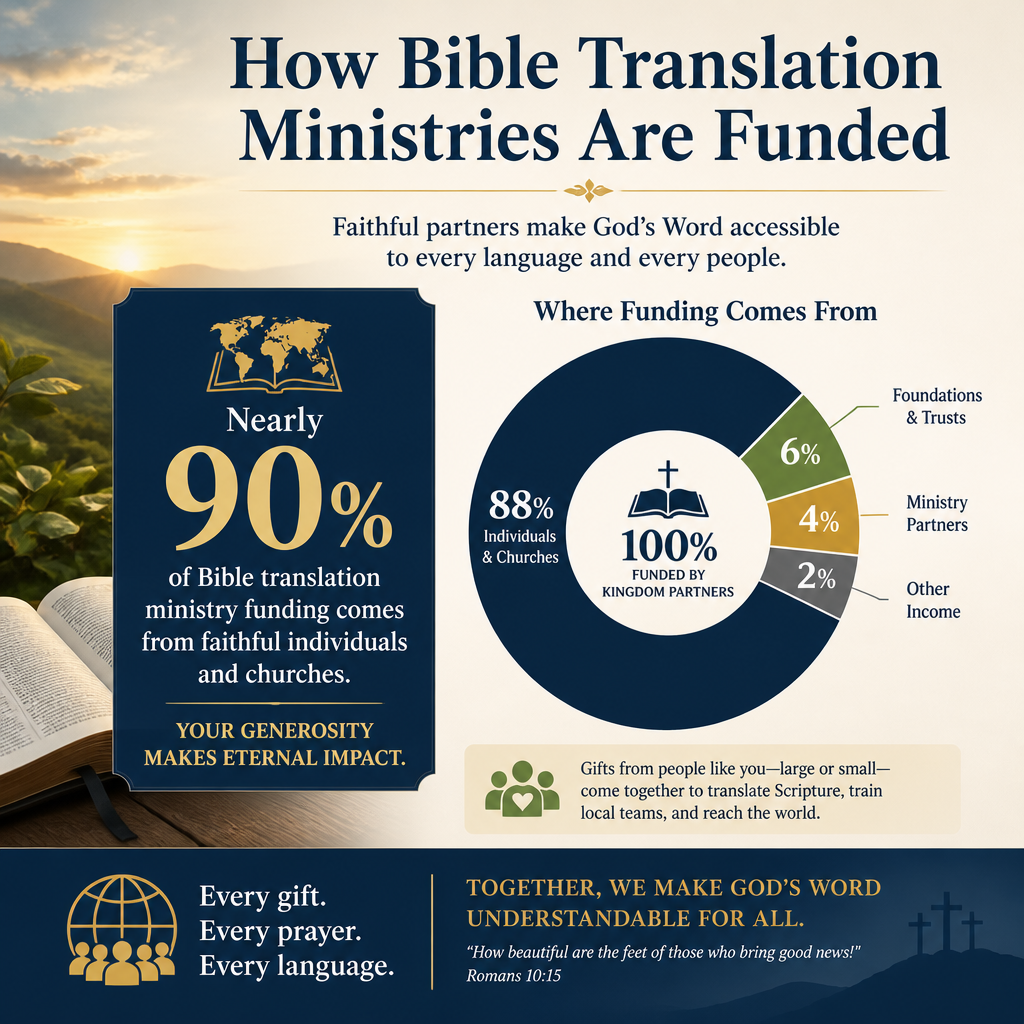
Bible translation ministries typically operate with a blended revenue model: individual donors, churches, foundations, and sometimes government or multilateral grants. Each stream carries strengths and constraints. Individual and church giving can be spiritually meaningful and relationally grounded, but may be less predictable. Foundation support can provide scale and multi-year stability, but often requires tighter reporting, restricted use, and clearly measurable milestones.
Across our verification work at Most Trusted, we observe that the healthiest ministries rarely rely on a single funding stream. Concentrated dependence can create a fragile ministry. When a few major donors comprise a large share of revenue, leadership may face subtle pressure to avoid hard truths, underinvest in core infrastructure, or keep projects alive beyond their strategic value.
Individual donors and churches
Many translation organizations are sustained by recurring gifts from households and congregations. This funding is often the most spiritually resonant for donors who want a direct connection between generosity and gospel access. It can also be the most vulnerable to economic shocks and to the shifting attention of the American church.
Patterns in national giving suggest that this vulnerability is not theoretical. In 2023, charitable giving in the United States declined when adjusted for inflation, a signal that ministries dependent on broad-based giving must plan for volatility (Giving USA). Responsible ministries build reserves, avoid overcommitting on optimistic projections, and treat donor confidence as a long-term asset rather than a short-term instrument.
Foundations and major donors
Foundation grants and major gifts often fund multi-year initiatives: a cluster of languages in a region, the buildup of a national translation team, or the technology required for publishing and distribution. This can be especially constructive for work that has high upfront cost and delayed visible results. The trade-off is that grant-funded ministries must be disciplined about scope, reporting, and restricted-fund compliance.
Christians genuinely disagree about how much a ministry should shape its priorities around funder interests. The most credible organizations are explicit about what funders may and may not influence, and they protect theological and missional clarity even when it costs them opportunities.
Institutional and public-sector funding
Some translation-related work intersects with literacy, education, or cultural preservation, which can attract institutional funding beyond the church. Donors should not assume such funding is inherently compromising, nor should they treat it as automatically neutral. The central question is governance and accountability: what reporting requirements exist, what restrictions shape the work, and how does the ministry ensure that gospel-centered aims are not displaced by external incentives.
What translation funding must cover beyond the final product
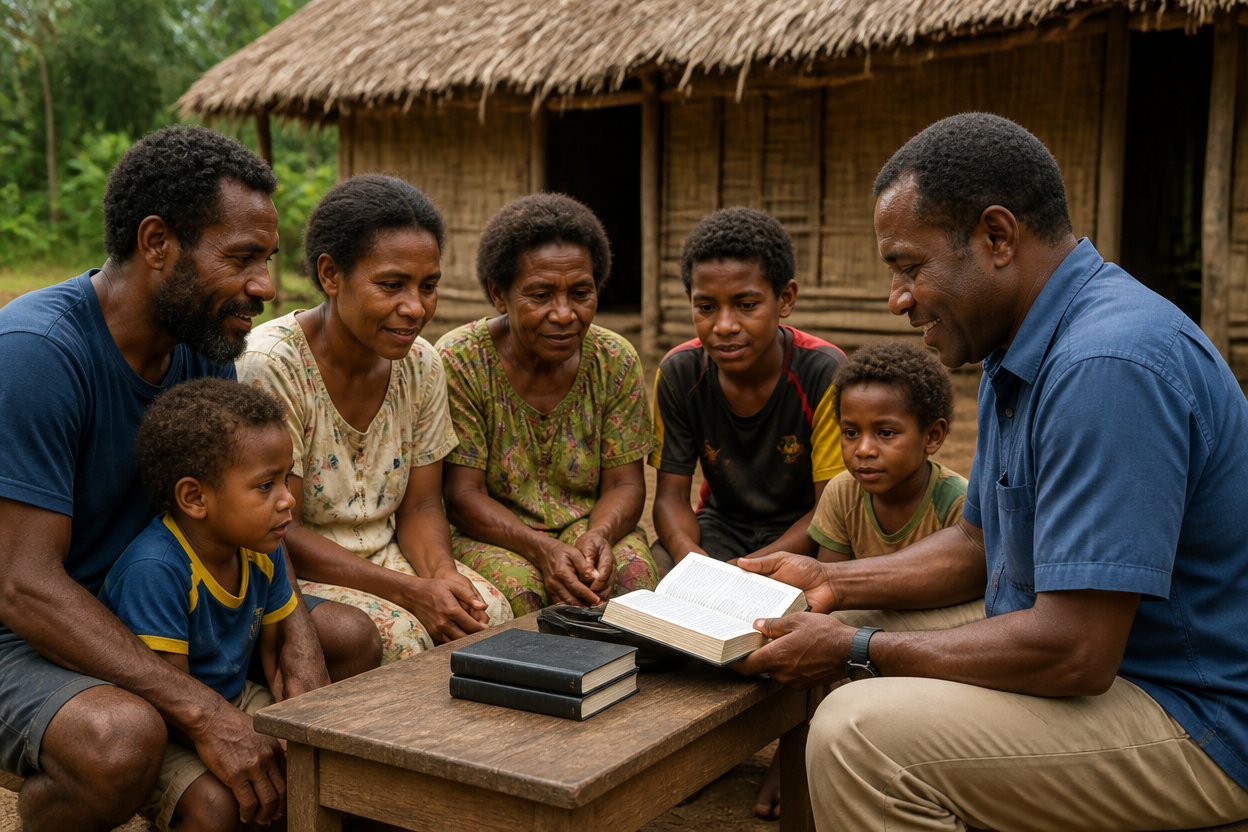
Many donors instinctively want to fund the “actual translation” and minimize everything else. The impulse is understandable; no one wants to bankroll bureaucracy. But Bible translation is not a single act of writing. It is a long process of training, checking, community testing, publishing, and often Scripture engagement so that translated text becomes living Scripture in the church.
Project costs and the long horizon
Translation work is time-intensive because accuracy and reception matter. A faithful translation must be linguistically sound, theologically careful, and understandable to the community. That requires team members with specialized training, structured review processes, and multiple stages of checking. It also requires durable local partnerships, because translation that is not received by local churches can become a product without a people.
The funding implication is direct: donors should not assume that a one-time gift will “finish a Bible.” Many projects require sustained support over years, sometimes a decade or more depending on language context, team capacity, and publication scope. Multi-year commitments are not a luxury in this field; they are often the difference between continuity and costly restart cycles.
Training and local capacity
In mature translation work, a meaningful share of costs are invested in training and mentoring national translators, reviewers, and literacy workers. Some donors prefer to fund only deliverables. Yet capacity is a deliverable when it is embedded in local church life. It also aligns with a biblical instinct toward entrusting the work to faithful people who will teach others also (2 Timothy 2:2).
When ministries cut training to keep direct costs low, they may unintentionally create perpetual dependency on outside specialists. This can undermine local ownership and inflate long-term costs. The better question is not whether training counts as “overhead,” but whether it is necessary for the integrity and sustainability of the work.
Publishing, technology, and Scripture engagement
Even after translation is complete, publication and access have costs: typesetting, audio recording, app distribution, print production, shipping, and permissions. In many contexts, oral Scripture access is as important as print access. Technology can be an enabler rather than a distraction, but it should be evaluated as a means to the church’s reception of Scripture, not as innovation for its own sake.
The field has also had to reckon with a hard truth: translated text does not automatically become read, loved, or taught. Scripture engagement efforts—training pastors, developing study helps, and supporting local distribution channels—are often essential if the goal is not merely translation completion but church formation.
Restricted gifts, fundraising costs, and the discipline of accountability
Donors commonly ask what percentage goes to programs versus fundraising and administration. This question can be sincere stewardship, but it can also become a distorted proxy for effectiveness. The broader nonprofit sector has pushed back against simplistic overhead fixation for good reason; in 2013, major evaluators explicitly warned against using overhead ratios as the primary measure of a charity’s performance (Charity Navigator).
For Bible translation ministries, the stewardship challenge is more specific: restricted gifts must be honored, reporting must be credible, and fundraising must be appropriately scaled to the ministry’s mission and maturity. A ministry can have low overhead and still be poorly governed. It can also have higher support costs because it is building systems that protect donors and serve partners well.
How restricted funding can help and harm
Restricted gifts can be a gift to the ministry when they align with strategic priorities and are accounted for with precision. They can become harmful when donors impose restrictions that prevent leadership from funding necessary infrastructure: quality assurance, translator care, cybersecurity, compliance, and financial controls. In translation work, underfunding these “unseen” needs can increase the risk of avoidable errors, partner conflict, and reputational harm.
Wise donors often ask a different set of questions: What portion of the budget is flexible? How does leadership decide which projects to start? What policies govern restricted funds, and how are exceptions handled? Mature ministries answer these questions without defensiveness because their integrity does not depend on hiding complexity.
Fundraising as a real cost of sustaining long projects
Fundraising costs are not inherently suspect. They can be an expression of diligence—building relationships, communicating accurately, and maintaining donor care across a broad base. They can also be a warning sign when spending rises without clear strategy or when messaging becomes manipulative, reductionistic, or inattentive to local partners.
Across ministries that meet The Most Trusted Standard, we tend to see fundraising treated as accountable service rather than as a growth engine. Strong ministries keep promises carefully, avoid exaggeration, and report results with enough specificity that a donor can understand what was accomplished and what remains unfinished.
Why governance and controls belong in the conversation
Funding is inseparable from governance. The more complex the revenue mix—multiple restricted grants, international partners, in-kind contributions, and subgrants—the more a ministry needs competent financial leadership and board oversight. Donors should expect clear audit practices, conflict-of-interest policies, and transparent reporting that reflects both accomplishments and limits.
This is one reason Most Trusted exists. Our evaluations against The Most Trusted Standard consider not only financial integrity but also faith foundation, governance and leadership, and transparency and effectiveness. Funding models are only as trustworthy as the systems that manage them.
How funding gaps happen and what faithful donors can do
Funding gaps in Bible translation are rarely caused by a single failure. They often arise from the collision of long project timelines with short donor attention cycles, sudden currency or political disruption, or overcommitment to projects without a realistic runway. The consequences can be severe: staff turnover, loss of local trust, delays that inflate costs, and in some cases the quiet abandonment of work that once looked promising.
The risk of the starvation cycle
Nonprofits can be pushed into what some researchers call a “nonprofit starvation cycle,” where pressure to keep overhead low leads to underinvestment in capacity, which then reduces effectiveness and increases fragility. This concept is widely discussed in the field and has been articulated in major philanthropic analysis (Stanford Social Innovation Review). Translation ministries are not immune. If donors require unrealistically lean operations, ministries may comply in the short term and weaken in the long term.
A faithful donor posture does not ignore efficiency. It refuses to confuse efficiency with faithfulness. Scripture’s concern is not that stewards spend nothing on administration; it is that they be found faithful (1 Corinthians 4:2), and that their conduct withstand scrutiny.
Multi-year commitments and flexible funding
One of the most stabilizing gifts a donor can offer is multi-year support, particularly when a ministry can apply it flexibly within a defined scope. Multi-year commitments allow leadership to plan responsibly, retain trained staff, and avoid disruption that harms local partners. They also reduce the temptation to chase donor trends rather than steward callings.
Some donors prefer only project-restricted giving. Others prioritize general support. The best practice often involves a considered blend: support that is specific enough to be meaningful, but flexible enough to fund the systems and people that protect quality and integrity.
How to evaluate a ministry’s funding health
Serious donors can evaluate funding health without becoming amateur accountants. A few questions often surface what matters: Does the ministry have adequate reserves? Is revenue concentrated among a few funders? Are restricted funds tracked cleanly? Are project timelines realistic? Does the ministry report setbacks candidly, or only victories?
When donors want to go deeper, it helps to place funding questions within a broader evaluation of trustworthiness. Our team at Most Trusted assesses ministries using The Most Trusted Standard because governance, theology, financial controls, and transparent reporting belong together. Funding is not merely a mechanical concern; it is a stewardship concern before God.
For readers who want the wider context of how this field functions, we maintain coverage of Bible Translation Ministries with the same commitment to clarity, evidence, and Christian seriousness.
Funding that honors the Word and the people who receive it
How Bible translation ministries are funded will either strengthen or strain the work they exist to serve. Healthy funding patterns respect the long horizon of translation, invest in local capacity, and insist on accountable governance. They also resist sentimental narratives that collapse complexity into a single number or a single story.
Donors serve the church best when giving is both generous and discerning—marked by confidence in God’s provision and clarity about human responsibility. In a field where the stakes are Scripture access and church formation, stewardship that is honorable “in the sight of man” is not optional; it is part of the ministry’s witness.



