
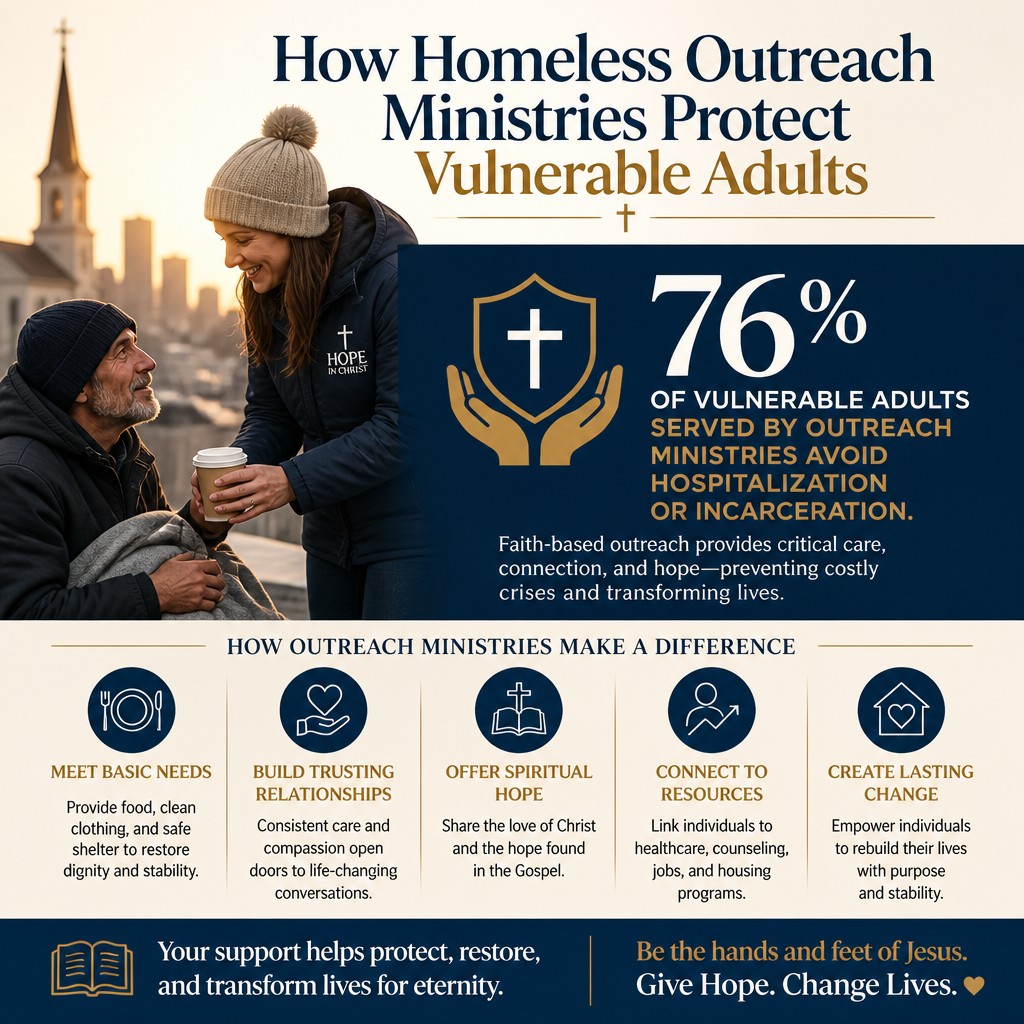
How homeless outreach ministries protect vulnerable adults is not a secondary operational question; it is a moral question with legal, pastoral, and spiritual weight. Christian donors rightly want to know whether a ministry’s compassion is joined to sober safeguards, because the people being served often carry layered trauma, impaired judgment, and heightened exposure to exploitation.
Scripture does not permit indifference to the vulnerable. The prophets condemn those who “trample on the poor” (Amos 5), and Jesus identifies himself with those in need (Matthew 25). Yet the same Scriptures assume discernment. Love is not sentimental permissiveness; it “rejoices with the truth” (1 Corinthians 13). In street outreach, shelters, and recovery programs, that means ministries must protect adults from predators, coercion, financial abuse, and preventable harm—without treating them as problems to manage.
Vulnerability is real and protection must be designed, not assumed
Why outreach settings heighten risk
Homelessness concentrates risk factors that complicate consent and safety: untreated mental illness, substance use disorder, sleep deprivation, chronic medical conditions, and disconnection from stable relationships. These conditions do not erase adult agency, but they can narrow meaningful choice. The U.S. Department of Housing and Urban Development’s annual Point-in-Time count regularly documents substantial numbers of people experiencing chronic homelessness and unsheltered homelessness, both associated with elevated health and safety risks (HUD).
What this means in practice is that a ministry can be sincere, orthodox, and sacrificial, and still unintentionally create opportunities for harm if it lacks disciplined safeguards. A crowded lobby without supervision, a volunteer who meets one-on-one in a private room, an informal “cash help” practice, or an unvetted ride offered after dark can become channels for exploitation.
Protection without paternalism
Christians genuinely disagree about where the line falls between necessary boundaries and unnecessary control. Some ministries emphasize strong rules because they have seen manipulation, violence, or drug dealing destabilize a shelter. Others prioritize low barriers because they have watched rigid policies exclude those most in need. Mature protection practices acknowledge this tension and design for both safety and dignity: clear expectations, consistent enforcement, and pathways back after failure.
This is one reason donors increasingly assess not only a ministry’s compassion, but also its governance and operational clarity. We see donors asking better questions: Who is accountable for safety decisions? Are incidents documented? Are volunteers trained? Are there independent channels for complaints? Those questions are not cynicism. They are stewardship.
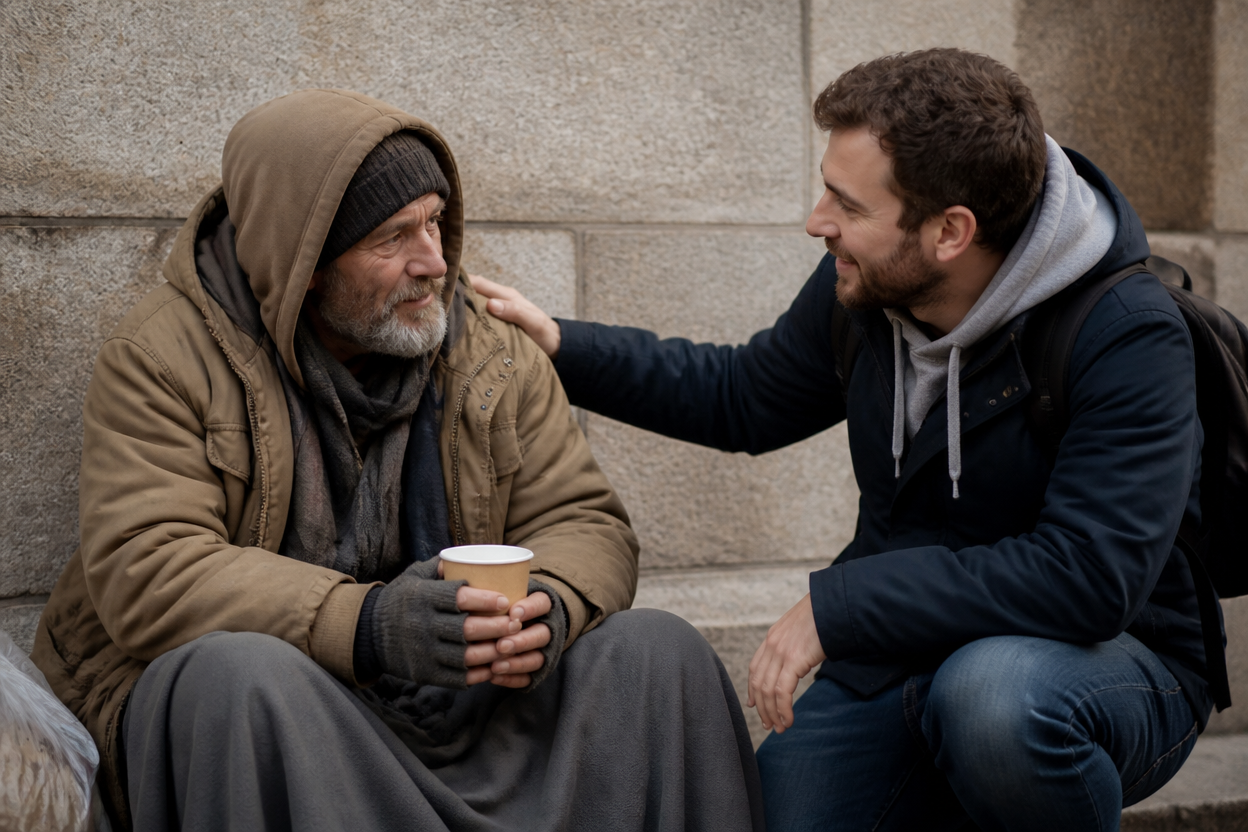
Core safeguards ministries use to prevent abuse and exploitation
Policies that turn good intentions into consistent practice
Protecting vulnerable adults begins with written, enforced policies that address foreseeable risks: supervision rules, boundaries in counseling, confidentiality, transportation, distribution of goods, and on-site security. Policies do not replace wisdom, but they create a baseline of consistency so that protection does not depend on who happens to be on shift.
In the strongest programs, we typically see adult safeguarding policies that mirror principles long established in child protection: two-adult rules where feasible, controlled access to sleeping areas, clear rules for staff and volunteer interactions, and careful documentation. Donors should not confuse “policy” with bureaucracy; policy is the ministry’s promise in writing.
Screening, training, and supervision that match real-world risk
Volunteer energy is one of the church’s great strengths, but it can become a liability when roles outpace preparation. Screening and training are not statements of distrust; they are acknowledgments of the field’s realities. Where a ministry works with vulnerable adults, background checks are often a minimum, not a finish line. Training should include trauma awareness, de-escalation, mandated reporting obligations where applicable, and clear boundaries in prayer, counseling, and physical contact.
For donors, a practical test is whether training is role-specific. Serving a meal requires different preparation than doing street outreach at night, transporting a guest, or leading a recovery group. Ministries that treat all volunteering as interchangeable often leave both volunteers and guests exposed.
- Controlled environments: supervised common areas, limited access to sleeping quarters, clear visitor rules.
- Boundaries: no private one-on-one meetings behind closed doors; appropriate communication policies.
- Documentation: incident reports, logbooks, and clear escalation paths for concerns.
- Screening: background checks and reference checks appropriate to the role.
- Training: de-escalation, trauma-informed care, and reporting procedures.
Trauma-informed care and spiritual care must be held together
Why trauma awareness is a protection strategy
Trauma-informed care is sometimes framed as a clinical trend, but at its best it is a way of honoring the imago Dei in people whose experiences have trained their bodies and minds to expect harm. Outreach workers see how trauma can shape memory, trust, and emotional regulation. A trauma-informed approach reduces unnecessary triggers, sets predictable routines, and uses calm authority rather than coercion.
The research literature on adverse childhood experiences has contributed to public understanding of how early trauma correlates with later health and behavioral outcomes, even though correlation does not mean destiny (Centers for Disease Control and Prevention). Ministries do not need to become medical providers to take trauma seriously. They do need to recognize that protection often begins with stability: clear schedules, consistent staff presence, and respectful communication.
Pastoral care with consent and clarity
Christian ministries rightly offer prayer, Scripture, worship, and invitation to repentance and faith. Yet spiritual care must never be used to override consent or to pressure vulnerable adults into disclosures they are not ready to make. The strongest outreach teams make room for spiritual conversations while keeping boundaries clear: prayer is offered, not imposed; counseling is supervised, not privatized; accountability is pastoral, not punitive.
For donors who care about faithfulness, this is not a concession to secular norms. It is an application of Christian ethics. The church’s authority is given for building up, not for control. Protection includes guarding against spiritual manipulation as surely as guarding against financial exploitation.
Accountability systems donors should expect to see
Governance that does not concentrate power
Many failures in safeguarding trace back to governance. When a charismatic founder holds unchecked authority, or when a board functions as a circle of friends rather than a fiduciary body, safety concerns are easily minimized. Donors can legitimately ask whether the board is independent, whether there are conflict-of-interest disclosures, and whether leadership evaluation is real.
In our work at Most Trusted, we evaluate ministries against The Most Trusted Standard, a 15-criteria framework spanning faith commitments, financial integrity, governance and leadership, and transparency and effectiveness. The point is not to burden ministries with paperwork, but to verify whether structures exist that make protection more than an aspiration.
Financial controls that prevent “help” from becoming harm
Direct aid can be holy, and it can also be destabilizing if it bypasses wise controls. Cash assistance, gift cards, and discretionary spending need approval processes and documentation, both to prevent misuse and to protect guests from coercion by other guests or outsiders. Ministries that distribute resources often face manipulation attempts; staff need clear rules so that “no” is not personal, and “yes” is accountable.
Donors sometimes over-focus on overhead ratios, but the field has rightly challenged the assumption that low overhead equals high integrity. The “Overhead Myth” letter—signed by GuideStar (now Candid), Charity Navigator, and the BBB Wise Giving Alliance—argued that overhead measures are a poor proxy for impact and can incentivize underinvestment in necessary infrastructure, including safeguarding (Candid).
For donors seeking a wider view of the field, our coverage of Accountability and Transparency in Rescue Missions addresses common points of failure and the practical signals of healthy governance.
When protection conflicts with access, ministries must choose wisely
Low-barrier approaches and safety trade-offs
Some outreach models prioritize low barriers: fewer requirements for entry, fewer programmatic demands, greater tolerance for relapse, and reduced paperwork. These approaches can bring help to people who avoid traditional shelters, including those with severe mental illness or active substance use. They can also raise safety risks inside facilities, especially for women, seniors, and those with disabilities.
Protection is not served by simplistic answers. A ministry can choose low barriers and still protect vulnerable adults through design: separate spaces, higher staffing ratios, partnerships with mental health crisis services, and clear consequences for violence and predation. The harder question is whether leadership has honestly faced the trade-offs and invested in the measures that make their chosen model ethically defensible.
Partnerships that expand competence and reduce isolation
Street outreach and shelter work often sit at the intersection of pastoral care, public health, and criminal justice. Ministries that isolate themselves can drift into improvised practices. Strong ministries cultivate partnerships with local health systems, domestic violence agencies, and municipal services, while keeping their Christian identity clear. These partnerships matter because a shelter is not a psychiatric ward, and a church van is not an ambulance.
Donors who want to understand the broader ministry landscape can explore Rescue Missions and Homeless Outreach and see how different models approach safety, discipleship, and long-term stability.
FAQs for How homeless outreach ministries protect vulnerable adults
Should a Christian homeless ministry require background checks for volunteers?
Where volunteers have access to vulnerable adults in settings that create private contact, transportation, or authority, background checks are a prudent baseline. They should be paired with training, supervision, and clear boundaries, since background checks do not identify every risk. The underlying question for donors is whether the ministry has matched its screening and supervision to the actual level of access it grants.
How can donors evaluate safeguarding without turning compassion into suspicion?
We recommend focusing on verifiable systems rather than rumors or personality judgments: written adult safeguarding policies, incident reporting practices, independent board governance, clear complaint channels, and audited financial controls for discretionary aid. Those measures do not replace trust in Christian leadership, but they reduce the likelihood that trust is misplaced and increase the ministry’s capacity to respond well when things go wrong.
Stewardship that protects the vulnerable is part of faithful giving
Donors do not honor Christ by funding care that is tender in tone but careless in practice. Protecting vulnerable adults requires humility about risk, discipline in operations, and a willingness to invest in the unglamorous work of policies, training, supervision, and accountable governance. The ministries most worthy of confidence are rarely those that promise perfection; they are those that can show, with evidence, how their compassion is made safer through structures that withstand scrutiny.



