
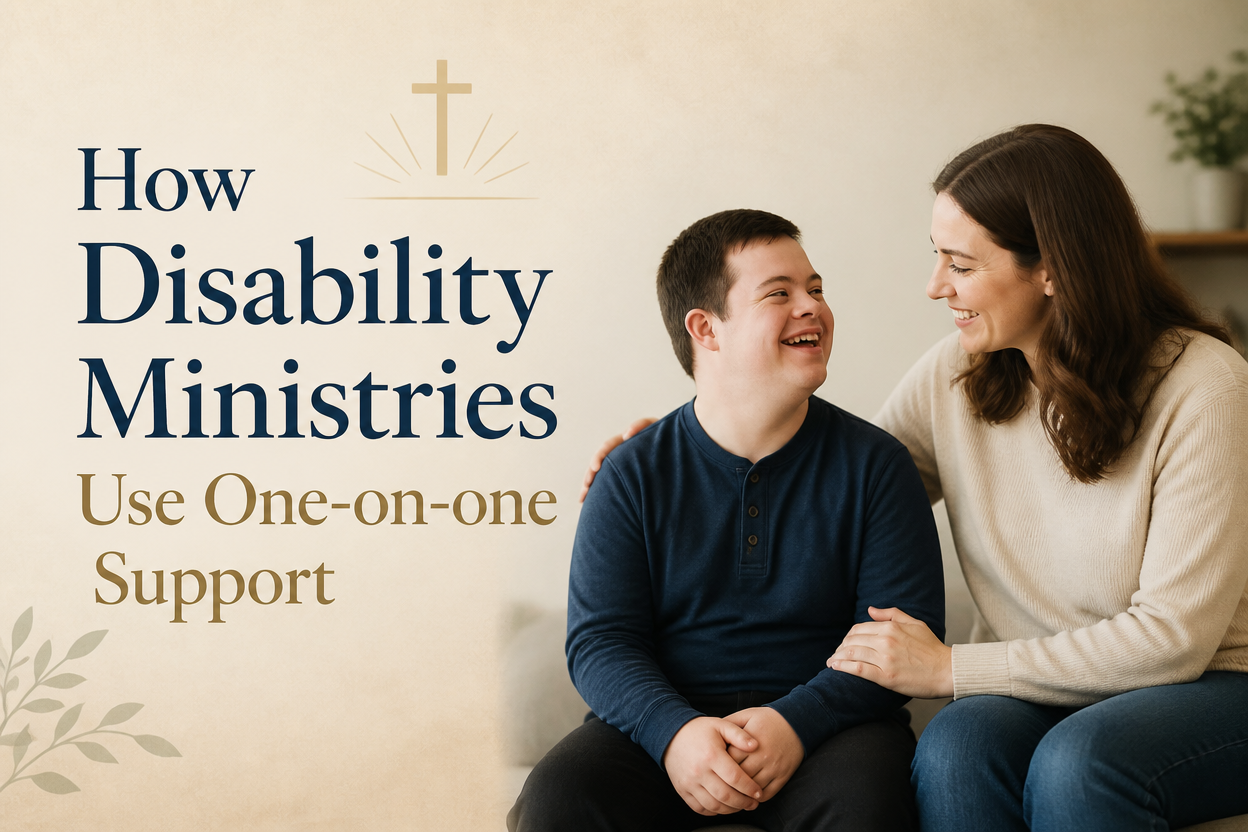
How disability ministries use one-on-one support reveals what a church believes about the image of God when no one is watching. This work is not an accessory to “real ministry”; it is often the most concrete test of whether a congregation will bear one another’s burdens with patience, humility, and skill.
For Christian donors, the question is not whether one-on-one support is compassionate. It is whether it is faithful, safe, and genuinely helpful to the person receiving care rather than comforting to the people providing it. One-on-one support can be a means of dignity and belonging. It can also become infantilizing, unsafe, or unnecessarily dependent if it is not governed with clarity and accountability.
One-on-one support is not a program feature but a theological commitment
The aim is belonging, not management
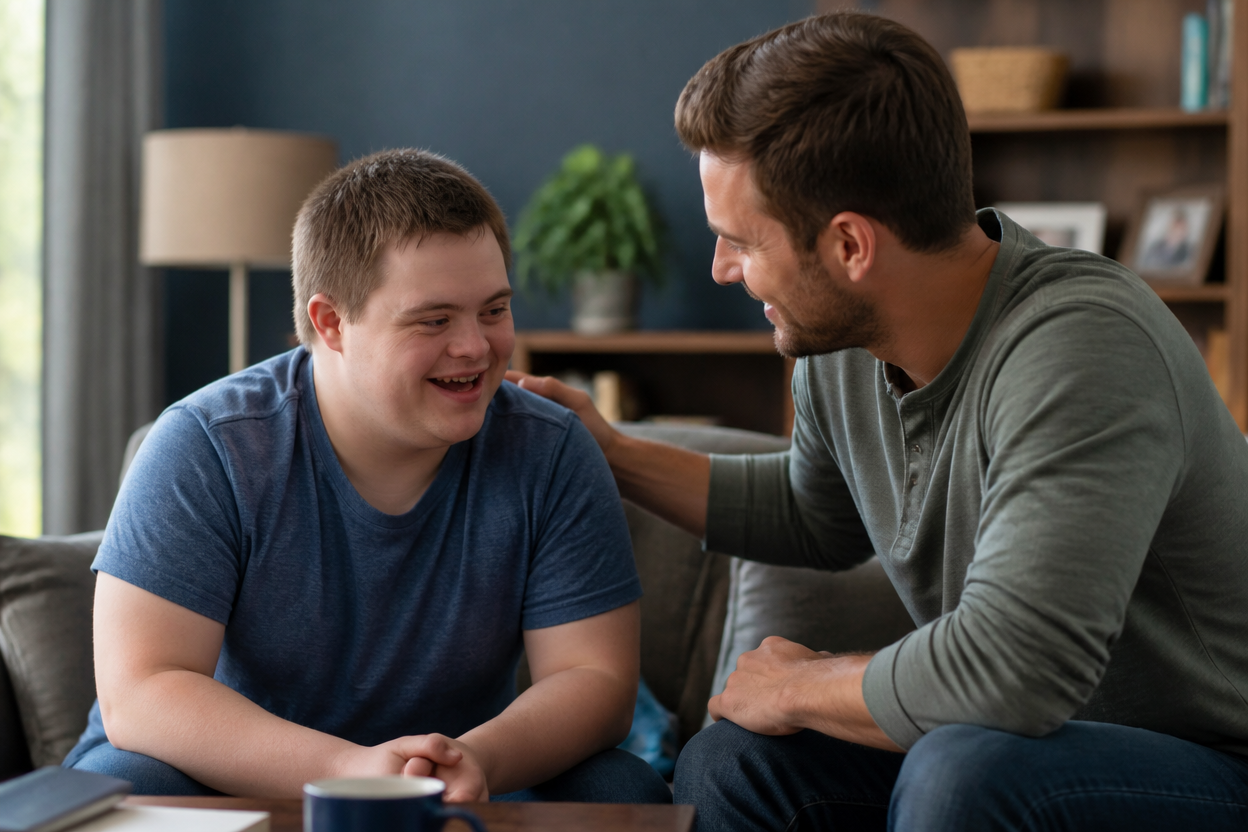
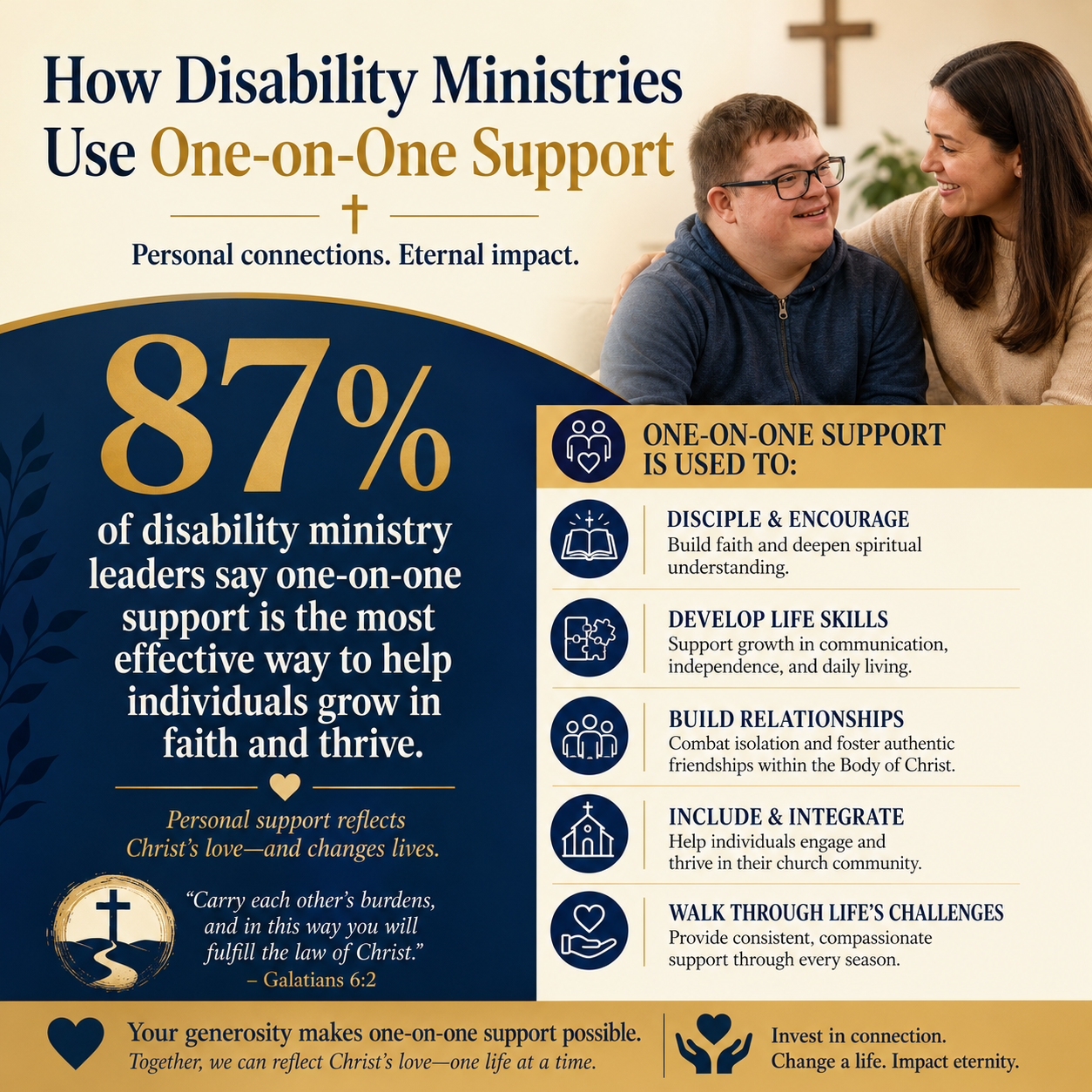
At its best, one-on-one support is a practical expression of 1 Corinthians 12: the parts of the body that seem weaker are indispensable, and God has arranged the body so that there may be no division. Many disability ministries have learned that belonging rarely happens by accident. It is cultivated through prepared relationships: a trained volunteer who knows a person’s communication style, sensory needs, routines, and sources of anxiety, and who can translate those realities into ordinary participation in worship and community life.
What this means in practice is that one-on-one support is usually less about specialized “intervention” and more about removing barriers. The volunteer may help someone navigate the building, manage transitions, follow the sermon with visual supports, participate in small group conversation, or tolerate a crowded foyer after service. The measure of success is not the volunteer’s activity. It is whether the person can meaningfully engage as a worshiper and neighbor.
Disability ministry requires moral seriousness about power
One-on-one support places a volunteer in a position of unusual relational and physical proximity. That carries power, even when everyone has good intentions. The ministry’s ethical burden is therefore higher, not lower. Churches that take safeguarding seriously do not assume affection equals safety. They operationalize boundaries: who is alone with whom, for how long, under what supervision, and with what reporting expectations.
Donors sometimes underestimate how much structure love requires. Yet Scripture’s commands to protect the vulnerable assume that vulnerability can be exploited, including inside religious communities. Wise disability ministries build safeguards that honor people with disabilities as full persons rather than perpetual dependents.
Effective one-on-one support begins with assessment and clarity
Support plans prevent both neglect and overreach
Many churches begin with a simple, pastoral impulse: “We will find someone to sit with your child,” or “We will assign a buddy.” The harder question is what that buddy is actually responsible to do. Strong ministries create a lightweight support plan that is written, shared appropriately, and updated. It often includes goals that are functional and relational: participation in worship, communication supports, de-escalation strategies, and how to foster peer relationships rather than isolating the person with their helper.
In our review work at Most Trusted, we observe that ministries with clearer documentation tend to reduce crises and volunteer churn. Clarity does not remove complexity, but it limits improvisation in moments when improvisation can become unsafe.
Families are partners, and so are the people being served
One of the most common failure points is treating the family as an information source rather than as partners with legitimate authority and insight. Another failure, more subtle, is speaking about a person rather than to them. Disability ministries that honor dignity do both: they listen carefully to caregivers and they also prioritize self-advocacy, using communication tools as needed.
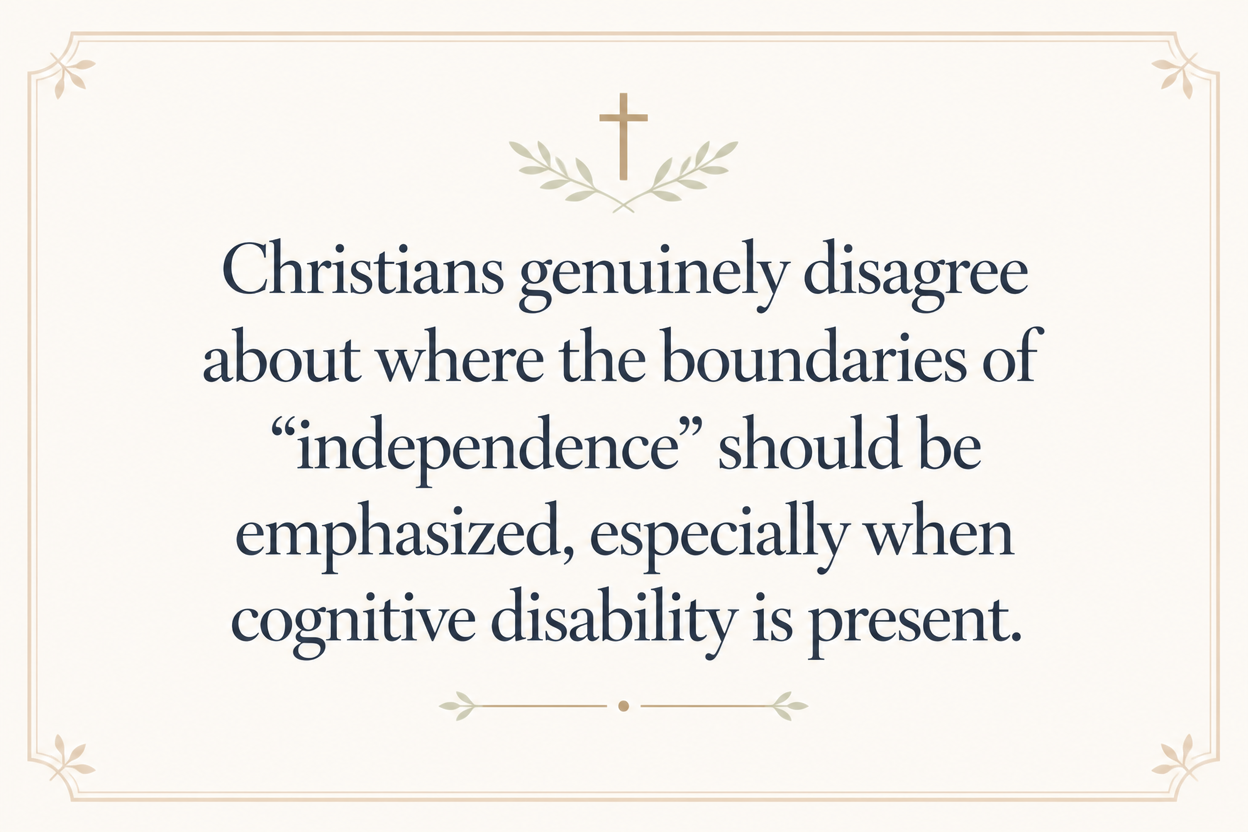
Christians genuinely disagree about where the boundaries of “independence” should be emphasized, especially when cognitive disability is present. The healthiest ministries tend to avoid ideological extremes. They pursue appropriate autonomy while also acknowledging that interdependence is not a defect in the Christian life; it is part of what it means to be the Church.
Volunteer training and safeguarding are the backbone of one-on-one support
Screening is pastoral care for the whole community
Because one-on-one support increases access and intimacy, it requires mature safety practices. In the United States, the Child Maltreatment 2022 report documented 558,899 victims of child abuse and neglect in a single year, a reminder that risk is not theoretical and that vigilance is part of love’s duty. U.S. Department of Health and Human Services Administration for Children and Families
Prudent churches treat screening and training as pastoral care for everyone involved: the person served, the volunteer, the family, and the congregation. Policies often include background checks where legally appropriate, reference checks, clear supervision expectations, and explicit guidance on physical contact, bathroom assistance, transportation, and electronic communication. When a ministry serves adults with disabilities, safeguarding remains essential; the scenarios change, but the power dynamics do not disappear.
Training should be practical, not merely inspirational
Many volunteers enter disability ministry with sincere compassion but limited experience. Training should therefore focus on scenarios, not slogans. It should teach volunteers how to recognize sensory overload, how to respond to elopement risk, how to de-escalate without coercion, and how to communicate respectfully. It should also cover mandatory reporting obligations and internal incident reporting pathways.
For donors evaluating a ministry, we recommend looking for training that is repeatable and documented, not dependent on a single charismatic leader. The ministries that can demonstrate consistent preparation are usually the ministries that can scale care without increasing harm.
- Written role descriptions that define what a one-on-one volunteer does and does not do
- Documented training and refreshers, including scenario-based practice
- Supervision structures so volunteers are not isolated decision-makers
- Clear reporting pathways for incidents, boundary concerns, and safety issues
- Family communication norms that protect privacy and prevent confusion
Donors should ask what outcomes the ministry is actually pursuing
Attendance is not the same as discipleship or flourishing
One-on-one support makes participation possible, but participation alone is not the end of Christian ministry. The question is whether the person is being welcomed into the life of the church as a disciple: prayed with, taught, known, and given opportunities to serve according to their gifts. A “buddy” model can drift into spiritual babysitting if the volunteer is treated as a containment strategy rather than a facilitator of belonging.
It is reasonable for donors to ask what the ministry is aiming for beyond Sunday coverage. Does the person have relationships that extend past the volunteer? Are there pathways into small groups, service roles, or friendship? Are adults with disabilities seen as members with spiritual agency, or as permanent recipients of charity?
Respect for evidence protects the people we mean to serve
Disability ministry is not identical to clinical care, but it should not be indifferent to what research has established about disability and family life. For example, the Centers for Disease Control and Prevention reports that about 1 in 36 children has been identified with autism spectrum disorder in its 2023 surveillance findings, which means many churches are already serving families with complex support needs whether they have named it or not. Centers for Disease Control and Prevention
What this means for donors is that scale matters. When prevalence is high, a church’s disability ministry is not merely a boutique expression of compassion; it is a plausible front line of pastoral care for a significant portion of the congregation. Serious ministries therefore measure what they can measure: volunteer retention, incident rates, family satisfaction, successful inclusion moments, and whether individuals are moving toward stable participation rather than cyclical crises.
Those questions connect naturally to Volunteer Training and Safety in Disability Ministries, where safeguards, boundaries, and supervision practices often determine whether one-on-one support becomes a blessing or a liability.
Verification questions that distinguish mature ministries from well-meaning ones
Financial stewardship and governance show up in the details
One-on-one support is labor-intensive. That reality pressures budgets, staff capacity, and volunteer pipelines. Donors should not punish ministries for spending money on training, staffing, and safeguarding. The “overhead” debate has matured for good reason; leading charity evaluators have argued that simplistic overhead ratios can mislead donors and harm nonprofits. BBB Wise Giving Alliance
The better question is whether spending is aligned with mission and managed with integrity. Are disability ministry funds restricted and tracked appropriately? Does the ministry have policies for background checks and incident management, and are they funded? Is leadership accountable for safeguarding outcomes rather than merely activity metrics?
The Most Trusted Standard frames what donors can reasonably verify
At Most Trusted, we evaluate Christian nonprofits against The Most Trusted Standard, a 15-criteria framework covering Faith Foundation, Financial Integrity, Governance and Leadership, and Transparency and Effectiveness. For disability ministries using one-on-one support, that framework presses donors toward verifiable questions rather than sentimental impressions: Who oversees the work? How are volunteers screened and trained? How are incidents recorded and learned from? How is success defined, and who gets to define it?
Across our verification work, we also observe a consistent pattern: ministries that can articulate their safeguarding practices with precision tend to be the ministries that honor the people they serve with the most practical respect. They do not treat vulnerability as a marketing asset. They treat it as a sacred trust.
Donors seeking to understand the broader landscape will find it helpful to begin with Disability Ministries, where different models of inclusion, respite, and support can be compared with appropriate nuance.
FAQs for How disability ministries use one-on-one support
Is one-on-one support the same as a buddy program?
Sometimes. “Buddy program” often implies companionship and participation support during a defined ministry setting, such as Sunday services or youth group. One-on-one support can include that, but it may also involve more structured care elements, such as communication supports, sensory regulation strategies, or safety planning for elopement risk. Donors should ask whether the role is clearly defined, trained, and supervised rather than relying on the label.
What should donors watch for to avoid funding harmful one-on-one models?
Warning signs include vague role descriptions, inconsistent screening, informal private communication between volunteers and participants, dependence on a single leader with minimal accountability, and a culture that treats boundaries as obstacles to compassion. Healthier signs include documented training, supervision structures, incident reporting procedures, and measurable goals oriented toward belonging and spiritual participation rather than control.
One-on-one support should strengthen the church, not merely staff its gaps
When disability ministries use one-on-one support well, they make a credible claim about the gospel: that every person is received as a bearer of God’s image and a member of Christ’s body, not as an inconvenience to be managed. That outcome does not happen through goodwill alone. It requires the slow, accountable work of training, safeguarding, supervision, and theological clarity—exactly the kind of work mature donors should expect before funding expansion.



