
How disability ministries screen and train volunteers is not an administrative detail; it is a moral question with pastoral consequences. When a church invites volunteers into the lives of children and adults with disabilities, it assumes a duty of care that must be expressed through competent screening, careful training, and accountable supervision.
Donors increasingly understand that disability ministry is both a work of mercy and a context where harm can occur through neglect, naïveté, or misplaced urgency. Scripture’s commands to protect the vulnerable are not abstract. “Learn to do good; seek justice, correct oppression; bring justice to the fatherless” (Isaiah 1:17) sets a standard that reaches into policies, boundaries, and volunteer readiness.
Why screening and training are part of Christian moral responsibility
Safety is not optional stewardship
Ministries often describe volunteer screening as a “safety step,” but the deeper reality is theological: love of neighbor requires competence. Disability ministry frequently involves toileting, transportation, medication coordination, communication supports, and intimate proximity. These are ordinary ministry tasks that also carry predictable risk if handled casually.
What this means in practice is that strong screening and training are not substitutes for trust; they are how trust becomes faithful. In many churches, volunteers are drawn by genuine compassion. Compassion, however, is not the same as preparedness. A volunteer who has not been trained to respect consent, recognize grooming behavior, or follow a two-adult rule can unintentionally create conditions where abuse becomes easier to conceal.
The field has had to reckon with disability-specific vulnerabilities
Disability ministries serve people who may have limited speech, higher dependence on caregivers, or less ability to interpret social cues. These realities are not deficits to be pitied; they are reasons ministry leaders must plan carefully. Abuse prevention experts have long noted that people with disabilities experience elevated risk of victimization, and that reduced capacity to report can increase the risk further. The U.S. Department of Justice’s Bureau of Justice Statistics has reported higher rates of violent victimization among persons with disabilities than those without disabilities in some years, underscoring why safeguards matter beyond intuition or goodwill (Bureau of Justice Statistics).
Christians genuinely disagree about how much process is “enough” before it becomes bureaucratic. Yet the Christian tradition has never treated prudence as a lack of faith. Screening and training are the ordinary means by which ministries honor the vulnerable and protect volunteers from situations they were never prepared to navigate.
What careful screening looks like in disability ministry
Screening starts before a background check
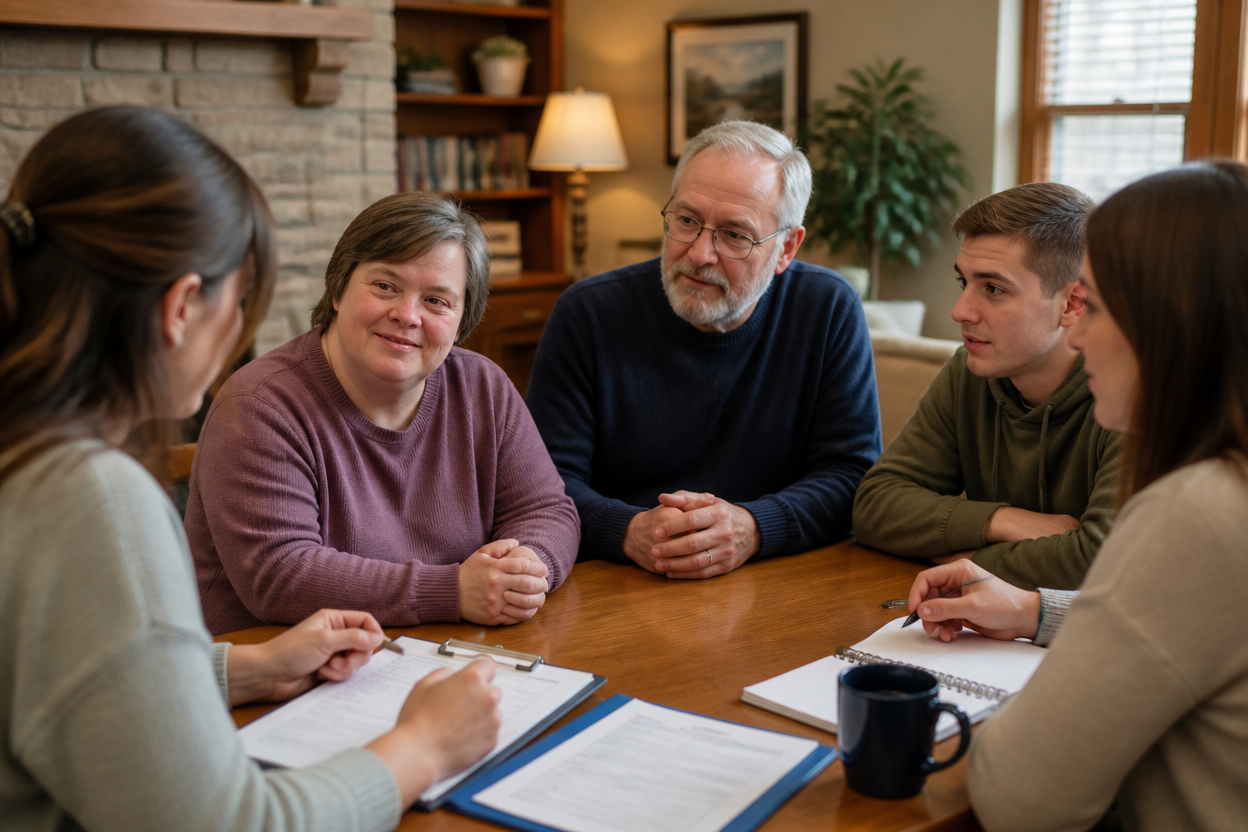
Background checks have become common, but they are not comprehensive. A criminal record check is one tool, limited by what has been reported, prosecuted, and recorded in accessible databases. Mature ministries begin earlier: they clarify role descriptions, define boundaries, and require a meaningful application that surfaces motivations, relevant experience, and potential risk factors.
A consistent pattern we observe across our verification work at Most Trusted is that ministries with stronger volunteer safety do not rely on a single gate. They use multiple, redundant safeguards: pastoral references, structured interviews, written policies, and supervision practices that make isolation difficult.
Disability ministry requires role-based screening
Not every volunteer role carries the same risk. A volunteer who serves snacks in a group setting should not be screened identically to a volunteer who provides one-to-one support in a restroom. Screening should be calibrated to the level of access and vulnerability involved.
Many ministries use a tiered approach:
- General volunteers serving in visible group settings under direct supervision
- Buddy volunteers providing one-to-one support during worship or classes
- Care-support volunteers assisting with toileting or personal care with explicit safeguards
- Drivers transporting participants and requiring added insurance and driving record checks
- Leaders supervising others and handling sensitive incident reporting
Role-based screening is a stewardship discipline for donors to ask about. It also respects volunteers by not placing them in responsibilities that exceed their competence or maturity.
Policies must confront predictable failure points
Screening is not only about excluding dangerous individuals; it is also about clarifying predictable failure points: boundary confusion, favoritism, secrecy, and the well-meaning volunteer who disregards protocols because a participant “seems comfortable.” Disability ministry can intensify these pressures because volunteers may feel protective, emotionally attached, or eager to be seen as indispensable.
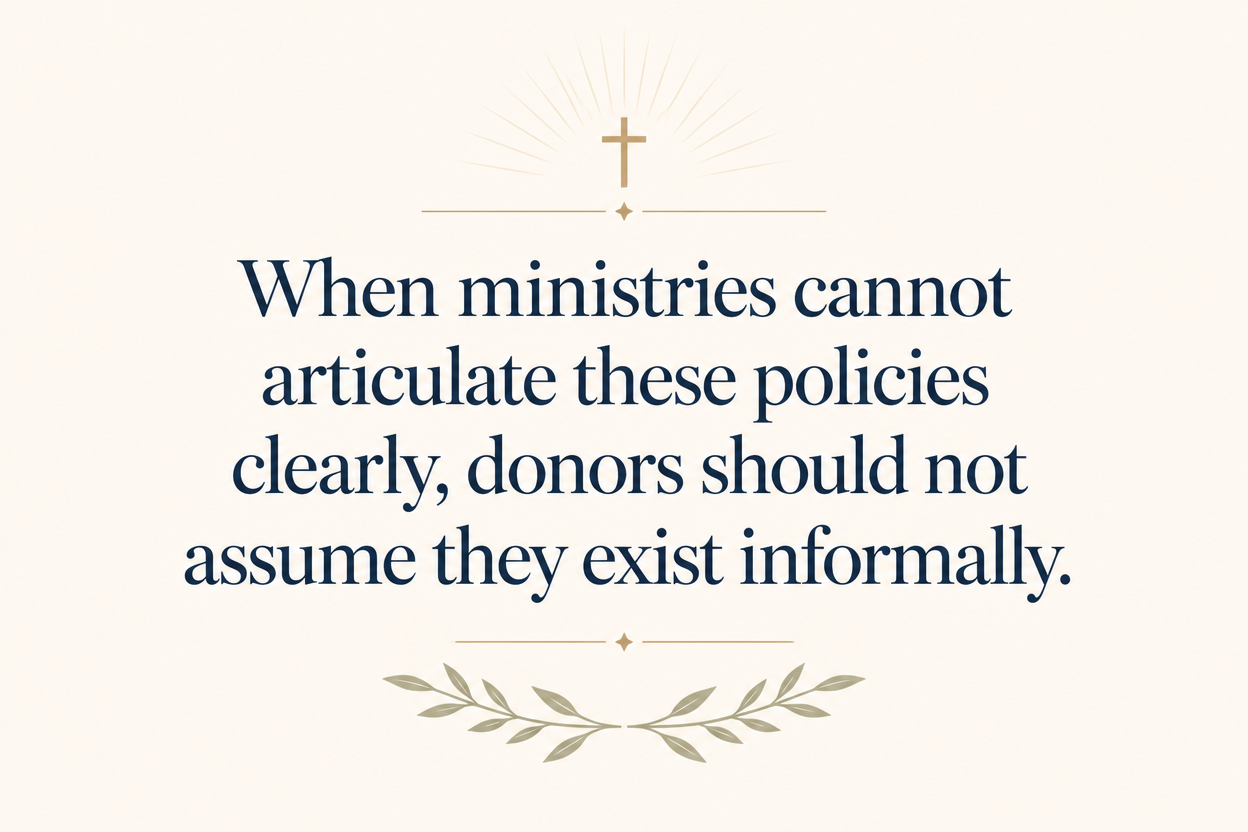
Sound screening includes explicit agreement to policies that govern physical touch, one-to-one interactions, communication outside ministry settings, photography, and reporting. When ministries cannot articulate these policies clearly, donors should not assume they exist informally. Informal rules are difficult to enforce and nearly impossible to audit.
Training volunteers for competence, dignity, and wise boundaries
Training must be theological and practical
The best volunteer training does not treat disability as a problem to be solved. It frames disability ministry as participation in the church’s shared life, where every member is needed (1 Corinthians 12). That theological frame matters because it shapes how volunteers speak, how they handle frustration, and whether they treat participants as projects or as neighbors.
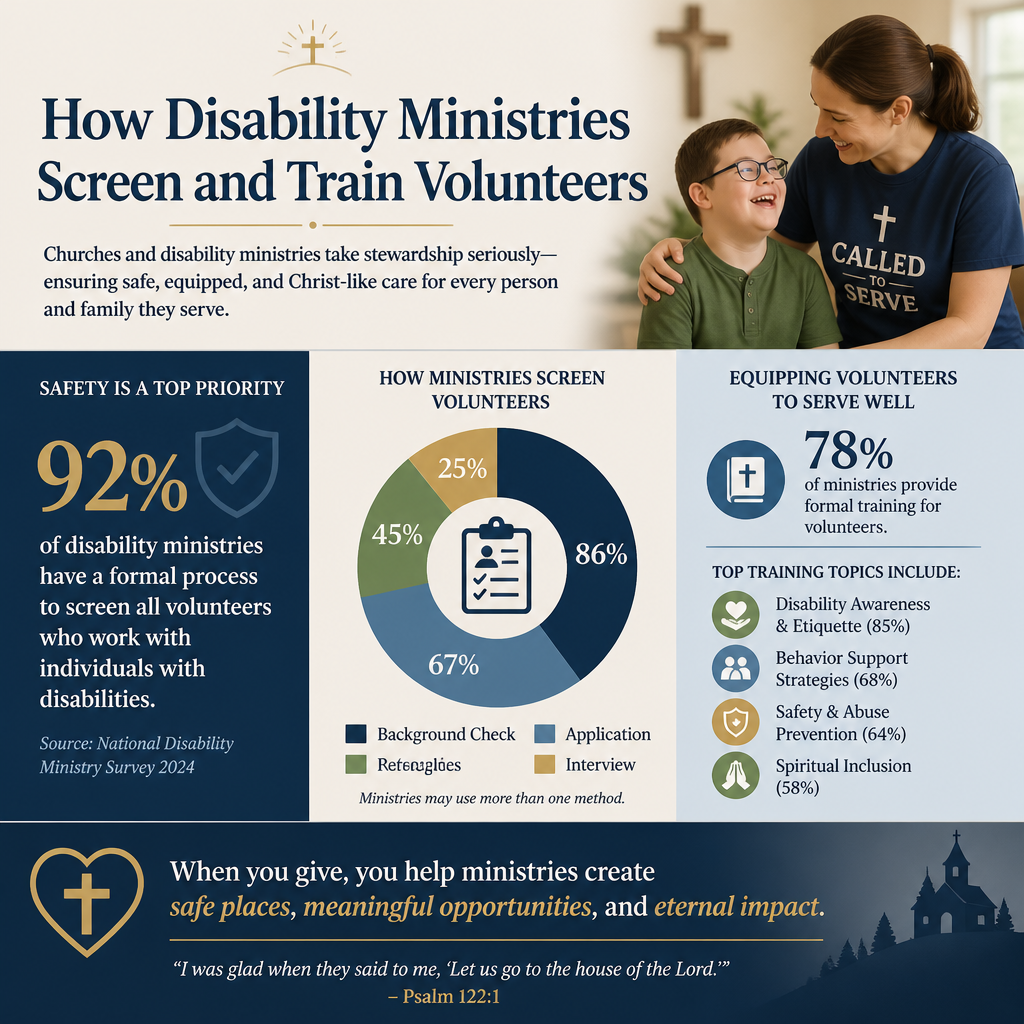
Training should also be concrete. Volunteers need to learn what to do, what not to do, and what to do when they do not know what to do. This includes basic disability etiquette, confidentiality expectations, and the difference between helping and controlling.
Trauma awareness and de-escalation are increasingly essential
Many families affected by disability also carry accumulated trauma: medical trauma, educational conflict, social isolation, and repeated experiences of being misunderstood. Participants themselves may have sensory sensitivities, anxiety, or a history of restraint and exclusion. Training should include de-escalation practices that prioritize safety without humiliation: calm tone, predictable structure, minimal force, and clear pathways to call a supervisor.
Ministries commonly borrow from special education and behavioral support approaches. The tension is that church volunteers are not clinicians, and ministry settings are not therapy. Training should therefore draw a bright line: volunteers offer support and belonging, but they do not diagnose, counsel beyond their competence, or make promises about outcomes.
Guardrails for personal care and consent
Disability ministry often includes assistance that implicates bodily dignity. If a ministry provides toileting support, the training must be explicit: consent language, privacy protection, documentation, and the circumstances under which volunteers should never proceed without a trained lead or a parent present. Consent should be treated as a practice, not a checkbox, including for participants who communicate nonverbally. Volunteers need to recognize assent and refusal cues and to respond respectfully.
For donors, the most revealing question is not whether the ministry “has training,” but whether it can describe the exact safeguards for the highest-risk moments: restroom assistance, changing rooms, transportation, and one-to-one prayer or counseling requests.
Supervision, accountability, and incident response
Training without supervision is incomplete
Volunteer preparation is not finished when someone completes a class or signs a policy. Disability ministry is relational, and relational settings produce surprises: a participant discloses abuse, a volunteer becomes overly attached, a parent asks for an exception to rules, or a medical issue arises during a service. Supervision is the system that makes consistent judgment possible when situations deviate from the plan.
Stronger ministries schedule regular check-ins, require floaters who can relieve a buddy volunteer, and maintain clear lines of authority. They do not leave volunteers to improvise alone. In donor terms, supervision is a form of governance at the program level: clear accountability, documented expectations, and timely correction when something goes wrong.
Mandatory reporting and documentation practices
Church volunteers are often unclear about mandatory reporting obligations and internal reporting channels. The consequences can be severe: delays in protecting a participant, exposure of the church to liability, or the mishandling of a family’s trust. Training should explain what constitutes a reportable concern, how to respond in the moment, and how to document facts without speculation.
When incidents occur, ministries should have a written response protocol: immediate safety actions, notification chain, reporting to civil authorities when required, pastoral care for the family, and restrictions or removal of volunteers pending investigation. Donors should expect that such protocols exist and are rehearsed, not merely drafted.
Healthy culture protects volunteers as well as participants
Accountability also protects volunteers. Clear policies and supervision reduce false allegations, boundary misunderstandings, and situations where a volunteer is pressured to do more than is safe. Many churches quietly struggle with volunteer burnout; disability ministry can intensify it because the needs are real and the families are often exhausted.
A responsible ministry sets limits and honors them. It builds schedules that allow rest, rotates demanding roles, and communicates to families with both compassion and clarity. When donors support disability ministries, they are not funding sentimental intentions; they are funding systems that can endure.
What donors should ask and how verification strengthens confidence
Questions that reveal whether safeguards are real
Donors cannot manage a ministry, but donors can ask questions that require concrete answers. The goal is not suspicion; it is stewardship. In disability ministry, the absence of clarity is itself a risk signal.
We recommend asking leaders to walk through their process for the highest-access roles. A credible ministry will answer directly, name its constraints, and explain how it handles exceptions without weakening its safeguards. When leaders cannot explain the basics, donors should consider whether the program is being carried by goodwill rather than governed with discipline.
For readers who are supporting work in this area, our broader coverage of Disability Ministries provides context for how programs differ in model, risk profile, and measurable practice.
How The Most Trusted Standard fits donor due diligence
Most Trusted exists because good intentions do not automatically produce safe and effective ministry. We evaluate Christian nonprofits against The Most Trusted Standard, a 15-criteria framework that examines faith commitments, financial integrity, governance, and transparency and effectiveness. Volunteer screening and training sit at the intersection of governance and program integrity: policies must exist, leaders must enforce them, and results must be visible in consistent practice.
Verification does not replace the local church’s responsibility, and it does not eliminate every risk. It does, however, distinguish between ministries that can document mature safeguarding practices and those that rely on informal trust. Donors who want to fund disability ministry without funding preventable harm should treat volunteer safety as a first-order question, not a secondary operational matter.
For additional considerations related to safeguarding and preparation, Volunteer Training and Safety in Disability Ministries addresses the program realities donors regularly encounter when evaluating disability-focused work.
FAQs for How disability ministries screen and train volunteers
Do background checks make disability ministry safe?
Background checks are a useful tool, but they are not sufficient. They only detect known and recorded offenses, and they do not address boundary drift, poor supervision, or untrained volunteers in high-access situations. Safer ministries combine checks with role-based screening, documented policies, ongoing supervision, and clear incident reporting pathways.
What is the most donor-relevant sign that a ministry takes volunteer safety seriously?
The most reliable signal is specificity under pressure. When asked about one-to-one roles, toileting support, transportation, and incident response, responsible leaders can describe their protocols plainly, including what they will not allow and how they enforce consequences. General assurances without clear safeguards are not evidence of safety.
Safety and dignity are part of the ministry itself
Disability ministry is one of the clearest places where the church’s theology becomes practice. Screening and training are not distractions from compassion; they are compassion disciplined by wisdom. Donors best serve families affected by disability when they support ministries that can demonstrate careful safeguards, accountable leadership, and a culture where dignity is protected in the ordinary details.



