

How Christian counseling ministries offer sliding-scale counseling is ultimately a question of moral theology expressed in budgets, policies, and pastoral responsibility. Donors are not merely funding sessions; they are funding a way of keeping care accessible without reducing counseling to a commodity or treating need as a marketing strategy.
The Church has long understood works of mercy to include care for the distressed in mind and spirit, not only in body. Yet counseling ministries operate in a marketplace where clinician time is scarce, administrative overhead is real, and clients often arrive with financial fragility. Sliding-scale care is one of the few tools that can honor both dignity and sustainability—if it is governed with clarity.
Sliding scale as a theological and clinical commitment
Access is not charity theater
A sliding scale is not simply a discount. In a healthy ministry, it functions as a disciplined commitment to serve people who cannot pay full fee while refusing practices that quietly harm them: overpromising, under-staffing, or keeping counselors in a perpetual fundraising deficit. Scripture’s insistence on impartial care for the poor is not sentimental; it is a demand for justice that touches how services are priced and how burdens are shared (James 2:1–7).
At its best, sliding-scale counseling treats clients as image-bearers with agency. Fees are discussed plainly, without manipulation or shame. Ministries that are serious about discipleship and trauma-informed care recognize that financial ambiguity can deepen anxiety and undermine trust in the therapeutic alliance.
The donor’s role is underwriting capacity, not controlling outcomes
Christian donors sometimes assume that paying for counseling must mean directing the content of counseling. That is a category error. Donors can and should ask about doctrinal commitments, clinical supervision, safeguarding, and measurable service patterns. But counseling itself requires confidentiality, consent, and professional boundaries. The donor’s proper role is to underwrite capacity and access, not to purchase privileged visibility into individual stories.
This is where verification matters. Across our work at Most Trusted, we find that ministries aligned with The Most Trusted Standard tend to make this boundary explicit: donors fund mission, leadership ensures accountability, counselors provide care, and clients retain privacy.

The financial mechanics behind sliding-scale counseling
Cross-subsidy and the discipline of true cost
Most sliding-scale models depend on cross-subsidy: some clients pay closer to market rate so others can pay less. The harder question is whether the ministry knows its true cost per session. True cost includes clinician compensation, supervision, intake and scheduling labor, facilities or telehealth infrastructure, malpractice insurance, and documentation time. Ministries that do not calculate true cost often drift into one of two failures: quietly rationing care through long waitlists, or burning out counselors through unsustainable caseload expectations.
For donors, this is a crucial discernment point. A ministry can advertise “affordable counseling” while masking that affordability is being achieved through chronic underpayment or poor governance. Wage stewardship is not peripheral; “the laborer deserves his wages” is a moral claim with operational consequences (Luke 10:7).
Why demand is so high and why that matters for pricing
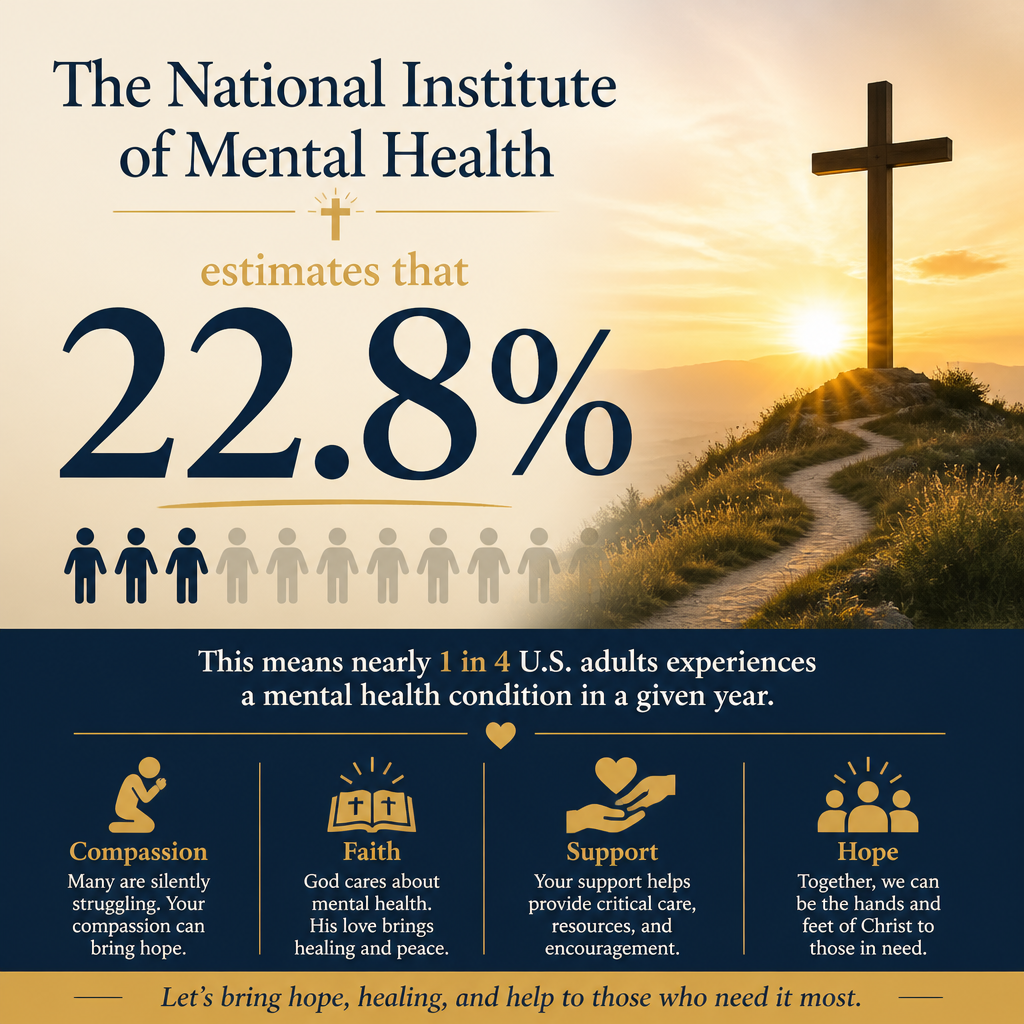
Sliding scale exists in a context of widespread mental health need. The National Institute of Mental Health estimates that 22.8% of U.S. adults experienced mental illness in 2021 (NIMH). That scale of need means a counseling ministry’s pricing policy will quickly become a capacity policy: every reduced-fee slot is a decision about who is served, how quickly, and for how long.
Donors should therefore ask ministries not only whether they offer sliding scale, but how they protect clinical quality while doing so. A sliding scale that multiplies access but weakens supervision or increases risk is not faithful stewardship; it is the appearance of mercy without the substance of care.
How ministries determine fees without eroding dignity
Common approaches and their trade-offs
Christian counseling ministries use several approaches to set sliding-scale fees. Each carries real trade-offs in fairness, administrative burden, and the risk of unintended exclusion.
- Income-based tiers: clients select or are assigned a tier based on household income, sometimes adjusted for dependents.
- Needs-based discretion: a director applies a policy with room for complex circumstances (medical debt, unemployment, separation).
- Fixed scholarship slots: a set number of reduced-fee appointments per week are reserved and funded.
- Time-limited subsidy: reduced fees apply for a defined period with planned review and transition.
- Partner referrals: local churches or ministries contribute toward fees for referred congregants.
Income-based tiers can feel more objective, but they can also become rigid, especially for clients with unstable employment or high cost-of-living realities. Discretion-based models can be humane, yet they require strong documentation and consistent application to avoid favoritism. Time-limited subsidy can prevent dependency, but it can also create anxiety for clients in prolonged crisis. There is no perfect method; there are only methods governed well or poorly.
Confidentiality and documentation are not optional
Sliding-scale decisions require some form of verification or attestation. Ministries must hold two commitments together: protect client dignity and maintain financial integrity. In practice, the best ministries minimize intrusive documentation, store any financial information securely, and define clear retention policies. A donor should be wary of models that require excessive disclosure from vulnerable people, but equally wary of models so casual that financial controls are absent.
Because counseling involves sensitive data, donors should also ask whether the ministry’s systems align with basic privacy and security expectations. HIPAA may or may not formally apply to every ministry in every structure, but prudent stewardship treats confidentiality as a moral obligation regardless of regulatory coverage.
Donor-funded access and the governance questions it raises
Restricted gifts can help or destabilize
Many donors want to fund “sessions for those who cannot afford them.” That desire is often honorable. But restricted giving, if misaligned with the ministry’s cost structure, can distort operations. If a ministry receives gifts restricted to client subsidies but lacks funds for supervision, intake, and compliance, it may increase subsidized volume while weakening the support systems that keep counseling safe. Donors can do better by funding access within a whole-ministry view, including the less visible functions that protect clients.
This aligns with well-established philanthropic caution about simplistic overhead ratios. The “Overhead Myth” letter—signed by Charity Navigator, GuideStar, and BBB Wise Giving Alliance—argues that focusing on overhead can mislead donors and discourage necessary investment in infrastructure (Charity Navigator). Counseling ministries are a clear case where infrastructure is part of care.
What we assess when a ministry claims to offer sliding scale
Across our verification work, we observe that credible sliding-scale ministries can explain, in plain language, how money flows from donors to client access without compromising governance. They can show that leadership understands the ethical tensions: compassion without coercion, affordability without undercompensation, and spiritual integration without clinical shortcuts.
In our evaluation at Most Trusted, these questions land in multiple parts of The Most Trusted Standard: financial integrity (true cost, controls, and sustainability), governance and leadership (policy consistency and accountability), transparency and effectiveness (clear reporting without exaggeration), and faith foundation (explicit commitments that shape counseling practice).
Donors who want broader context on how faith-based counseling ministries structure programs and oversight can review Christian Counseling Ministries as a reference point for the field’s common models and risks.
What donors should ask before funding sliding-scale counseling
Questions that reveal seriousness, not slogans
Sliding scale can be a faithful practice or a fragile promise. Donors can help by asking questions that test whether accessibility is matched by stewardship.
These are the questions that tend to separate mature ministries from aspirational ones:
- How do you calculate the true cost per session, and how often is it updated?
- What proportion of your caseload is sliding-scale, and what is the wait time by fee tier?
- How are counselors supervised, and what are your clinical policies for crisis and referral?
- What is your policy for reassessing fees, and how do you avoid shaming clients?
- How do restricted gifts for subsidies interact with staffing and infrastructure needs?
Notice what these questions do not ask: they do not demand private client stories. Donors can respect confidentiality while still requiring transparency about process, safeguards, and results at the program level.
Funding models that strengthen access over time
Some of the strongest donor strategies resemble endowment thinking more than emergency relief. Multi-year commitments allow ministries to hire and retain qualified clinicians, expand supervision capacity, and stabilize scholarship slots. Church partnerships can also distribute responsibility in a way that honors the body of Christ: a congregation contributes toward care, the ministry supplies clinical leadership, and the counselee receives support without being turned into a fundraising project.
Donors seeking the broader funding and access questions that surround counseling can engage Funding Care Access in Christian Counseling, where the field’s common financial constraints and donor approaches can be assessed with clearer expectations.
FAQs for How Christian counseling ministries offer sliding-scale counseling
Is sliding-scale counseling the same as free counseling?
No. Sliding scale usually means the fee is adjusted based on ability to pay, while free counseling eliminates the fee entirely. Some ministries offer a small number of no-fee slots, but most sustainable models rely on a range of reduced fees supported by donors and by clients who can pay closer to market rate.
What should donors watch for as signs a sliding-scale program may be unsustainable?
Persistent waitlists that grow without a plan, high counselor turnover, vague explanations of how subsidies are funded, and pressure on counselors to carry unrealistic caseloads are common warning signs. A ministry that cannot articulate true cost per session or that treats supervision and administrative capacity as optional is likely absorbing strain that will eventually surface in reduced quality or reduced access.
A faithful sliding scale is measurable stewardship
Sliding-scale counseling is one of the clearest places where Christian compassion must be expressed with operational honesty. The goal is not simply lower fees; it is durable access to competent care offered in a manner consistent with Christian conviction and neighbor-love. Donors serve this goal best when they fund the whole system of care—policies, supervision, staffing, and transparency—so that reduced-fee sessions remain both accessible and safe.



