
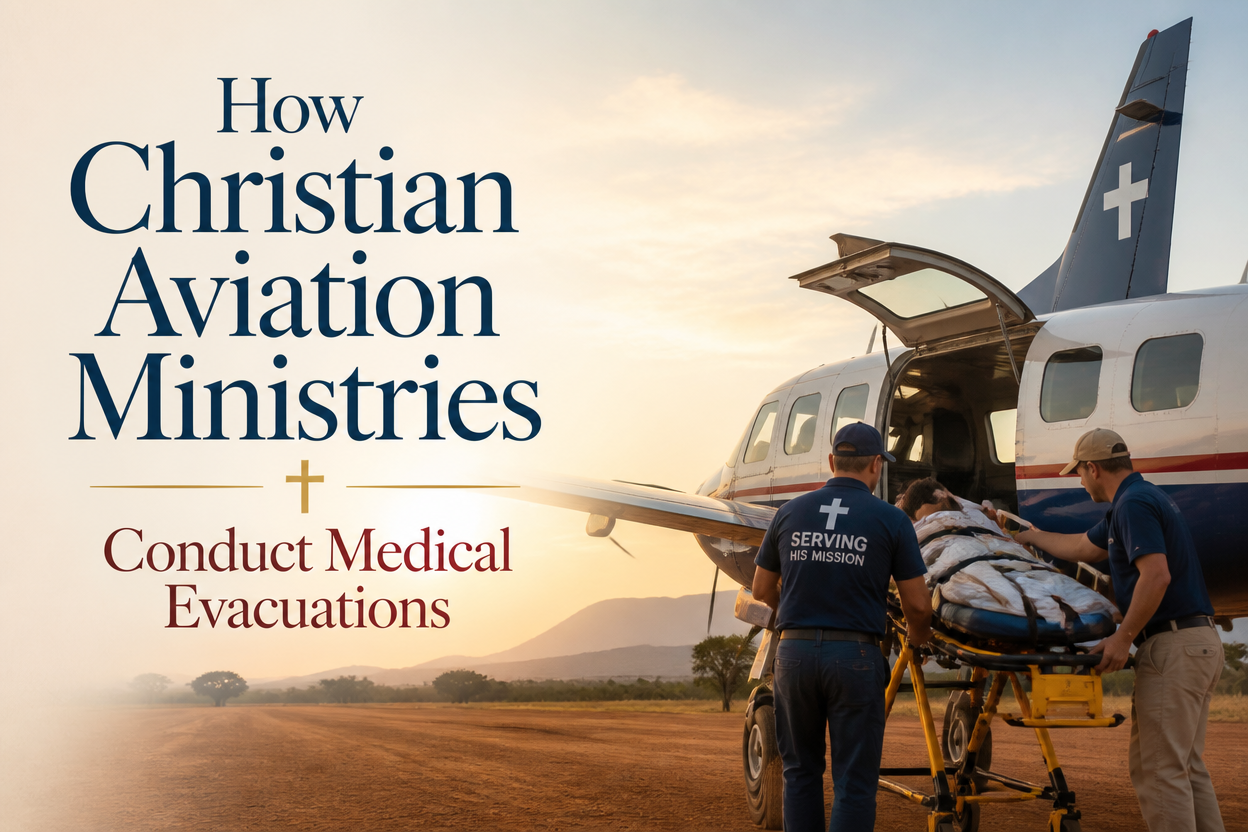
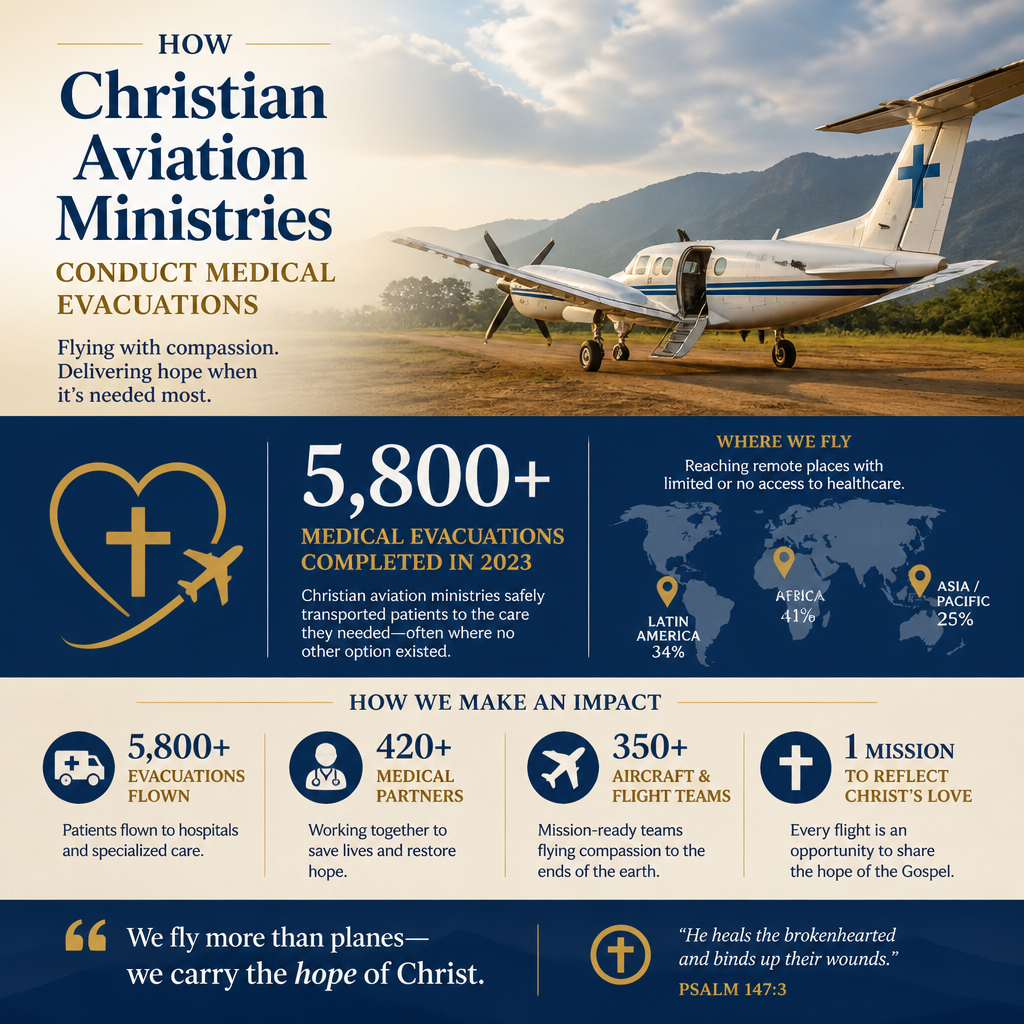
How Christian aviation ministries conduct medical evacuations is a question of theology as much as logistics. These flights are not merely transportation; they are an embodied answer to Scripture’s steady call to move toward the vulnerable, including the sick and those with no practical access to care.
For donors, the moral impulse is clear. The harder task is discernment: understanding what a medically sound evacuation requires, what it costs, and what governance and accountability must look like when a ministry is operating aircraft in remote environments under urgent conditions. The ministries that serve well tend to combine clinical seriousness, aviation discipline, and a patient commitment to local partnership rather than hero narratives.
Medical evacuation is ministry, but it is also regulated risk
Why medical evacuation exists in mission contexts
In many rural settings, the main barrier to survival is not the absence of medicine in the world, but the absence of access. A hemorrhage, obstructed labor, sepsis, severe malaria, a snakebite, or a traumatic injury becomes fatal when the nearest capable facility is many hours away over impassable roads or waterways. Christian aviation ministries exist precisely in this gap, using aircraft to connect remote communities to clinics and hospitals that can provide definitive care.
This work aligns with the biblical pattern of neighbor-love that bears cost and crosses boundaries. In Luke 10, the Samaritan does not offer sympathy from a distance; he assumes financial and personal risk to get a wounded man to care. Medical evacuation is a contemporary form of that same moral movement, conducted with propellers, radios, and oxygen bottles.
Why donors should expect stringent operational standards
Evacuation aviation is inherently high-stakes. Weather is volatile, runways are short, navigation aids may be limited, and aircraft may operate far from maintenance infrastructure. Add medical urgency, and the pressure to fly can quietly become the pressure to take unsafe risk. Mature ministries build systems that allow them to say “no” when the conditions are unsafe, even when a life is at stake.
Donors can also benefit from a sober understanding of the broader safety context. Aviation has become remarkably safe over time, but the sector still carries risk; the U.S. government reports hundreds of general aviation fatalities in a typical year, underscoring why training, maintenance, and decision-making culture are not optional in any flight operation (National Transportation Safety Board).
The evacuation begins long before takeoff
Activation and triage in the field
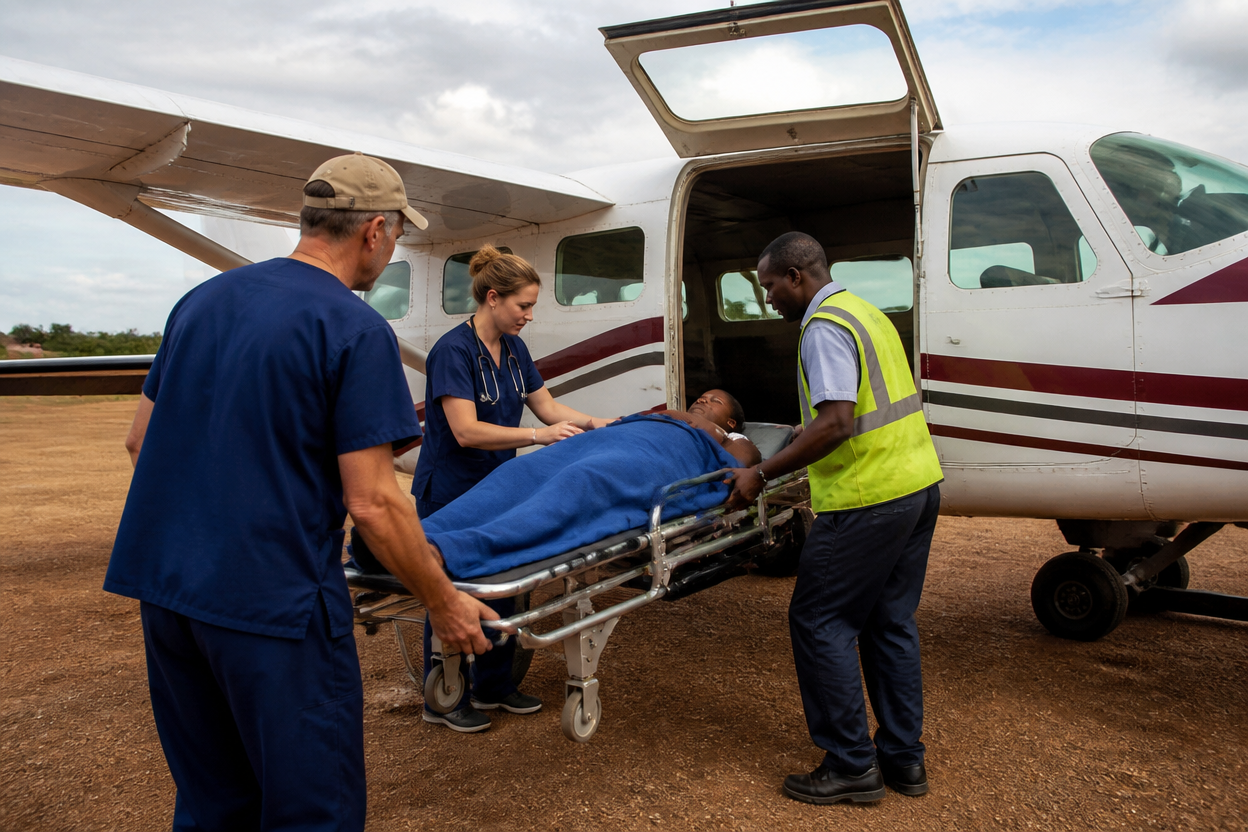
A credible medical evacuation process begins with a disciplined request-and-triage system. A mission hospital, rural clinic, community health worker, or partner ministry contacts the aviation team with a patient summary: symptoms, vital signs if available, suspected diagnosis, time course, and immediate threats. Many aviation ministries employ or consult medical staff who can help determine whether a flight is warranted, what level of monitoring is needed, and whether the patient should be stabilized first.
This triage is not a matter of compassion versus caution. It is the recognition that the riskiest moment for a critically ill patient can be transfer itself. The best programs communicate clearly: when the safest option is ground transport, delayed departure for weather, or local stabilization, that is still faithful care.
Flight planning under clinical constraints
Once a flight is approved, flight planning incorporates medical constraints that donors rarely see but should expect to be present. The crew must consider altitude effects on oxygenation, turbulence risk for trauma patients, cabin configuration, and the availability of fuel along the route. Destination choice is also clinical: the closest runway is not always the best hospital, and the best hospital may not have a blood supply, surgical capacity, or neonatal care when needed.
Ministries with mature systems often rely on checklists and written protocols, because urgency is precisely when human memory fails. In our verification work at Most Trusted, we find that well-governed ministries do not equate flexibility with improvisation; they build repeatable processes that serve patients and protect crews.

What happens in the aircraft is clinical care in a constrained environment
Aircraft configuration and medical equipment
Airframes used in Christian aviation range from small single-engine aircraft to turboprops, depending on geography, runway conditions, and payload needs. The interior must accommodate a stretcher or litter, secure tie-down points, and space for a medical attendant when appropriate. Equipment varies by context, but credible evacuation capability often includes oxygen delivery, suction, basic airway tools, IV supplies, and monitoring equipment that can function under vibration and variable temperature.
There is a temptation in donor communications to emphasize dramatic rescues. Responsible ministries emphasize readiness: equipment maintenance schedules, expiry dates for medical consumables, and careful weight-and-balance calculations for each load. Those details are not glamorous, but they are where patients survive.
Who flies and who treats
In many contexts, the pilot is not the clinician, and the clinician is not the pilot. Some evacuations are flown with a nurse, paramedic, or physician escort; others rely on basic transport with careful stabilization and rapid transfer on arrival. Donors should not assume that every “medevac” is equivalent to an ICU-level air ambulance. Definitions vary across countries and ministries, and the ethical responsibility is to represent capability accurately rather than aspirationally.
Christians genuinely disagree about how explicitly evangelistic aviation operations should be during emergency care. A wise ministry keeps the priority clear: the patient’s welfare is immediate. Witness is expressed through competence, compassion, honesty, and respectful collaboration with local caregivers, not through coercive or ill-timed spiritual pressure.
Handoffs on the ground are where outcomes are won or lost
Coordination with local health systems
Even the best flight accomplishes little if the receiving facility is unprepared. Mature evacuation programs coordinate in advance with hospitals, confirm bed capacity when possible, and communicate the patient’s condition and estimated time of arrival. In some settings, the aviation ministry also helps arrange payment expectations, because many hospitals require deposits before treatment begins. This is one of the hidden complexities donors should understand: access is not only geographic; it is also administrative and financial.
International health systems are diverse, and the lines between public, private, and faith-based care can be complex. The most credible aviation ministries maintain local relationships that allow them to navigate that complexity without supplanting local authority. The goal is not to become the health system; it is to strengthen the patient’s path through it.
Family, consent, and dignity
Evacuations often happen in the presence of family members under extreme distress. Consent may be unclear, language barriers may be significant, and cultural expectations about decision-making can differ. Ministries that take dignity seriously train teams to communicate with clarity and respect, to document what was agreed, and to avoid the subtle paternalism that can emerge when outsiders control the aircraft and the timeline.
For donors shaped by Christian moral formation, this is not secondary. People are not problems to be solved; they bear God’s image. The ministry’s operational excellence should be matched by its ethical seriousness.
How donors can evaluate medical evacuation claims with confidence
What transparency should include
Because evacuation stories are emotionally powerful, they can also become marketing that outpaces reality. Donors can insist on verifiable clarity. Ministries that deserve trust generally publish audited financials, describe their safety culture, and communicate outcomes with appropriate humility. They also name limitations plainly: aircraft types, typical range, weather constraints, staffing models, and the difference between routine patient transport and higher-acuity medical escort.
When donors want to place aviation within a broader understanding of the field, we encourage review of Christian Aviation Ministries as a category, including the differing models of service (church and mission support, community development flights, disaster response, and medical transport). Clarity about the model helps donors align expectations with reality.
Governance and stewardship signals donors should look for
Medical evacuation aviation can be expensive, and it can be easy to romanticize costs as a sign of seriousness. Mature stewardship is more specific than that. Within The Most Trusted Standard, we look for disciplined governance, financial integrity, and evidence that leadership welcomes scrutiny rather than resisting it. Donors should expect clear conflict-of-interest policies, board-level oversight of safety and finance, and transparent reporting on incidents and corrective actions where appropriate.
The following questions tend to separate credible operations from aspirational ones:
- Does the ministry clearly define what “medical evacuation” means in its context and what it does not mean?
- Are pilots appropriately trained for the operating environment, and is recurrent training documented?
- Is maintenance performed on schedule by qualified technicians, with records available for review?
- Does the ministry have written go-no-go policies that protect against pressure to fly in unsafe conditions?
- Are patient dignity, consent, and safeguarding practices explicitly trained and enforced?
Donors will also benefit from understanding a recurring philanthropic tension: overhead ratios do not measure mission effectiveness. The organizations behind the “Overhead Myth” argued that fixation on low overhead can mislead donors and distort nonprofit decision-making, particularly in complex work that requires strong systems (GiveWell). In aviation, where safety and maintenance are moral imperatives, underinvestment in infrastructure is not frugality; it is negligence.
For donors comparing ministries within this domain, we also point to the broader category context of How Christian Aviation Ministries Serve Mission Fields, where different approaches to partnership, cost structure, and reporting practices become more visible over time.
FAQs for How Christian aviation ministries conduct medical evacuations
Are Christian aviation medical evacuations the same as an air ambulance service?
Not always. Some Christian aviation ministries can provide higher-acuity transport with a medical escort and specialized equipment, but many provide rapid transport that is clinically basic compared with hospital-based air ambulance systems. Responsible ministries define their capability precisely, including what level of monitoring and intervention is feasible in their aircraft and staffing model.
What should donors ask to ensure an aviation ministry prioritizes safety?
Donors should ask for evidence of recurrent pilot training, maintenance schedules and documentation, written go-no-go decision policies, and governance oversight of safety. Transparent ministries can also explain how they report and learn from incidents and near-misses, and how they prevent operational pressure from overriding prudent judgment.
Stewarding mercy with competence
Medical evacuation is one of the most concrete ways Christian compassion can meet material need, often at the edge of what infrastructure can support. The call to love our neighbor does not release us from accountability; it heightens it. Donors serve this work well when they honor the drama of rescue without being governed by it, and when they support ministries whose safety culture, governance, and transparency are as serious as the lives they carry.



