
How biblical museum ministries support Bible education is not a sentimental question about artifacts. It is a question of formation: how Christians learn to read Scripture as the Word of God given in real places, through real languages, under real empires, among real communities of worship and witness. Donors who care about discipleship have learned that Bible literacy can erode quietly—through distraction, shallow teaching, and the gradual loss of historical and theological imagination.
Biblical museums, when they are faithful and well-governed, can help reverse that erosion. They place the Bible in its material and historical setting without reducing it to a museum piece. They serve the church when they strengthen confidence that the biblical story is not a private spiritual myth, and when they disciple visitors into deeper reading, better questions, and more durable convictions.
1. Bible education needs context without surrendering authority
Scripture is inspired, and it is also situated
Christian donors often feel the strain between two unhelpful instincts. One treats history and material culture as threats to faith. The other treats faith as something we can preserve only by evacuating the Bible of its claims. Biblical museum ministries serve the church best when they refuse both options: Scripture remains the living Word of God, and it came to us through human authors, ancient economies, and contested political realities.
This is not a modern concession. Luke explicitly frames his Gospel as an orderly account grounded in careful investigation (Luke 1:1–4). Paul’s letters are densely circumstantial: churches, conflicts, and local questions that require interpretive work. Museums can help visitors see that faithful reading has always meant attention to language, genre, and setting—precisely so that the church can hear what God has actually said.
Material culture can clarify, but it cannot replace teaching
Artifacts and reconstructions can illuminate the world of the Bible: weights and measures, ancient writing materials, household objects, burial practices, and the technologies of empire. Yet mature Bible education does not emerge from objects alone. The educational power lies in interpretation—curation that is transparent about what is known, what is debated, and what is inferred.
This is where donors should be discerning. Museums can either cultivate humble confidence or cultivate spectacle. The difference is whether the ministry is accountable to biblical authority and to honest scholarship, and whether its educational goals are aimed at discipleship rather than mere foot traffic.
2. Museums can strengthen biblical literacy for ordinary Christians
We are in a measurable literacy crisis
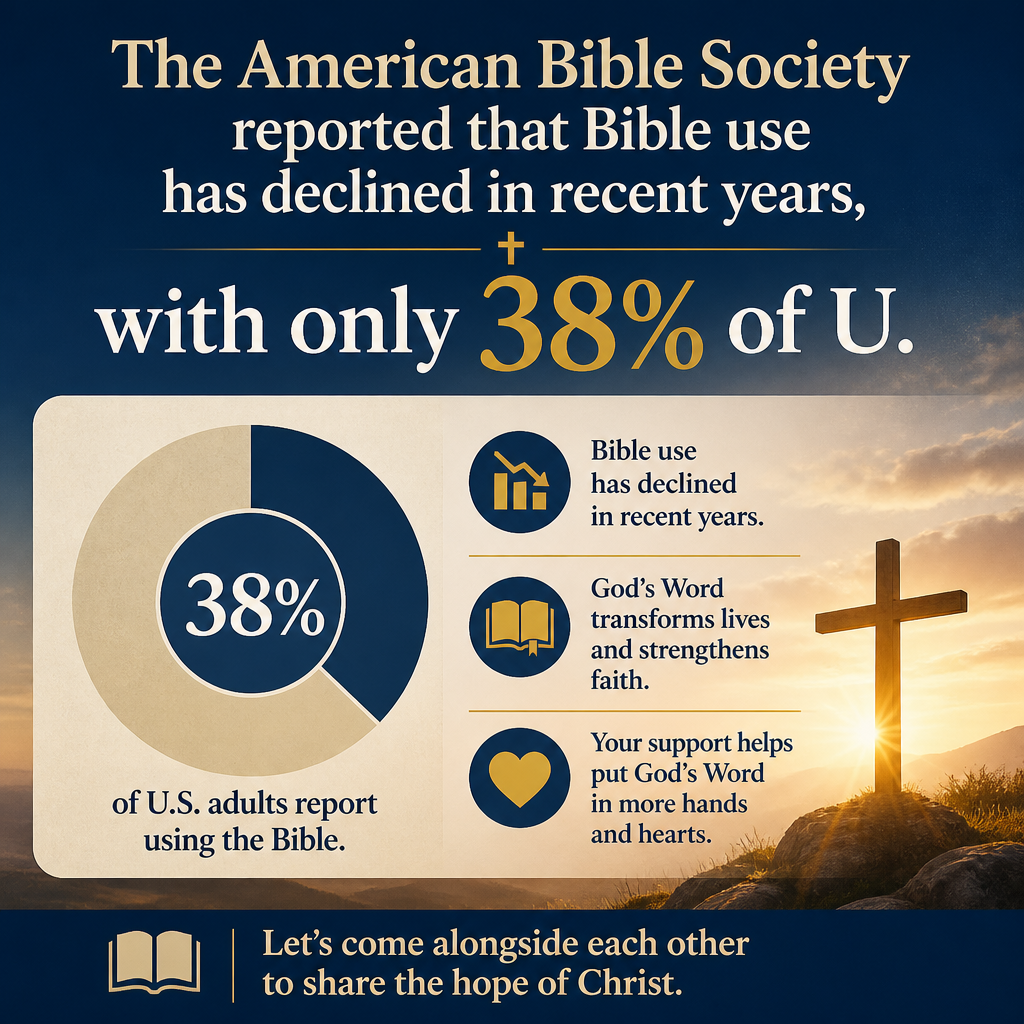
Many pastors and Christian educators describe a widening gap between people who have church familiarity and people who can actually locate, summarize, and interpret Scripture. That concern is not merely anecdotal. The American Bible Society reported that Bible use has declined in recent years, with only 38% of U.S. adults counted as “Bible Users” in its 2024 State of the Bible report (American Bible Society).
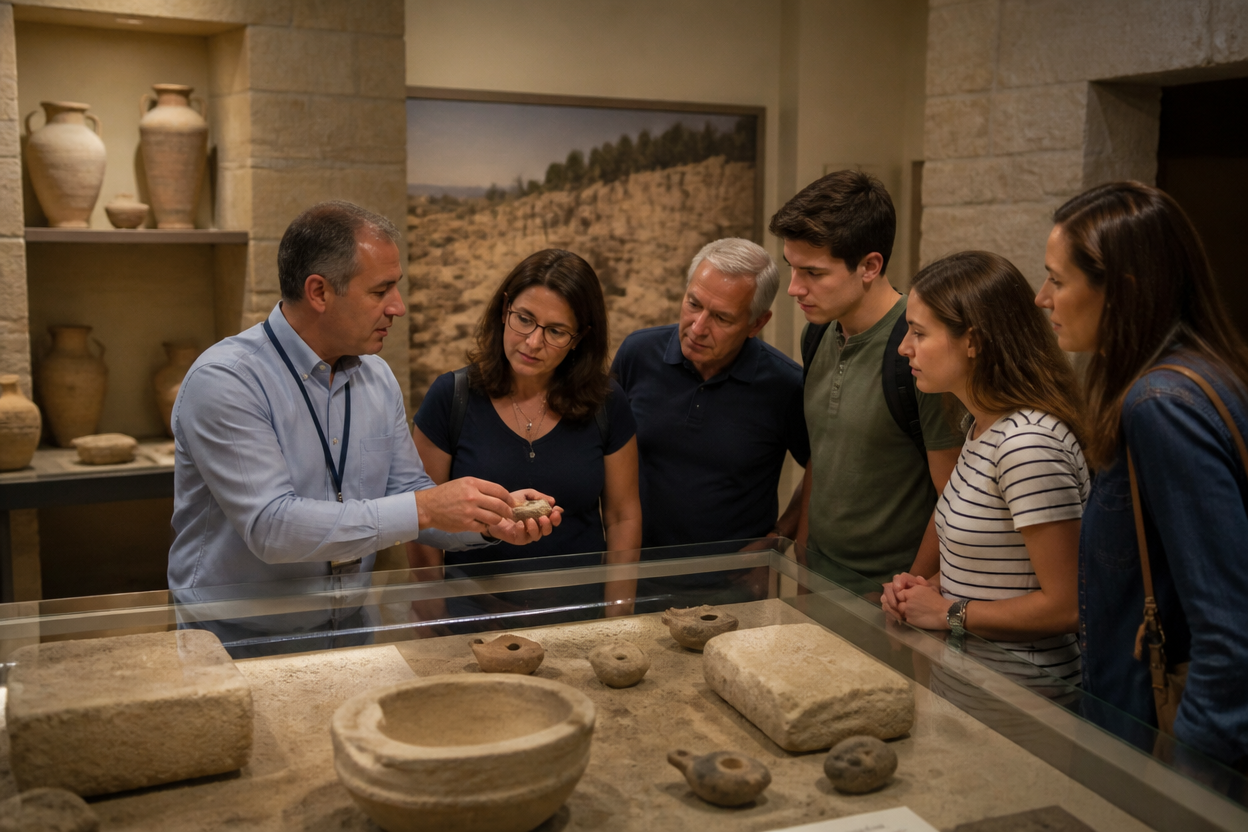
Biblical museum ministries can help by building on-ramp experiences that are accessible to families, students, and seekers. A well-designed exhibit can give someone their first coherent map of the biblical storyline, the geography of Israel, or the difference between a scroll and a codex—and then direct them back to the text and to the church.
They can disciple the imagination as well as the mind
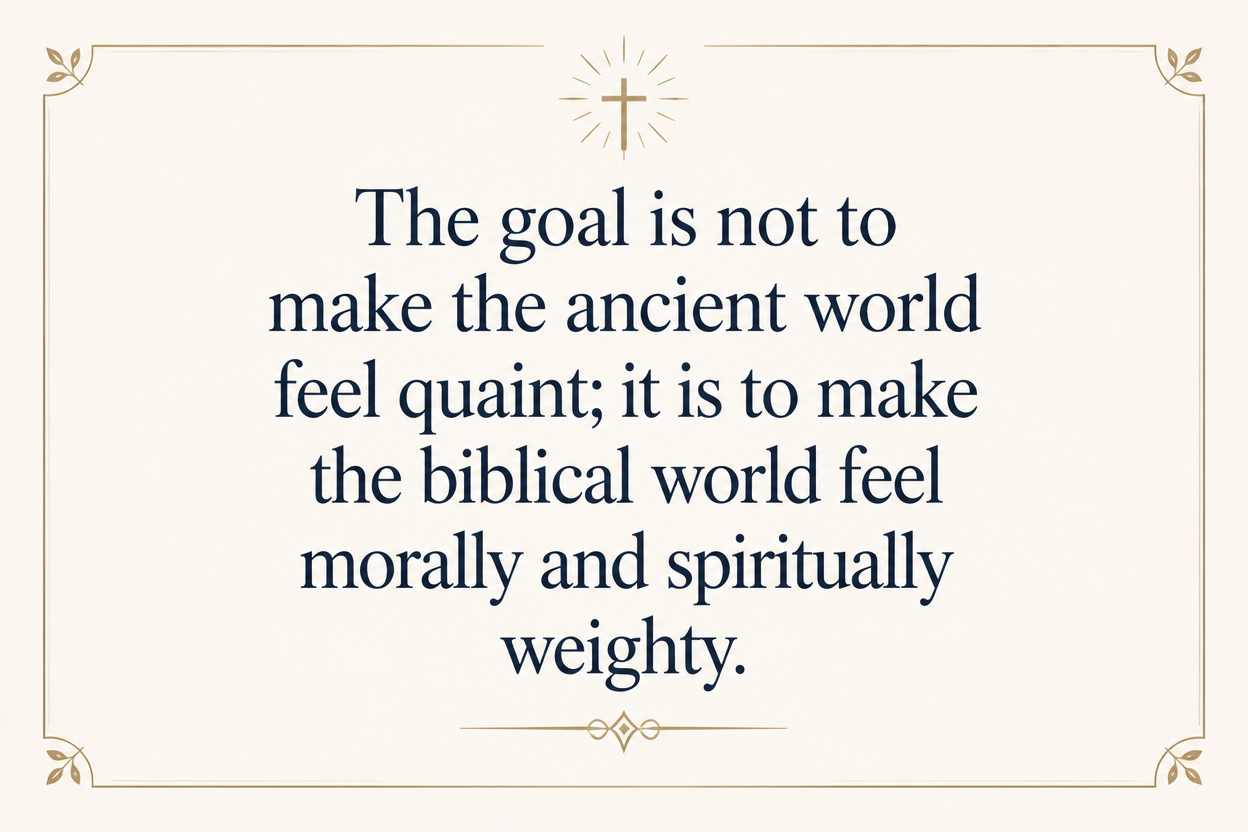
Bible education is more than information transfer. Scripture forms a people. Museums can serve this formation by training the imagination toward the world of the Bible: the vulnerability of exile, the pressure of idolatrous power, the costs of faithful witness, the meaning of covenant. The goal is not to make the ancient world feel quaint; it is to make the biblical world feel morally and spiritually weighty.
For donors, this is a strategic point. Many churches struggle to sustain week-to-week formation, especially for adolescents and young adults. Museums can provide high-quality learning environments that reinforce what pastors and parents are teaching, without supplanting the church’s responsibility to teach the Word.
3. The best biblical museums combine scholarship, catechesis, and pastoral restraint
Interpretive honesty builds trust
Christians genuinely disagree about some historical questions and about how to weigh certain kinds of evidence. A museum does not need to act as if every question is settled to be faithful. In many cases, honesty about the limits of certainty serves the church better than overconfident claims that later collapse under scrutiny.
That is why donors should pay attention to interpretive methodology. Does the museum distinguish between primary evidence and later tradition? Does it acknowledge contested reconstructions? Does it avoid using the Bible as a prop for arguments the text itself does not make? Overstatement may draw headlines, but it rarely strengthens long-term Bible confidence.
Educational depth should be paired with spiritual care
Some visitors arrive carrying real wounds: skepticism formed by poor teaching, or faith shaken by social media caricatures of Scripture and history. A responsible biblical museum ministry plans for that pastoral reality. It trains docents to engage respectfully, offers resources that point toward trustworthy Christian scholarship, and makes clear that the church is the proper home of Word and sacrament.
We also observe that the healthiest institutions resist the temptation to make every exhibit do everything. A museum is not a seminary curriculum, and it is not a Sunday sermon. It can, however, be a disciplined educational ministry that supports both.
4. Donors should fund biblical museums with the same rigor they apply elsewhere
Education ministries still require governance and integrity
Because museums can feel “safe”—cultural, educational, family-friendly—donors sometimes relax the due diligence they would apply to other ministries. Yet museum operations are complex: collections care, acquisitions, insurance, facilities, staff expertise, and significant capital needs. Complexity can either be governed wisely or become a breeding ground for opacity.
At Most Trusted, our work is to help donors give with confidence by evaluating Christian nonprofits against The Most Trusted Standard, a 15-criteria framework covering Faith Foundation, Financial Integrity, Governance and Leadership, and Transparency and Effectiveness. Those categories are not abstractions. They are the practical safeguards that protect a ministry’s witness and ensure donor intent is honored.
What wise donor questions sound like
When donors assess biblical museum ministries, the questions should reach beyond “Is it inspiring?” and toward “Is it faithful, competent, and accountable?” The ministries that are most deserving of sustained support can usually answer clearly, in writing, with documentation and measurable practices.
- How does the museum articulate its doctrinal commitments and interpretive approach to Scripture?
- What policies govern acquisitions, provenance, and the handling of contested artifacts?
- Is the board independent, engaged, and qualified to oversee complex operations?
- Do audited financial statements and Form 990s align with public messaging and fundraising claims?
- How does the museum evaluate educational outcomes beyond attendance counts?
These questions do not signal distrust. They are a form of stewardship. Jesus’ teaching on faithfulness in small things is not suspended when a ministry’s mission feels culturally impressive (Luke 16:10).
5. The spiritual opportunity is real, and so are the tensions
Apologetics can serve discipleship, but it can also distort it
Biblical museums often carry an apologetic impulse: to defend the credibility of Scripture and the reality of biblical events. That impulse can be legitimate. Christianity is a public truth claim rooted in God’s action in history, culminating in the resurrection of Jesus (1 Corinthians 15:3–8). Yet apologetics can also become brittle when it requires constant certitude, or when it treats faith as a conclusion we secure by winning arguments.
The most constructive museum ministries treat apologetics as a servant, not a master. They strengthen confidence without promising more than the evidence can bear. They invite visitors into patient learning rather than into a cycle of sensational claims and reactive rebuttals.
Formation should remain church-centered
The church is “the pillar and buttress of the truth” (1 Timothy 3:15), not a museum. A biblical museum ministry is at its best when it understands itself as an aid to the church’s teaching mission: a resource for pastors, homeschool families, Christian schools, campus ministries, and adult learners.
This is also where donor strategy matters. Funding that supports partnerships with local churches, accessible curricula, docent training, and thoughtful programming can yield longer-term discipleship fruit than funding that prioritizes expansion without educational depth. For readers tracking the broader landscape, our coverage of Biblical Museum Ministries distinguishes between institutions that function as Christian education allies and those that drift toward entertainment or ideological combat.
FAQs for How biblical museum ministries support Bible education
Do biblical museums strengthen faith, or do they risk undermining it with scholarship?
They can do either, depending on how they handle Scripture and evidence. Scholarship that is honest about what is known and careful about what is inferred often strengthens faith by removing false dilemmas and by modeling mature learning. What tends to undermine confidence is not scholarship itself, but overclaiming, sensationalism, or presenting disputed conclusions as unquestionable fact.
What should Christian donors look for before supporting a biblical museum ministry?
Donors should look for doctrinal clarity, transparent interpretive methods, strong governance, and financial accountability appropriate to a complex institution. Evidence of church partnership and measurable educational outcomes is also significant. For donors focused on education and discipleship outcomes, our analysis within How Biblical Museum Ministries Support Education and Discipleship outlines the kinds of practices that typically signal long-term credibility.
A disciplined investment in Bible education
Biblical museum ministries can be a serious instrument of Bible education when they combine interpretive humility with doctrinal fidelity, and when they submit their operations to transparent governance. Donors who care about the health of the church should not treat museums as peripheral cultural projects. They are one of the few settings where historical context, sensory learning, and public witness can converge in service of Scripture.
The work is not simple, and the temptations are real: spectacle, overstatement, and institutional opacity. Yet when a museum ministry is faithful to its calling and accountable in its stewardship, it can help Christians read the Bible with greater clarity and reverence—and help the next generation understand that the God who speaks in Scripture speaks in history.



