
How do rescue missions keep volunteers safe without turning mercy into fear management? The best ministries treat volunteer safety as a moral obligation, not a liability exercise, because the people being served and the people serving are both image-bearers whose dignity must be guarded.
For Christian donors, the question is also practical. Volunteer programs often act as a ministry’s “front door” for church partners and community relationships. When safety is taken lightly, harm follows: volunteers burn out, guests feel surveilled rather than welcomed, and churches disengage. When safety is treated with sober competence, ministries can sustain long-term, trauma-informed care that reflects the steadiness of the Good Shepherd.
Safety begins with a theology of neighbor love and honest risk
Neighbor love includes the volunteer
Christian missions work is not exempt from ordinary duties of care. Scripture’s command to love our neighbor is not sentimental; it is concrete and costly. The parable of the Good Samaritan assumes real danger on the road, yet it also assumes disciplined action rather than recklessness. A ministry that routinely places untrained volunteers into unpredictable settings is not displaying faith; it is failing stewardship.
Safety practices do not contradict hospitality. They make hospitality possible. In homelessness outreach, wise boundaries protect guests from exploitation, volunteers from harm, and staff from moral injury. The ministries that serve well over decades tend to hold both truths: Christ calls us into sacrificial compassion, and Christ does not require us to ignore foreseeable hazards.
Risk is real, but it is often misdescribed
Donors sometimes overestimate certain risks and underestimate others. Headlines tend to fixate on rare violent incidents, while more common issues—secondary trauma, boundary violations, medication exposure, communicable illness, or unsafe driving during outreach routes—receive less attention. A mature mission names risk categories plainly, then addresses each with proportionate controls.
The harder question is how a mission talks about safety without dehumanizing those it serves. The strongest organizations refuse fear-based narratives about homelessness. They recognize that many guests carry complex trauma histories, and that volatility can occur, but they train volunteers to respond with de-escalation, predictable structure, and clear lines of authority.
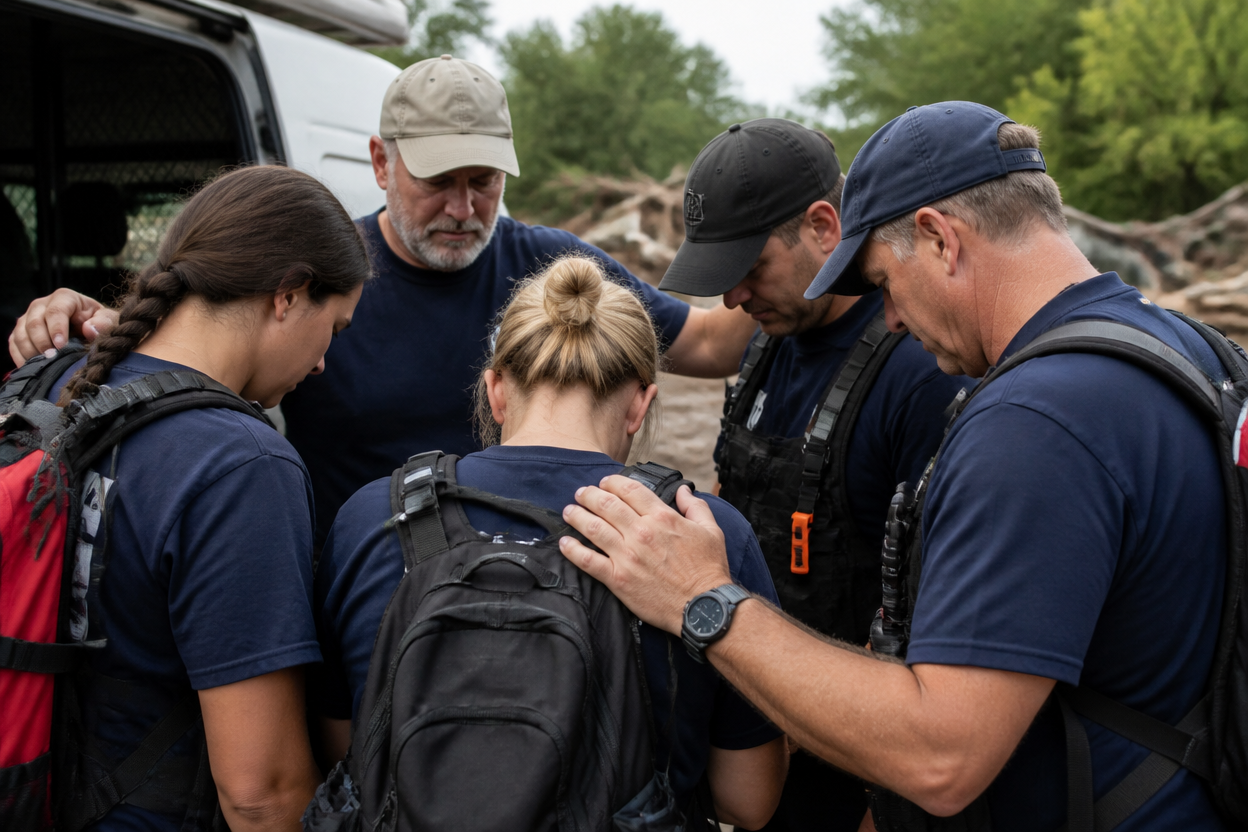
Operational safeguards that responsible rescue missions put in place
Controlled environments and clear supervision
Rescue missions keep volunteers safe first by designing environments where safety is the default. That usually means controlled access points, staff presence, and defined volunteer roles that do not require volunteers to function as security, case managers, or crisis clinicians. Volunteers should know who is in charge at every moment and how to reach that person immediately.
Many missions also create “layers” of supervision: frontline staff, shift leads, and on-call managers for escalation. Donors should listen for specificity: who makes the call to remove a volunteer from a situation, who contacts emergency services, and what documentation is required afterward. Vague assurances are not a safety plan.
Role design that limits predictable points of failure
Volunteer safety improves dramatically when ministries refuse to improvise roles around immediate needs. Instead, roles are engineered around predictable risk points: money handling, private conversations, transportation, and contact with minors or vulnerable adults. A responsible mission limits one-on-one settings, establishes sight-line rules in service areas, and uses two-person teams for outreach when warranted.
In practice, well-run volunteer programs often include a short list of non-negotiables:
- No unsupervised one-on-one counseling or spiritual direction with guests
- Clear boundaries on giving cash, rides, or personal contact information
- Defined procedures for medication or sharps discovery
- Mandatory incident reporting, even for near-misses
- Immediate escalation paths for threats, intoxication crises, or harassment
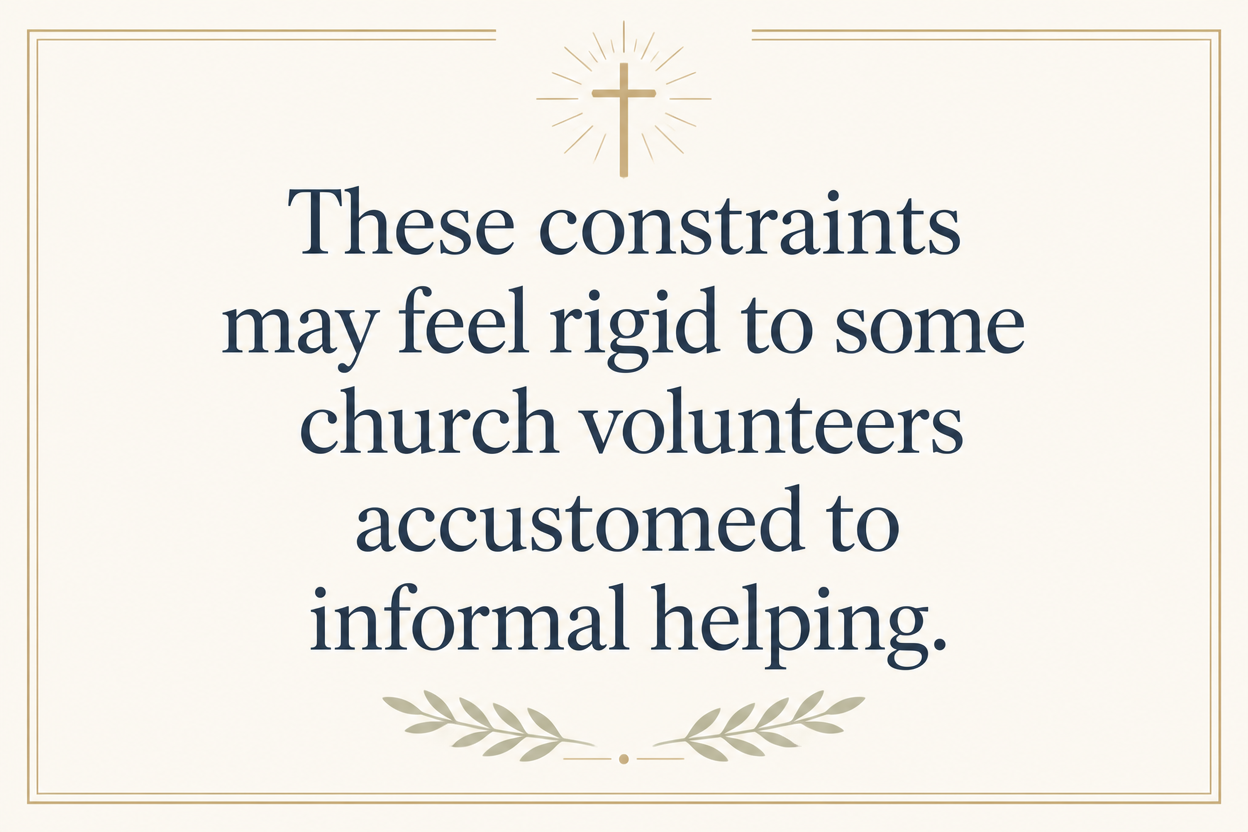
These constraints may feel rigid to some church volunteers accustomed to informal helping. Yet structure is often what allows guests to experience a space as safe and non-chaotic. It also protects volunteers from moral confusion about what they are authorized to promise or provide.
Training, screening, and culture matter as much as locks and policies
Training for de-escalation and trauma awareness
Safety is not only physical; it is relational and psychological. Many guests in shelters and street outreach have experienced violence, foster care disruption, domestic abuse, or repeated institutional failure. A volunteer who interprets trauma-driven behavior as simple defiance can inadvertently escalate a situation. Missions that keep volunteers safe train them to recognize early warning signs, maintain non-threatening body posture, respect personal space, and avoid power struggles.
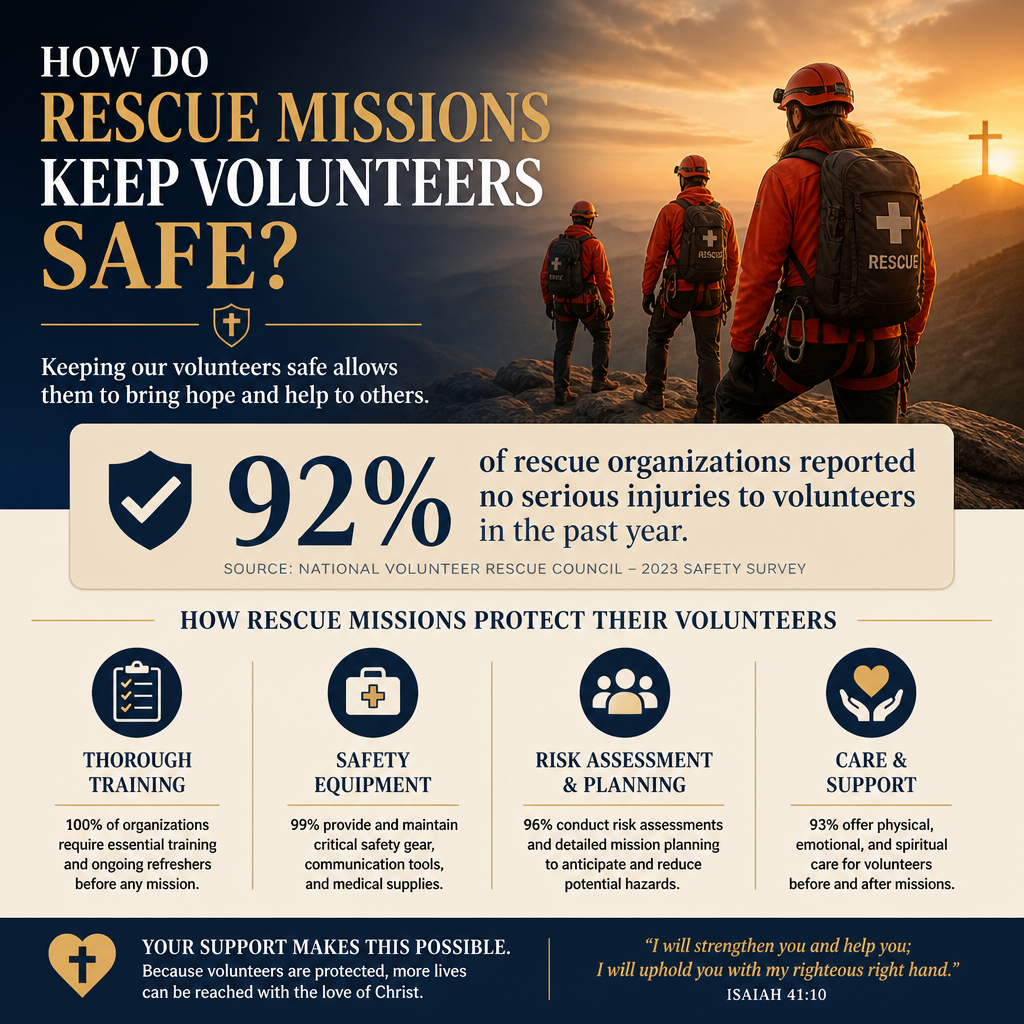
We also recommend donors ask whether the ministry trains volunteers on secondary trauma and healthy spiritual limits. Exposure to severe poverty and crisis can destabilize well-meaning volunteers, especially those serving for the first time. A mission that offers debriefs, prayerful processing with staff, and clear off-ramps is practicing long-term care, not extracting emotional labor.
Screening that matches the level of access
Screening is contested terrain in Christian ministry because it can feel unwelcoming. Yet it is not unbiblical to vet people who will be placed near vulnerable populations or asked to represent a ministry publicly. The standard should be proportionality: minimal friction for low-risk roles, higher scrutiny for roles with sensitive access.
For some assignments, background checks are appropriate, especially when minors are involved or when volunteers have access to sleeping quarters, counseling spaces, or transportation. The U.S. Department of Justice has documented that background checks alone are not a complete safeguard and must be paired with supervision and policy enforcement; they are one tool, not a talisman (U.S. Department of Justice Bureau of Justice Assistance).
Culture is the decisive factor. A mission can have excellent policies on paper and still be unsafe if leadership tolerates boundary violations, jokes about “tough guests,” or inconsistent enforcement. Donors should pay attention to whether staff speak of guests with respect and whether volunteers are corrected promptly and calmly when they drift outside role.
Safety and accountability are donor concerns, not internal details
What donors should ask before sending a volunteer team
Volunteer safety is closely tied to governance and transparency because it requires consistent oversight, documented procedures, and real accountability when failures occur. Donors who support homelessness outreach often send church groups into a mission’s facilities. That means donors are not merely funding a program; they are entrusting people.
Before supporting a mission—or before encouraging a church team to serve—we recommend asking a short set of questions that reveals whether safety is operationalized:
- What roles are volunteers allowed to do, and what roles are explicitly prohibited?
- What training is required before the first shift, and how is it refreshed?
- Who supervises volunteers on-site, and what is the volunteer-to-staff ratio during peak times?
- What is the incident reporting process, and can we review a sample form?
- How does the mission handle harassment or boundary violations by guests or volunteers?
These questions are not adversarial. They are a practical application of Christian stewardship. Jesus’ teaching about faithfulness in “little things” does not exclude operational competence; it demands it.
How Most Trusted evaluates signals of reliability
At Most Trusted, our verification work focuses on whether a ministry can be trusted to do what it says it does with integrity, consistency, and spiritual seriousness. The Most Trusted Standard is a 15-criteria framework across four areas: Faith Foundation, Financial Integrity, Governance and Leadership, and Transparency and Effectiveness. Volunteer safety is not a standalone theological category, but it is often a visible test of these commitments.
The ministries that meet The Most Trusted Standard tend to document policies, train for real-world scenarios, and demonstrate board-level seriousness about risk. They also communicate plainly with donors and church partners when incidents occur, balancing privacy, legal prudence, and truthfulness. Donors can explore the broader landscape of Rescue Missions and Homeless Outreach with an eye toward these reliability signals.
Where safety and mission can collide and how mature ministries respond
Security measures can erode dignity if they are not disciplined
Some safety practices can unintentionally communicate suspicion: excessive surveillance, public shaming for rule violations, or security personnel who treat guests as problems to manage rather than people to serve. Christian donors should not romanticize discomfort, but neither should we fund systems that mirror carceral instincts under the banner of safety.
Mature missions often adopt “least restrictive” approaches: enough control to protect people, not so much that the environment becomes humiliating. This includes private, respectful correction; consistent rule enforcement; and clear grievance pathways for guests. Safety done well is experienced as predictability, not intimidation.
The hardest cases require partnerships and referral pathways
Rescue missions are not hospitals, detox facilities, or psychiatric wards, even when they serve people who need those levels of care. Some guests present acute risks due to untreated mental illness, severe intoxication, or active violence. A responsible mission has referral relationships with local crisis response, law enforcement when necessary, and medical providers. It also sets thresholds for when shelter is not the right setting, however painful that decision may be.
This is one place where donors can be misled by simplistic expectations. Christians genuinely disagree about how low-barrier a ministry should be and how strictly rules should be enforced. The more credible organizations acknowledge the trade-off: lower barriers can increase access for the most vulnerable and increase volatility; higher structure can improve safety and exclude some who cannot comply. What matters is whether the mission makes these decisions transparently, with theological reflection, evidence from operations, and measurable outcomes rather than mood or pressure.
Many donors who care about volunteer engagement will also want to understand broader volunteer practice norms across the field. The standards and expectations that shape Volunteering in Homeless Outreach Ministries are increasingly shaped by trauma-informed care, safeguarding norms, and long-term partnership rather than episodic service.
FAQs for How do rescue missions keep volunteers safe
Should volunteers ever be asked to intervene in conflicts or restrain someone?
In most rescue mission settings, volunteers should not be asked to physically intervene, restrain, or act as informal security. Those responsibilities require training, legal clarity, and institutional authority. A responsible mission trains volunteers to disengage, alert staff immediately, and follow a clear escalation protocol. Donors should treat “volunteers handling conflicts” as a warning sign of inadequate staffing or unsafe role design.
Are background checks enough to keep volunteers and guests safe?
No. Background checks can reduce certain risks, but they do not address many of the most common problems in shelter environments: boundary violations, poor supervision, inadequate training, or inconsistent enforcement. The U.S. Department of Justice notes that background checks should be paired with supervision and strong policies to be effective (U.S. Department of Justice Bureau of Justice Assistance). Donors should look for a complete safeguarding system: screening proportional to access, role clarity, training, and a culture that acts quickly when concerns arise.
Safety is part of faithful stewardship
Rescue missions keep volunteers safe through disciplined role design, competent supervision, training that reflects trauma realities, and governance strong enough to enforce what is written. The most trustworthy ministries resist two errors at once: sentimentalizing risk as “just part of ministry,” and securitizing compassion until guests are treated as threats. Donors can honor Christ and protect the church’s witness by supporting missions that pursue safety as a dimension of love—love for the guest, love for the volunteer, and reverence for the God whose mercy is steady rather than chaotic.



