

When Christian donors ask what services rescue missions offer people experiencing homelessness, they are usually asking a deeper stewardship question: what does faithful, competent mercy actually look like when a neighbor’s needs are immediate and their wounds are longstanding? Rescue missions sit at a difficult intersection of crisis response and long-term restoration, where compassion must be paired with structure, and where good intentions can either stabilize a life or inadvertently prolong instability.
Scripture does not allow Christians to treat homelessness as a distant social issue. Isaiah condemns a piety that ignores the hungry and the unhoused (Isaiah 58:6–7). Jesus identifies himself with those in material need (Matthew 25:35–40). Yet the field has had to reckon with hard questions: which interventions reduce harm, which foster dependence, and how should explicitly Christian proclamation relate to publicly funded systems, trauma-informed practice, and the dignity of those served?
1. Crisis services that keep people alive and restore dignity
The first work of many rescue missions is straightforward: people cannot pursue employment, sobriety, or stable housing if they are cold, hungry, unsafe, or untreated. Emergency services are not the whole solution, but they are often the necessary beginning. Most missions provide a bundle of basic supports that government shelters and secular agencies also provide, while adding relational ministry, prayer, and pastoral care in ways that fit their convictions and local context.
Emergency shelter and safe bed space
Emergency shelter is typically the most visible service: a bed, showers, laundry, and a safer environment than street sleeping. The scale of need is not speculative. On a single night in January 2024, the United States recorded 771,480 people experiencing homelessness, the highest point-in-time count on record, according to the U.S. Department of Housing and Urban Development’s Annual Homeless Assessment Report HUD.
That reality has operational consequences. Missions must manage intake protocols, curfews, safety screening, and—often—conflict de-escalation. The better organizations do this without treating guests as problems to be controlled. They set clear expectations while communicating respect, recognizing that many guests have endured trauma, exploitation, and repeated institutional failure.
Meals, hygiene, and practical supports
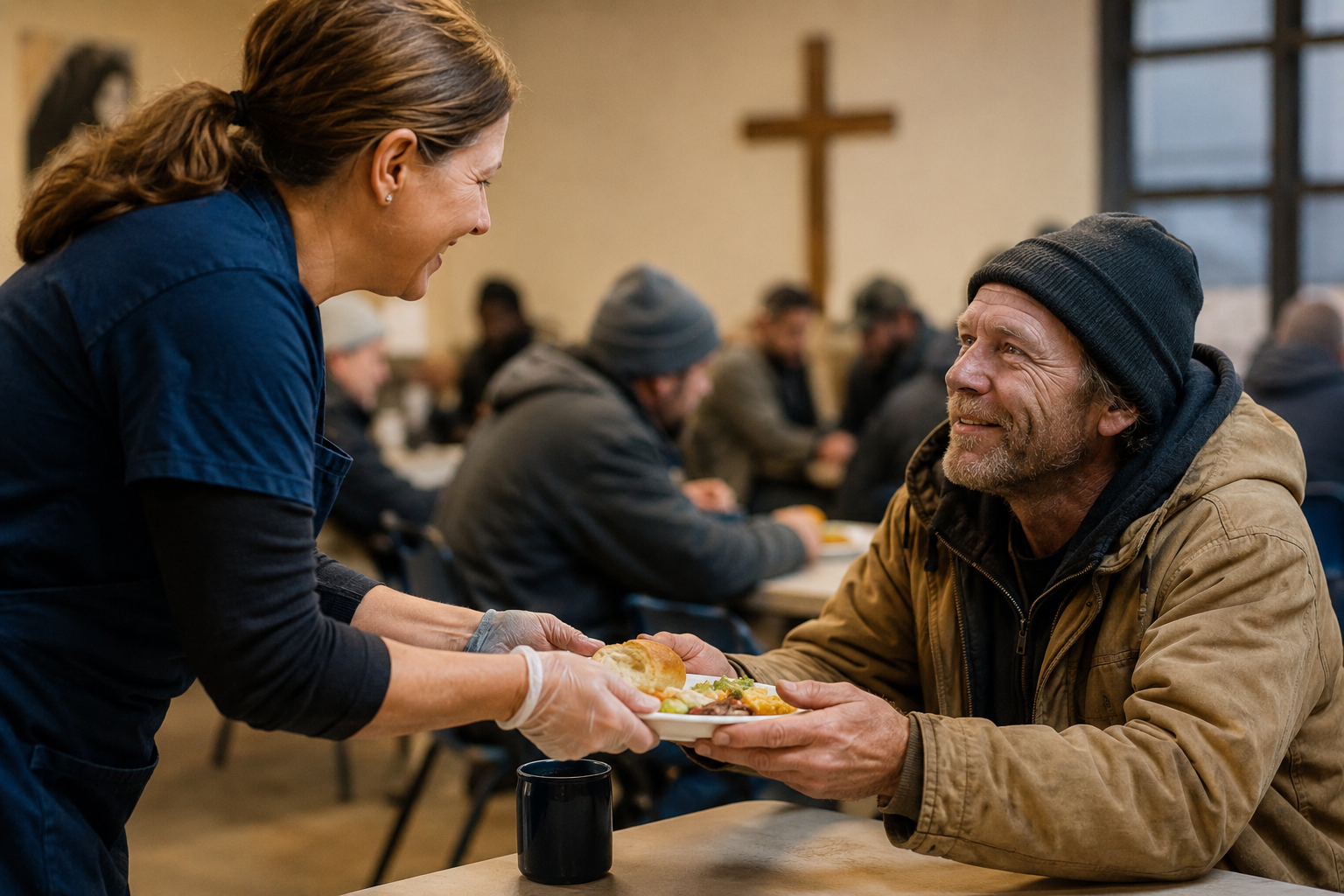
Most missions offer daily meals, often paired with clothing closets, toiletries, showers, and limited transportation support. Donors sometimes discount these services as “band-aids,” but the church has always understood that mercy is embodied. A meal served with consistency and honor can be an entry point to trust, assessment, and next steps.
What this means in practice is that donors should not only ask whether meals are served, but how. Is the environment chaotic or ordered? Are guests treated as image-bearers or as throughput? Do staff and volunteers know how to refer people to medical care, domestic violence services, or benefits enrollment when a need surfaces at the table?
2. Case management that turns compassion into a plan
Crisis care becomes transformative when it is paired with competent case management. The missions that serve well typically move quickly from “What do you need tonight?” to “What is keeping you unstable, and what will change in the next 30, 90, and 180 days?” This requires trained staff, clear documentation, realistic goals, and a network of partners.
Intake assessment and individualized pathways
Effective missions begin with assessment: housing history, health, mental health, substance use, legal barriers, family connections, and income potential. Some guests need a short stay and help securing ID and employment. Others require intensive recovery and clinical care. Still others are medically fragile and need supportive housing rather than programmatic shelter.
Christians genuinely disagree about how “requirements” should function in a shelter setting. Some donors prefer low-barrier models that minimize conditions for entry. Others emphasize structure, accountability, and curfews as part of restoring order. Many missions try to hold both concerns: open doors for immediate safety, paired with clear standards in longer-term programs.
Benefits, documentation, and referrals
Practical barriers often derail well-meant recovery plans. A lost birth certificate, unresolved warrants, medical debt, or lack of identification can block employment and housing applications. Strong case managers help guests navigate these systems and coordinate referrals. In many communities, rescue missions also act as a bridge to Continuum of Care networks, public health clinics, and workforce agencies.
Donors should ask whether a mission has formal referral relationships and whether staff are trained to work within those systems. Competence here is not a substitute for prayer; it is one form of loving one’s neighbor with wisdom.
3. Recovery and discipleship programs that address root causes
Many rescue missions are known not only for emergency shelter but for structured recovery and discipleship programs. These programs vary widely, and donors should not assume uniformity across the sector. Some are primarily spiritual formation with life-skills support. Others integrate clinically informed addiction treatment through licensed partners. The best programs are explicit about what they are—and what they are not.
Substance use recovery and mental health support
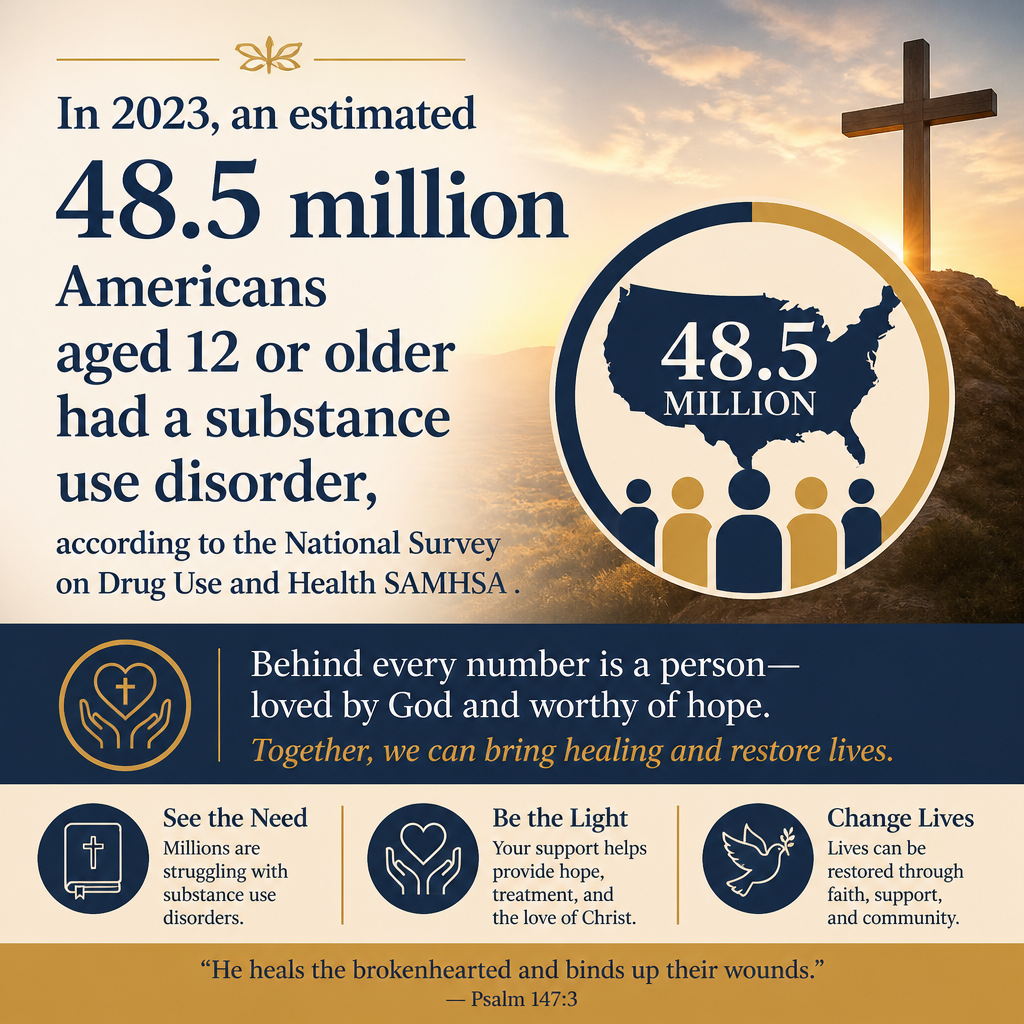
Addiction and mental illness are common among people experiencing homelessness, though not universal, and the causal pathways run both directions. Treatment access matters. In 2023, an estimated 48.5 million Americans aged 12 or older had a substance use disorder, according to the National Survey on Drug Use and Health SAMHSA. Missions serving urban centers frequently encounter this reality daily.
The harder question is whether a given mission has adequate clinical partnerships and safety protocols. A ministry can be faithful and still be overextended. Donors should look for transparent boundaries: when does the mission refer to detox, inpatient care, psychiatric services, or medication management? A purely spiritual approach can be sincere and still be insufficient for acute psychiatric conditions.
Discipleship that respects agency and avoids coercion
Rescue missions are Christian by conviction; many include chapel services, Bible study, pastoral counseling, and prayer. Done well, spiritual care is offered as genuine ministry rather than as a transactional requirement for food or a bed. This is both an ethical concern and a theological one. The gospel is not a commodity exchanged for services; it is good news announced and embodied.
Across our verification work at Most Trusted, we observe that the strongest missions articulate clear policies on participation in spiritual activities, communicate those expectations upfront, and maintain dignity for guests who are not ready to engage. They also equip staff to minister without manipulation, recognizing that trauma can make people compliant in the short term without producing lasting change.
4. Housing and employment services that make stability durable
If rescue missions only provide nights indoors, they will remain trapped in perpetual crisis response. Many missions therefore invest in housing placement and job readiness, often in coordination with landlords, employers, and local housing authorities. The sector has learned that restoration is not merely spiritual renewal; it is also the slow rebuilding of a stable life.
Transitional housing and supportive housing partnerships
Some missions operate transitional housing—time-limited, structured living environments connected to program participation. Others focus on shelter and partner with supportive housing providers. There are genuine debates here. The Housing First approach emphasizes rapid placement into permanent housing with voluntary services. Program-based models emphasize readiness, sobriety, and accountability before housing placement. Evidence across communities is mixed and heavily dependent on implementation quality, local housing markets, and available clinical services.
Donors should ask not only which philosophy a mission prefers, but whether its outcomes are measured honestly and whether it collaborates with the broader ecosystem. A mission can maintain theological commitments while still learning from best practices and integrating with coordinated entry systems.
Workforce development and job placement
Employment services often include job-readiness classes, interview coaching, work therapy, vocational training, and partnerships with local employers. Some missions run social enterprises—thrift stores, cafés, landscaping crews—to provide transitional work and discipline. The stronger programs also address the practical barriers that sabotage early employment: transportation, childcare, court dates, relapse risk, and the emotional toll of re-entering a structured workplace after years of instability.
- Assistance replacing IDs and securing a stable mailing address
- Basic digital literacy and help completing online applications
- Workplace conflict coaching and professional conduct training
- Transportation support for the first weeks of employment
- Coordination with probation and re-entry requirements when applicable
Christian donors often care about “life change,” and that is appropriate. A job is not salvation, but it can be one of the concrete means by which stability, self-respect, and family reunification become possible.
5. How donors can evaluate rescue mission services with moral clarity
Many donors want to support rescue missions but have seen scandals, inflated claims, or ministries that confuse activity with effectiveness. Discernment here is not cynicism. It is stewardship. Scripture commends careful testing and integrity (1 Thessalonians 5:21–22), and donors have a responsibility to give in ways that do not reward opacity or dysfunction.
What to look for in governance, finances, and reporting
Donors should expect accessible financial statements, clear leadership accountability, and credible outcome reporting. Transparency is not opposed to faith; it is one of the ways ministries honor trust. The Overhead Myth letter—signed by Charity Navigator, GuideStar, and the BBB Wise Giving Alliance—helped the sector move beyond simplistic overhead ratios toward a fuller view of accountability and results Charity Navigator.
In rescue mission work, outcomes are complicated. A guest may leave early. A relapse may occur. A housing placement may fail and later succeed. The right question is not whether every story ends neatly, but whether the mission measures what it can, tells the truth about what it sees, and adjusts programs with humility and rigor.
How Most Trusted approaches verification for Christian donors
Most Trusted exists because mature Christian giving requires more than inspiration. We evaluate ministries against The Most Trusted Standard, a 15-criteria framework covering Faith Foundation, Financial Integrity, Governance and Leadership, and Transparency and Effectiveness. In rescue mission work, this means we look for doctrinal clarity without sectarian opportunism, compassionate services without coercion, and measurable stewardship without technocratic pretense.
Donors who want broader context on the ministry landscape can review Rescue Missions and Homeless Outreach as a starting point for understanding how different models operate. For those comparing explicitly Christian program approaches, Faith-Based Programs in Homeless Outreach provides a helpful frame for the distinctives and tensions in faith-driven service.
FAQs for What services rescue missions offer people experiencing homelessness
Do rescue missions only provide emergency shelter and meals?
No. While many rescue missions began with emergency shelter and meals, a substantial number now offer case management, recovery programs, workforce development, and housing placement support. The scope varies by mission, funding base, and local partnerships. Donors should evaluate what a specific mission is equipped to do well rather than assuming a standard package of services.
How can donors tell whether a rescue mission is effective and trustworthy?
Trustworthy missions typically show financial transparency, accountable governance, clear policies for guest care, and credible reporting on outcomes and program participation. Effectiveness in homelessness ministry is rarely captured by a single metric, but donors can look for honest measurement, appropriate referrals for clinical needs, and evidence of sustained stability such as employment retention, housing placements, or successful transitions to longer-term care.
A faithful rescue mission holds mercy and truth together
The services rescue missions offer people experiencing homelessness range from immediate survival supports to long-term pathways toward stability, recovery, and renewed community. The most credible missions refuse false choices: they provide tangible help without treating people as projects, and they speak of Christ without turning vulnerability into leverage. Christian donors can give with confidence when they pair compassion with verification, supporting ministries that tell the truth, honor the vulnerable, and steward resources in a way worthy of the gospel.



