
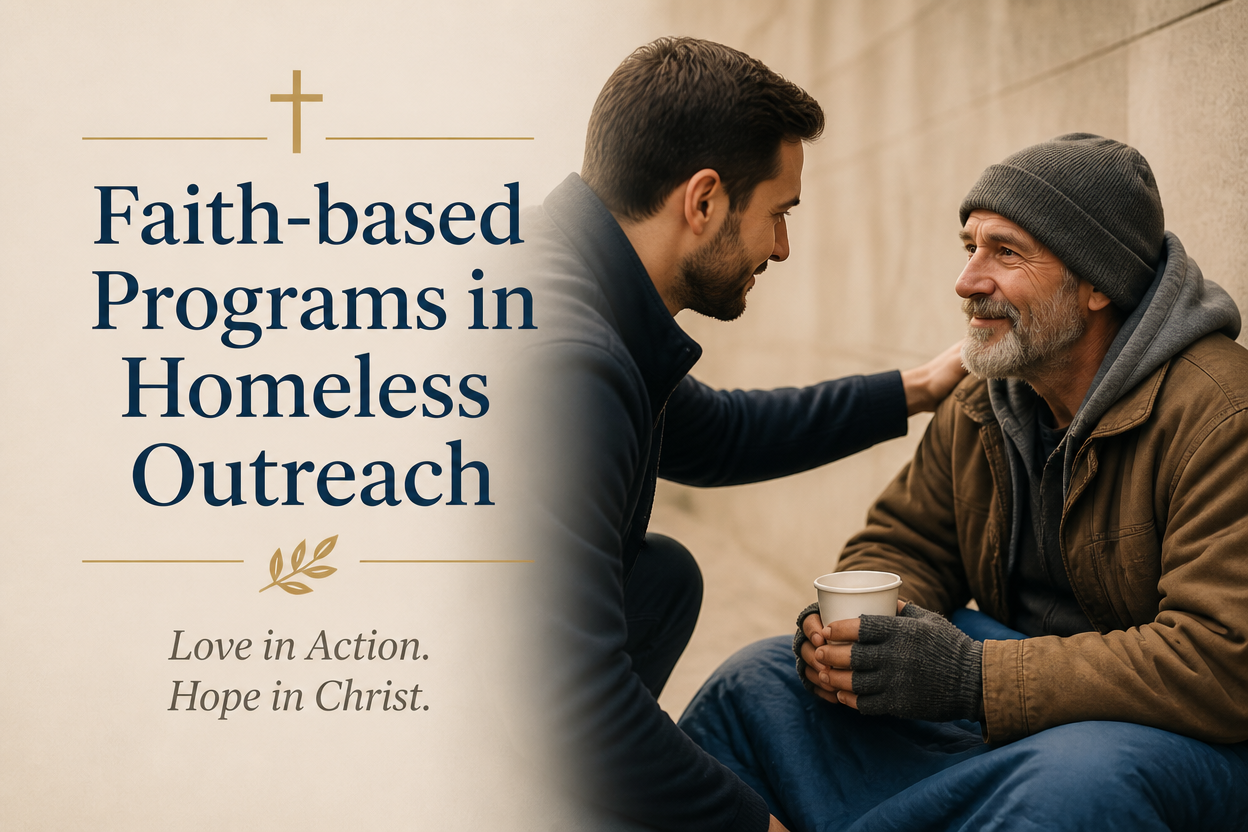
Faith-Based Programs in Homeless Outreach sit at a crossroads of mercy and moral formation. Donors often feel the tension: the command to feed the hungry is unmistakable, yet the realities of addiction, trauma, and chronic instability do not yield to goodwill alone.
Christian donors also face a practical question. When a ministry names Christ openly and serves people experiencing homelessness, how do we assess whether the program is spiritually faithful, operationally responsible, and genuinely effective for neighbors made in God’s image? That question is not cynical; it is stewardship.
Why faith-based outreach is not merely social services with a religious label
Many communities have strong secular providers offering shelter, meals, and case management. Faith-based programs are not valuable because they duplicate what already exists, but because they bring a particular theological anthropology to the work: every person bears God’s image (Genesis 1:27), sin and suffering are both real, and durable change often requires more than material inputs. The Christian tradition has long insisted that mercy and truth belong together, and that love is not reduced to sentiment.
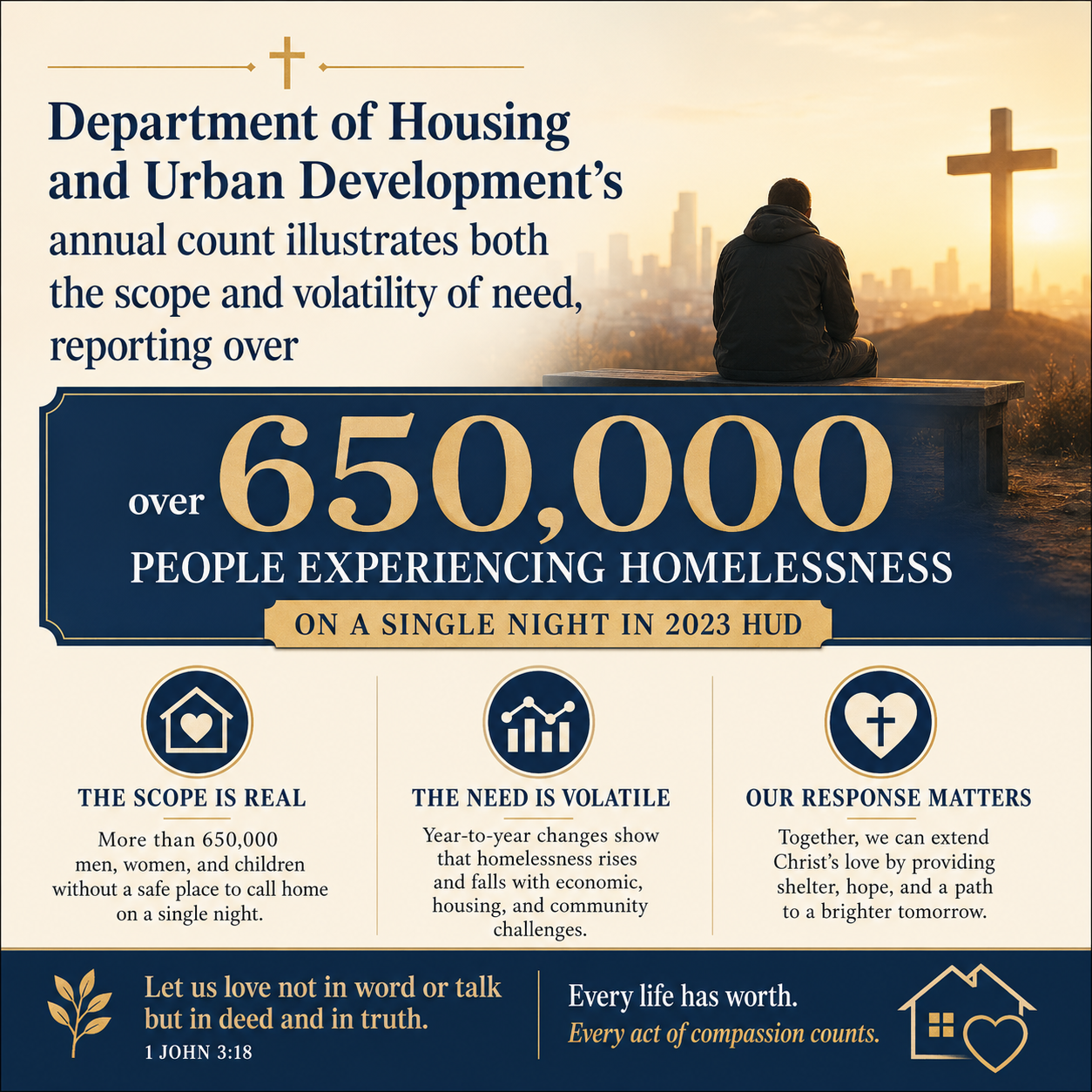
That distinction matters because homelessness is rarely one problem. It can involve job loss, family breakdown, untreated mental illness, substance use disorder, criminal-legal involvement, and disability, sometimes layered over years. The U.S. Department of Housing and Urban Development’s annual count illustrates both the scope and volatility of need, reporting over 650,000 people experiencing homelessness on a single night in 2023 HUD. Those totals do not tell us which interventions are best, but they do clarify that the problem is not marginal.
Gospel proclamation and neighbor-love are rightly connected
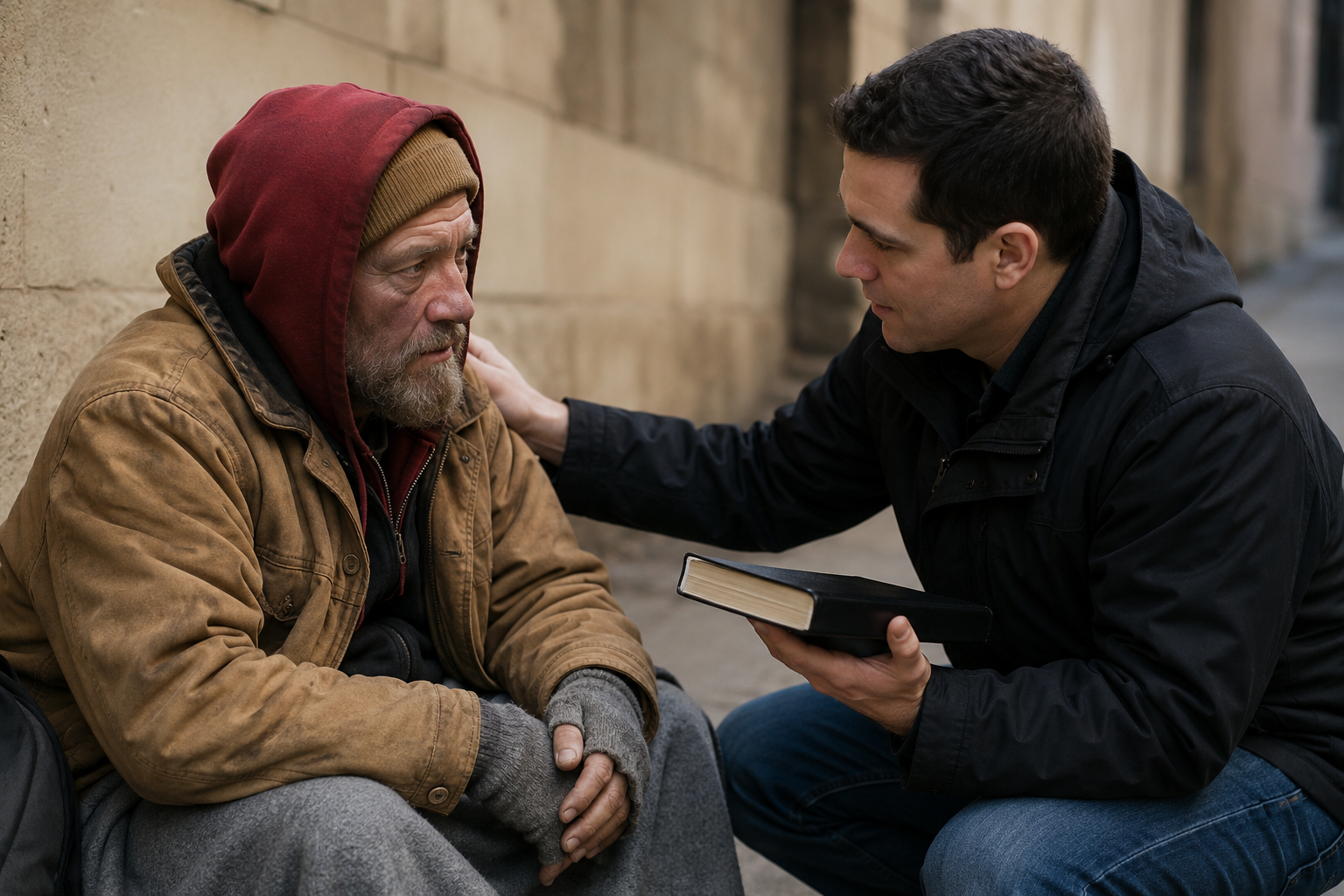
Christians genuinely disagree about how explicit evangelism should be in a service setting. Some emphasize proclamation; others prioritize presence and patient relationship. A serious faith-based program refuses false choices: it does not weaponize food as a bargaining chip, and it does not treat spiritual care as an embarrassment to be hidden. When prayer, Scripture, worship, and pastoral counsel are offered with dignity and clear consent, many guests experience them not as coercion but as a form of being seen.
Holistic care must be more than a slogan
Holistic care is sometimes invoked to cover thin programming. The better ministries operationalize it: health screening, benefits navigation, addiction recovery pathways, trauma-informed care practices, employment coaching, and reconnection with family where wise and safe. Holistic Christian care is not the claim that spirituality replaces treatment; it is the insistence that persons are spiritual and embodied, relational and moral, and that restoration touches all of life.
Local context shapes what faithfulness looks like
Urban, suburban, and rural outreach differ materially. A downtown mission may operate emergency shelter at scale; a rural ministry may rely on a network of host homes, churches, and transportation support. Donors should be cautious about importing expectations from one context to another. The question is not whether a ministry looks like a large city mission, but whether it is appropriately structured for its community and honest about its limitations.
What programs typically include and why expectations like sobriety and curfew exist
Faith-based homeless outreach tends to fall into two broad categories: low-barrier services that prioritize immediate survival and access, and structured programs that prioritize stability through clear expectations. Both can be faithful. Both can also be misused.
Emergency services often include meals, hygiene, clothing, short-term shelter, and crisis referrals. These are works of mercy that correspond closely to Jesus’ own teaching about welcoming the stranger and feeding the hungry (Matthew 25:35–36). Structured residential programs often include addiction recovery components, mandatory meetings, chore rotations, chapel, counseling, job readiness, and savings plans. Donors should not assume one is compassionate and the other is harsh. Properly administered structure can be a form of care.
Sobriety policies are usually about safety and program integrity
Sobriety requirements are contested. Low-barrier shelters argue that strict sobriety screening can exclude the very people most at risk of dying. Structured programs argue that communal living with active intoxication can endanger other residents and staff, and can undermine recovery progress for those seeking sobriety. The wise question for donors is not, “Does this ministry require sobriety?” but, “What pathway exists for a person who cannot meet that requirement today?” A ministry can uphold sobriety in a residential recovery track while maintaining partnerships or referral routes for detox, medical stabilization, or lower-barrier shelter.
Curfews and rules can protect the vulnerable when applied with justice
Curfews, chore schedules, and behavioral expectations are easy to caricature. Yet in congregate settings, predictability reduces conflict and improves sleep, safety, and staff capacity. Rules become a moral problem when they are arbitrary, humiliating, or enforced inconsistently. A credible program explains the rationale for expectations, applies them without favoritism, and uses graduated responses rather than immediate expulsion for every infraction.
Services are not outcomes and good intentions do not equal effectiveness
Many donors are familiar with “meals served” and “beds provided” as success indicators. Those are activity measures; they matter, but they do not answer the harder question of long-term stability. Donors should look for ministries that track exits to housing, employment retention, reunification with family where appropriate, sustained sobriety for those in recovery tracks, and connections to clinical care. Where those outcomes are difficult to measure, ministries should be candid about what they can and cannot substantiate.
The hardest questions donors should ask about mental health, addiction, and dignity
Homeless outreach forces Christian donors into complexity. Addiction is neither merely a disease nor merely a moral failure; it has physiological, psychological, social, and spiritual dimensions. Mental illness is real, and its intersection with trauma and substance use often complicates straightforward program design. A ministry can be deeply Christ-centered and still need competent clinical partnerships.
National public health agencies treat homelessness and substance use as intertwined public concerns, and they emphasize evidence-informed interventions and cross-system coordination CDC. That public framing does not settle theological questions, but it can sharpen our operational thinking: a mission that treats addiction solely as a willpower problem is likely to churn residents. Conversely, a program that removes moral agency entirely can inadvertently communicate that change is impossible.
Trauma-informed care is compatible with robust Christian moral formation
Trauma-informed approaches are sometimes misunderstood as permissiveness. Properly practiced, they acknowledge that past harm shapes present behavior and that safety and predictability are prerequisites for learning. Christian moral formation still matters: the call to repentance and new life is not suspended. But ministry that ignores trauma often confuses survival adaptations with defiance and responds with escalating discipline rather than wise care.
Spiritual care should be offered without manipulation
Donors often worry about whether faith-based programs “require chapel” or “make guests pray.” We recommend distinguishing between participation expectations for voluntary discipleship tracks and access to emergency aid. It is one thing for a resident who freely chooses a Christian recovery program to agree to communal worship; it is another to make a hungry person’s meal contingent on a religious performance. The difference is not mere optics. It reflects whether a ministry understands grace as gift rather than transaction.
Dignity includes transparency, not only kindness
Dignity is not only warm interactions at the front desk. It is also accurate representation: not using dehumanizing images, not overstating “rescue” claims, and not presenting complex lives as simple before-and-after narratives for fundraising. Mature ministries can tell the truth about hardship without exploiting it. Donors can reinforce this by favoring organizations that describe their work soberly and publish clear results and audited financials.
How donors can evaluate faith-based outreach with confidence
Christians give not only out of compassion but out of stewardship before God. The question is not whether a ministry’s heart is in the right place, but whether its claims are verifiable and its practices are worthy of trust. This is where Most Trusted serves the Church: we verify Christian nonprofits against The Most Trusted Standard, a 15-criteria framework across Faith Foundation, Financial Integrity, Governance and Leadership, and Transparency and Effectiveness.
Across our verification work, we observe patterns that tend to separate durable ministries from those that produce recurring crises. Faithful outreach organizations can articulate a theology of mercy that does not collapse into vague humanitarianism, and they can show how that theology governs policies, staffing, partnerships, and communications. They also treat financial and governance rigor as part of discipleship, not as a distraction from ministry.
What to look for in a ministry’s faith foundation
A credible program is clear about its doctrinal commitments and honest about what participation entails. It can explain how it serves people of other faiths or none without compromise or hostility. It trains staff and volunteers to speak about Christ with humility, and it has safeguards against spiritual manipulation. Donors should not equate “more religious language” with stronger discipleship; clarity, consent, and pastoral maturity are better indicators.
What to look for in financial integrity and governance
Homeless outreach can involve high-risk cash flow, emergency spending, and facilities costs. Strong ministries publish recent financial statements, maintain appropriate board oversight, and handle restricted gifts with care. They avoid theatrical fundraising tactics that pressure churches with exaggerated urgency. In staffing, they invest in training and supervision, recognizing that burnout and turnover are not only operational issues but pastoral ones.
What transparency and effectiveness sound like in practice
Some outcomes are easier to count than to interpret. A mission may provide thousands of nights of shelter yet see limited long-term housing exits if a community has severe housing shortages. The better ministries name those constraints plainly and show their strategy: partnerships with housing providers, coordinated entry participation where available, or bridge programs that prepare residents for permanent housing. They also show what they do when a participant relapses or leaves early, because churn is part of the reality and the ministry’s response reveals its doctrine of grace.
For donors who want broader context on how rescue missions fit within the larger landscape of emergency aid, residential programming, and long-term stabilization, we encourage engagement with Rescue Missions and Homeless Outreach as a reference point for common models and donor questions.
Stewardship that honors both mercy and truth
Faith-Based Programs in Homeless Outreach are often at their best when they refuse simplistic stories. They can offer immediate relief without romanticizing the street, and they can require structure without confusing discipline with redemption. Donors can strengthen this work by funding ministries that pair theological clarity with operational maturity, and by insisting that compassion be matched with verifiable integrity. Under that standard, generosity becomes not only heartfelt, but trustworthy.



