

How churches can use discipleship ministry training resources is ultimately a stewardship question: whether the church is forming people into the likeness of Christ, or merely maintaining religious activity. Donors tend to fund what can be seen and counted, but Scripture places unusual weight on what is formed quietly over time—faithfulness, obedience, and love that endures (Matthew 28:18–20; Galatians 5:22–23).
Training resources can strengthen a church’s discipleship ministry, but they can also become a substitute for it. A curriculum can be excellent and still fail if a church lacks qualified leaders, wise governance, and the patience to let formation take root. The harder question is whether resources are being used to deepen repentance, worship, and mission—or to standardize a program the church can manage.
Begin with the church’s theological aim, not the resource catalog
Discipleship is not primarily an information problem. It is the Spirit’s work of conforming believers to Christ through Word, sacrament, prayer, and the lived obedience of the body (Romans 12:1–2; 2 Corinthians 3:18). When churches select training resources without first clarifying the theological and pastoral aim, the result is often activity without formation.
Define the end before selecting the means
Churches that use training resources well tend to start with a clear definition of maturity: not merely biblical literacy, but durable practices of faith and love expressed in home, work, and public witness. That definition should be explicit enough that leaders can recognize progress and address drift. Resources then become servants of that end, not the end itself.
Name the formation pressures your congregation actually faces
Many congregations are discipled more consistently by digital habits, political identity, and consumer assumptions than by the church’s shared life. Pew Research Center has documented religious switching and disaffiliation trends that intensify the formation challenge for churches seeking to build resilient faith across generations Pew Research Center. Training resources should be chosen with those pressures in mind: not to chase relevance, but to cultivate theological depth, relational fidelity, and moral clarity under strain.

Use training resources to form leaders, not just to staff programs
Most churches do not suffer from a shortage of tasks; they suffer from a shortage of prepared leaders. Discipleship ministry training resources are most effective when they are built into a leadership formation pathway rather than treated as a binder handed to volunteers the week before they teach.
Train for spiritual oversight and practical competence
Scripture’s qualifications for leadership are character-heavy because leadership inevitably reproduces itself (1 Timothy 3:1–13; Titus 1:5–9). Training should therefore cover both doctrine and practice: handling Scripture responsibly, facilitating discussion with humility, recognizing pastoral care needs, and knowing when to refer someone to ordained leadership or professional help.
Create a cadence of coaching, not a one-time onboarding
Churches often adopt excellent materials and then lose momentum because leaders are isolated. A sustainable pattern includes regular debriefs, shared troubleshooting, and periodic observation. This is not corporate performance management; it is mutual care and accountability in the service of souls. Churches that do this well usually designate a discipleship lead who is responsible for leader development, not merely scheduling.
Match resources to the church’s actual capacity and culture
Resource quality matters, but fit matters as much. A church can purchase a sophisticated training suite and still harm the work if leaders are stretched thin or if the church’s culture resists the kinds of relationships discipleship requires. Discipleship is inevitably embodied and local, even when the content is excellent.
Start with what you can supervise well
Supervision is a spiritual responsibility. If a church cannot meaningfully oversee a multiplying network of groups, it may be wiser to begin with fewer groups and stronger leaders. Many failures in discipleship initiatives are not theological; they are governance failures at the ministry level—unclear authority, unmanaged risk, and inadequate reporting. Donors understand this intuitively in nonprofit settings, and churches benefit from the same clarity.
Choose resources that reinforce the church’s doctrine and worship
Training resources should harmonize with the church’s confession, preaching, and sacramental life. When materials implicitly teach a different theology of sanctification, authority, or suffering than the church proclaims on Sunday, confusion follows. In our review work at Most Trusted, we repeatedly see that organizations with clear doctrinal commitments and consistent teaching are more resilient over time, especially when leadership transitions occur.
For churches wanting a broader frame for how discipleship ministries connect to leadership health, see How Discipleship Ministries Support Church Leadership.
Measure what discipleship produces without reducing it to metrics
Wise donors want evidence, but spiritual formation cannot be audited the way financial statements can. The church must resist two opposite errors: measuring nothing (which can conceal harm) and measuring only what is easy (which can distort priorities). Evidence should serve pastoral discernment and accountability, not replace them.
Use leading indicators that are theologically meaningful
Training resources should produce clearer doctrine, deeper prayer, stronger mutual care, and increased readiness to serve. Some of these can be tracked with simple tools: leader retention, completion rates for training, participation in pastoral care pathways, and engagement in congregational worship. These are imperfect indicators, but they can reveal whether the church is building sustainable practices or cycling through short-lived initiatives.
Keep qualitative testimony disciplined and credible
Testimonies matter, but they should be handled with integrity. Churches can collect stories in a structured way—what changed, over what period, and with what pastoral safeguards—without pressuring participants to perform spiritual progress. When helping work has reshaped many Christian approaches to ministry evaluation, particularly the insistence that good intentions are not enough and that interventions can cause harm; the framework is articulated by Steve Corbett and Brian Fikkert in When Helping Hurts Moody Publishers.
- Define 3 to 5 discipleship outcomes your elders or leadership team will own.
- Track leader readiness through observation and periodic assessment, not assumptions.
- Document pastoral escalation pathways for crisis situations and doctrinal confusion.
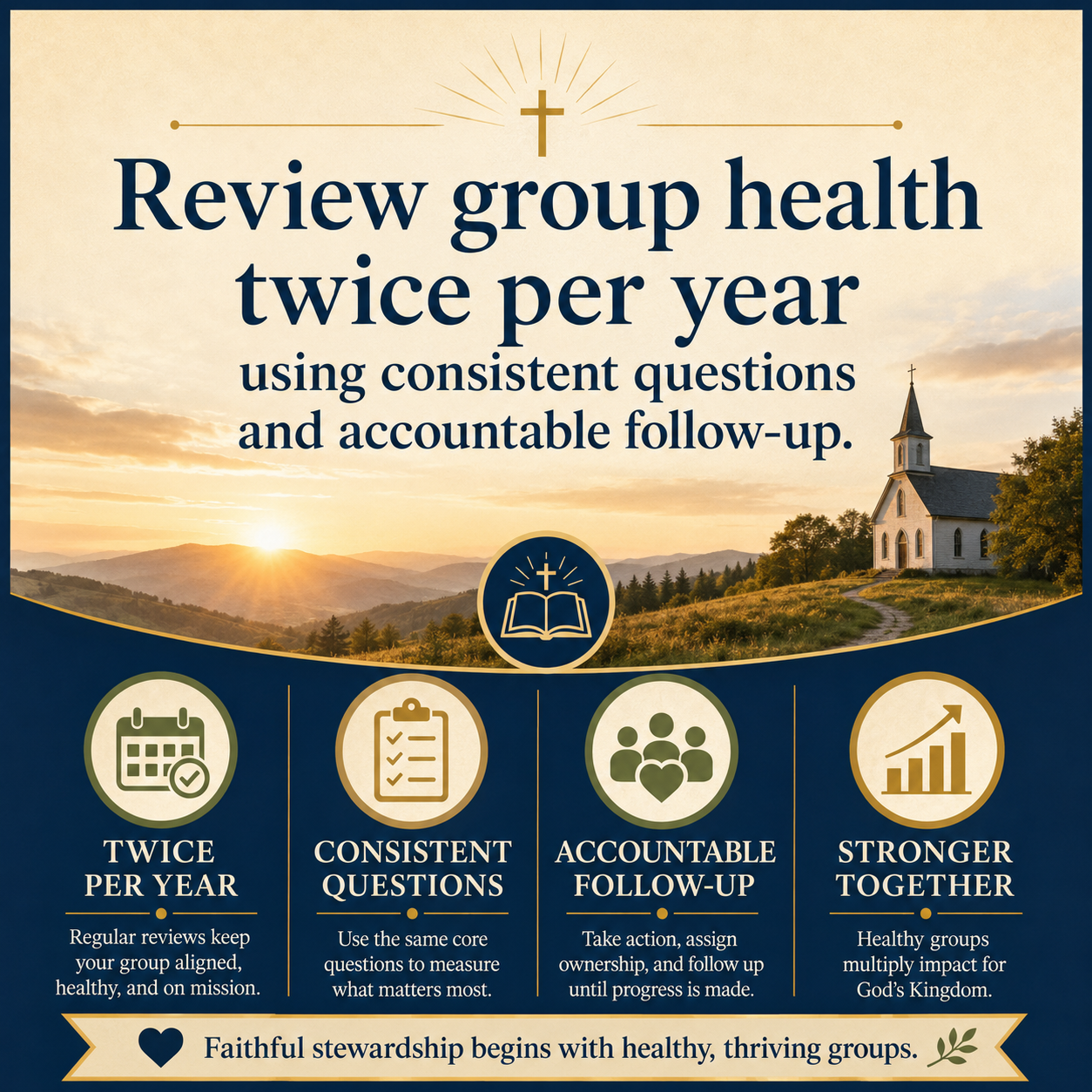
- Review group health twice per year using consistent questions and accountable follow-up.
- Collect testimonies with consent, specificity, and a clear refusal to manipulate emotion.
For donors, fund discipleship with the same seriousness used for governance and integrity
Donors often support discipleship initiatives because they are rightly concerned about the church’s endurance and witness. That concern should be matched by diligence. Funding can unintentionally encourage growth without oversight, charisma without accountability, or expansion without theological clarity. The church is not a nonprofit, but donors still have moral responsibility for what their giving enables.
Ask whether the training ecosystem is accountable
Accountability begins with leadership clarity: who approves resources, who trains leaders, who responds to concerns, and who can stop a program that is bearing harmful fruit. The best discipleship systems are not merely scalable; they are governable. They can articulate doctrinal guardrails, screening practices for leaders, and reporting mechanisms that protect the vulnerable.
Apply The Most Trusted Standard as a donor’s due diligence lens
When donors fund external discipleship ministries, publishing houses, or training organizations, basic verification practices become essential. Most Trusted evaluates ministries against The Most Trusted Standard, a 15-criteria framework across Faith Foundation, Financial Integrity, Governance and Leadership, and Transparency and Effectiveness. Donors do not need perfection, but they should expect credible governance, clear theological commitments, and honest reporting about what a program can and cannot accomplish.
For a wider view of discipleship training in context, see Discipleship Ministries.
FAQs for How churches can use discipleship ministry training resources
Should a church prioritize curriculum quality or leader quality?
Leader quality should come first. Strong curriculum in the hands of an unprepared leader often yields either legalism, confusion, or shallow discussion. A modest resource guided by a mature leader who can handle Scripture carefully, care for people, and maintain accountability is usually more fruitful over time.
What should donors look for before funding a discipleship training initiative?
Donors should look for clarity on theology, oversight, and outcomes. Who approves resources, and what doctrinal guardrails exist? How are leaders screened and trained, and what pastoral escalation pathways protect participants? What evidence is collected, and is it reported with integrity rather than marketing pressure? These questions align with the same concerns Most Trusted examines through The Most Trusted Standard.
Training resources serve the church when they deepen faithful formation
Discipleship ministry training resources are valuable when they help a church do what it is called to do: teach obedience to Christ, nurture holy love, and sustain faithful witness across time. The resources themselves are not the maturity. They are tools that either strengthen the church’s ministry of the Word among its people or distract from it. Donors best serve the church when they fund formation that is theologically grounded, carefully governed, and patient enough to let enduring fruit emerge.



