

Why discipleship stories matter to donors is not a sentimental question. It is a stewardship question: how Christians discern whether a ministry’s work is forming faithful disciples, not merely producing activity. In Scripture, fruit is not a metaphor for publicity; it is a test of spiritual reality (John 15:8). Donors who want to give with clear conscience need more than inspirational anecdotes, but they also need more than spreadsheets.
Discipleship is inherently personal, often slow, and frequently hidden. The field has had to reckon with a tension: what is hardest to measure is often what matters most. The task for mature Christian giving is not to choose between story and evidence, but to require that stories are tethered to verifiable reality, and that metrics are interpreted in light of faithful, biblical aims.
Discipleship stories translate spiritual formation into accountable stewardship
Donors are not funding content, they are funding formation
The New Testament does not define discipleship as information transfer. Jesus commands his church to “make disciples… teaching them to observe all that I have commanded you” (Matthew 28:19–20). The aim is a life apprenticed to Christ—beliefs embodied, habits reshaped, sin confessed, reconciliation pursued, generosity learned, and endurance formed through trials.
Most donors understand this, even when they cannot articulate it. They are not primarily looking for a ministry that can generate outputs. They are looking for ministries that can, by God’s grace, form men and women who increasingly resemble Christ. Discipleship stories matter because they describe the kind of change the donor is actually praying for.
Stories also expose whether the ministry’s theory of discipleship is coherent
Discipleship stories are not only about outcomes; they reveal a ministry’s underlying convictions. A story that features repentance, restitution, and reintegration into the local church implies a fundamentally different theology than a story that centers on platform growth or self-actualization language. Donors should listen for doctrinal clarity and pastoral seriousness, because “the heart is deceitful above all things” (Jeremiah 17:9) and religious activity can masquerade as spiritual health.
What this means in practice is that a well-told story functions like a window into a ministry’s formation pathway: Who is discipling whom? Under what authority? With what safeguards? Toward what vision of maturity?

Stories without verification can mislead, and donors know it
The faith sector has learned that testimony can be weaponized
Christians genuinely disagree about how much weight donors should place on narrative. Some fear stories become marketing. Others fear metrics become secularized control. Both concerns have merit. The philanthropic world has also learned, across sectors, that compelling stories can be selectively curated, exaggerated, or detached from typical results.
Discipleship ministries are not immune. A single dramatic conversion testimony can conceal a pattern of spiritual abuse. A public baptism count can hide a weak local-church connection. A “leader pipeline” can be built on unhealthy charisma. Donors who have seen moral failure or financial scandal in Christian organizations have learned to ask harder questions, not because they are cynical, but because they are stewards.
Verification does not replace trust, it disciplines trust
This is where independent review matters. At Most Trusted, we evaluate ministries against The Most Trusted Standard, a 15-criteria framework across four areas: Faith Foundation, Financial Integrity, Governance and Leadership, and Transparency and Effectiveness. The purpose is not suspicion for its own sake. The purpose is to help donors give with confidence, and to help ministries build credibility that can bear the weight of long-term partnership.
A discipleship story that is supported by clear governance, sound financial practices, and credible reporting is qualitatively different from a story that is untethered to any accountable structure. In the first case, narrative becomes evidence with context. In the second, narrative remains a claim.
What credible discipleship stories have in common
They are specific about the pathway, not vague about the outcome
Donors do not need a story that says, “Lives were changed,” as though change were self-evident. Credible discipleship stories describe the means of grace and the real disciplines of formation: Scripture engagement, prayer, confession, mentoring, participation in the local church, and concrete obedience. They also name the cost. The New Testament assumes discipleship includes suffering and perseverance, not only “success” (2 Timothy 3:12).
Across our verification work, we observe that stronger ministries can articulate their discipleship pathway in plain language and then show how a participant actually moved through it over time. They know the difference between attendance and transformation, and they resist the temptation to equate publicity with fruit.
They honor dignity and avoid spiritual exploitation
Christian ministry testimony has a long tradition, from Acts onward. Yet testimony can become exploitative when it treats a person’s pain as content. Donors should notice whether a ministry protects participants’ privacy, gains informed consent, and avoids sensationalizing trauma. Mature discipleship storytelling is marked by restraint and reverence.
Practical markers donors can look for include:
- Clear consent practices and anonymity when appropriate
- Language that preserves the person’s agency and dignity
- Avoidance of exaggerated “before and after” caricatures
- Connection to ongoing community, not isolated hero narratives
- Evidence of pastoral care and appropriate referral when needs exceed the ministry’s scope
How donors can connect stories to evidence without reducing discipleship to numbers
Ask for indicators that fit the theology of discipleship
Discipleship is not identical to program completion, and donors are right to resist simplistic scorecards. Still, donors can ask for indicators that are appropriate to the ministry’s aims. A church-based mentoring program may track consistency of mentor-mentee meetings, retention over a year, and integration into congregational life. A prison discipleship initiative may track participation in Bible study, reentry support connections, and post-release church involvement, with appropriate safeguards for privacy and safety.
The research is mixed on which indicators best predict long-term spiritual maturity, and ministries should not pretend otherwise. What donors can reasonably expect is clarity: what the ministry believes spiritual growth looks like, what it does to pursue that end, and what observable signs it watches for as participants remain in community over time.
Use story as qualitative evidence and demand faithful reporting
In rigorous evaluation, stories are often treated as qualitative data: rich, contextual accounts that help interpret patterns and identify what is actually happening on the ground. Donors can request that ministries pair stories with transparent reporting practices—what proportion of participants complete a pathway, what follow-up looks like, and what the ministry has learned when results were weaker than hoped.
For donors wanting a fuller view of how discipleship ministries report outcomes responsibly, How Discipleship Ministries Measure Impact frames common practices, strengths, and failure points. The goal is not to turn the church into a laboratory, but to insist that faithfulness does not fear truthful description.
Why this matters now for Christian donors seeking trustworthy ministries
Donors are increasingly attentive to credibility and transparency
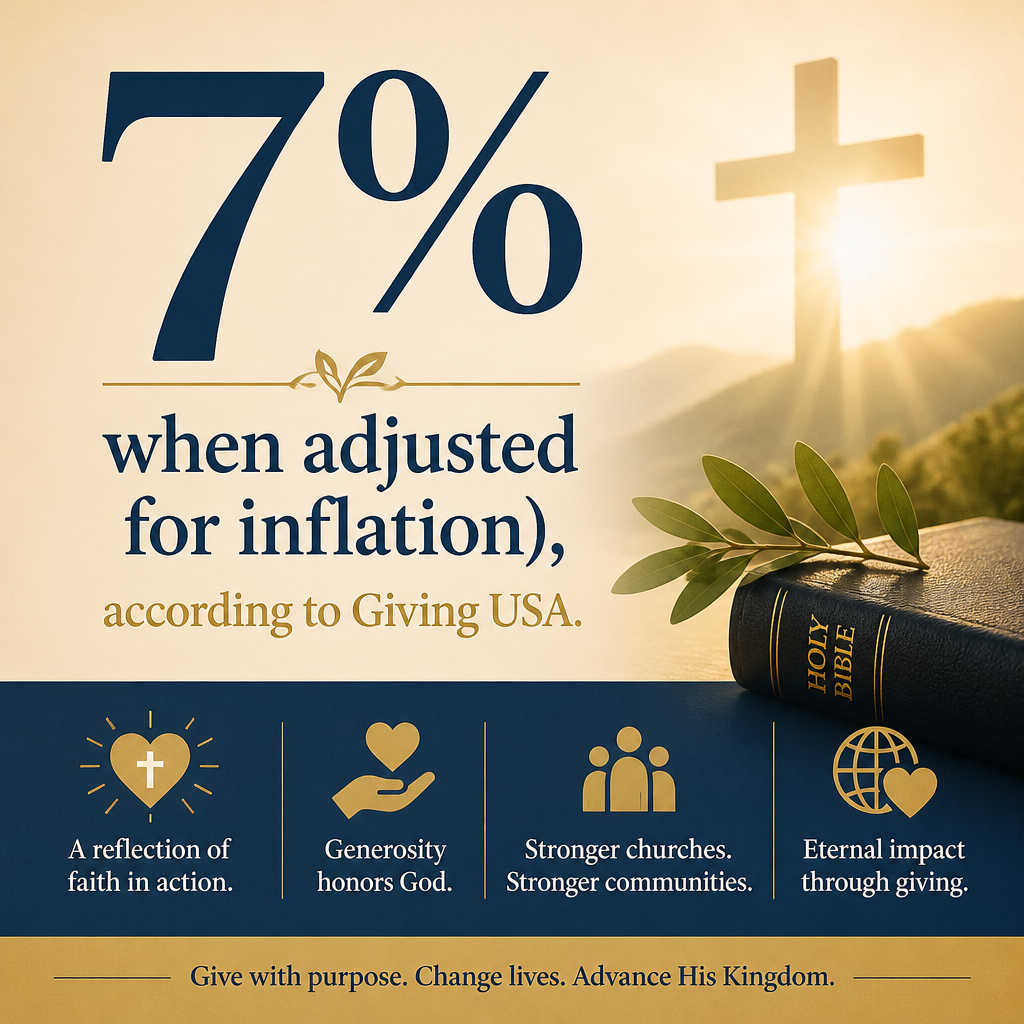
American generosity remains significant, but donors are more cautious than in prior decades. In 2023, total charitable giving in the United States declined by 2.1% in current dollars (and 5.7% when adjusted for inflation), according to Giving USA. That environment tends to reward organizations that can sustain trust through clarity, transparency, and consistent communication—especially when the work is complex and the results are not immediate.
Within Christian giving, this caution is not merely economic. It is often moral. Many donors have seen ministry collapse that was preceded by secrecy, weak boards, and a culture that confused giftedness with godliness. When donors ask for verified integrity, they are not importing a secular standard into the church; they are responding to a biblical concern for leaders who are “above reproach” (1 Timothy 3:2).
Stories become persuasive when they sit inside accountable structures
The ministries that meet The Most Trusted Standard tend to treat discipleship stories as part of a larger integrity ecosystem: clear doctrinal commitments, appropriate governance, honest financial practices, and transparent communication about results. This combination honors both what donors need and what discipleship demands. It also respects the church’s calling to “take thought for what is honorable in the sight of all” (Romans 12:17).
Donors who want to support reliable discipleship work benefit from evaluating both the story and the structures around it. A compelling testimony may be true and still be unrepresentative. A disciplined reporting culture may be technically competent and still be spiritually thin. Mature discernment holds both together.
FAQs for Why discipleship stories matter to donors
Should donors prioritize discipleship stories or measurable outcomes?
Donors should require both, without collapsing discipleship into simplistic metrics. Stories provide theological and pastoral texture: what kind of formation is actually occurring, in what community, and toward what vision of maturity. Measurable outcomes provide accountability: whether the ministry can describe its work truthfully, track participation over time, and learn from what is and is not bearing fruit. The question is not story versus evidence; it is whether story is supported by credible reporting and sound governance.
What should a donor ask for when a discipleship story feels compelling?
Donors can ask for the discipleship pathway behind the story, the follow-up over time, and the safeguards that protect participants from exploitation or pressure. It is also reasonable to ask about board oversight, financial integrity, and transparency practices, since a ministry’s credibility is not established by narrative alone. For donors assessing the broader landscape of discipleship work, Discipleship Ministries provides context for how different models approach formation and accountability.
Conclusion
Discipleship stories matter to donors because donors are not only funding programs; they are participating in the church’s responsibility to form disciples who obey Christ. The stories worth trusting are neither polished testimonials nor raw data points. They are truthful accounts of formation that sit inside accountable structures—doctrinally clear, financially honest, well-governed, and transparent about what can and cannot be claimed. That combination supports generous giving that is both warm-hearted and rightly cautious.



