

Why respite care matters in disability ministry becomes clear the moment a church stops treating family caregiving as a private burden and starts naming it as a shared, covenantal responsibility. When a parent or spouse is carrying round-the-clock disability-related care, the limiting factor is often not love or willingness, but exhaustion, isolation, and the slow erosion of spiritual and relational health.
For Christian donors, respite can feel less dramatic than a new program or a visible facility upgrade. Yet it is often the difference between a family staying connected to worship and quietly disappearing. Respite is not a luxury added onto “real ministry.” It is one of the practical ways the church bears one another’s burdens, and so fulfills the law of Christ (Galatians 6:2).
Respite care is mercy that sustains, not charity that replaces
Caregivers are not a special-interest subgroup
Disability ministry often centers the person with a disability, as it should. The church is called to honor those the world overlooks and to welcome those who may require more deliberate inclusion (Luke 14:13–23). But disability affects households, not only individuals. Many families live with complex, chronic needs that reshape sleep, work, finances, transportation, friendships, and the simple ability to sit through a sermon without being on alert.
Respite care recognizes that caregivers are also neighbors. Their discipleship, marriage, parenting of other children, and capacity for prayer are not incidental. When ministry leaders treat caregiver fatigue as a spiritual failure rather than a predictable human limit, families learn to hide their need. A mature disability ministry normalizes the need for rest as part of faithful endurance.
Rest is a theological claim about God and about us
The Sabbath is not merely a productivity strategy. It is a declaration that God is God and we are not. For families whose days are governed by medications, safety concerns, behavioral supports, seizures, mobility assistance, or unpredictable medical appointments, “rest” can become an abstraction. Respite is one concrete way a church can translate a biblical vision of rest into the lived reality of people who cannot simply step away.
Jesus’ compassion routinely included bodily limits. He invited the weary to come to him for rest (Matthew 11:28–30). He also withdrew to desolate places to pray (Luke 5:16). When the church builds respite into its ordinary life, it is not indulging weakness; it is acknowledging creatureliness and making space for spiritual resilience.

Without respite, families quietly detach from church life
Attendance is not the only indicator of belonging
Many churches interpret a family’s absence as a scheduling issue or a preference. Families living with disability-related caregiving often experience a different reality: they may be absent because coming has become logistically complex, emotionally risky, or physically impossible without support. When every Sunday involves negotiating sensory overload, inaccessible spaces, or the fear of judgment if a child melts down, the cost of showing up can become unsustainable.
Respite functions as retention not in a transactional sense, but in a pastoral sense. It is a way of saying, “Your presence is not conditional on your ability to manage alone.” This includes supporting caregivers who cannot be in the room to “enjoy church” because they are constantly on duty. A respite-trained volunteer team can make worship possible for the whole household, not only on special occasions.
The field has had to reckon with the scale of unpaid care
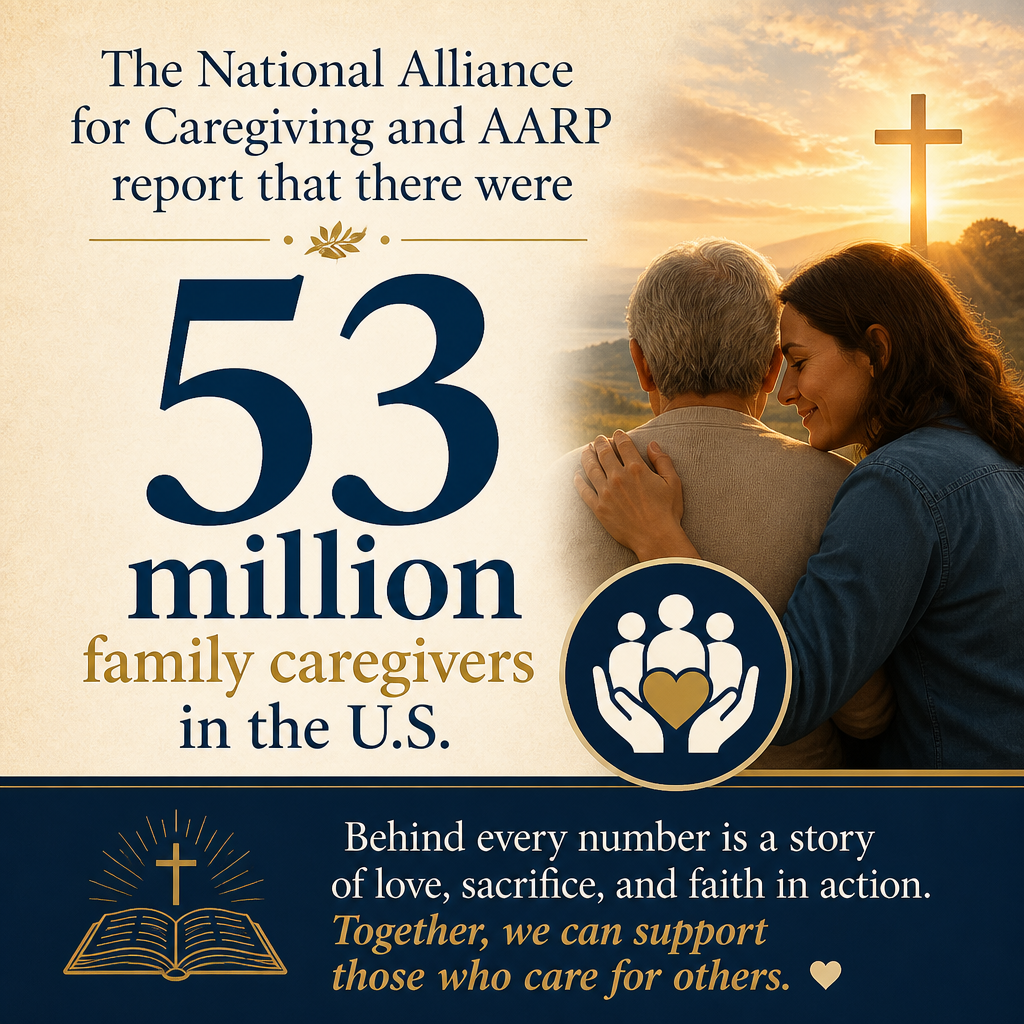
Caregiving in the United States is widespread, and much of it is uncompensated. The National Alliance for Caregiving and AARP report that there were 53 million family caregivers in the U.S. in 2020, representing a substantial portion of adult life and labor that remains largely invisible in public systems of support National Alliance for Caregiving.
Christian donors should read that scale as a ministry reality. Even in churches with strong benevolence funds and strong teaching, caregivers can remain underserved because their need is not a single crisis but an ongoing condition. Respite does not solve disability, and it does not remove grief. It does, however, interrupt the isolation that makes faithful perseverance harder than it needs to be.
Healthy respite requires more than goodwill
Safety, dignity, and competence must be designed
Some donors hesitate to fund respite because the risks are real. Serving vulnerable people requires careful screening, training, policies, and supervision. A church cannot improvise disability support the way it might improvise a fellowship meal. Families are entrusting what is most precious to them, sometimes with a history of medical trauma or institutional harm. That trust should be treated as weighty.
What this means in practice is that responsible respite includes: appropriate ratios, clear boundaries, background checks, emergency plans, secure check-in and check-out, and volunteers trained for the specific needs they are serving. When these elements are absent, respite becomes fragile and families will not use it, even if it exists on paper.
Respite should not isolate the person with a disability from the church
Respite can drift into “childcare in a separate room,” which can unintentionally reinforce segregation. The goal is not to remove disruption for the sake of comfort. The goal is to make participation possible and sustainable for everyone. Some respite is best offered during worship; some is best offered on other days so caregivers can attend marriage counseling, take a walk, or simply sleep.
Christians genuinely disagree about how much integration is feasible in every setting, especially when needs are significant. The stronger ministries tend to resist slogans in either direction and instead build individualized plans with families, emphasizing dignity, consent, and the spiritual good of the whole congregation.
What discerning donors should fund and what to ask
Respite funding is often unglamorous and therefore strategic
Respite ministries frequently need small, recurring support more than one-time gifts. Training materials, volunteer coordination, sensory tools, adaptive supplies, insurance, and staff time for scheduling and follow-up are not dramatic line items, but they are the infrastructure that makes care reliable. Donors who value faithful presence over visible expansion often find respite to be a high-impact category precisely because it is easy to neglect.
In our work at Most Trusted, we see a consistent pattern: ministries that meet The Most Trusted Standard treat vulnerable-serving programs as governance questions, not merely program questions. They can explain who oversees the ministry, how policies are enforced, how incidents are documented, and how families are heard when something goes wrong. That level of seriousness is part of Christian love in institutional form.
Questions that clarify whether a respite ministry is trustworthy
Donors do not need to micromanage, but we do need to ask questions that surface whether a ministry is safe, humble, and sustainable. A short set of questions often reveals whether respite is built on durable practice or on heroic volunteering.
- How are volunteers screened and trained for specific needs, and who supervises them in real time?
- What are the check-in, check-out, and emergency protocols, and how often are they reviewed?
- How does the church incorporate parents and caregivers in planning, feedback, and incident review?
- Is respite offered in ways that support participation in worship and community, not only relief for caregivers?
- What is the plan for continuity when key volunteers or staff rotate out?
Donors who want to understand the broader landscape of verified work in this field can engage our reporting on Disability Ministries, where we evaluate ministries with attention to faith commitments, financial integrity, governance, and demonstrated effectiveness.
Respite care strengthens the church’s witness to mutual belonging
The church is tested by whose needs shape its schedule
Every congregation communicates, often unintentionally, which lives it is structured to accommodate. If the church calendar assumes uninterrupted sleep, flexible transportation, spare time, and predictable behavior, it will implicitly exclude many households living with disability. Respite care is one way the church reorders itself around the “weaker” members whom Scripture says are indispensable (1 Corinthians 12:22).
This is not sentimental. It requires repentance from a consumer model of church life and a recovery of the church as a body with real obligations to one another. When respite is done well, it does not merely prevent burnout; it signals that the congregation’s life together is credible.
Donor support should follow the contours of faithfulness, not preference
Some giving decisions are easier when impact can be photographed. Respite often cannot be. Its fruit is measured in continued attendance, sustained marriages, fewer crises, and a caregiver who can pray without falling asleep from exhaustion. The harder question is whether donors will fund this kind of quiet endurance as readily as they fund expansion.
Respite also highlights why independent verification matters. In a space involving vulnerable people, good intentions are not enough. Donors should ask not only whether a ministry is compassionate, but whether it is accountable. Our evaluations at Most Trusted are designed for this kind of stewardship, applying The Most Trusted Standard across faith foundation, financial integrity, governance and leadership, and transparency and effectiveness in ways that help donors give with confidence.
For donors specifically looking at church-based models and program designs, our work on Church Disability Ministry Programs Donors Can Support offers a broader set of categories where respite fits alongside inclusion supports, caregiver discipleship, and accessible congregational life.
FAQs for Why respite care matters in disability ministry
Is respite care primarily a social service or a spiritual ministry?
In practice it is both, and separating the two often harms families. Respite is a tangible work of mercy that protects spiritual formation by creating space for worship, prayer, marriage health, and continued connection to the body of Christ. Churches should still treat it with professional seriousness—policies, training, and accountability—because spiritual intent does not reduce practical risk.
What should donors avoid funding in respite-related disability ministry?
Donors should be cautious about efforts that depend on informal arrangements without screening, training, and supervision, or programs that isolate people with disabilities from congregational life as a default. Funding should prioritize ministries that can explain governance, safeguarding protocols, incident reporting, and how families participate in shaping care. Respite that cannot be relied upon may offer momentary relief but will not build long-term trust.
Respite is a measure of whether the church will share the weight
Respite care matters in disability ministry because it is one of the clearest tests of whether a church will bear burdens in a sustained, organized, accountable way. Families living with disability-related caregiving do not primarily need admiration; they need the body of Christ to share the load with competence and reverence. Donors who fund respite are not funding an accessory to ministry. They are strengthening the church’s ability to remain present, week after week, to members and neighbors who cannot carry this alone.



