
What church accessibility upgrades make the biggest difference is not primarily an architectural question. It is a discipleship question that touches worship, hospitality, and the church’s public witness. For Christian donors, the stakes are also fiduciary: accessibility projects can be quietly transformative, but they can also become expensive gestures that do not materially increase participation.
Scripture frames the matter with uncommon clarity. The body of Christ is explicitly composed of members who seem weaker and are “indispensable” (1 Corinthians 12:22), and the church is commanded not to show partiality (James 2:1–4). Accessibility is not an optional add-on for a modern audience segment. It is one practical way a congregation refuses to treat image-bearing people as interruptions.
Start with access to worship and the Word
The upgrades that change a person’s week are those that remove friction from the most central church actions: entering the building, finding a seat, hearing the preaching, joining in singing, receiving prayer, and accessing the sacraments with dignity. Many congregations unintentionally communicate, “You may attend, but not without asking for special help.” The most consequential improvements reverse that message.
Step free entry and the path from parking to pew
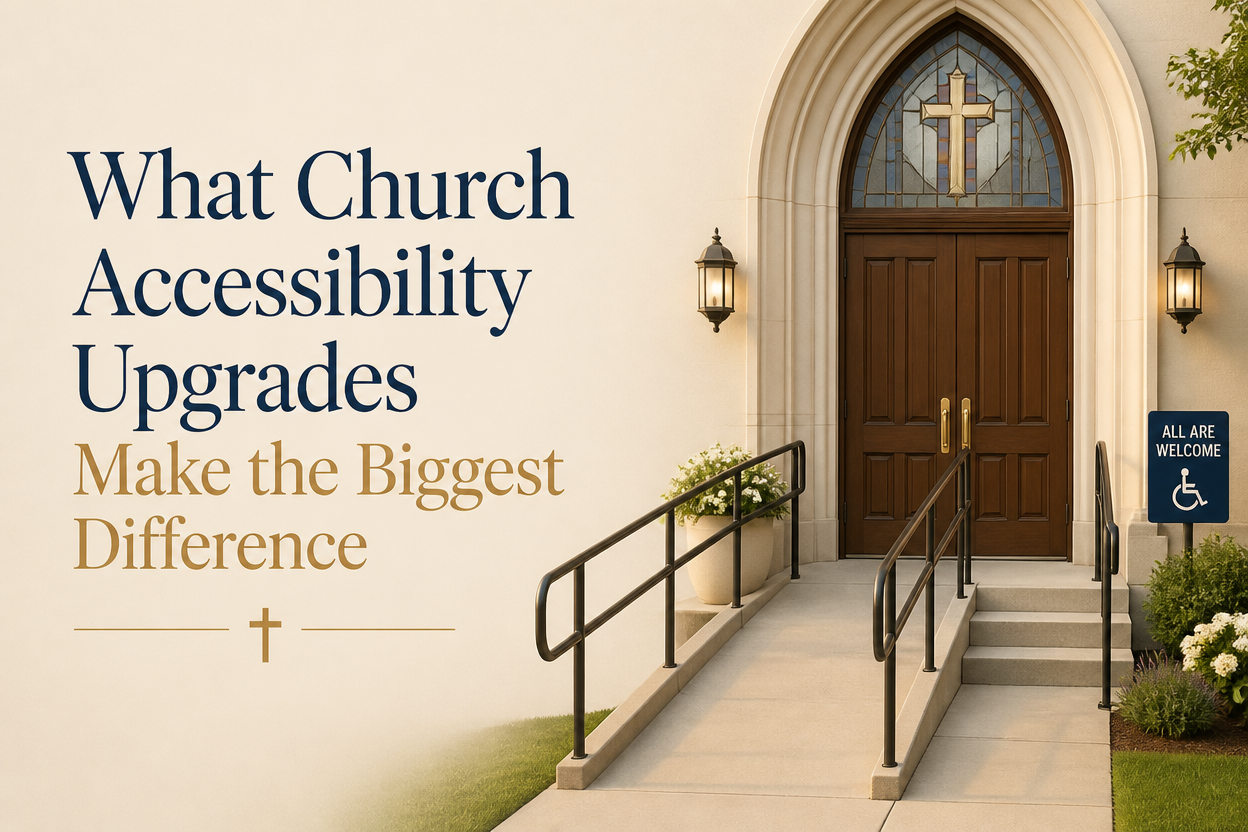
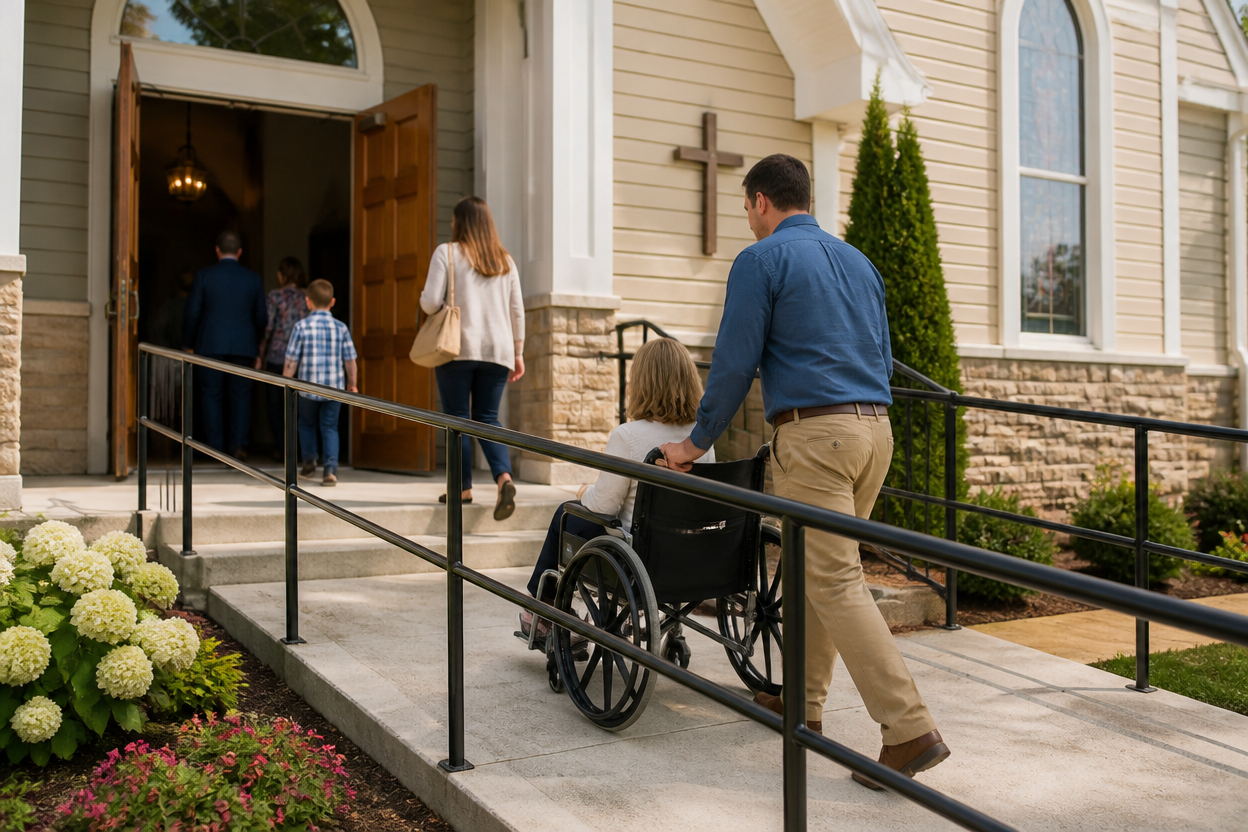
If a church is physically difficult to enter, nothing else matters. Step-free entry with a ramp or lift, accessible doors, and a clear, stable route from parking to the sanctuary tends to produce immediate change because it removes the first and most public barrier. Even when churches provide volunteers to assist, repeated reliance on assistance can create dependency and shame that keeps families home.
For donors evaluating a proposed project, the practical test is straightforward: can a wheelchair user, an older adult with limited mobility, or a parent managing a disability-related support need arrive, enter, and be seated without needing to flag someone down? When the answer becomes “yes,” attendance patterns often follow.
Hearing assistance and intelligible sound
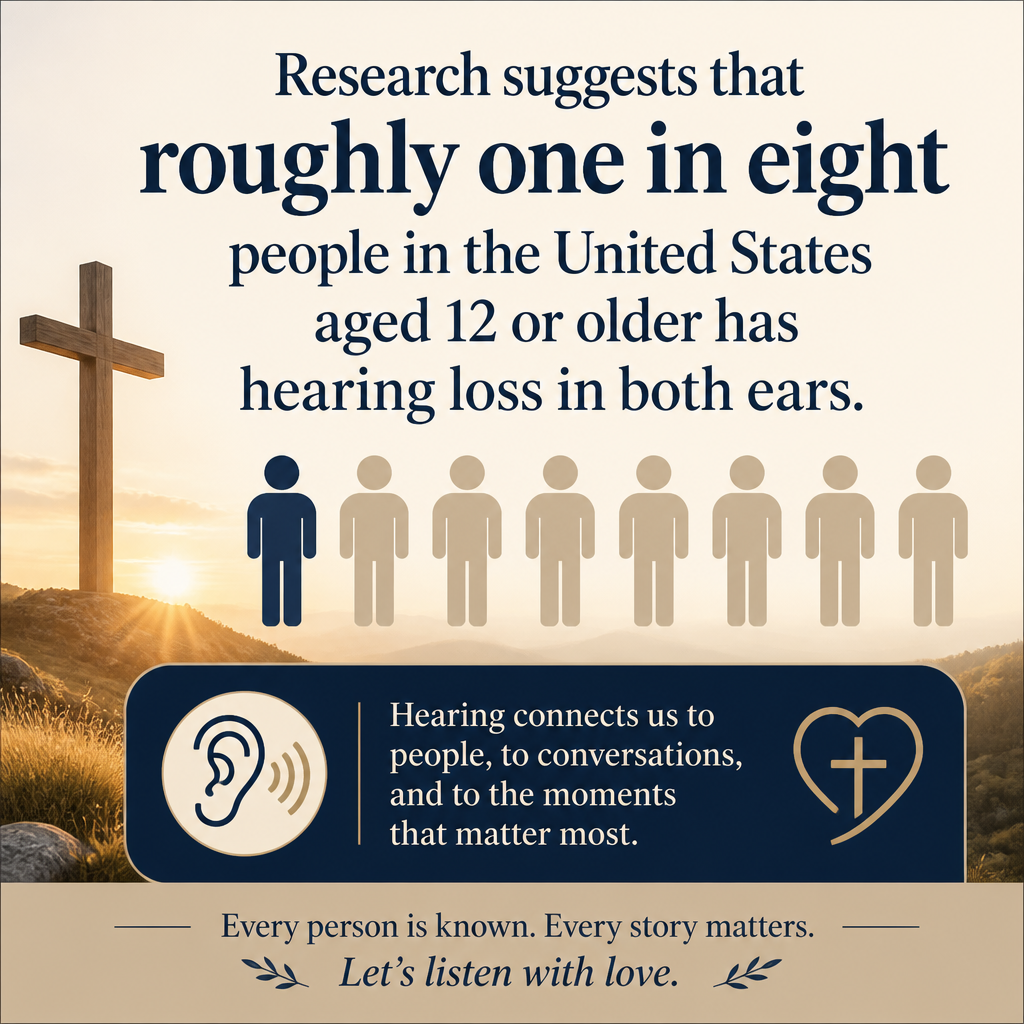
Hearing loss is common, frequently invisible, and often socially costly. Research suggests that roughly one in eight people in the United States aged 12 or older has hearing loss in both ears. National Institute on Deafness and Other Communication Disorders. In church settings, this can mean the sermon becomes a blur, congregational singing becomes exhausting, and small groups become isolating.
Upgrades with outsized impact include a properly tuned sound system, consistent microphone use, and assistive listening technology such as hearing loops or FM systems. These investments are not glamorous, but they can restore a member’s ability to participate without the spiritual fatigue of constant guessing.
Prioritize bathrooms and circulation that preserve dignity
Many accessibility projects focus on what visitors see first. Mature churches also invest in what determines whether a family can stay for the full service: bathrooms, hallways, and transitions between spaces. Dignity is not sentimental. It is concrete.
Accessible restrooms with enough space and the right details
An “accessible” restroom is sometimes accessible only in a code-minimum sense. The difference-making elements are adequate turning radius, properly placed grab bars, sinks and dispensers that can be reached, and doors that can be managed without strain. For some families, the presence or absence of an adult-sized changing table determines whether a loved one can attend at all, particularly when the disability involves personal care needs.
Donors can ask a simple question: does the proposed design assume independence and privacy, or does it assume a helper must maneuver around tight corners and awkward fixtures? Designs that assume privacy treat a person as a person, not a problem to be managed.
Wide, clear routes and predictable wayfinding
Accessibility is compromised when people must thread through narrow hallways, step around clutter, or guess at signage. Wider routes, clear floor space, and coherent wayfinding reduce anxiety for many disabilities at once, including mobility limitations, low vision, and cognitive disabilities.
What this means in practice is that “housekeeping” decisions matter as much as construction. A corridor that is technically wide enough but chronically blocked by stacked chairs or décor is not accessible. Churches often need both a facilities fix and a culture fix.
Invest in low cost changes that remove hidden barriers
Some of the most important upgrades are modest in cost and high in human value. They do not produce dramatic before-and-after photos, but they reduce the daily burdens that quietly keep people away.
Lighting, contrast, and visual accessibility
For people with low vision, migraines, sensory sensitivity, or some forms of neurodivergence, lighting can be either hospitable or punishing. Simple adjustments such as reducing glare, increasing contrast on steps and stage edges, and ensuring signage is legible at a distance can materially change the experience of worship.
When churches add large screens, they should ensure lyric fonts are readable and backgrounds are high-contrast. The goal is not aesthetic maximalism. It is intelligibility.
Communication access beyond the room
Some barriers appear before a person ever arrives. An accessible website with clear service times, building entry information, parking instructions, and a straightforward way to request accommodations reduces anxiety for families who have learned that “we’ll figure it out when you get here” often means they will be improvised around.
Churches with livestreams should pay attention to captioning and audio clarity. For many homebound members, digital access is not a convenience but a lifeline to the communion of saints.
- Accessible entry information posted online with photos and plain directions
- Clear signage to accessible routes, restrooms, and quieter spaces
- Consistent microphone discipline for all speakers
- High-contrast, readable projected text and printed materials
- Trained greeters who can describe options without pressure
Fund staffing and training alongside construction
Church accessibility is often framed as a capital campaign problem. The harder question is whether a congregation has the operational maturity to sustain hospitality after the ribbon-cutting. Physical upgrades without trained volunteers can create a new kind of exclusion: the building is accessible, but relationships are not.
Disability ministry readiness and volunteer formation
Training matters because disabilities are diverse. A plan that serves wheelchair users but ignores sensory needs, communication differences, or mental health realities can still leave many members unsupported. Churches also need clear boundaries and safeguarding practices, especially in children’s ministry and respite contexts.
For donors, this is where discernment becomes spiritual and practical. The church’s posture should not be pity or heroism. It should be patient belonging: a community prepared to welcome, adapt, and learn without making a family feel like an ongoing exception.
Policies that prevent accessibility from depending on a few saints
Many congregations have a faithful handful who carry disability inclusion for years. That model is fragile. When those volunteers move or burn out, the ministry collapses, and families feel the loss acutely.
Better practice includes written procedures for accommodations requests, designated points of contact, and routine review of what is and is not working. When churches treat accessibility as normal governance rather than informal goodwill, inclusion becomes durable.
Give with discernment and verify readiness for impact
Christian donors are often drawn to tangible projects. An accessibility upgrade can be an excellent use of capital, but it should be paired with sober questions: is there a real community of people who will benefit, is the church prepared to implement well, and will the change be sustained?
Measure what matters and name the trade offs
Accessibility projects have real trade-offs. Historic buildings may require costly retrofits. Limited budgets mean choosing between competing needs: an elevator, bathroom remodel, hearing assistance, children’s ministry adaptations. Christians genuinely disagree about prioritization in constrained settings, and there is no single faithful blueprint.
What donors can rightly expect is clarity. Churches should articulate who the upgrades are for, what barriers they address, what the project will not solve, and how the church will steward the investment over time. Vague promises of “welcoming everyone” often conceal the absence of a plan.
How Most Trusted approaches donor confidence
Across our verification work at Most Trusted, we observe that healthy ministries tend to connect mission intent with operational evidence: budgets aligned to stated priorities, governance that asks hard questions, and transparent communication about outcomes and limitations. When donors support accessibility efforts, they should look for the same alignment.
The Most Trusted Standard is a 15-criteria framework that evaluates ministries across Faith Foundation, Financial Integrity, Governance and Leadership, and Transparency and Effectiveness. The point is not bureaucratic scrutiny for its own sake. The point is Christian stewardship: giving that is both generous and wise, grounded in truth rather than sentiment.
Donors who want to situate accessibility giving within a broader view of disability inclusion can begin with Disability Ministries. For more focused context on built environment decisions, see Church Accessibility and Disability Inclusion.
FAQs for What church accessibility upgrades make the biggest difference
Should donors fund an elevator or smaller upgrades first?
An elevator can be decisive when worship, classrooms, or restrooms are on different floors, but it is also capital-intensive and can crowd out other changes. We recommend donors ask for a barrier audit that identifies which obstacles currently prevent participation and then sequence projects accordingly. In many churches, step-free entry, an accessible restroom, and hearing assistance create immediate access while longer-term structural work is planned.
How can donors tell whether an accessibility project will be maintained?
Maintenance is usually visible in governance and budgeting rather than in architecture drawings. Donors should ask who owns the program after installation, what the annual maintenance and replacement costs are, and whether staff and volunteers are trained to use the equipment well. Projects that depend on one knowledgeable volunteer are vulnerable; projects embedded in policy, budget, and routine review are more likely to endure.
When upgrades become a form of witness
The church does not become faithful by installing ramps and loops. Yet faithfulness is expressed in tangible love, and buildings either obstruct that love or serve it. The accessibility upgrades that make the biggest difference are those that remove the first barriers to worship and fellowship, protect dignity in ordinary needs, and are sustained by congregational maturity. Christian donors can strengthen that witness by funding changes that are concrete, prioritized, and verifiably stewarded.



